United Arab Emirates
Sharjah
The UAE's intellectual counterweight of heritage souks, dry laws, and serious museums
Plan & book
Sort your Sharjah trip in one place.
We point you to the booking tools we'd actually use — live prices, no markup. Or let us build the day-by-day plan around you first, then book.
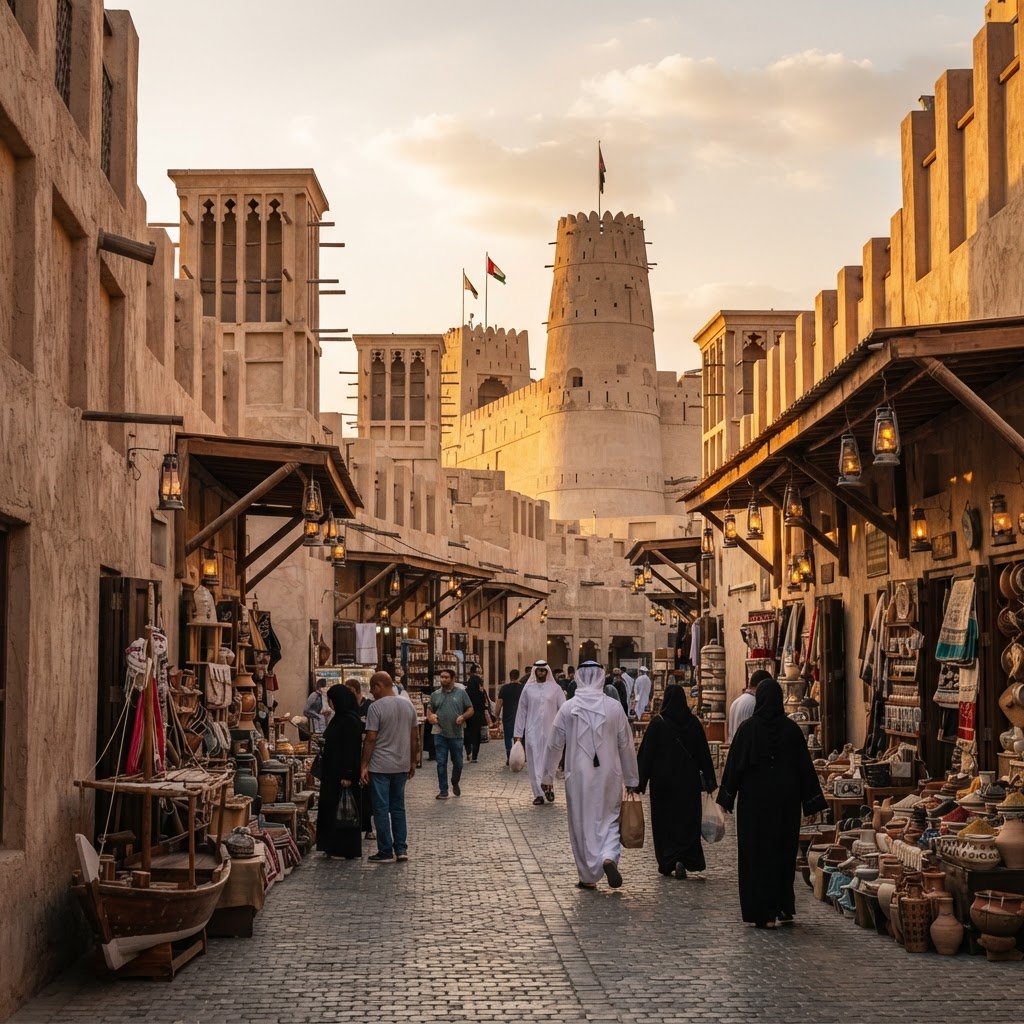
Sharjah is the deliberate cultural antithesis to neighboring Dubai's commercial spectacle. As the third-largest emirate, it preserves coral-stone heritage quarters, hosts cutting-edge contemporary art foundations, and enforces strict conservative cultural norms, including a total prohibition on alcohol and conservative public dress codes. Rather than competing for mega-malls, Sharjah focuses on UNESCO-recognized heritage, literary institutions, and restored desert archaeology.
3 days
Best time
November to March for comfortable outdoor souk walking and desert archaeological tours.
Build your own trip with these prebuilt itineraries
Each one is a tested, day-by-day plan for Sharjah — start here, then make it yours.
5 Days Coast to Coast: Deserts, Mountains, and Enclaves in Sharjah
Road-trip exploration across the entire emirate from the Persian Gulf museums to the Hajar Mountains and Khor Fakkan
3 Days of Culture and Archaeology in Sharjah
Balanced classic overview pairing historic downtown quarters with the inland desert tombs of Mleiha
2 Days of Art and Islamic Heritage in Sharjah
Museums, restored souks, and cultural pockets around the Heart of Sharjah and Al Majaz
Go for authentic architectural heritage and world-class regional arts without the skyscraper glitz. The restored Heart of Sharjah offers coral-stone alleyways and functional historic souks like Souq Al Arsah, while institutions like the Sharjah Art Foundation and the Sharjah Museum of Islamic Civilization house some of the Arab world's deepest collections. It is also an affordable gateway to the UAE's stark interior landscapes, from the prehistoric caves of Mleiha to the dramatic Hajar mountains on its eastern exclaves.
Where to stay
Getting there
Getting around
Food & drink
What it costs
Things to do
Book tours & tickets in SharjahSkip it if
Skip Sharjah if your UAE vacation centers on resort nightlife, pool parties, clubbing, or casual alcohol consumption, as the emirate enforces a complete alcohol prohibition. Also pass if you are short on time in Dubai and dislike navigating heavy cross-border traffic for standard shopping experiences.
When to go
Winter brings crisp, sunny days with daytime temperatures between 20°C and 28°C, making the pedestrian alleys of the Heart of Sharjah and desert treks at Mleiha genuinely pleasant. Shoulder months get sweltering quickly, while summer heat makes outdoor exploration nearly impossible.
Peak (Nov–Mar)
Pleasant breezes and low humidity; perfect for walking the waterfronts, though hotel prices peak and the Sharjah Light Festival in February draws heavy regional evening traffic.
Shoulder (Apr & Oct)
Temperatures consistently exceed 35°C; outdoor activities must be restricted to early mornings and late evenings, leaning on museums during the midday sun.
Low (May–Sep)
Pervasive heat above 42°C with extreme coastal humidity; street life vanishes into air-conditioned malls and museums, though boutique heritage rates drop substantially.
Neighborhoods
Where you stay shapes the trip. Here's how to think about it.
Heart of Sharjah
Restored coral-stone alleys, quiet courtyard galleries, and heritage souks scented with frankincense.
Best for:Culture purists and heritage hotel stays
Don't miss:The intimate courtyards of the Sharjah Art Foundation and the thatched roofing of Souq Al Arsa.
Al Majaz
Wide, manicured waterfront promenade alive at sunset with local families, cafe terraces, and evening fountain displays.
Best for:Families, relaxed evening walks, and lagoon views
Don't miss:Watching the illuminated Khalid Lagoon from an outdoor terrace at Al Majaz Waterfront.
Al Qasba
Venetian-style canal district lined with casual dining, small cultural hubs, and breezy pedestrian paths.
Best for:Evenings with kids and laid-back dining
Don't miss:A ride on a traditional abra boat through the canal before touring the Maraya Art Centre.
Al Khan
Coastal stretch transitioning from old fishing ruins into wide public sand beaches and maritime maritime exhibits.
Best for:Beach days and maritime history buffs
Don't miss:The dual-ticket entry to Sharjah Aquarium and the adjacent Sharjah Maritime Museum.
Mleiha (Inland Exclave)
Raw red-dune desert anchored by dramatic limestone crags and monumental Bronze Age tombs.
Best for:Archaeology lovers and desert day-trippers
Don't miss:A guided 4x4 excursion out to Fossil Rock and the excavated Umm an-Nar circular tomb.
Destination intelligence
Updated 9/14/2026The structured record we plan every Sharjah itinerary from.
Walkability
Low overall; limited to self-contained walkable pockets like Heart of Sharjah, Al Majaz Corniche, and Al Qasba.
Transit quality
Moderate; extensive regional and intercity buses centered at Al Jubail, but city travel depends largely on taxis.
Car needed
Recommended for desert day trips and eastern enclaves, but unnecessary if staying strictly between the historic center and lagoon.
Ideal duration
3 days
Minimum useful
1 full day (from Dubai)
Peak season
November through March: cool, sunny days ranging from 20°C to 28°C ideal for walking souks and desert tours.
Shoulder season
April and October: warm shoulder weather with temperatures hovering in the mid-30s°C, requiring mid-day indoor museum breaks.
Low season
May through September: punishing desert heat exceeding 42°C with extreme humidity along the coast, restricting life indoors.
Best for
Common mistakes
- Underestimating the E11 commute gridlock between Dubai and Sharjah during weekday rush hours (07:00-10:00 and 17:00-20:30).
- Violating the emirate's conservative decency and modesty laws by wearing revealing swimwear or bare shoulders and shorts away from private hotel pools.
- Assuming luxury hotels have licensed bars; Sharjah is entirely alcohol-free by law.
- Skipping the interior desert and eastern mountain regions like Mleiha and Khor Fakkan to stay strictly within the coastal city.
Best nearby
How to plan it
- Stay in the Heart of Sharjah at The Chedi Al Bait if you prioritize walking to cultural institutions, contemporary galleries, and historic souks without getting into a car.
- Group the Sharjah Museum of Islamic Civilization, the Sharjah Art Museum, and Souq Al Shanasiyah into a single daytime foot loop to maximize air-conditioned sanctuary.
- Book your visit to the Rain Room at the Sharjah Art Foundation at least one to two weeks in advance, as time-slotted admissions strictly cap capacity.
- Never schedule a taxi transfer to Dubai International Airport (DXB) during the 16:30 to 20:30 weekday commute window unless you add 90 minutes of contingency travel time.
- Combine a morning at Mleiha Archaeological Centre with an off-road trip to Fossil Rock, keeping inland desert adventures strictly to the winter months.
Questions
More in Middle East
Readymade itineraries
Start from a tested template — then make it yours.
Ready to book
Lock in your Sharjah trip
Everything in one place. We may earn a small commission — it never costs you more.
Plan a trip to Sharjah
Pick a length and we'll build a day-by-day plan around how you travel — neighborhoods clustered, budget-aware, and editable.
Get better at planning trips like this
Occasional notes on planning smarter — no spam, unsubscribe anytime.
Plan a trip to Sharjah
Turn this guide into a day-by-day plan built around your pace, your group, and your budget.
Build my Sharjah trip