United States
Sedona, Arizona Itinerary: How Many Days + Sample Plans
Red rock canyons, technical hiking, and high-desert calm minus the parking gridlock.
Traveler rating
Loved by day hikers who prefer scrambling over smooth sandstone to forested switchbacks.
Plan & book
Sort your Sedona, Arizona trip in one place.
We point you to the booking tools we'd actually use — live prices, no markup. Or let us build the day-by-day plan around you first, then book.
Pick your trip length
How many days do you need in Sedona, Arizona?
Each of these opens a full day-by-day plan you can make your own.
- 2 days — Two days — the essentials, no rushing.
- 3 days — Three days — the icons plus one neighborhood.
- 4 days — Four days — a full city without sprinting.
- 5 days — Five days — room for a day trip.
- 7 days — A week — the city at a human pace.
- With Kids trip — Shorter days, earlier dinners, what to skip.
- For Couples trip — Two-person pacing with evenings built in.
- Solo trip — A plan that works well on your own.
- Food trip — Meals and markets as the anchors.
- Outdoors trip — Nature, walks and open air.
- Culture trip — History, museums and the streets around them.
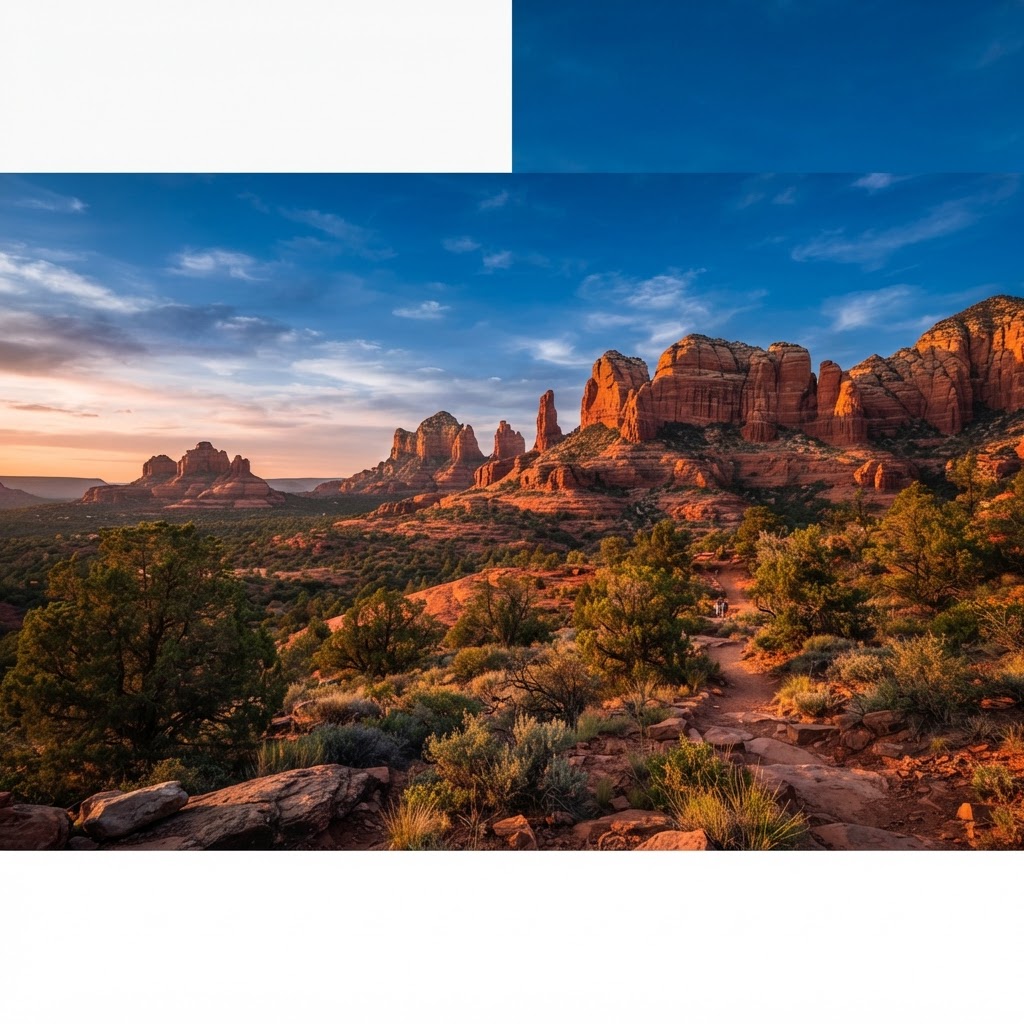
Sedona occupies a dramatic transitional shelf between northern Arizona's high timber country and the Sonoran desert. Renowned for its deep crimson sandstone buttes, pine-scented side canyons, and pervasive metaphysical culture, it offers world-class trail access paired with upscale culinary spots. However, extreme popularity has introduced intense traffic along Highway 89A and State Route 179. Experiencing Sedona properly requires treating it as an outdoor hub that demands early alarm clocks, strategic shuttle logistics, and clear boundaries around peak crowds.
4 days
Best time
Mid-October to early November or April to early May for prime 70°F trail weather.
Build your own trip with these prebuilt itineraries
Each one is a tested, day-by-day plan for Sedona, Arizona — start here, then make it yours.
3 Days in Sedona
Hiking, 4x4 backcountry jeep tour, vortex meditation, and Tlaquepaque dining
2 Days in Sedona
Classic red rocks: Cathedral Rock sunset, Devil's Bridge hike, and Uptown shopping
5 Days in Sedona
Sedona immersion plus Jerome ghost town and Grand Canyon South Rim day trip
Sedona is worth visiting because dramatic 1,500-foot sandstone spires rise directly above your morning coffee, offering trailheads within 10 minutes of residential roads. The red rock terrain provides unmatched slickrock mountain biking, classic scrambles like Cathedral Rock, and refreshing canyon creek swims in Oak Creek, balanced by fine dining and dark-sky stargazing.
Where to stay
Getting there
Getting around
Food & drink
What it costs
Things to do
Book tours & tickets in Sedona, ArizonaSkip it if
Skip Sedona if you are on a shoestring backpacker budget, as budget lodging is virtually nonexistent within town limits. Also reconsider if you hate navigating trailhead parking apps, timed shuttles, and heavily populated nature trails, or if you are seeking lively nightlife, as Sedona reliably goes quiet by 9:00 PM.
When to go
Spring and autumn provide comfortable hiking temperatures and golden-hour clarity, but demand top-tier lodging rates and bring intense trail gridlock. Winter offers quiet trails and cheaper rooms if you can handle 30°F mornings, while summer drops rates significantly but requires hiking before 9:00 AM to survive desert heat.
Spring (March to May)
Peak crowds and maximum room rates. Wildflowers bloom and days stay around 70°F–80°F, but trail parking fills before 7:00 AM and Highway 89A crawls.
Summer (June to August)
Desert heat routinely exceeds 95°F and afternoon monsoon storms trigger flash floods in slot canyons. Cheaper hotel rates reward those willing to hike at sunrise and retreat to creeks or pools by 10:00 AM.
Fall (September to mid-November)
Ideal crisp weather with daytime highs in the 70s and turning canyon foliage. Crowds match spring peaks, requiring advance dinner and lodging bookings 3–6 months out.
Winter (late November to February)
Quiet, crisp, and underrated. Mornings hover near freezing with occasional dusting of snow on red rocks, but midday sun is perfect for active slickrock scrambles with zero trailhead competition.
Neighborhoods
Where you stay shapes the trip. Here's how to think about it.
Uptown Sedona
Commercial tourist center packed with tour jeep departures, souvenir shops, and constant pedestrian energy.
Best for:First-timers, families without rental cars, and tour-takers
Don't miss:The departure zone for Pink Jeep Tours along Highway 89A before daytime tour bus crowds peak.
West Sedona
Residential, functional commercial strip with authentic local dining and rapid trailhead access.
Best for:Active hikers, food lovers, and value-oriented travelers
Don't miss:Starting early from Dry Creek Road trailheads for Devil's Bridge or Mescal Trail without navigating cross-town traffic.
Village of Oak Creek (VOC)
Sprawling, golf-adjacent southern enclave framed directly beneath massive iconic buttes.
Best for:Hikers wanting immediate trail access and travelers dodging central highway congestion
Don't miss:Sunset walks around the Bell Rock and Courthouse Butte Loop directly from roadside pullouts.
Oak Creek Canyon
Shaded, pine-forested alpine retreat cooled by running water along a twisting mountain highway.
Best for:Summer travelers, fly fishermen, and romantic cabin getaways
Don't miss:West Fork Trail, an immersive canyon walk crossing creek stones between towering sandstone walls.
Tlaquepaque & Gallery District
Stucco arches, Spanish sycamore courtyards, and upscale artisan galleries along Highway 179.
Best for:Couples, art collectors, and relaxed afternoon shoppers
Don't miss:The cobblestone courtyards and patio dining beneath mature sycamores at Elote Cafe's neighborhood perimeter.
Destination intelligence
Updated 10/6/2026The structured record we plan every Sedona, Arizona itinerary from.
Walkability
Low. Individual hubs like Uptown or Tlaquepaque are pedestrian-friendly, but the destination spans distinct valleys separated by multi-mile highways without continuous sidewalks.
Transit quality
Moderate. The free Sedona Shuttle efficiently serves top trailheads from Thursday to Sunday, and Sedona Shuttle Connect provides microtransit, but full geographic mobility across towns requires a car.
Car needed
Yes. Essential for exploring dispersed trailheads, visiting Oak Creek Canyon, reaching Verde Valley dining, and managing trips outside municipal shuttle operating windows.
Ideal duration
4 days
Minimum useful
2 days
Peak season
Spring (March to May) and Fall (September to mid-November), when daytime temperatures hover in the 65°F to 80°F range, bringing max lodging rates and trail traffic.
Shoulder season
Late Fall through early Winter (late November to mid-December) and late Spring (late May to early June), balancing moderate weather with smaller crowds.
Low season
Mid-summer (July and August) due to intense desert heat exceeding 95°F and afternoon monsoon storms, alongside mid-winter (January to mid-February) for brisk, chilly days and occasional snowfall.
Best for
Common mistakes
- Driving personal cars to Cathedral Rock or Soldier Pass trailheads between Thursday and Sunday when lots are gated shut for the Sedona Shuttle.
- Starting mid-day hikes in warm months without sufficient water; sandstone radiates ambient heat, leading to severe dehydration.
- Staying in Uptown Sedona and expecting a peaceful desert sanctuary instead of tourist shops, commercial bus traffic, and gridlock.
- Failing to make dinner reservations weeks ahead for top tables like Elote Cafe and Mariposa.
- Underestimating Highway 179 and Highway 89A roundabouts during 4 PM to 6 PM commuter traffic.
Best nearby
How to plan it
- Stay in West Sedona along Route 89A if you want direct access to local restaurants and trailheads without Uptown's daily gridlock.
- Book dinner at Elote Cafe exactly when their 30-day reservation window drops at midnight, or settle for bar seating upon early arrival.
- Do not attempt Devil's Bridge, Cathedral Rock, and Oak Creek Canyon in a single day; pick one major geographic zone per morning.
- Pair your Sedona trip with a 30-minute side drive to the hillside ghost-mining town of Jerome or the Verde Valley wineries in Page Springs.
- If traveling Thursday through Sunday, park at the SR 179 park-and-ride for Cathedral Rock instead of attempting the trailhead lot, which is locked to private cars.
Questions
More in United States

Tampa, Florida
United States
A historic cigar-making heritage wrapped in polished waterfront revivals and Gulf Coast culinary ambition.
Milwaukee, Wisconsin
United States
Industrial lakeside cool anchored by serious culinary chops and effortless urban grit.
Door County, Wisconsin
United States
Limestone bluffs, heritage cherry orchards, and lakefront villages on Lake Michigan.

Traverse City, Michigan
United States
Freshwater bays, cool-climate vineyards, and windswept dunes anchored by a farm-driven culinary hub.

Mackinac Island, Michigan
United States
Car-free Victorian bluffs, freshwater coastlines, and horse-drawn transport

Baltimore, Maryland
United States
Industrial maritime roots, blue-collar grit, and distinct neighborhood enclaves.
Readymade itineraries
Start from a tested template — then make it yours.
Ready to book
Lock in your Sedona, Arizona trip
Everything in one place. We may earn a small commission — it never costs you more.
Plan a trip to Sedona, Arizona
Pick a length and we'll build a day-by-day plan around how you travel — neighborhoods clustered, budget-aware, and editable.
Get better at planning trips like this
Occasional notes on planning smarter — no spam, unsubscribe anytime.
Plan a trip to Sedona, Arizona
Turn this guide into a day-by-day plan built around your pace, your group, and your budget.
Build my Sedona, Arizona trip