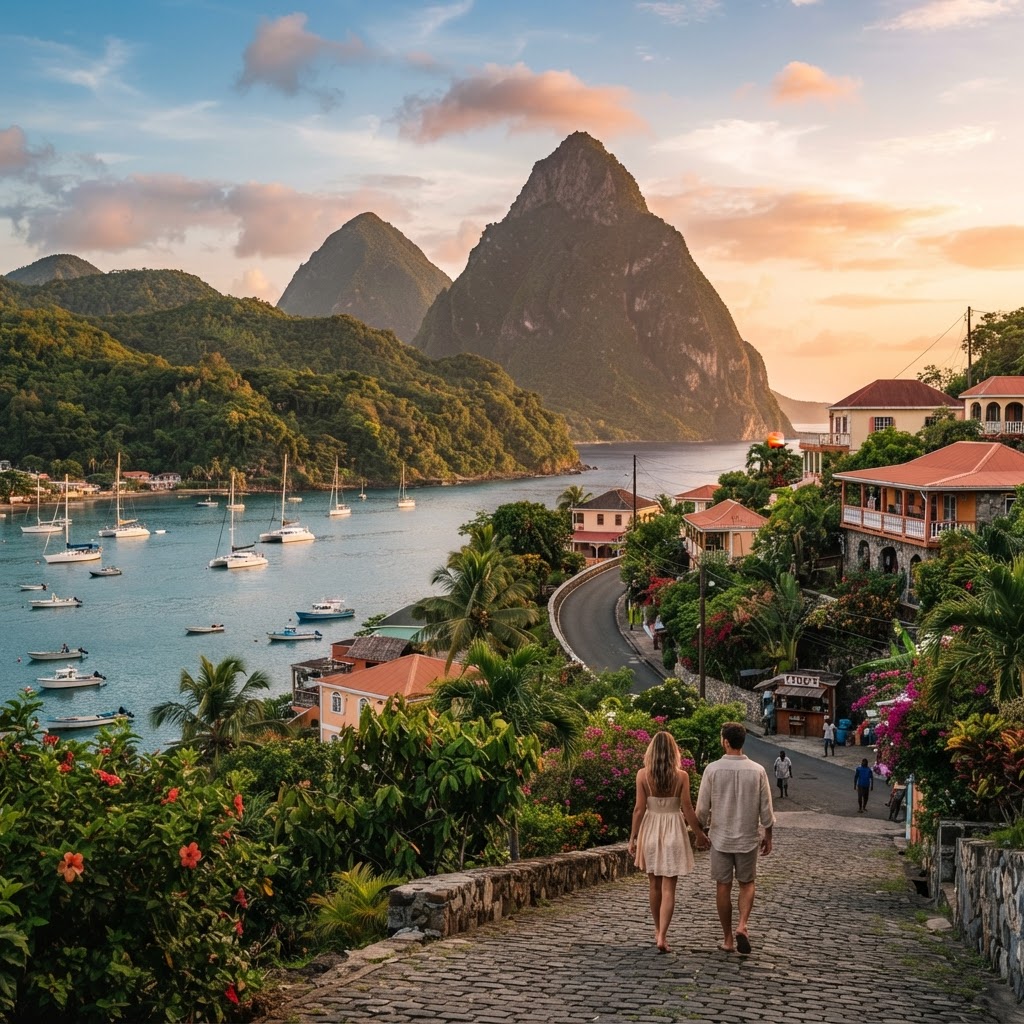
Saint Lucia
Saint Lucia
Volcanic peaks, cacao groves, and calm Caribbean coves built for adventure and romance.
Plan & book
Sort your Saint Lucia trip in one place.
We point you to the booking tools we'd actually use — live prices, no markup. Or let us build the day-by-day plan around you first, then book.
Saint Lucia trades flat, generic Caribbean sandscapes for dramatic topography: jagged volcanic spires, dense rainforest reserves, and coastal bays hemmed in by steep jungle. The island splits cleanly into two personalities. The northern corridor around Rodney Bay and Gros Islet brings resort beaches, marina dining, and lively street soundscapes, while the southwestern quarter around Soufrière frames the towering Pitons, working cacao estates, and geothermal springs. It is an island engineered for active days and deliberate slow evenings rather than fast-paced urban roaming.
7 days
Best time
December to April for dry sunny weather; May to June for the best balance of value and calm trails.
Build your own trip with these prebuilt itineraries
Each one is a tested, day-by-day plan for Saint Lucia — start here, then make it yours.
7 Days of Island Contrasts: North to South in Saint Lucia
Split-stay classic highlights combining beach resort life with rainforest adventures
5 Days of Romantic Escapes and Piton Views in Saint Lucia
Romance and dramatic volcanic landscapes based around Soufriere
Go for landscapes that dwarf standard beach destinations: hiking through rainforest canopies beneath the UNESCO-listed Gros Piton, swimming at Anse des Pitons between volcanic spires, and soaking in volcanic mud baths at Sulphur Springs. Saint Lucia satisfies travelers who want tropical beaches paired with tangible physical geography and rich agricultural heritage like bean-to-bar chocolate making.
Where to stay
Getting there
Getting around
Food & drink
What it costs
Things to do
Book tours & tickets in Saint LuciaSkip it if
Skip Saint Lucia if you expect budget backpacker hosteling, wide pedestrian-friendly promenades, or endless flat golf-cart beach cruising. Travelers prone to severe motion sickness may struggle with the hour-plus winding roads connecting the airport, south coast attractions, and northern resorts.
When to go
Peak season provides consistently dry trade winds and ideal ocean visibility, but resort room rates peak sharply and narrow mountain roads see heavy cruise tour traffic. Shoulder months bring occasional short tropical showers while cutting lodging rates by 25 to 40 percent without the humidity of late summer.
Peak (Mid-December to Mid-April)
Clear skies and calm sea conditions. High rates and scarce luxury villa availability; reserve 6 months ahead.
Shoulder (May to June & late November)
Pleasant tropical warmth, fewer cruise crowds on hiking routes, and moderate resort rates.
Low (July to October)
High heat, elevated humidity, and Atlantic storm risks. Significant hotel discounts, but afternoon downpours can wash out mountain roads.
Neighborhoods
Where you stay shapes the trip. Here's how to think about it.
Soufrière
Towering volcanic spires, dense rainforest canopy, working cacao farms, and slow romantic evenings.
Best for:Hikers, honeymooners, and nature purists
Don't miss:The challenging climb up Gros Piton or a boat shuttle into the marine reserve at Anse Chastanet.
Rodney Bay Village
Buzzing marina life, pedestrian-friendly dining strips, calm bay swimming, and easy convenience.
Best for:Families, watersport enthusiasts, and first-timers wanting walkable dining
Don't miss:Swimming off Reduit Beach followed by fresh grilled fish along the marina promenade.
Gros Islet
Historic fishing settlement anchored by rum shops, historic colonial fortifications, and lively weekend street culture.
Best for:Cultural travelers and social night owls
Don't miss:Exploring the military ruins and panoramic ridgeline trails of Pigeon Island National Park by day, then joining the Friday night street party.
Marigot Bay
Steep forested hillside framing a protected yacht anchorage with serene overwater cocktail spots.
Best for:Sailors, quiet couples, and travelers seeking seclusion midway between north and south
Don't miss:Taking the small ferry crossing to the sand spit for rum punch at Hurricane Hole as catamarans anchor for dusk.
Vieux Fort & Laborie
Untouristed southern fishing hamlets, authentic seaside rum joints, and wind-whipped Atlantic shores.
Best for:Kitesurfers, off-the-beaten-path road trippers, and quick airport layovers
Don't miss:Windsurfing at Anse de Sables beach and eating Creole saltfish in sleepy downtown Laborie.
Destination intelligence
Updated 9/14/2026The structured record we plan every Saint Lucia itinerary from.
Walkability
Low. Settlements are connected by steep, winding mountain roads lacking continuous footpaths; walking is generally limited to resort grounds, Pigeon Island trails, or Rodney Bay village center.
Transit quality
Basic. Minibuses connect major towns like Castries and Vieux Fort along trunk routes, but schedules are informal and ill-suited for travelers with strict timelines or heavy luggage.
Car needed
Optional but demanding. Most visitors rely on pre-arranged private drivers or boat taxis; self-driving requires comfort with left-hand traffic, steep drop-offs, and mountain switchbacks.
Ideal duration
7 days
Minimum useful
4 days
Peak season
Mid-December through mid-April, featuring dry trade winds, minimal rainfall, and packed luxury resort inventory.
Shoulder season
May to June and late November, delivering warm sunny weather, lighter crowds, and moderate villa pricing.
Low season
July through October, coinciding with the Atlantic hurricane season and higher tropical humidity, balanced by significant hotel discounts.
Best for
Common mistakes
- Staying in Rodney Bay and attempting multiple day trips to Soufrière by car, spending 3+ hours daily navigating switchback traffic.
- Failing to carry local cash (Eastern Caribbean Dollars) for rural roadside bread stands, fruit stalls, and tips.
- Underestimating the steepness and physical exertion required to hike Gros Piton in tropical heat.
- Renting a standard economy compact sedan to traverse rutted interior estate roads.
Best nearby
How to plan it
- Book a split-stay: 4 nights near Soufrière for hiking, waterfalls, and diving, followed by 3 nights in Rodney Bay for beaches and dining.
- Avoid doing a day-trip drive from Rodney Bay to the Pitons by car; the winding two-hour drive each way causes car sickness. Take a coastal catamaran or water taxi instead.
- Hire a licensed local guide at the base of Gros Piton or Petit Piton; summiting requires technical scrambling and trail permits.
- Reserve open-air dining spots like Dasheene or Boucan at Hotel Chocolat at least two to four weeks in advance for sunset dinner seatings.
- If landing at UVF with a resort stay in the far north, book a scenic helicopter shuttle or boat transfer to bypass the 90-minute serpentine overland haul.
Questions
Readymade itineraries
Start from a tested template — then make it yours.
Ready to book
Lock in your Saint Lucia trip
Everything in one place. We may earn a small commission — it never costs you more.
Plan a trip to Saint Lucia
Pick a length and we'll build a day-by-day plan around how you travel — neighborhoods clustered, budget-aware, and editable.
Get better at planning trips like this
Occasional notes on planning smarter — no spam, unsubscribe anytime.
Plan a trip to Saint Lucia
Turn this guide into a day-by-day plan built around your pace, your group, and your budget.
Build my Saint Lucia trip