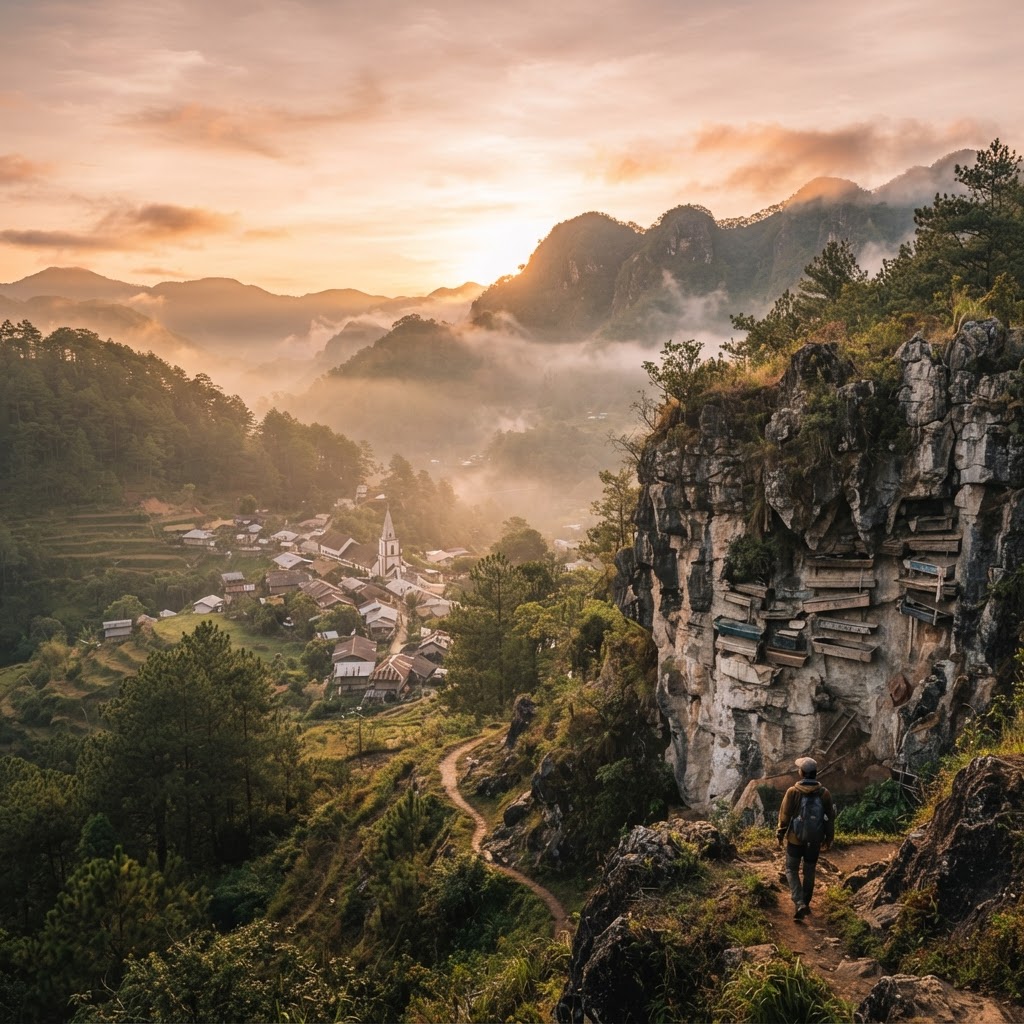
Philippines
Sagada, Philippines
A misty Cordillera sanctuary of pine ridges, subterranean rivers, and ancestral limestone cliff burials.
Plan & book
Sort your Sagada, Philippines trip in one place.
We point you to the booking tools we'd actually use — live prices, no markup. Or let us build the day-by-day plan around you first, then book.
Set high in the Cordillera Central range of northern Luzon, Sagada (historically known as Ganduyan) trades tropical beach tropes for crisp mountain air, limestone cave networks, and ancestral Applai-Kankana-ey traditions. It is famous for cliffside hanging coffins, locally grown Arabica coffee, and rugged mountain tracks. The town functions under a strictly centralized, community-led eco-tourism system requiring registered local guides for outdoor excursions.
4 days
Best time
November to February for crisp mountain air and clear skies, or March to April to beat the heaviest domestic crowds.
Build your own trip with these prebuilt itineraries
Each one is a tested, day-by-day plan for Sagada, Philippines — start here, then make it yours.
5 Days in Sagada: Slower Mountain Living in Sagada
Unrushed retreat blending peaceful village walks, local culinary traditions, pottery crafts, and sunrise ridges
4 Days in Sagada: Ancestral Traditions & Culture in Sagada
In-depth cultural exploration covering sacred mortuary rituals, Kankana-ey heritage, and high-elevation coffee estates
3 Days in Sagada: Spelunking & Highland Trails in Sagada
High-exertion adventure focused on caving systems, rugged waterfall treks, and mountain viewpoints
Sagada delivers a dramatically different vision of the Philippines: cool mountain weather, pine-covered ridgelines, and deeply preserved indigenous heritage. Travelers come to navigate the subterranean cavern passages of Sumaguing and Lumiang, witness sunrise sea-of-clouds from Marlboro Hills, and view the hanging coffins of Echo Valley with guides whose families built the traditions.
Where to stay
Getting there
Getting around
Food & drink
What it costs
Things to do
Book tours & tickets in Sagada, PhilippinesSkip it if
Skip Sagada if you require five-star luxury resorts, reliable high-speed co-working Wi-Fi, elevators, or barrier-free mobility, as the town features rugged topography, rustic homestays, and extensive walking across uneven steps.
When to go
December through February brings cool daytime temps and crisp visibility for morning ridge walks, but holidays and late February's Etag Festival draw packed crowds and jammed trailhead queues. March to April runs warmer and drier, delivering open trails before the summer monsoon brings mudslides.
Peak (December to February, Holy Week)
Crisp morning chills and vibrant festivals, but homestays book out months ahead and trail shuttles fill quickly.
Shoulder (March to May)
Warmer, settled hiking conditions and thin crowds, though waterfalls carry slightly reduced volume by late April.
Low (June to October)
Southwest monsoons trigger persistent downpours, slick limestone caves, and periodic highway landslide blockages.
Neighborhoods
Where you stay shapes the trip. Here's how to think about it.
Poblacion (Town Center)
Bustling civic hub set around steep alleys, craft bakeries, and municipal offices.
Best for:First-timers needing easy walking access to tourist registration, cafes, and bus drop-offs
Don't miss:The freshly baked sourdough and mountain preserves at Sagada Lemon Pie House.
Demang
Traditional agricultural village with tight stone footpaths and deep indigenous roots.
Best for:Travelers wanting a quiet cultural base away from the central vehicle commotion
Don't miss:The morning walk toward the historical dap-ay (communal gathering places) bordering the village pathways.
Nangonogan
Pliant pine-ridge serenity offering sweeping valley views along the road toward Sumaguing.
Best for:Hikers and nature lovers prioritizing sunset views and quiet over downtown dining convenience
Don't miss:Sunset drinks looking down across the pine canopy toward the south valley.
Dagdag
Artsy, leafy corridor strung along the upper road toward St. Mary the Virgin Church.
Best for:Coffee purists, boutique diners, and travelers seeking artisan weaving shops
Don't miss:Pour-overs made with single-origin Typica beans at one of the village's micro-roasters.
Destination intelligence
Updated 9/14/2026The structured record we plan every Sagada, Philippines itinerary from.
Walkability
Moderate within town center, but demanding due to steep inclines and stone steps. Outlying attractions require trail hiking and authorized municipal shuttles.
Transit quality
Limited. Regional bus and van connections link to Manila, Baguio, and Bontoc; local transport relies strictly on registered community tourism shuttles.
Car needed
No. Personal vehicles are restricted on narrow attraction access roads and must remain parked; community shuttles are required for trailheads.
Ideal duration
4 days
Minimum useful
3 days
Peak season
December to February, Holy Week, and the late February Etag Festival (coldest temperatures, clear morning skies, heavy domestic crowds).
Shoulder season
March to May (warmer, dry weather with reliable trail conditions before the monsoon season arrives).
Low season
June to October (southwest monsoon brings heavy rains, trail closures, and periodic mountain highway landslide hazards).
Best for
Common mistakes
- Attempting to hike to sacred sites, caves, or waterfalls without an accredited guide assigned by the Tourist Information Center, which violates local customary protocols and eco-tourism regulations.
- Failing to carry adequate physical cash; the town has extremely limited ATM access that frequently runs out of cash or loses network connectivity.
- Underestimating the steep physical exertion and slippery surfaces involved in spelunking and trekking to Bomod-ok Falls.
- Driving a private vehicle directly into narrow village center lanes instead of parking in designated municipal staging areas.
Best nearby
See what a trip to Philippines actually costs. Travel Budget Co.
How to plan it
- Book your Coda Lines overnight bus from Cubao or your GL Trans seat from Baguio at least two weeks ahead during peak dry months.
- Head straight to the Municipal Tourism Office upon arrival to register, pay your 50 PHP environmental fee, and lock in your daily guided routes.
- Never pair the intense Sumaguing-Lumiang Cave connection and the steep descent to Bomod-ok Falls on the same calendar day; the stair climbs will burn out your legs.
- Combine your trip with a 2-day detour to the UNESCO-listed rice terraces in Batad and Banaue to optimize the grueling Cordillera transit time.
- Pack a high-lumen headlamp and grippy trail runners with drainable mesh, as subterranean cave treks involve wet limestone surfaces and muddy descents.
Questions
More in Philippines
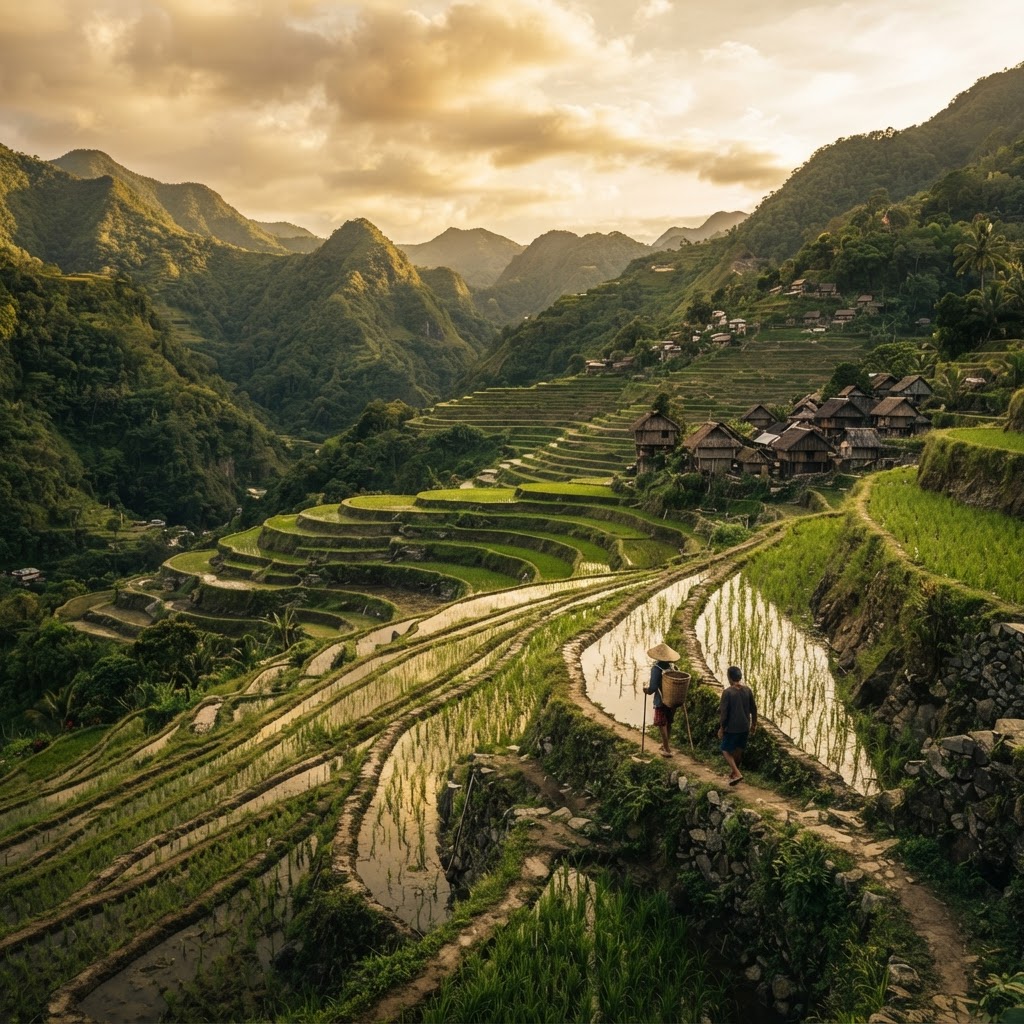
Banaue, Philippines
Philippines
Carved stone, emerald amphitheatres, and high-altitude endurance in Luzon's northern mountains
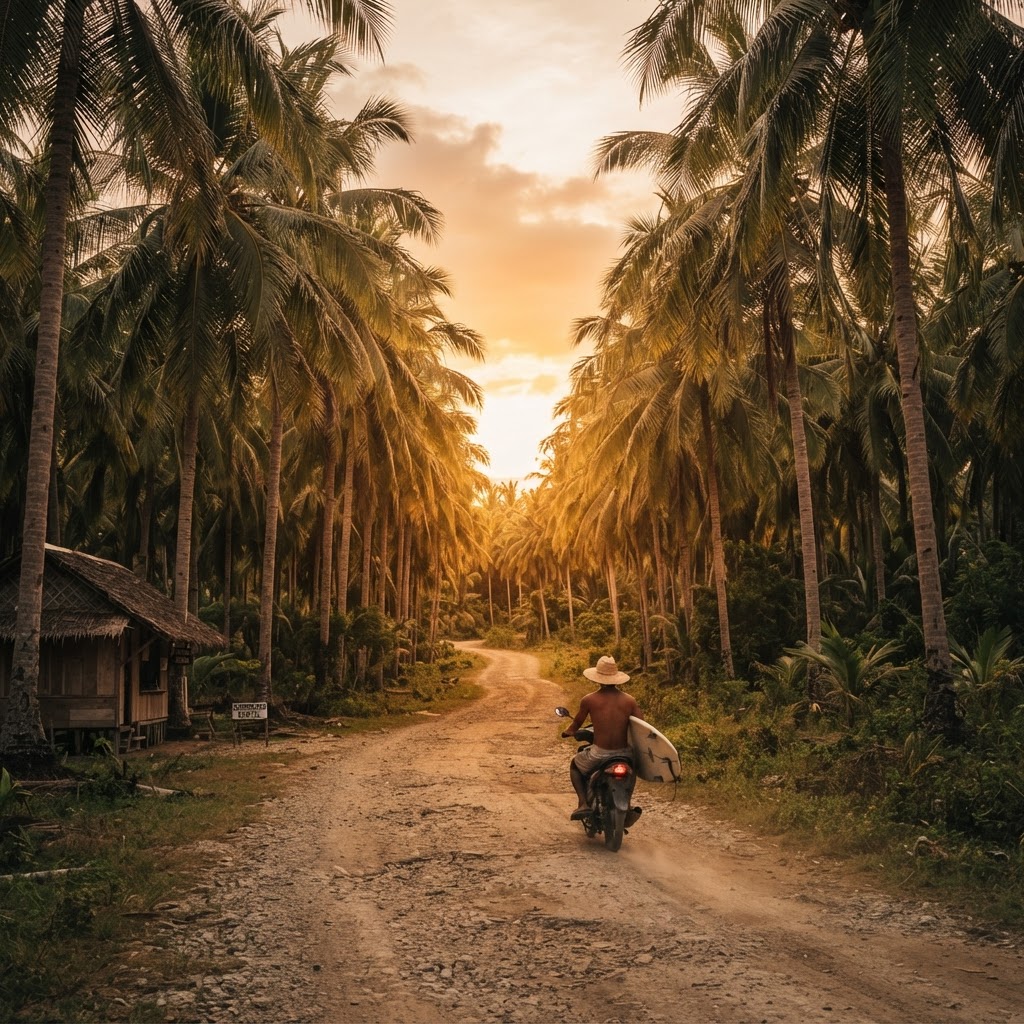
Siargao, Philippines
Philippines
World-class reef breaks, coconut-canopy backroads, and raw island pace
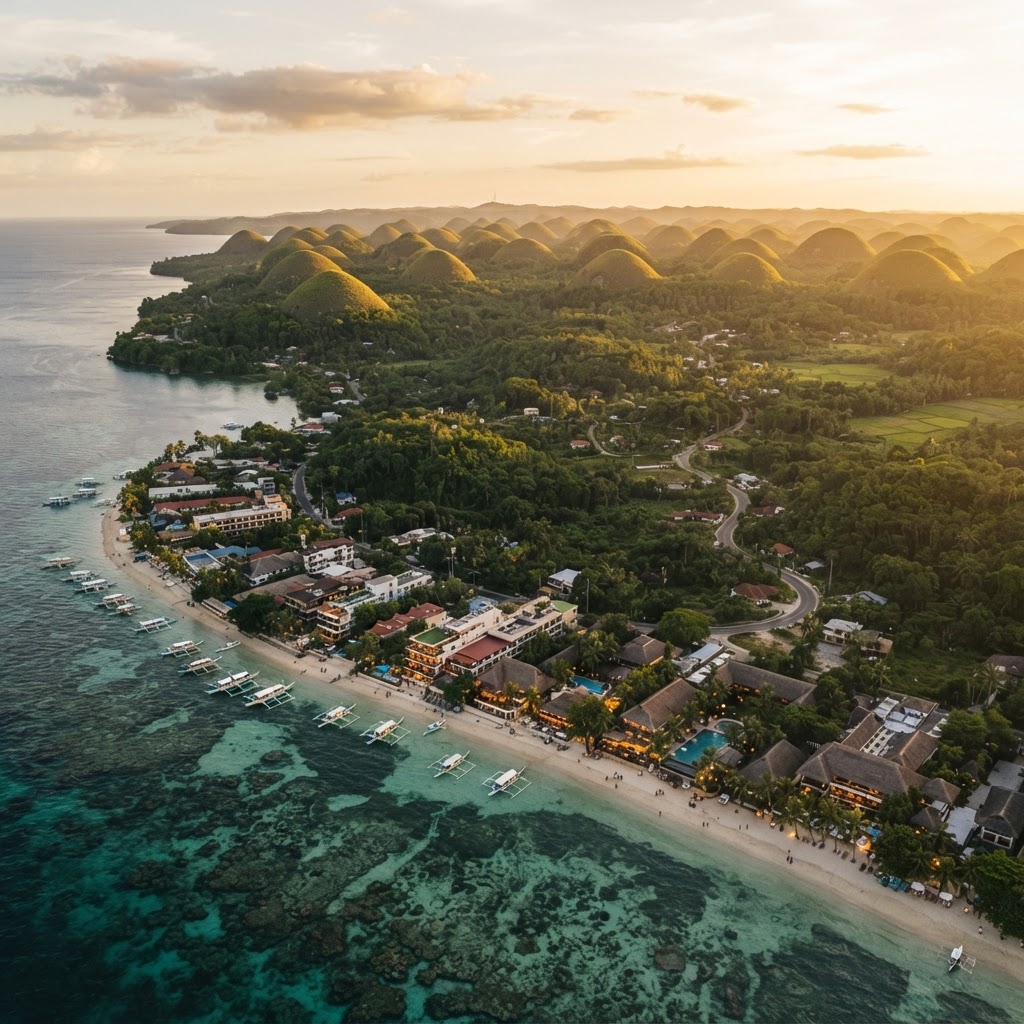
Bohol, Philippines
Philippines
Limestone karst hills, reef-fringed outposts, and a distinct split between resort strip and quiet interior.

Cebu, Philippines
Philippines
Urban heritage, roast lechon, and gateway to Visayan reefs and canyons
Readymade itineraries
Start from a tested template — then make it yours.
Ready to book
Lock in your Sagada, Philippines trip
Everything in one place. We may earn a small commission — it never costs you more.
Plan a trip to Sagada, Philippines
Pick a length and we'll build a day-by-day plan around how you travel — neighborhoods clustered, budget-aware, and editable.
Get better at planning trips like this
Occasional notes on planning smarter — no spam, unsubscribe anytime.
Plan a trip to Sagada, Philippines
Turn this guide into a day-by-day plan built around your pace, your group, and your budget.
Build my Sagada, Philippines trip