Philippines
Banaue, Philippines
Carved stone, emerald amphitheatres, and high-altitude endurance in Luzon's northern mountains
Plan & book
Sort your Banaue, Philippines trip in one place.
We point you to the booking tools we'd actually use — live prices, no markup. Or let us build the day-by-day plan around you first, then book.
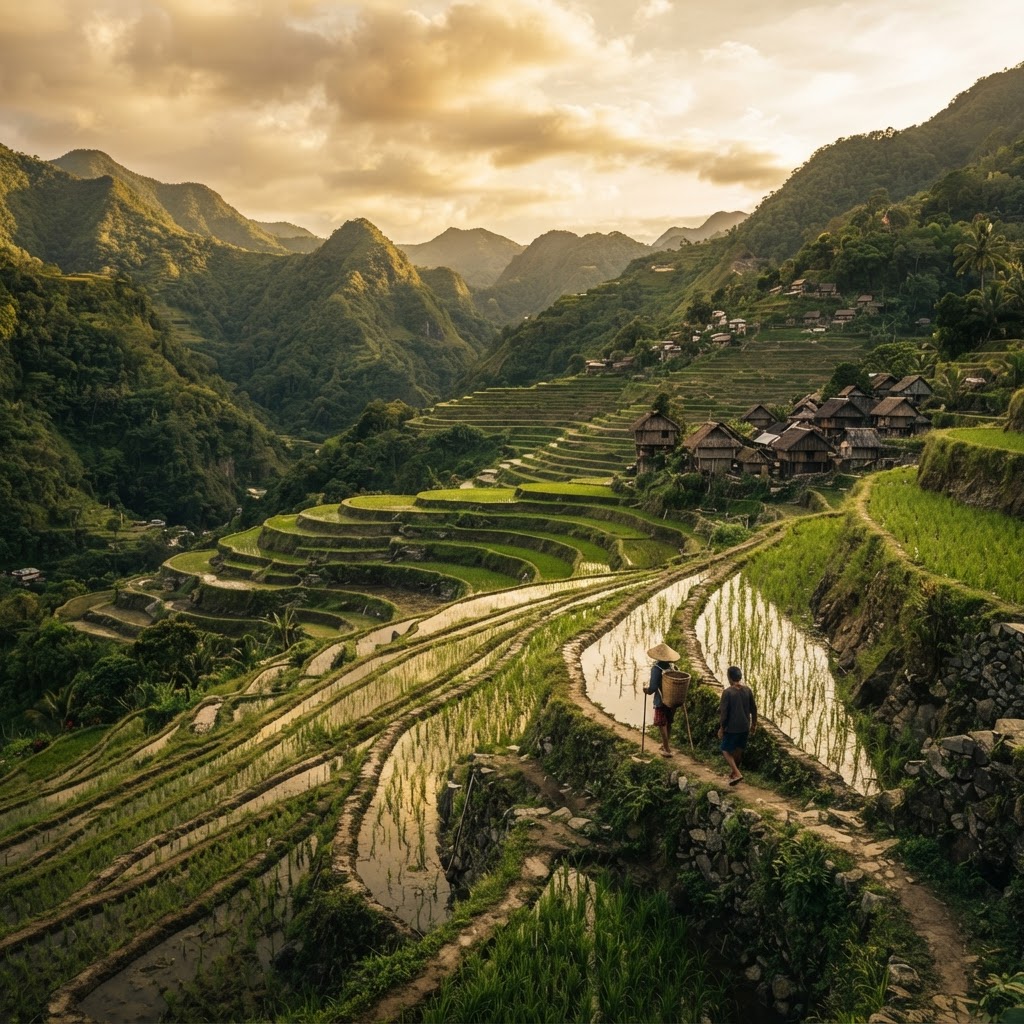
Banaue serves as the rugged gateway to the Cordillera mountain range's ancient agricultural monuments. Carved directly into steep mountain valleys over two millennia ago by the Ifugao people, the surrounding terraces—most notably Batad, Bangaan, and Hapao—represent extraordinary pre-colonial engineering. Reaching them demands a rigorous 9- to 10-hour overland mountain bus journey from Manila, filtering out casual day-trippers. Those who arrive find cold mountain air, woodcarving traditions, strenuous vertical treks along narrow stone terrace ledges, and rustic homestay hospitality.
3 to 4 days
Best time
March to May offers dry weather, open trails, and bright emerald green terraces prior to harvest.
Build your own trip with these prebuilt itineraries
Each one is a tested, day-by-day plan for Banaue, Philippines — start here, then make it yours.
4 Days Deep Cordillera Explorer in Banaue
Strenuous village-to-village hiking covering Bangaan, Cambulo, and remote terrace trails
3 Days in Banaue & Batad Valley in Banaue
First-time trekking highlights with an immersive overnight in the Batad amphitheater
2 Days Cultural & Scenic Overland in Banaue
Accessible heritage, viewpoints, and local Ifugao crafts without extreme vertical ascents
Go for the scale of high-altitude heritage that exists nowhere else on Earth. While the roadside terraces directly above Banaue Poblacion suffer from erosion and urban encroachment, using Banaue as an operations base allows access to Batad—a natural stone-walled amphitheater devoid of motorized transport—and Hapao's terraced valley hot springs. The reward is physical immersion in living, working cultural landscapes rather than passive sight-gazing from an observation deck.
Where to stay
Getting there
Getting around
Food & drink
What it costs
Things to do
Book tours & tickets in Banaue, PhilippinesSkip it if
Skip Banaue if you have acute knee or mobility issues, severe vertigo, or a low tolerance for rustic guesthouses with fluctuating Wi-Fi and intermittent hot water. It is equally unsuited to travelers on rigid short timelines who cannot spare two full days exclusively for arduous mountain transit.
When to go
Dry trail footing is critical when walking sheer 10-foot terrace drops, making March through May ideal despite warming midday temperatures. Visiting outside this window means balancing mud and landslide risks against dramatically different terrace aesthetics.
Peak (December to April)
Crisp mountain air and minimal rainfall make hiking trails safe and reliable. Terraces transition from flooded reflective pools in winter to vibrant green fields by April.
Shoulder (May to June & November)
May to June features lush, mature green stalks just before harvest, though afternoon showers increase. November brings post-monsoon clearing and seedling transplantation.
Low (July to October)
Monsoon rains and typhoons bring slick, dangerous terrace ledges, frequent road closures via rockslides, and persistent cloud cover obscuring valley views.
Neighborhoods
Where you stay shapes the trip. Here's how to think about it.
Banaue Poblacion
Rustic mountain transit hub and market settlement clinging to steep valley roads.
Best for:Logistical bases, solo travelers, and dining variety
Don't miss:Uyami's Greenview Lodge restaurant for native mountain coffee, tinola, and organizing village guides.
Batad Village
Car-free, colossal stone amphitheater defined by dirt trails, rooster calls, and off-grid quiet.
Best for:Serious hikers and travelers seeking village immersion
Don't miss:The arduous stone-step descent from the upper terrace viewpoints down to Tappiya Falls.
Bangaan
A quiet, tightly clustered UNESCO-listed living village situated directly inside a terrace bowl.
Best for:Cultural photography and moderate day treks
Don't miss:Viewing the intact cluster of traditional thatched Ifugao bale houses from the road ridge above.
Hapao Valley (Hungduan)
Wide, gently undulating stone-walled terraces flanking a rushing river valley with far fewer visitors.
Best for:Low-impact walking and hot spring soaks
Don't miss:Walking the river dikes all the way to Bogyah Hot Springs for a post-hike soak in natural thermal water.
Cambulo
Remote river valley community untouched by motorized roads, accessible only on foot.
Best for:Multi-day trekking routes and rustic homestays
Don't miss:The ridgeline trail section connecting Cambulo to Batad across pristine stone terrace walls.
Destination intelligence
Updated 9/14/2026The structured record we plan every Banaue, Philippines itinerary from.
Walkability
Low overall across the region due to extreme vertical relief; high within compact village boundaries provided travelers possess solid hiking fitness.
Transit quality
Basic and informal. Regular overnight buses connect to Manila, while regional transit relies on fixed-route or chartered passenger jeepneys and local tricycles.
Car needed
No. Personal car rental is discouraged due to steep, single-lane roads subject to rockslides and fog; public buses, tricycles, and chartered 4x4 jeepneys are standard.
Ideal duration
3 to 4 days
Minimum useful
2 days (requires two grueling overnight bus rides)
Peak season
December to April (dry season across Luzon, offering clear trail conditions and warm sunshine)
Shoulder season
May to June and November (planting periods and pre-monsoon shifts; May–June delivers lush green terrace views before harvest)
Low season
July to October (typhoon and heavy monsoon season; high risk of trail washouts, road-blocking landslides, and zero visibility)
Best for
Common mistakes
- Treating Batad merely as an afternoon day-trip instead of spending an overnight in the valley to experience dusk and dawn.
- Bringing heavy rolling hardshell suitcases instead of a compact, manageable backpack that you can personally haul up mountain stairs.
- Assuming every rice terrace is emerald-green all year round without verifying the local planting and harvesting agricultural calendar.
- Attempting to traverse narrow, unguarded terrace drop-offs without hiring an accredited local Ifugao guide.
- Underestimating the knees and leg strength required for constant, vertical ascent and descent on uneven stone blocks.
Best nearby
See what a trip to Philippines actually costs. Travel Budget Co.
How to plan it
- Do not book a day trip to Batad from Banaue Poblacion without staying overnight; sleeping in Batad lets you experience the valley in total silence before day hikers arrive.
- Pair Banaue with 2 days in Sagada to explore Sumaguing Cave and the hanging coffins, using the local passenger jeepneys via Bontoc to connect them.
- Reserve your Manila-to-Banaue overnight bus seats at least two weeks ahead during dry season weekends and Philippine holiday weeks, as buses sell out completely.
- Store your large rolling luggage at your Banaue Poblacion guesthouse or the tourist office, packing only a light 20-30L backpack for the trek into Batad.
- Hire your trekking guide directly at the Banaue Municipal Tourism Information Center upon morning arrival to ensure certified local rates and village compliance.
Questions
More in Philippines
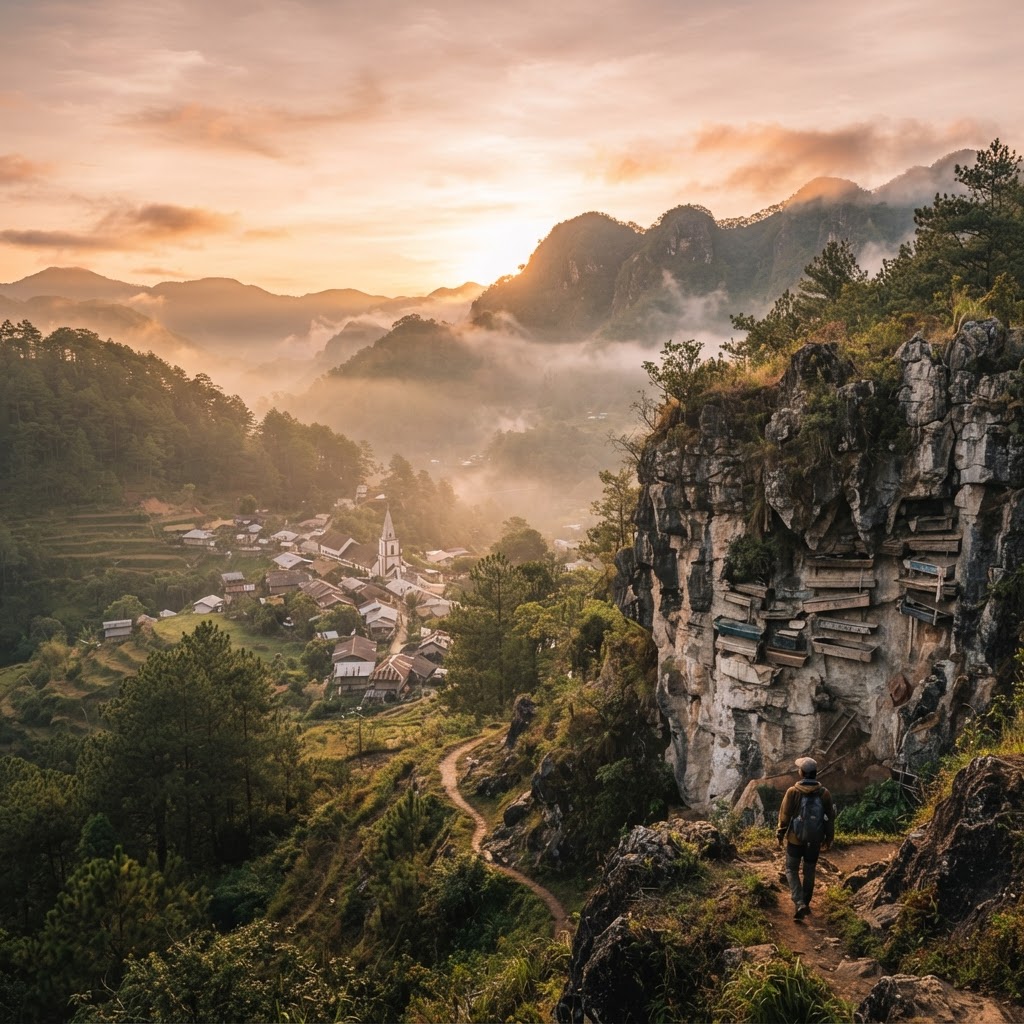
Sagada, Philippines
Philippines
A misty Cordillera sanctuary of pine ridges, subterranean rivers, and ancestral limestone cliff burials.
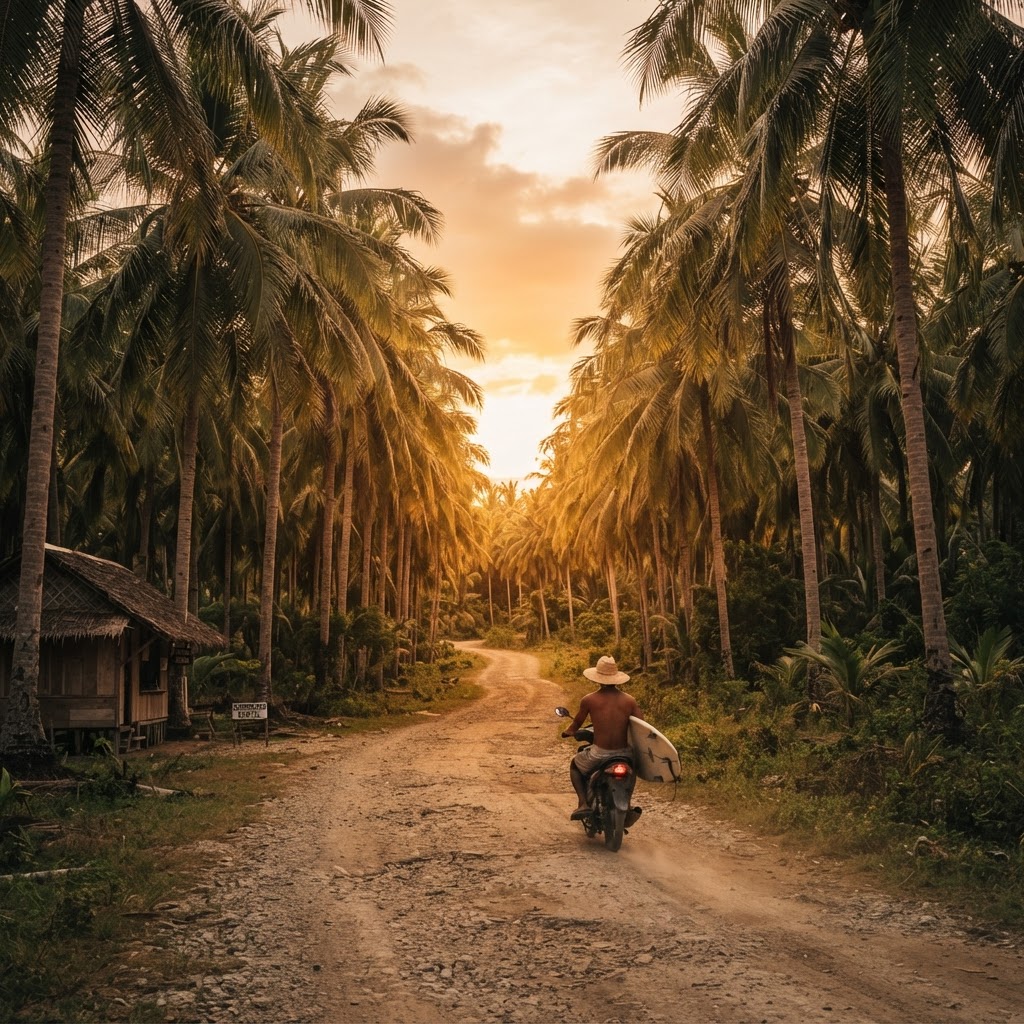
Siargao, Philippines
Philippines
World-class reef breaks, coconut-canopy backroads, and raw island pace
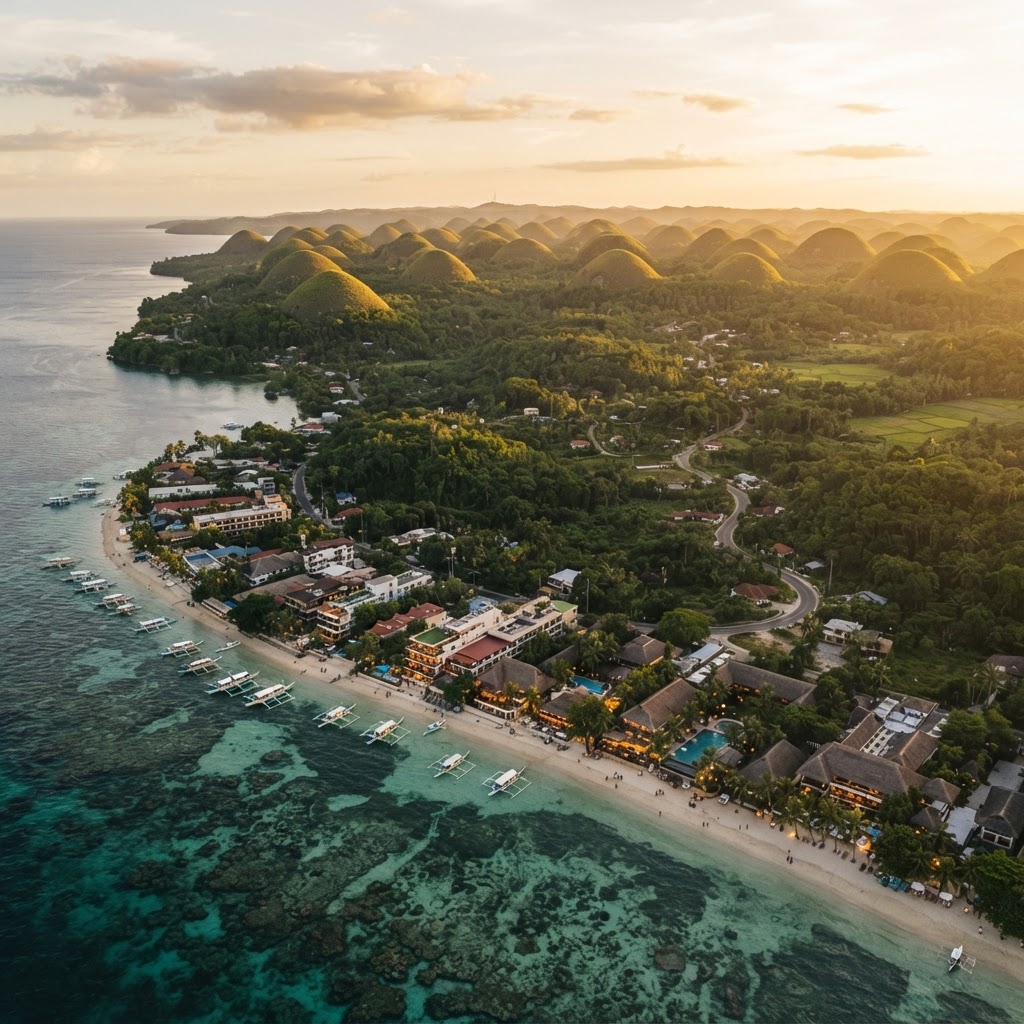
Bohol, Philippines
Philippines
Limestone karst hills, reef-fringed outposts, and a distinct split between resort strip and quiet interior.
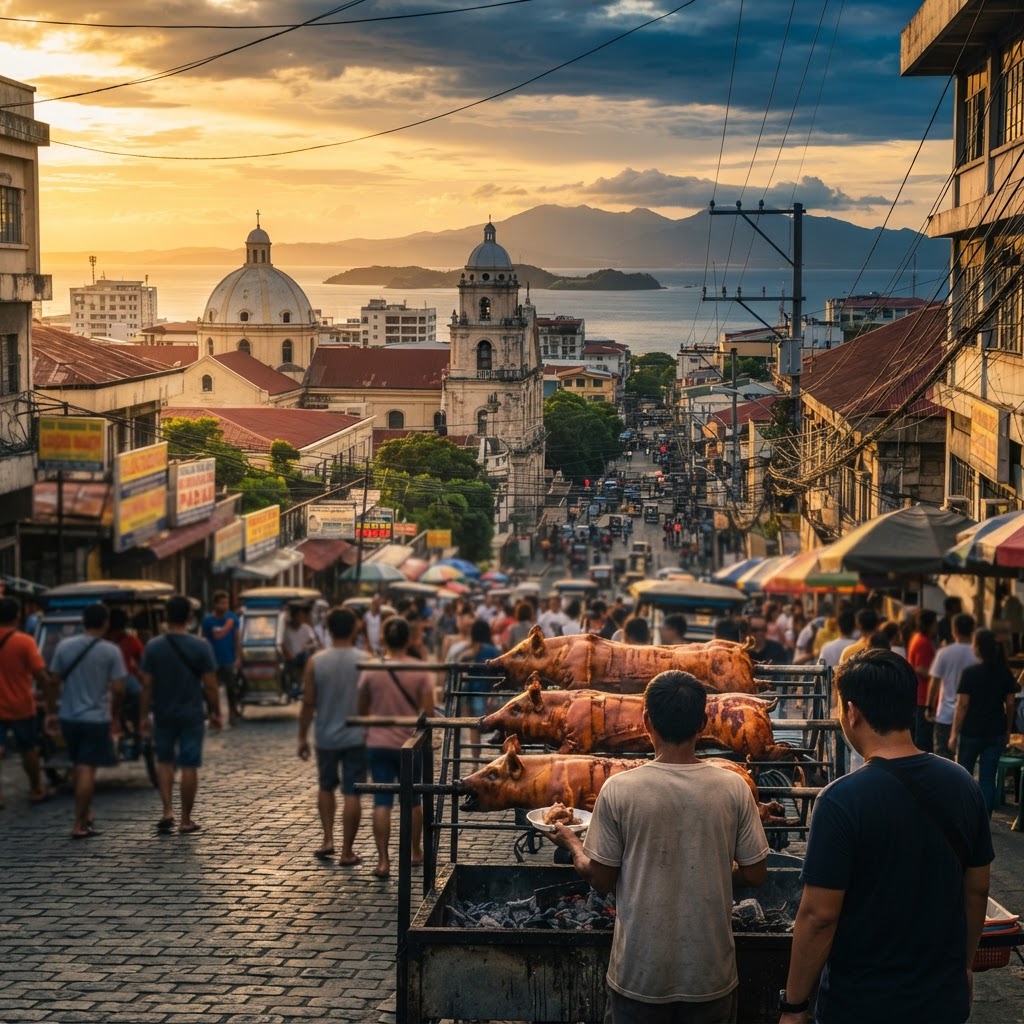
Cebu, Philippines
Philippines
Urban heritage, roast lechon, and gateway to Visayan reefs and canyons
Readymade itineraries
Start from a tested template — then make it yours.
Ready to book
Lock in your Banaue, Philippines trip
Everything in one place. We may earn a small commission — it never costs you more.
Plan a trip to Banaue, Philippines
Pick a length and we'll build a day-by-day plan around how you travel — neighborhoods clustered, budget-aware, and editable.
Get better at planning trips like this
Occasional notes on planning smarter — no spam, unsubscribe anytime.
Plan a trip to Banaue, Philippines
Turn this guide into a day-by-day plan built around your pace, your group, and your budget.
Build my Banaue, Philippines trip