Indonesia
Raja Ampat
The planet's richest marine wilderness, demanded on nature's terms
Plan & book
Sort your Raja Ampat trip in one place.
We point you to the booking tools we'd actually use — live prices, no markup. Or let us build the day-by-day plan around you first, then book.
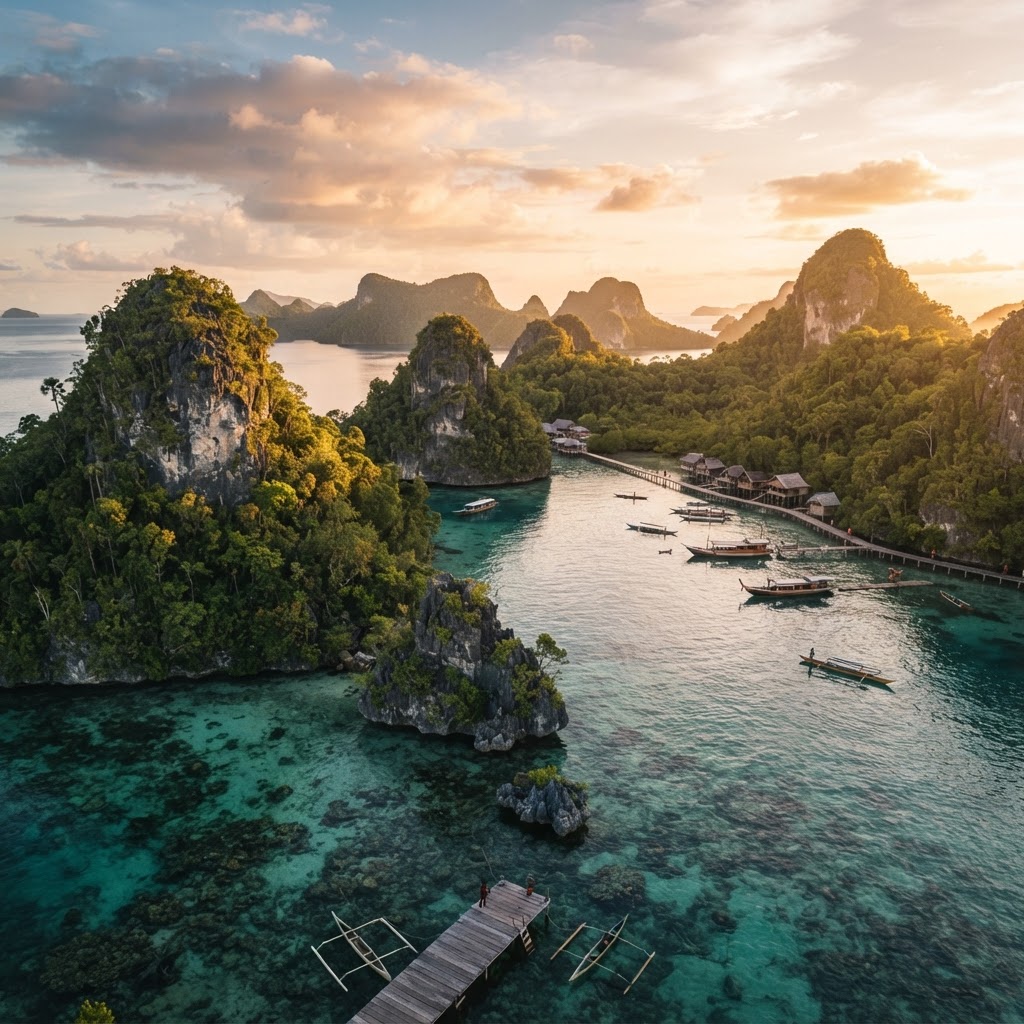
Scattered across the remote waters of Southwest Papua, Raja Ampat comprises more than 1,500 karst islands and atolls anchored in the epicenter of the Coral Triangle. Reaching it is an expedition involving long domestic flights through Jakarta or Makassar, followed by ferries from Sorong and wooden longboats across open water. What awaits is unmatched: 75% of all known coral species, thriving pelagic life, and emerald limestone islets rising out of mirror-calm shallows. This is not a classic beach vacation with beach clubs and manicured infinity pools; it is an unforgiving, high-reward frontier where daily rhythms are dictated by tides, marine park regulations, and generator power schedules.
10 to 12 days
Best time
October to April is the optimal window for diving, calm crossings, and pelagic wildlife.
Build your own trip with these prebuilt itineraries
Each one is a tested, day-by-day plan for Raja Ampat — start here, then make it yours.
10 Days of Remote Diving & Birds-of-Paradise Expedition in Raja Ampat
Advanced drift diving across world-class sites combined with early-morning endemic birding treks
7 Days in Central Raja Ampat: Classic Reefs & Viewpoints in Raja Ampat
Highlights of the Dampier Strait, classic viewpoints like Piaynemo, and accessible marine biodiversity
Raja Ampat is universally recognized by marine biologists and veteran divers as harboring the highest marine biodiversity on Earth. A single dive at sites like Cape Kri can register hundreds of species of fish alongside reef sharks, wobbegongs, and oceanic mantas. Beyond diving, the sheer visual drama of the Fam Islands and Wayag karst pinnacles, jungle treks to witness Red Birds of Paradise, and wild mangrove channels make it the ultimate pilgrimage for adventurous nature purists.
Where to stay
Getting there
Getting around
Food & drink
What it costs
Things to do
Book tours & tickets in Raja AmpatSkip it if
Travelers expecting standard resort nightlife, reliable air-conditioning, instant high-speed Wi-Fi, or accessible sandy promenades. It should also be skipped by anyone terrified of basic boat transfers, those prone to extreme seasickness, beginner divers who panic in strong downward or ripping currents, or travelers on a lightning-quick multi-city vacation through Southeast Asia.
When to go
This period brings mirror-flat seas in the Dampier Strait, crystal-clear water visibility, and massive aggregations of reef and oceanic manta rays. While occasional brief downpours happen year-round in the tropics, sea conditions outside this window can halt longboat transit altogether.
Peak (October to April)
Calmest ocean surfaces, peak manta ray season, and full liveaboard fleet operations; premium resorts book out 9 to 12 months in advance.
Shoulder (May to June & September)
Fewer visitors and lower occupancy at resorts, but water conditions remain workable with occasional rolling squalls and brief channel chop.
Low (July to August)
Strong southern winds generate rough open-ocean swells; longboat journeys between islands can be hazardous, and most liveaboards relocate to Komodo.
Neighborhoods
Where you stay shapes the trip. Here's how to think about it.
Pulau Kri
The social epicenter of Raja Ampat homestays and world-record house reefs, buzzes with scuba divers swapping stories on stilt decks.
Best for:Divers seeking world-class house reef diving and solo travelers wanting to split boat charters
Don't miss:Snorkeling directly off the homestay wooden jetties at slack tide, where schools of sweetlips, bumphead parrotfish, and reef sharks congregate in five feet of water.
Pulau Mansuar
Sprawling, heavily forested island offering upscale eco-dive resorts, traditional fishing villages, and quiet isolation.
Best for:Travelers wanting dedicated dive resort comfort, private dive boats, and proximity to manta aggregation points
Don't miss:Visiting Sawinggrai village early in the morning to see the Red Bird of Paradise courtship display in the canopy.
Pulau Gam
Dense mangroves, quiet channels, and emerald bays where the focus divides equally between jungle trekking and shallow reef drift.
Best for:Kayakers, birders, and travelers wanting peace far away from motorized boat traffic
Don't miss:Hiring a local tracker before dawn in Yenbeser or Sawinggrai to trek into the humid interior for Wilson's Bird of Paradise.
Pulau Arborek
A tiny, compact sandy islet surrounded by brilliant turquoise waters, known for traditional handicraft weaving and community-run homestays.
Best for:First-time visitors wanting village immersion and unmatched jetty snorkeling without long boat rides
Don't miss:Snorkeling under the Arborek village jetty, where dense bait balls swirl around giant gorgonian sea fans.
Pulau Misool (Southern Raja)
Towering labyrinthine karst towers, secluded marine reserves, and remote luxury eco-resorts far removed from the northern circuit.
Best for:Expedition travelers, serious divers, and affluent nature lovers who want stark isolation and sheer limestone topography
Don't miss:Drifting past the soft coral walls and pygmy seahorse sanctuaries inside the Misool Marine Reserve.
Destination intelligence
Updated 9/14/2026The structured record we plan every Raja Ampat itinerary from.
Walkability
Non-existent outside village footpaths. All genuine transit is by boat over open water.
Transit quality
Basic and rugged. Daily express ferries connect Sorong to Waisai; all onward transport relies on private longboat charters.
Car needed
Useless. Roads do not connect the archipelago; cars exist solely for local port-to-airport transfers in Sorong and Waisai.
Ideal duration
10 to 12 days
Minimum useful
7 days
Peak season
October to April (calmest seas, best underwater visibility, prime season for liveaboards and manta ray aggregations)
Shoulder season
May to June and September (occasional afternoon showers, calm water windows, significantly fewer visitors)
Low season
July to August (strong south winds, high swells in open channels, limited boat crossings, and liveaboards relocate away)
Best for
Common mistakes
- Booking flights out of Sorong on the same afternoon as your return boat from the islands; always sleep in Sorong the night before your outbound flight due to frequent sea crossing delays
- Underestimating internal boat transfer costs, which run $50 to $200+ per boat ride due to remote fuel surcharges
- Attempting a rushed 3-to-4-day weekend trip; the transit overhead will swallow half your itinerary
- Arriving without enough Indonesian Rupiah cash; ATMs on the islands are nonexistent outside Waisai, and homestays cannot take credit cards
- Visiting in July or August expecting mirror-calm seas, when southern winds trigger high chop and complicate small-boat transfers
- Diving without drift experience; currents here are fierce and require comfort with negative entries and reef hooks
Best nearby
See what a trip to Indonesia actually costs. Travel Budget Co.
How to plan it
- Base yourself on Pulau Kri or Pulau Gam for your first 5 days to stay close to classic Dampier Strait dive sites and minimize private boat fuel costs.
- Do not attempt to visit the Wayag karst pinnacles as a day trip from central homestays unless you have four to six travelers to split the exorbitant $800 to $1,200 fuel charter.
- Always schedule a buffer night in Sorong or Jakarta on your return route to ensure domestic airline delays do not cause you to miss your long-haul international connection.
- Withdraw sufficient Indonesian Rupiah cash at Sorong airport ATMs before taking the ferry, as outer islands have zero cash machines and virtually no card terminals.
- Bring your own high-grade mask, snorkel, and dive computer; rental gear at budget homestays is frequently tired, ill-fitting, or unavailable.
Questions
More in Indonesia
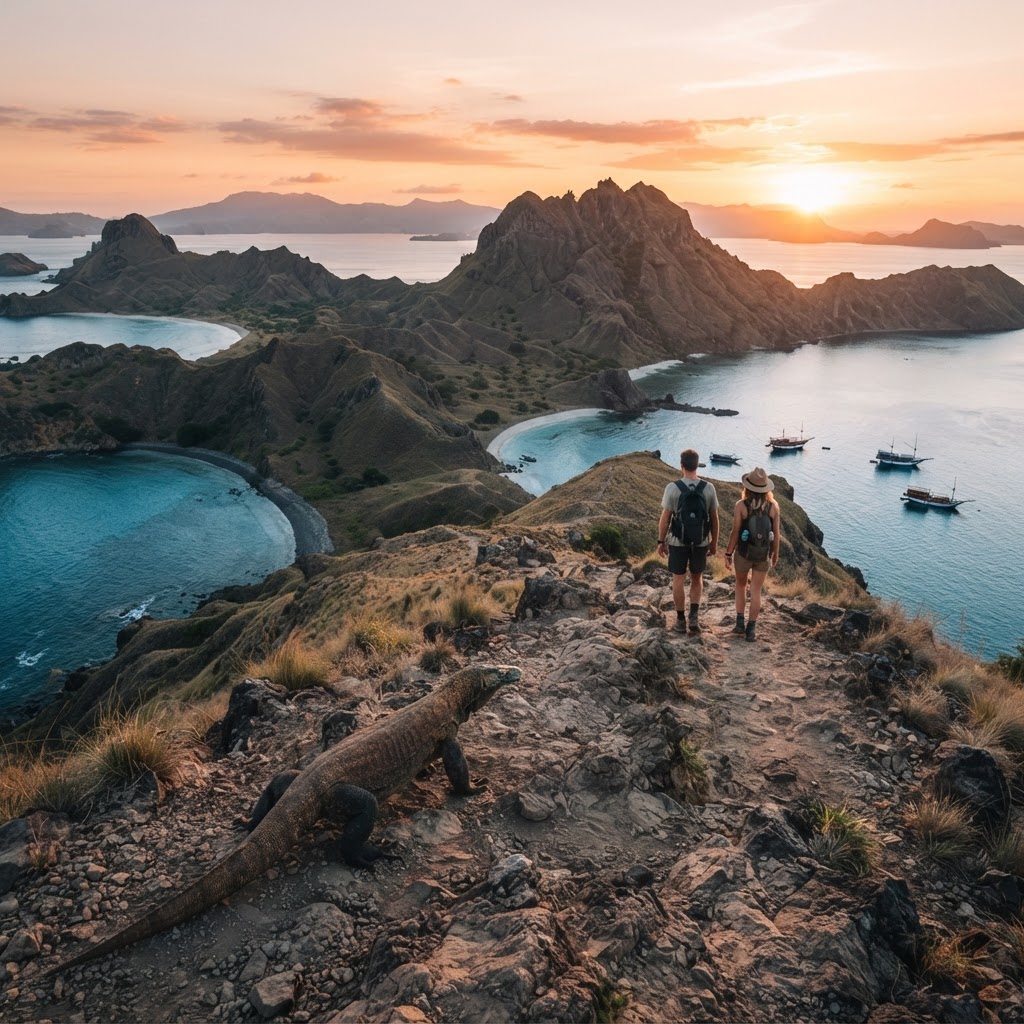
Flores
Indonesia
Volcanic ridges, prehistoric dragons, and the rugged gateway to Komodo
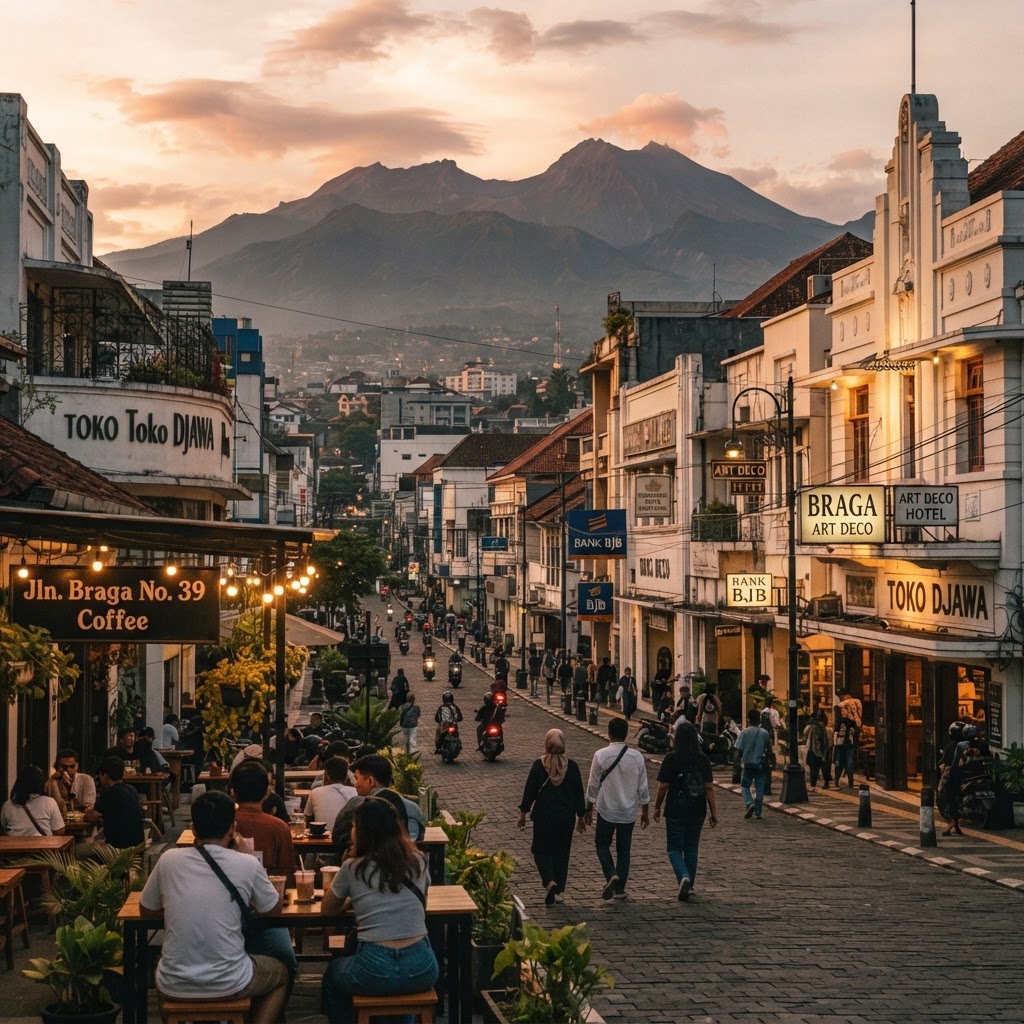
Bandung
Indonesia
Volcanic craters, Dutch Art Deco boulevards, and Java's coolest highland cafe culture
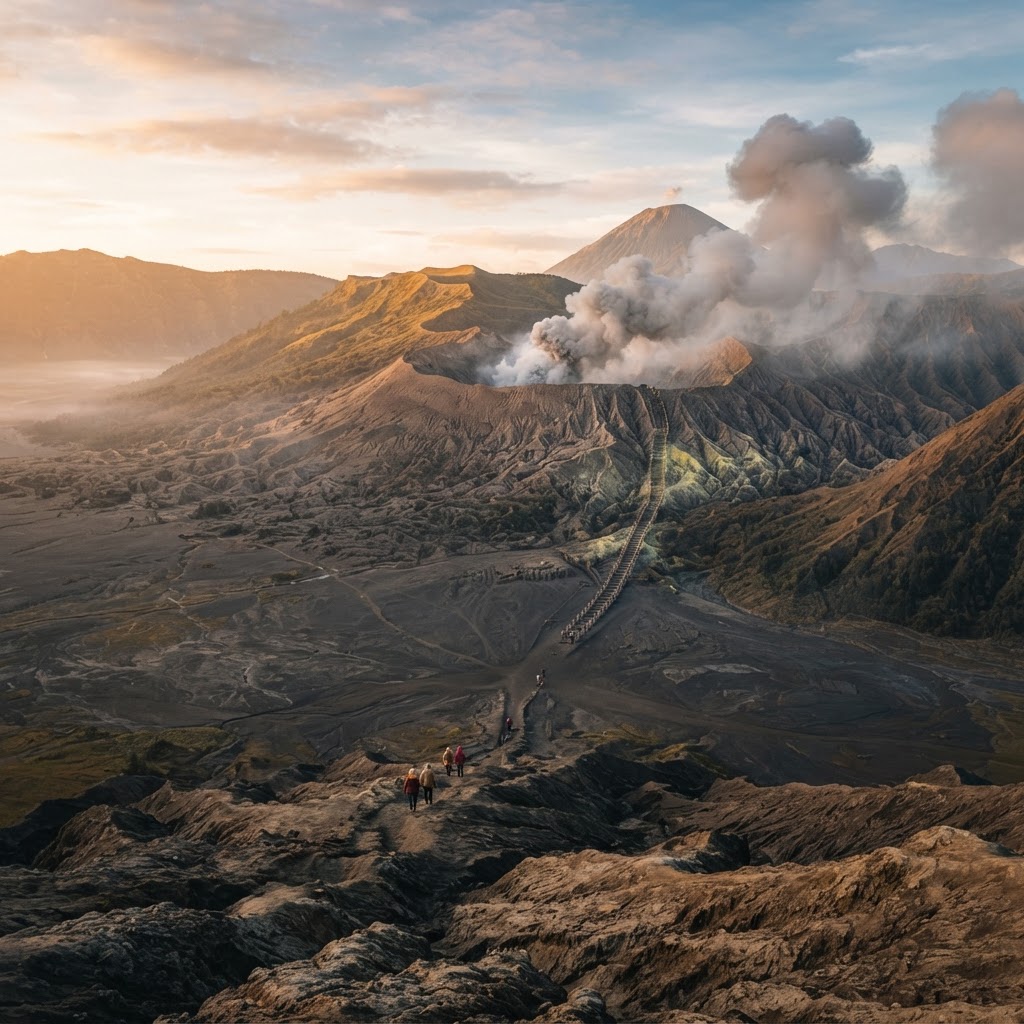
Mount Bromo, East Java, Indonesia
Indonesia
An otherworldly caldera crossing with direct access to a roaring volcanic crater.
Readymade itineraries
Start from a tested template — then make it yours.
Ready to book
Lock in your Raja Ampat trip
Everything in one place. We may earn a small commission — it never costs you more.
Plan a trip to Raja Ampat
Pick a length and we'll build a day-by-day plan around how you travel — neighborhoods clustered, budget-aware, and editable.
Get better at planning trips like this
Occasional notes on planning smarter — no spam, unsubscribe anytime.
Plan a trip to Raja Ampat
Turn this guide into a day-by-day plan built around your pace, your group, and your budget.
Build my Raja Ampat trip