Malaysia
Perhentian Islands
Unspoiled coral reefs, rustic beach living, and roadless ease off Malaysia’s east coast.
Plan & book
Sort your Perhentian Islands trip in one place.
We point you to the booking tools we'd actually use — live prices, no markup. Or let us build the day-by-day plan around you first, then book.
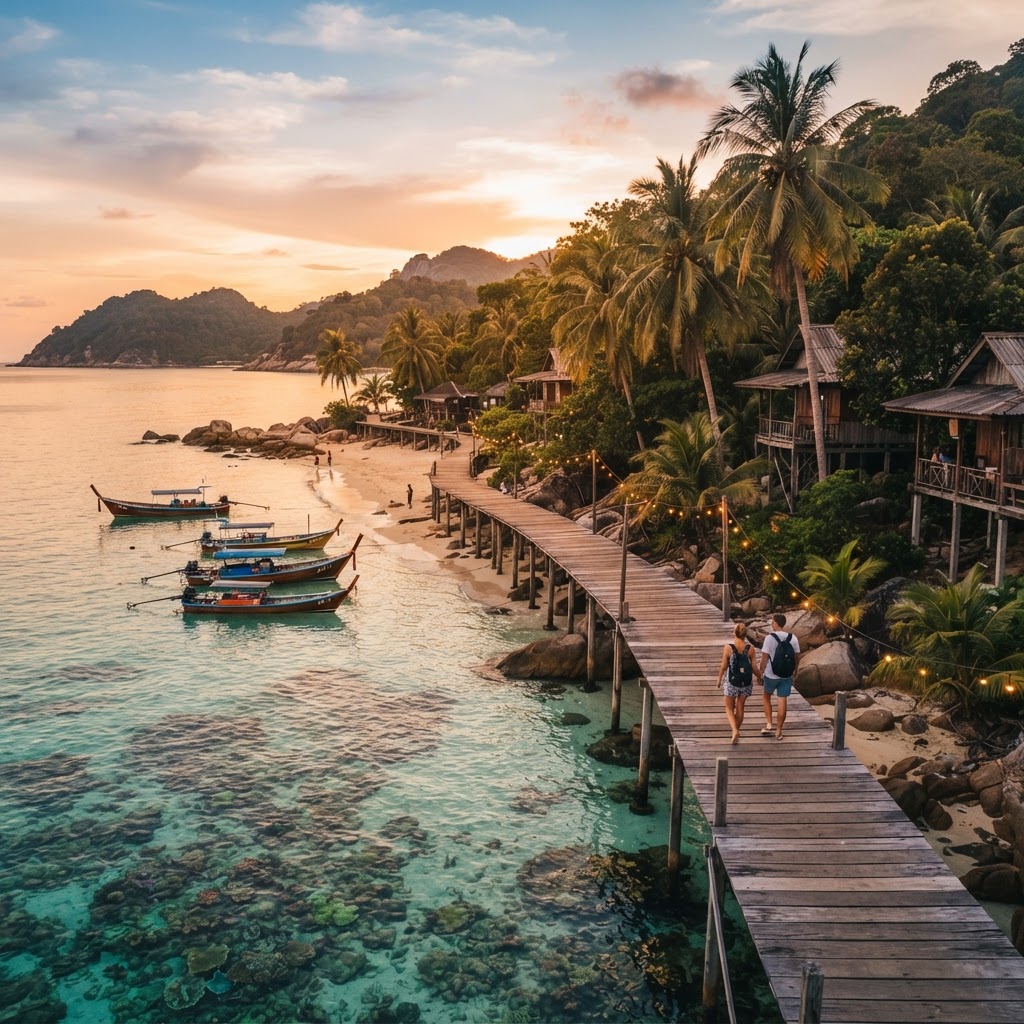
Perched off the northeastern coast of Peninsular Malaysia, the Perhentian archipelago—primarily Pulau Perhentian Besar (the large island) and Pulau Perhentian Kecil (the small island)—remains one of Southeast Asia's purest beach sanctuaries. There are no paved road networks, no cars, and very limited automated banking. Instead, dense jungle trails drop down to white-powder sands and protected marine reserves where blacktip reef sharks, green sea turtles, and clownfish swim just yards from shore. It offers an increasingly rare, low-fi island lifestyle built entirely around tides, snorkeling boats, and simple open-air beach dining.
4 to 5 days
Best time
May to June or early September for calm seas, peak visibility, and manageable lodging competition.
Build your own trip with these prebuilt itineraries
Each one is a tested, day-by-day plan for Perhentian Islands — start here, then make it yours.
5 Days of Unplugged Tropical Seclusion in Perhentian Islands
Quiet beachfront chalet relaxation, kayak excursions, and gentle coastal retreats on Perhentian Besar
4 Days of Coral Reefs & Marine Exploration in Perhentian Islands
A dedicated diving and snorkeling circuit covering offshore pinnacle sites, turtle sanctuaries, and shark points
3 Days of Rustic Island Vibes & Backpacking in Perhentian Islands
Budget beach shacks, jungle trail hiking between bays, and lively sunset beach bars on Perhentian Kecil
Go for world-class, accessible marine life without the extreme isolation or five-star resort price tag of the outer Pacific. You can snorkel directly off beaches like Teluk Keke or Turtle Beach and swim alongside turtles and reef sharks. It delivers an authentic, laid-back island routine: wake up, dive or snorkel warm reefs, trek jungle trails between bays, and settle into barefoot dinners on the sand.
Where to stay
Getting there
Getting around
Food & drink
What it costs
Things to do
Book tours & tickets in Perhentian IslandsSkip it if
Skip the Perhentians if you need seamless luxury infrastructure, five-star international chain amenities, smooth paved transport, or a bustling urban café scene. Travelers with mobility limitations will struggle with boat beach-landings and uneven sand paths, and anyone traveling during the wet monsoon (November–February) should head to Malaysia's west coast (e.g., Langkawi or Penang) instead.
When to go
July and August offer the best diving visibility and dry skies, but long queues for boat taxis and inflated room rates can wear on you. Visiting during the shoulder months gives you 90% of peak water clarity without scrambling for unbooked beach chalets.
Peak (July to August)
Crystal-clear visibility, smooth seas, and buzzing beach bars. Every reliable room is booked months ahead, water taxis charge full prices, and dive boats are full.
Shoulder (April to June & September to early October)
Optimal balance of warm tropical weather, low rainfall, calmer beaches, and lower lodging rates. Sea visibility is reliably strong.
Low (Late October to February)
The Northeast Monsoon shuts the islands down. Ferries cease regular operation due to dangerous swells, heavy torrential rains hit, and nearly all resorts board up.
Neighborhoods
Where you stay shapes the trip. Here's how to think about it.
Long Beach (Pulau Perhentian Kecil)
High-energy backpacker hub with rustic beach shanties, nightly fire dancers, open-air beach bars, and boat taxis constantly buzzing in.
Best for:Backpackers, solo travelers, divers, and nightlife seekers
Don't miss:The rugged jungle trail climb behind BuBu Resort up to the Perhentian Windmill viewpoint overlooking the twin islands.
Coral Bay / Teluk Aur (Pulau Perhentian Kecil)
Laid-back, sunset-facing bay with casual beachfront seafood barbecues, quiet wooden chalets, and a calm alternative to Long Beach.
Best for:Budget couples, sunset chasers, and travelers wanting Kecil convenience without the thumping bass
Don't miss:Catching dramatic orange sunsets over the South China Sea from Amelia Cafe’s beachfront tables before walking the 15-minute paved path to Long Beach.
Teluk Pauh & Marine Sanctuary (Pulau Perhentian Besar)
Pristine, tranquil, white-sand cove cradled by jungle cliffs, offering the islands' best walk-in sea turtle and coral snorkeling directly from shore.
Best for:Snorkelers, honeymooners, and families who prioritize sleep and nature over social scenes
Don't miss:Wading out directly into the seagrass meadows off the Perhentian Island Resort jetty early in the morning to swim alongside wild green sea turtles.
Teluk Keke & Southwestern Coast (Pulau Perhentian Besar)
Quiet, reef-fringed shoreline dominated by low-slung, family-run chalets, shaded hammocks, and shallow turquoise shallows.
Best for:Relaxation seekers, families with young children, and independent travelers wanting zero noise
Don't miss:Snorkeling off the rocky headland between Tuna Bay and Abdul's Chalet, where clownfish colonies live just yards from your balcony.
Teluk Dalam (Pulau Perhentian Besar)
Secluded, expansive southern sweep of sand home to upscale eco-resorts, thick primary rainforest backing, and quiet ocean breezes.
Best for:Upscale resort travelers, wellness seekers, and couples craving isolation
Don't miss:The jungle trekking trail that crosses through the island interior over to Teluk Pauh for spotting dusky leaf monkeys and monitor lizards.
Pasir Hantu & Petani Beach (Pulau Perhentian Kecil)
Sleepy, tucked-away southern enclave centered around boutique eco-lodges, offering undisturbed reefs and complete distance from the crowds.
Best for:Boutique lovers and travelers looking to completely disconnect from the beaten track
Don't miss:A boat charter around to secluded spots like Romantic Beach for untouched private swimming.
Destination intelligence
Updated 9/14/2026The structured record we plan every Perhentian Islands itinerary from.
Walkability
High within individual beaches and between connected bays via jungle paths, but inter-beach transit across the islands requires water taxis.
Transit quality
Limited. Island transit relies entirely on licensed small motorboat water taxis negotiated on the spot.
Car needed
Never. There are no roads or vehicles on the islands.
Ideal duration
4 to 5 days
Minimum useful
3 days
Peak season
July to August (crystal-clear sea visibility, peak international and domestic holidaymaker crowds, premium lodging rates).
Shoulder season
April to June and September (excellent diving conditions, sunny skies, manageable crowds, and easier chalet availability).
Low season
Late October to February (Northeast Monsoon; seas are dangerous, heavy rains hit, and the majority of resorts close).
Best for
Common mistakes
- Visiting between November and February during the Northeast Monsoon, when ferry operations cease, seas turn hazardous, and most resorts and restaurants shut down entirely.
- Failing to bring sufficient Malaysian Ringgit cash. There are virtually no reliable ATMs on the islands, card payment terminals frequently lose signal, and card fees typically add 3% to 5%.
- Packing heavy rolling suitcases. Boarding and disembarking speedboats often involves wading through knee-deep surf onto sandy beaches without piers.
- Booking the wrong island for your style: expecting tranquil silence at Long Beach (Kecil) or expecting budget hostels and late-night beach bars on Perhentian Besar.
Best nearby
See what a trip to Malaysia actually costs. Travel Budget Co.
How to plan it
- Stay on Perhentian Kecil’s Coral Bay if you want quick walking access to Long Beach’s nightlife without the late-night bass vibrating your wooden bungalow.
- Pair your island trip with an overnight food run in Kota Bharu to taste authentic Kelantanese Nasi Dagang before heading south to the Kuala Besut pier.
- Don't try to visit both islands via water taxi for every meal; boat fares after dark double in price, making dining on your home island far more economical.
- Book your chalets at least 3 to 4 months in advance if traveling in July or August; quality beachfront rooms on Perhentian Besar sell out quickly.
- Organize a private morning snorkeling charter around Teluk KK, Shark Point, and Turtle Point rather than joining packed 20-person group tour boats.
Questions
More in Malaysia

Taman Negara
Malaysia
Unfiltered exploration across 130-million-year-old primary equatorial rainforest
Tioman Island, Malaysia
Malaysia
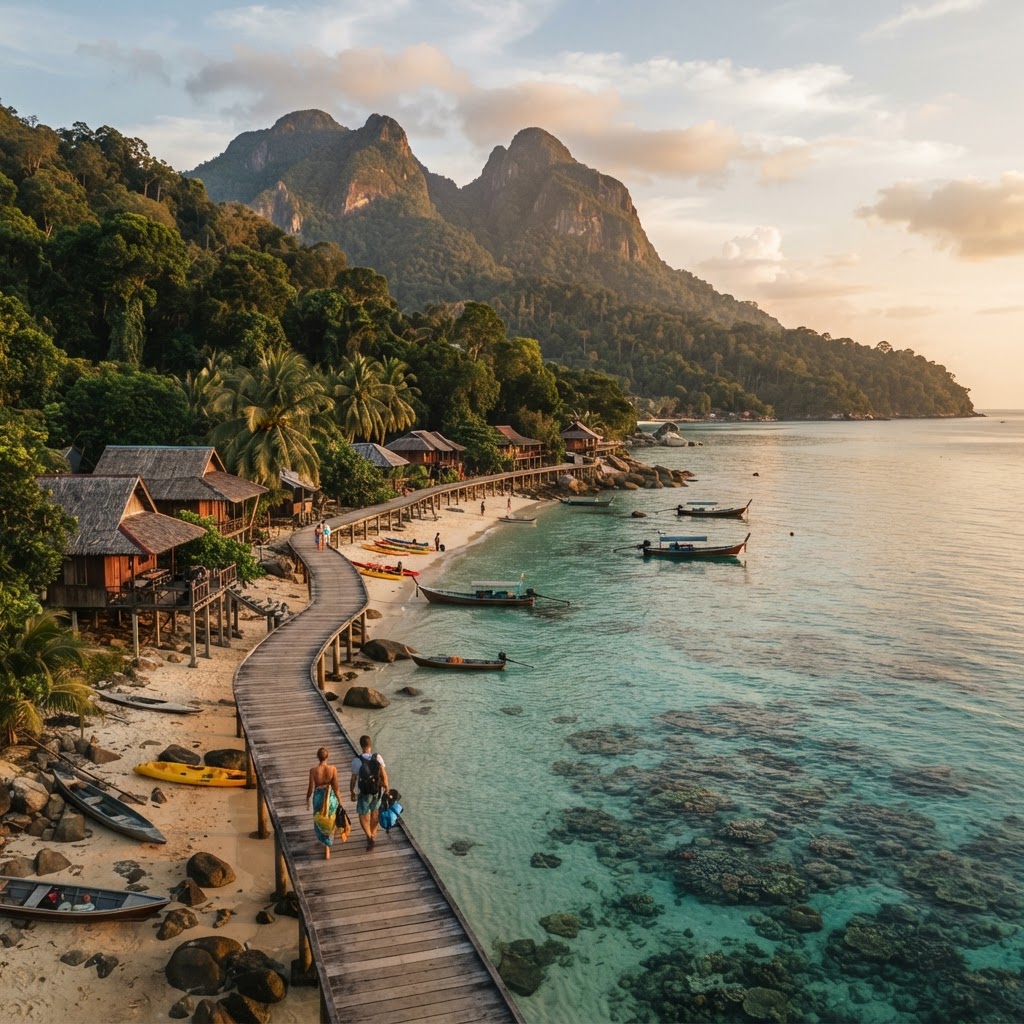
Dense granite jungle meets protected coral reefs on a slow-paced, roadless island escape.
Kuching, Malaysia
Malaysia
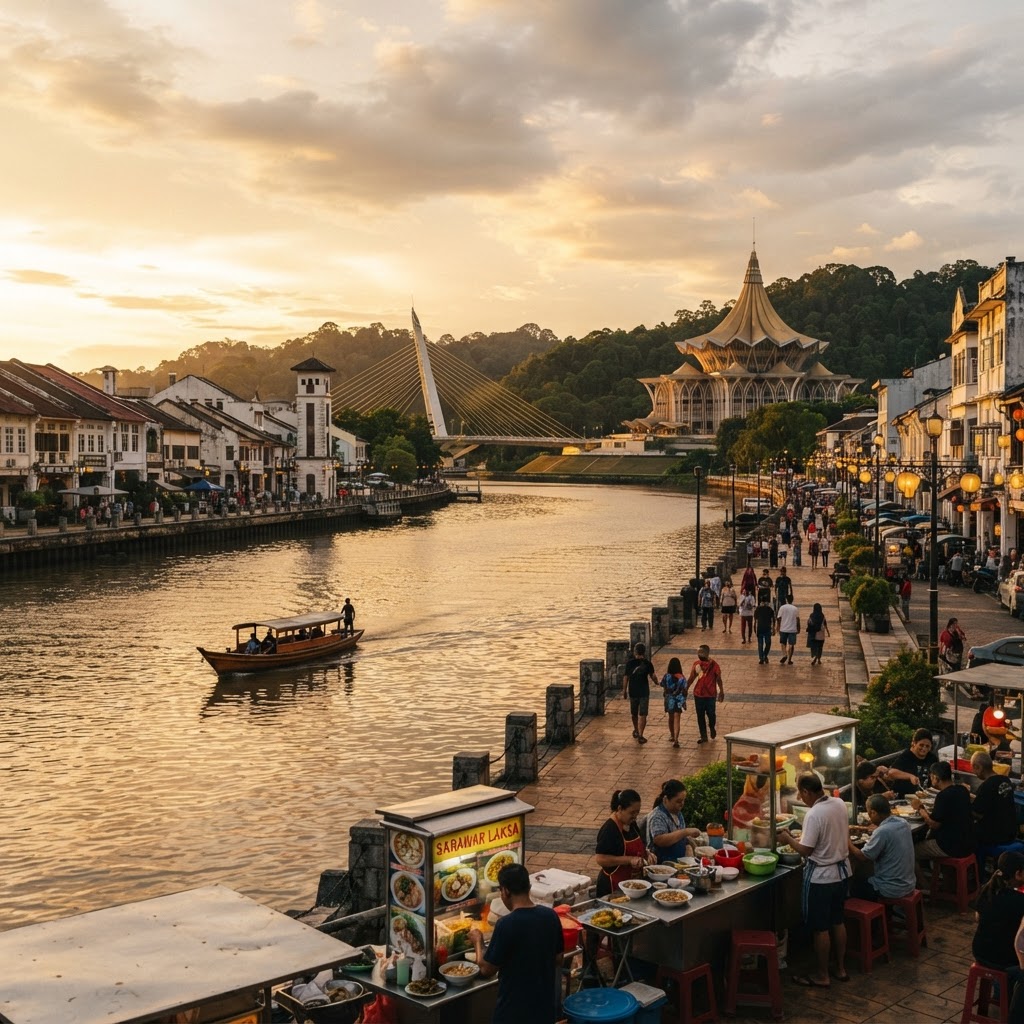
Colonial riverfronts, UNESCO-recognized gastronomy, and accessible Borneo wilderness.
Readymade itineraries
Start from a tested template — then make it yours.
Ready to book
Lock in your Perhentian Islands trip
Everything in one place. We may earn a small commission — it never costs you more.
Plan a trip to Perhentian Islands
Pick a length and we'll build a day-by-day plan around how you travel — neighborhoods clustered, budget-aware, and editable.
Get better at planning trips like this
Occasional notes on planning smarter — no spam, unsubscribe anytime.
Plan a trip to Perhentian Islands
Turn this guide into a day-by-day plan built around your pace, your group, and your budget.
Build my Perhentian Islands trip