Chile
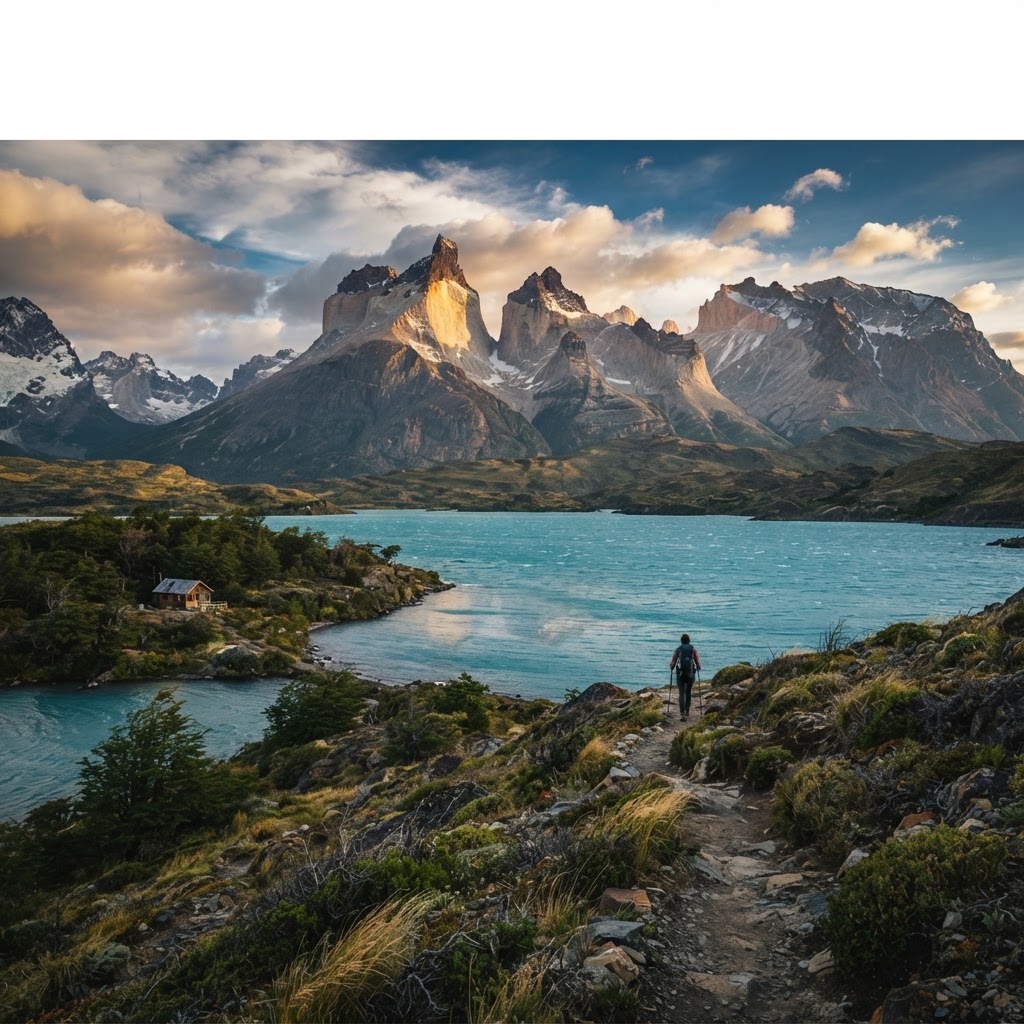
Torres del Paine, Patagonia
Granite spires, ferocious winds, and turquoise glacial lakes at the edge of the world.
Plan & book
Sort your Torres del Paine, Patagonia trip in one place.
We point you to the booking tools we'd actually use — live prices, no markup. Or let us build the day-by-day plan around you first, then book.
Torres del Paine National Park is Chilean Patagonia's centerpiece, defined by the sheer diorite horns of Los Cuernos, the iconic granite towers of Las Torres, and the massive southern ice sheet feeding Lago Grey. It is an extraordinary wilderness playground built around a sharply bifurcated traveler model: backcountry hikers trekking the hut-to-hut W or O circuits, and luxury or road-tripping explorers operating from full-service estancias and lodges inside and outside the perimeter.
5 to 6 days
Build your own trip with these prebuilt itineraries
Each one is a tested, day-by-day plan for Torres del Paine, Patagonia — start here, then make it yours.
7 Days Wild Patagonia & Safari in Patagonia/Torres del Paine
Luxury lodge immersion combining puma tracking, estancia culture, and remote navigation on Lake Grey
4 Days Scenic Self-Drive & Day Hikes in Patagonia/Torres del Paine
Flexible road-based adventure visiting miradors, waterfalls, and easy trails with comfortable hotel stays
5 Days on the Classic W-Trek in Patagonia/Torres del Paine
Endurance trekking refuge-to-refuge covering Base Las Torres, French Valley, and Grey Glacier
Go for landscapes on an incomprehensible scale that you cannot experience from a roadside viewpoint in most of the world. Standing below the three granite towers at sunrise or feeling 80 km/h winds sweep across the milky-blue water of Lago Pehoe makes it one of the premier trekking and wild-landscape destinations on earth.
Where to stay
Getting there
Getting around
Food & drink
What it costs
Skip it if
Skip it if you have severe mobility limitations or strongly dislike unpredictable, harsh weather. Travelers seeking vibrant city nightlife, seamless low-stress public transport, or affordable self-catered wandering should look elsewhere in Chile.
Destination intelligence
Updated 9/13/2026The structured record we plan every Torres del Paine, Patagonia itinerary from.
Walkability
Trek-dependent. 0/5 for urban walkability inside the park (vast wilderness requiring vehicles or boat transfers); 5/5 pedestrian ease once on marked trekking trails.
Transit quality
Moderate. Regular seasonal tourist buses run from Puerto Natales to park gates (Laguna Amarga, Pudeto, Administration), complemented by the Pudeto catamaran.
Car needed
Optional for trek-focused travelers using shuttles; highly recommended for non-trekkers who want to explore viewpoints and lakes at their own pace.
Ideal duration
5 to 6 days
Minimum useful
3 days
Peak season
December to February. Longest daylight (16+ hours) and warmest temperatures (10–18°C), but highest prices, peak crowds, and extreme Patagonian wind.
Shoulder season
October to November and March to April. Autumn foliage turns scarlet in April; reduced winds and lighter crowds, though days are shorter and nights drop below freezing.
Low season
May to September (Austral Winter). Most refugios close; snow covers high passes; requires specialized guided winter tours and park permits.
Best for
Common mistakes
- Failing to reserve W or O Trek refugios and campsites 6 to 9 months in advance (wild camping outside registered sites is strictly illegal).
- Underestimating Patagonian weather; gale-force winds and sudden sub-zero sleet happen in the middle of summer, making proper technical waterproofs non-negotiable.
- Booking a rental car with standard highway tires and no full damage cover for the harsh unpaved gravel roads.
- Attempting day trips directly from Punta Arenas instead of basing in Puerto Natales or inside the park.
Best nearby
More in Chile
Readymade itineraries
Start from a tested template — then make it yours.
Ready to book
Lock in your Torres del Paine, Patagonia trip
Everything in one place. We may earn a small commission — it never costs you more.
Plan a trip to Torres del Paine, Patagonia
Pick a length and we'll build a day-by-day plan around how you travel — neighborhoods clustered, budget-aware, and editable.
Get better at planning trips like this
Occasional notes on planning smarter — no spam, unsubscribe anytime.
Plan a trip to Torres del Paine, Patagonia
Turn this guide into a day-by-day plan built around your pace, your group, and your budget.
Build my Torres del Paine, Patagonia trip