Thailand
Pai
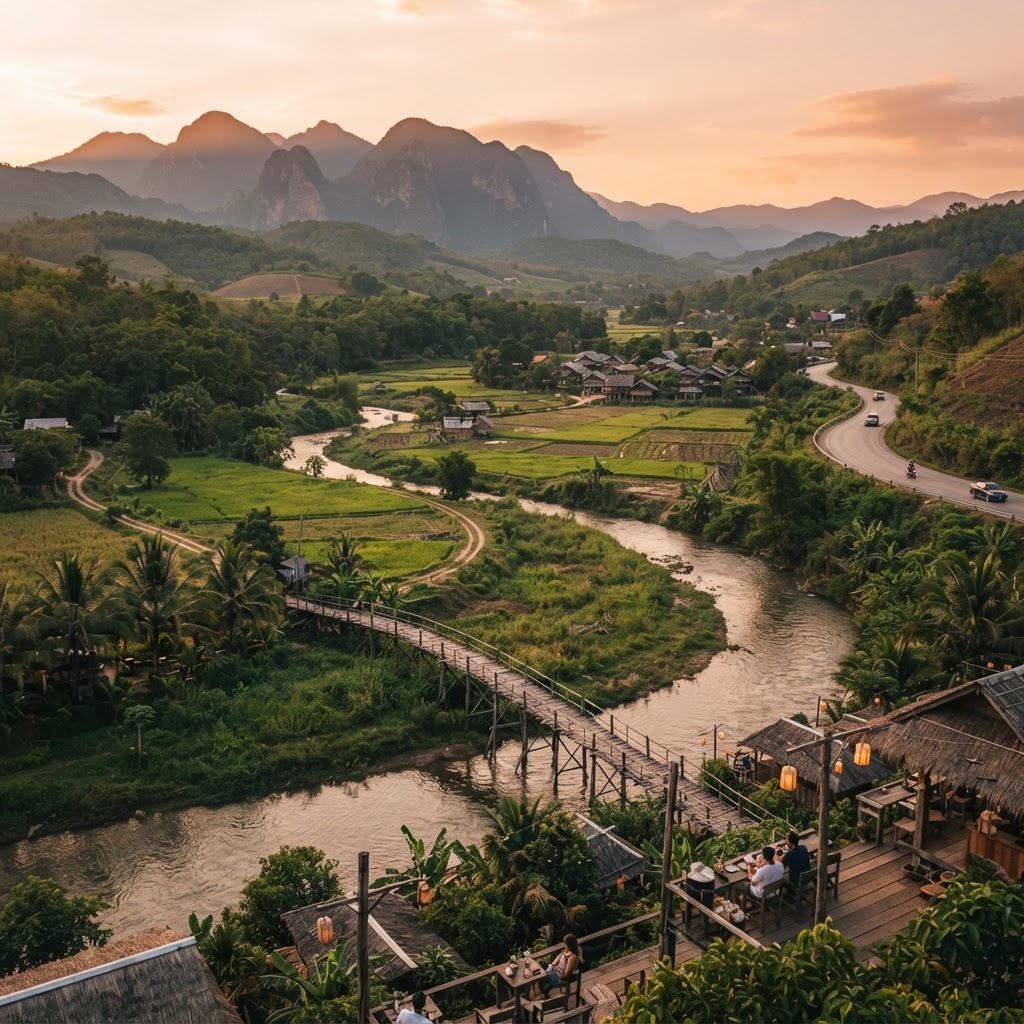
Mountain valley living where river bends, road trips, and cafe rituals slow time.
Plan & book
Sort your Pai trip in one place.
We point you to the booking tools we'd actually use — live prices, no markup. Or let us build the day-by-day plan around you first, then book.
Perched in the mountains of Mae Hong Son Province roughly three to four hours northwest of Chiang Mai, Pai is a lush river valley town framed by limestone ridges and paddy fields. While once a sleepy Shan village, it evolved into Northern Thailand's most famous bohemian hub. The real magic happens once you step beyond the concentrated hostel strip of the center: quiet bamboo walkways through rice fields, geothermal springs hidden in the forest, and sweeping sunset lookouts along narrow canyon ridges.
4 nights
Best time
November through February for crisp mountain air, brilliant clear skies, and lush green post-monsoon scenery.
Build your own trip with these prebuilt itineraries
Each one is a tested, day-by-day plan for Pai — start here, then make it yours.
5 Days in Pai: Slow Living & Deep Wilderness in Pai
Immersive slow-travel exploration featuring day trips to Tham Lod Cave, waterfalls, and local cafe culture
2 Days in Pai: Mountain Wellness & Foodie Escape in Pai
A relaxed weekend focused on hot spring soaking, healthy organic dining, and lively walking street markets
3 Days in Pai: Valley Highlights & Canyons in Pai
First-timer adventure focusing on iconic valley sights, canyon sunsets, and hot springs via scooter or private hire
Pai offers one of Southeast Asia's easiest ways to trade high-density urban energy for relaxed valley life. Between soaking in forested hot springs, traversing the undulating ridges of Pai Canyon, and lingering over local Shan curries or pour-over mountain coffee, it delivers a rare sense of spaciousness. It also serves as the quintessential first leg of the legendary Mae Hong Son motorcycle loop.
Where to stay
Getting there
Getting around
Food & drink
What it costs
Things to do
Book tours & tickets in PaiSkip it if
Skip Pai if you suffer from severe motion sickness and cannot stomach 762 mountain turns, or if you want pristine, uncommercialized Thai traditional villages without visible backpacker nightlife, smoothie bars, or Western comfort menus.
When to go
This winter window provides 70–80°F (21–27°C) sunny days and cool nights dropping to 50°F (10°C), making scooter touring and hiking comfortable. You trade away low room rates and solitude—high season fills boutique resorts and minivan routes weeks ahead—but you dodge suffocating agricultural smoke and torrential rain.
Peak (November–February)
Crisp dry mornings, golden valley light, and peak tourist numbers. Minivan tickets from Chiang Mai and high-end riverside bungalows sell out 3–5 days in advance.
Shoulder (July–October)
Lush emerald rice paddies and dramatic cloud-draped peaks punctuated by heavy afternoon cloudbursts; cave access at Tham Lod can flood temporarily, and mountain roads require cautious riding.
Low (March–May)
Northern Thailand's agricultural burning season coincides with punishing 100°F (38°C) valley heat, covering limestone ranges in persistent gray haze and hazardous PM2.5 smoke.
Neighborhoods
Where you stay shapes the trip. Here's how to think about it.
Pai Walking Street & Central Core
Bustling backpacker nerve center packed with street carts, tour desks, live acoustic bars, and travel cafes.
Best for:First-timers, solo travelers, and car-free visitors
Don't miss:Catching nightly live blues while eating street-cart roti at Jazz House on the southern edge of the walking strip.
Mae Yen & East Riverbank
Laid-back rural perimeter separated from town by the Pai River footbridges, blending quiet farmstays and open hillside views.
Best for:Walkers, yogis, and travelers wanting village calm with easy town access
Don't miss:The 353-step climb to Chedi Phra That Mae Yen (the White Buddha) for valley-wide sunset perspectives.
Wiang Tai Countryside
Paddy fields, mountain ridges, and upscale riverside boutique resorts stretching south along Highway 1095.
Best for:Couples, slow travelers, and road-trippers with private transport
Don't miss:Sunset drinks over terraced valley farmland at Two Huts Pai before the evening crowds arrive.
Santichon & West Valley
Steep hillside farming community founded by Yunnanese Chinese migrants, transitioning into limestone hill viewpoints.
Best for:Culture seekers, morning photographers, and tea drinkers
Don't miss:Sipping hot oolong tea over morning mist vistas from the wooden pavilion at Yun Lai Viewpoint.
Destination intelligence
Updated 9/14/2026The structured record we plan every Pai itinerary from.
Walkability
High within the compact downtown night market core; non-existent for regional sights like Pai Canyon, Tham Lod, or Sai Ngam Hot Spring which require wheeled transit.
Transit quality
Limited. There is no municipal public transit system; travel relies on rental scooters, songthaew charters, or organized minibus excursions.
Car needed
Not required, but personal wheels (either a rental car or an automatic scooter for experienced riders) provide the ultimate freedom to see valley attractions.
Ideal duration
4 nights
Minimum useful
3 nights
Peak season
November to February brings crisp mountain mornings (dropping to 50°F/10°C), bright dry afternoons, and lush green fields following the monsoon.
Shoulder season
July to October offers dramatic cloud cover, emerald-green landscapes, fewer tourists, and short daily rain bursts.
Low season
March to May brings scorching daytime heat and intense agricultural burning season with poor air quality and heavy smoke haze.
Best for
Common mistakes
- Learning to ride a scooter for the first time in Pai; winding mountain curves and gravel roads lead to frequent tourist injuries.
- Visiting between late February and April during the agricultural burning season, when regional smoke drops air quality and hides mountain views.
- Treating Pai as a quick 24-hour dash from Chiang Mai, which wastes 7 to 8 hours on mountain curves for very little downtime.
- Failing to pre-book the Chiang Mai–Pai return minivan tickets 2 to 3 days ahead during peak winter months.
Best nearby
See what a trip to Thailand actually costs. Travel Budget Co.
How to plan it
- Book your return minivan to Chiang Mai via Prempracha or Aya Service at least 2 to 3 days in advance during high season to avoid being stranded.
- Pair Tham Lod Cave and Sai Ngam Hot Spring into a single northern day trip; drive the 1 hour 15 minutes to Tham Lod early in the morning before midday tour crowds arrive at the bamboo rafts.
- Skip Pambok Waterfall if your time is limited; prioritize the multi-river-crossing hike to Mae Yen Waterfall or the jungle swimming pools of Mo Paeng instead.
- Arrive at Pai Canyon by 4:45 PM for sunset; the narrow sandstone ridges crowd quickly and footing becomes dangerous once light fades along the unguarded drop-offs.
- Stay east of the Pai River in Mae Yen if you want quiet village mornings within a flat 10-minute walk of downtown restaurants.
Questions
More in Thailand
Sukhothai, Thailand
Thailand
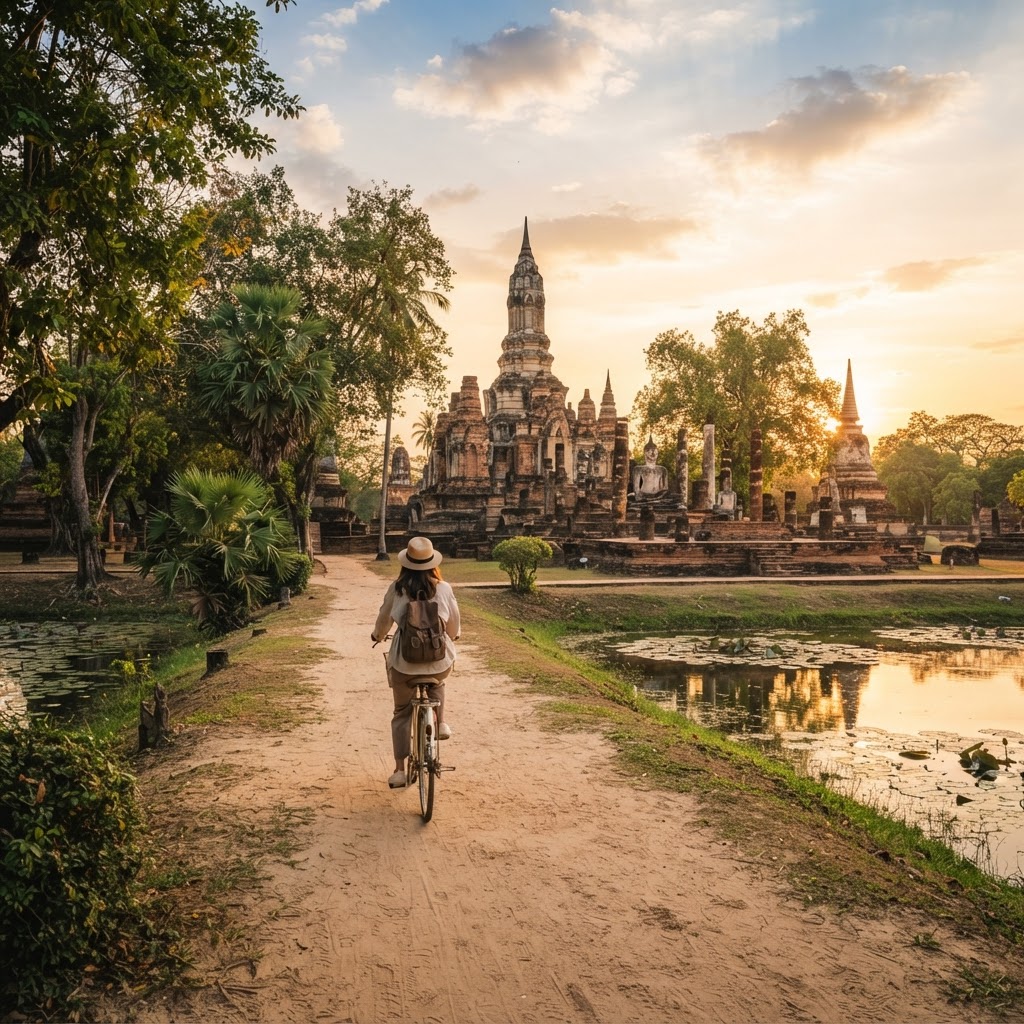
Cycle among the birthplace ruins of Siam, free from highway traffic and mass tour buses.
Hua Hin
Thailand
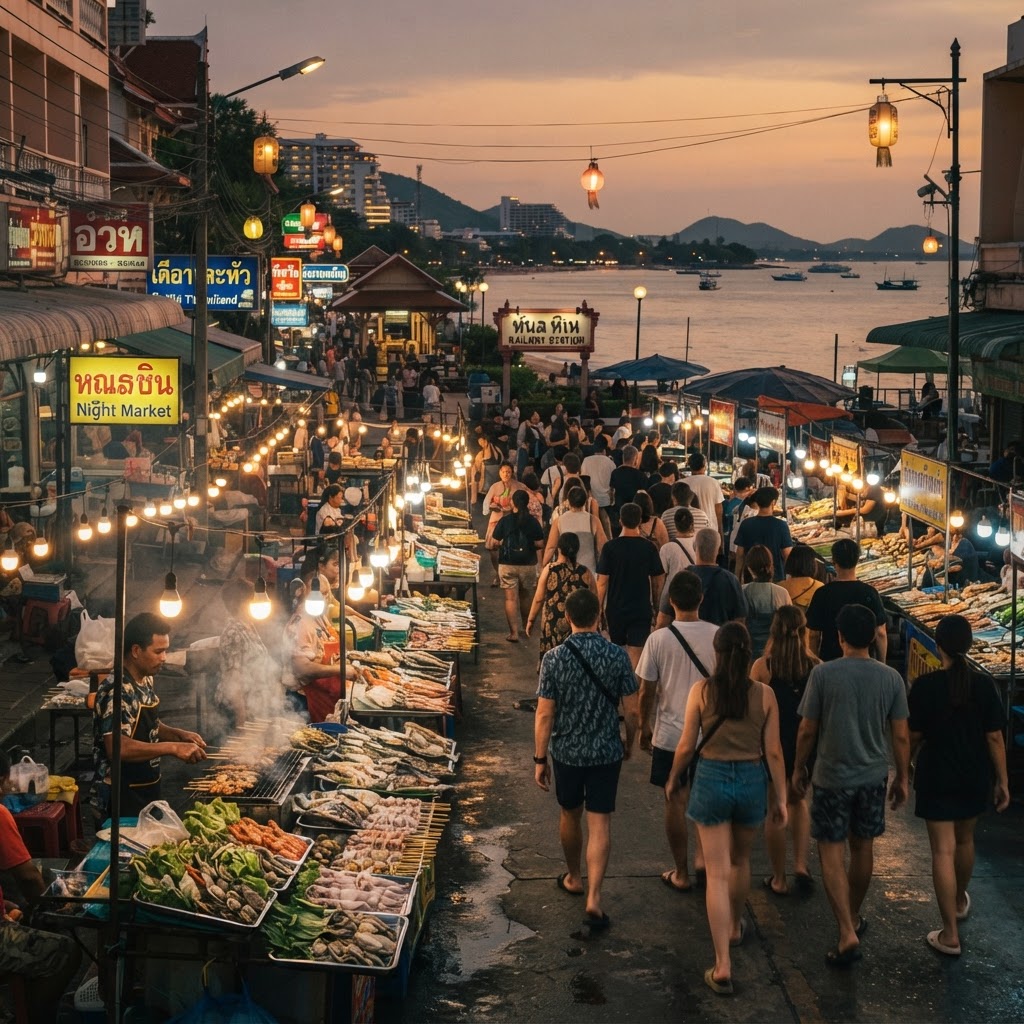
Royal coastal ease, night-market seafood, and low-friction seaside rest without the island transit hassle.
Readymade itineraries
Start from a tested template — then make it yours.
Ready to book
Lock in your Pai trip
Everything in one place. We may earn a small commission — it never costs you more.
Plan a trip to Pai
Pick a length and we'll build a day-by-day plan around how you travel — neighborhoods clustered, budget-aware, and editable.
Get better at planning trips like this
Occasional notes on planning smarter — no spam, unsubscribe anytime.
Plan a trip to Pai
Turn this guide into a day-by-day plan built around your pace, your group, and your budget.
Build my Pai trip