Peru
Machu Picchu & The Sacred Valley, Peru
Living Incan engineering, high-Andean drama, and lower-elevation acclimatization.
Plan & book
Sort your Machu Picchu & The Sacred Valley, Peru trip in one place.
We point you to the booking tools we'd actually use — live prices, no markup. Or let us build the day-by-day plan around you first, then book.
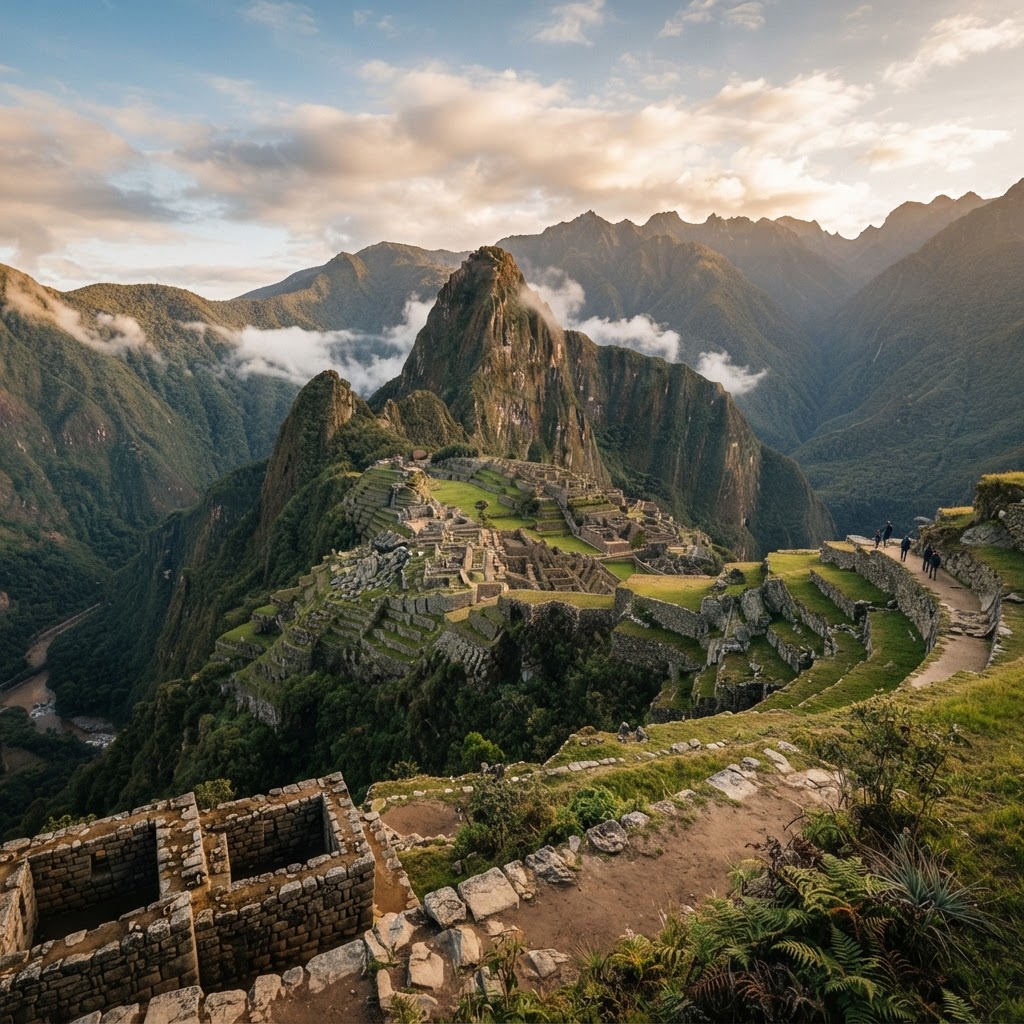
Stretching between Pisac and Ollantaytambo before dropping into the high jungle of Aguas Calientes, the Sacred Valley and Machu Picchu form the agricultural and spiritual core of the Incan Empire. Too many travelers rush through the valley on an exhausting day-trip en route from Cusco to the citadel, missing out on massive stone ruins, thriving indigenous villages, and the easiest way to acclimate to Andean altitude. Centering your stay in the valley keeps your elevation manageable, your transit seamless, and your mornings uncrowded.
4 to 5 days
Build your own trip with these prebuilt itineraries
Each one is a tested, day-by-day plan for Machu Picchu & The Sacred Valley, Peru — start here, then make it yours.
5 Days Active Ruins & High-Andean Treks in Machu Picchu/Sacred Valley
An active hiking and archaeology immersion covering mountain fortresses, scenic rail, and historic stone trails
3 Days Express Valley & Citadel in Machu Picchu/Sacred Valley
A focused, streamlined journey hitting the essentials of Ollantaytambo and Machu Picchu without the grueling day trip
4 Days Acclimatization & Classic Wonders in Machu Picchu/Sacred Valley
The smart altitude-first route balancing Sacred Valley highlights with a relaxed Machu Picchu visit
Visiting the Sacred Valley and Machu Picchu offers monumental archaeology set against steep Andean scenery without the crippling altitude sickness of staying in Cusco right away. At roughly 2,870 meters (9,400 feet) in Ollantaytambo and 2,430 meters (7,970 feet) at Machu Picchu, you will breathe significantly easier than at Cusco's 3,400 meters (11,150 feet). The region provides direct access to intact Incan town planning, functional agricultural terracing at Moray, and the logistics hub for trains directly to Aguas Calientes.
Where to stay
Getting there
Getting around
Food & drink
What it costs
Skip it if
Skip if you are looking for nightlife, flat city walking, or a beach holiday. Also reconsider if you have acute, unmanageable respiratory or cardiovascular conditions triggered by elevations over 2,400 meters, or if anyone in your group cannot handle uneven, steep, original cobblestones and endless stone steps.
Destination intelligence
Updated 9/13/2026The structured record we plan every Machu Picchu & The Sacred Valley, Peru itinerary from.
Walkability
Town centers like Ollantaytambo and Pisac are compact and walkable on foot, but feature steep grades, uneven historic cobblestones, and narrow paths. Sites like Machu Picchu, Pisac Ruins, and Ollantaytambo Fortress require hundreds of irregular stone steps and moderate physical fitness.
Transit quality
Scenic rail service (Inca Rail and PeruRail) between the Sacred Valley and Aguas Calientes is reliable and comfortable. Regional road transport relies on well-maintained private transfers or cheap, frequent local combis.
Car needed
No. Driving a rental car is strongly discouraged due to narrow unpaved roads, aggressive mountain traffic, unmarked turnoffs, and lack of parking at trailheads and train stations.
Ideal duration
4 to 5 days
Minimum useful
2 days
Peak season
June through August: Dry, clear, sunny Andean winter days with crisp, near-freezing nights. Maximum crowds, early ticket sell-outs, and peak accommodation rates.
Shoulder season
April to May and September to October: The sweet spot with vibrant green hillsides, moderate crowds, dry trail conditions, and high ticket availability.
Low season
December through March: Andean rainy season. Mudslides can interrupt rail routes, downpours are frequent, and the Inca Trail closes entirely for maintenance during February.
Best for
Common mistakes
- Staying the first two nights in Cusco instead of descending immediately to the lower altitude of the Sacred Valley.
- Attempting Machu Picchu as an exhausting 15-hour day trip from Cusco involving multiple trains, buses, and early-morning transfers.
- Not booking Machu Picchu entry circuit tickets months in advance, leaving travelers stranded or stuck on inferior lower circuits.
- Forgetting to carry original physical passports, which are strictly required for boarding trains and entering Machu Picchu.
Best nearby
See what a trip to Peru actually costs. Travel Budget Co.
Readymade itineraries
Start from a tested template — then make it yours.
Ready to book
Lock in your Machu Picchu & The Sacred Valley, Peru trip
Everything in one place. We may earn a small commission — it never costs you more.
Plan a trip to Machu Picchu & The Sacred Valley, Peru
Pick a length and we'll build a day-by-day plan around how you travel — neighborhoods clustered, budget-aware, and editable.
Get better at planning trips like this
Occasional notes on planning smarter — no spam, unsubscribe anytime.
Plan a trip to Machu Picchu & The Sacred Valley, Peru
Turn this guide into a day-by-day plan built around your pace, your group, and your budget.
Build my Machu Picchu & The Sacred Valley, Peru trip