Egypt
Luxor, Egypt
The monumental epicenter of pharaonic power, tombs, and living archaeology
Plan & book
Sort your Luxor, Egypt trip in one place.
We point you to the booking tools we'd actually use — live prices, no markup. Or let us build the day-by-day plan around you first, then book.
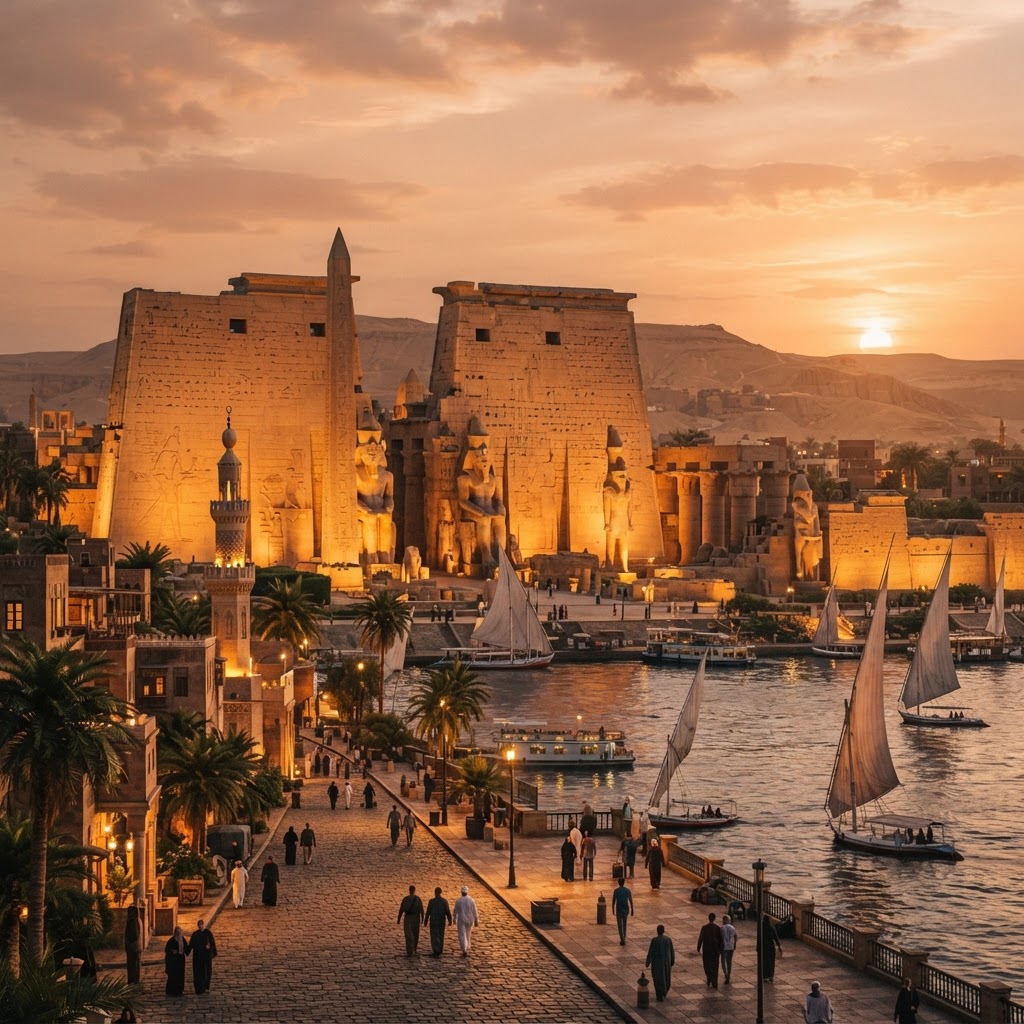
Luxor occupies the site of ancient Thebes, the New Kingdom capital that concentrated Egypt’s royal burial grounds and grandest religious architecture along the banks of the Nile. Today, the city is split between the East Bank’s urban pulse and colossal temples and the West Bank’s limestone desert cliffs concealing subterranean tombs. It is an intense, visually unmatched open-air museum where pacing and timing determine whether you experience ancient awe or rapid sensory exhaustion.
3 to 4 days
Build your own trip with these prebuilt itineraries
Each one is a tested, day-by-day plan for Luxor, Egypt — start here, then make it yours.
4 Days in Luxor: Deep Archaeology & Slow Nile in Luxor
An in-depth historical immersion featuring lesser-visited noble tombs, West Bank villages, and unhurried felucca sailing
2 Days in Luxor: Express Temples & Tombs in Luxor
A high-intensity, photographer-friendly sprint hitting Karnak, Luxor Temple, and the Valley of the Kings at optimal low-crowd hours
3 Days in Luxor: The Classic Antiquities in Luxor
First-time essential monuments balancing early morning West Bank tomb explorations with sunset East Bank temples
Luxor delivers ancient Egyptian history at an unmatched physical scale. The hypostyle hall at Karnak, the vivid subterranean pigments in the Valley of the Kings, and the lit pylons of Luxor Temple at twilight offer an immersion into monumental antiquity that Giza and Cairo cannot match in depth or preservation.
Where to stay
Getting there
Getting around
Food & drink
What it costs
Things to do
Book tours & tickets in Luxor, EgyptSkip it if
Skip Luxor if you cannot tolerate aggressive street vendors and persistent touts, or if you have severe mobility limitations, as tomb descents feature steep wooden ramps, stairs, and unpaved desert gravel without elevator access.
Destination intelligence
Updated 9/13/2026The structured record we plan every Luxor, Egypt itinerary from.
Walkability
Low to Moderate. The East Bank Corniche and central market streets are walkable, but sights are dispersed across both sides of the river, demanding taxis, private drivers, or boats.
Transit quality
Limited. There is no metro or city bus network for tourists; navigation relies on the reliable public river ferry, private riverboats, and negotiated street taxis.
Car needed
No. Driving a rental car in Luxor is strongly discouraged due to chaotic traffic, local driving norms, and police checkpoints. Hire a private licensed car and driver instead.
Ideal duration
3 to 4 days
Minimum useful
2 days
Peak season
November through February. Mild daytime temperatures (20°C to 26°C / 68°F to 78°F) draw peak global crowds and peak accommodation pricing.
Shoulder season
October, March, and April. Warmer days that demand early site visits, balanced by thinner tour group numbers and better hotel rates.
Low season
May through September. Scorching desert heat frequently exceeding 40°C (104°F) makes midday exploration hazardous, though sites are virtually empty.
Best for
Common mistakes
- Trying to blitz 5 West Bank monuments in one morning under full midday sun, leading to acute heat exhaustion.
- Visiting Karnak between 10:00 AM and 1:00 PM when mass tour groups from Red Sea beach resorts pack the walkways.
- Failing to carry small Egyptian pound notes for tips (baksheesh) and temple bathroom attendants.
- Booking a rushed day trip from Hurghada that wastes 8 hours on a desert highway for only 3 rushed hours at the tombs.
Best nearby
See what a trip to Egypt actually costs. Travel Budget Co.
Readymade itineraries
Start from a tested template — then make it yours.
Ready to book
Lock in your Luxor, Egypt trip
Everything in one place. We may earn a small commission — it never costs you more.
Plan a trip to Luxor, Egypt
Pick a length and we'll build a day-by-day plan around how you travel — neighborhoods clustered, budget-aware, and editable.
Get better at planning trips like this
Occasional notes on planning smarter — no spam, unsubscribe anytime.
Plan a trip to Luxor, Egypt
Turn this guide into a day-by-day plan built around your pace, your group, and your budget.
Build my Luxor, Egypt trip