Ethiopia
Lalibela
Monolithic stone churches carved directly into the earth by living medieval faith
Plan & book
Sort your Lalibela trip in one place.
We point you to the booking tools we'd actually use — live prices, no markup. Or let us build the day-by-day plan around you first, then book.
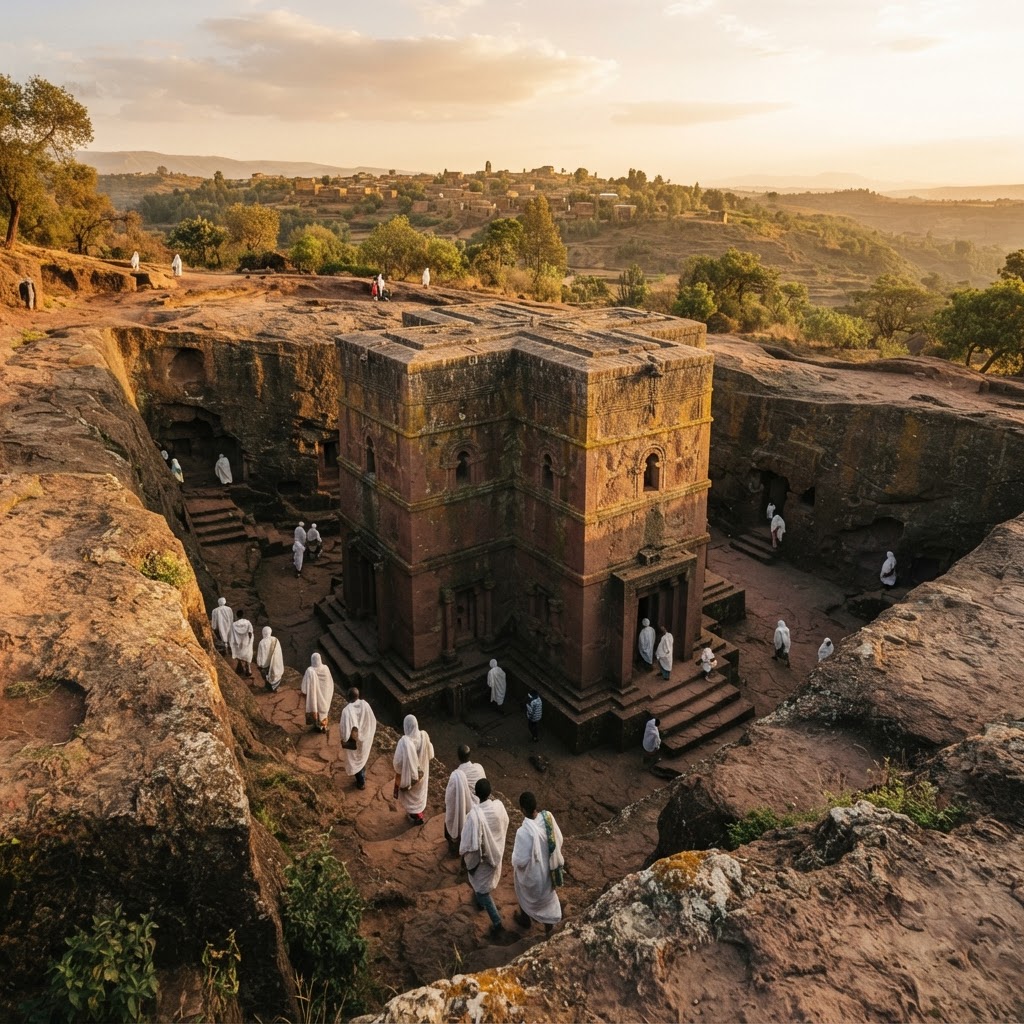
Perched at 2,500 meters in the rugged Lasta mountains of northern Ethiopia, Lalibela is a medieval pilgrimage town engineered as a 12th-century 'New Jerusalem.' Eleven monolithic and semi-monolithic churches—chiseled entirely out of red volcanic tuff below ground level—are connected by subterranean trenches, defensive tunnels, and ceremonial paths. Lalibela remains an active sanctuary where white-robed Orthodox pilgrims, ancient Ge'ez liturgical chants, and daily monastic life take precedence over tourism.
3 days
Best time
October to January for dry weather, clear mountain skies, and major Orthodox feast days.
Build your own trip with these prebuilt itineraries
Each one is a tested, day-by-day plan for Lalibela — start here, then make it yours.
4 Days in Lalibela: High Escarpments & Holy Sanctuaries in Lalibela
A trekking-focused adventure combining town rock complexes with highland community escarpment walks to Mount Asheten and Hudad plateau
3 Days in Lalibela: Sacred Rites & Monastic Secrets in Lalibela
Deep cultural immersion pairing classic rock churches with dawn liturgical services and a venture to Yemrehanna Kristos cave monastery
2 Days in Lalibela: The Essential Monolithic Churches in Lalibela
First-time architectural highlights focusing purely on the Northern, Western, and Southeastern rock-hewn clusters at dawn and dusk
Lalibela delivers one of humanity's most astonishing architectural achievements in active spiritual use. Unlike petrified archaeological sites, these 800-year-old subterranean sanctuaries still echo with dawn incense, drum rhythms, and blessings from priests bearing historic brass crosses. Standing at the cliff edge looking down onto the cruciform roof of Bet Giyorgis reveals an audacious feat of subtractive stonemasonry found nowhere else on Earth.
Where to stay
Getting there
Getting around
Food & drink
What it costs
Things to do
Book tours & tickets in LalibelaSkip it if
Skip Lalibela if you have severe mobility limitations or knee issues; navigating the complex requires negotiating steep, polished stone trenches, loose gravel steps, and tunnels with zero elevator or wheelchair infrastructure. It is also not suitable for travelers looking for resort-style relaxation or fast-paced nightlife.
When to go
October brings lush green hillsides right after the rains with dry paths, while January delivers the incredible spiritual atmosphere of Genna (Ethiopian Christmas) and Timkat (Epiphany). The tradeoff is high festival crowd density and inflated room rates in January, whereas November and early December offer dry trekking and empty church trenches.
Peak (October–January)
Clear highland weather and monumental religious festivals. Book flights and guesthouses months ahead for Genna (January 7) and Timkat (January 19).
Shoulder (February–May)
Warmer afternoons, dry conditions, and substantially fewer tour groups. Excellent for uncrowded photography, though landscape turns arid by April.
Low (June–September)
The kiremt summer rains make carved stone trenches and rock steps slick and treacherous; high mountain fog frequently delays regional flights.
Neighborhoods
Where you stay shapes the trip. Here's how to think about it.
Old Town (Church Quarter)
Sacred, dusty stone alleys wrapping directly around the Northwest and Southeast church complexes.
Best for:walking to dawn liturgies and direct access to church entrances
Don't miss:Early morning footsteps along the trench paths before tourist buses arrive, and the subterranean passage connecting Bet Gabriel-Rufael.
Upper Town Ridge
Elevated escarpment neighborhood offering cool mountain breezes and sweeping panoramic valley views.
Best for:quiet evenings, comfortable lodgings, and dramatic sunsets
Don't miss:Sundowners overlooking the Lasta mountain drop-off near Mountain View Hotel and Ben Abeba's hillside terrace.
Central Market Area (Arada)
Energetic, practical hub centered around the main road, local shops, and bajaj stands.
Best for:everyday services, local tej houses, and catching town transport
Don't miss:The sprawling Saturday market where rural farmers trade livestock, honey, and hand-woven cotton shammas.
Destination intelligence
Updated 9/14/2026The structured record we plan every Lalibela itinerary from.
Walkability
Moderate within the small town center, but physically demanding inside the church complexes due to steep rock stairs, slick stone surfaces, and altitude.
Transit quality
Basic. No municipal transit networks; transportation relies entirely on three-wheeled bajajs, private guesthouse vans, and walking.
Car needed
No. Rental cars are unnecessary within town. Walk or use local bajajs inside town, and rely on arranged transport for the 25 km airport commute.
Ideal duration
3 days
Minimum useful
2 days
Peak season
October to January (dry, sunny weather, clear skies, and major Orthodox celebrations like Genna/Christmas and Timkat)
Shoulder season
February to April (warming temperatures, dry walking trails, and quiet church complexes)
Low season
June to September (heavy highland monsoon rains, slippery rock surfaces, and mountain fog)
Best for
Common mistakes
- Attempting long-distance overland buses from Addis Ababa or Bahir Dar instead of booking a short domestic flight, wasting multiple days on treacherous mountain switchbacks.
- Visiting without slip-on shoes or thick wool socks; taking shoes off at every church entrance is mandatory, and the subterranean stone floors can be freezing and gritty.
- Rushing all eleven churches into a single 4-hour morning, which leads to visual fatigue and misses the distinct light shifts at dawn and dusk.
- Forgetting to pack a reliable headlamp or flashlight for traversing subterranean tunnels like the pitch-black 'Hell to Heaven' passage.
- Failing to confirm regional security updates before booking overland excursions outside the municipal perimeter.
Best nearby
How to plan it
- Fly instead of driving; the 55-minute Ethiopian Airlines flight from Addis Ababa saves you a grueling two-day overland road trip over volatile rural corridors.
- Book an Ethiopian Airlines international ticket to enter the country, which drastically discounts the price of your domestic flight hops to Lalibela.
- Visit Bet Giyorgis (Church of Saint George) either at 7:00 AM or late afternoon for the best light angle into the cruciform trench without midday heat.
- Hire a 4WD vehicle for half a day to visit Yemrehana Krestos, built inside a mountain cave 40 km north of town; do not skip it if you appreciate wooden Aksumite architecture.
- Bring a compact LED headlamp; the subterranean hand-cut tunnels connecting church complexes—such as the pitch-black 'Trench of Hell'—have zero interior lighting.
Questions
Readymade itineraries
Start from a tested template — then make it yours.
Ready to book
Lock in your Lalibela trip
Everything in one place. We may earn a small commission — it never costs you more.
Plan a trip to Lalibela
Pick a length and we'll build a day-by-day plan around how you travel — neighborhoods clustered, budget-aware, and editable.
Get better at planning trips like this
Occasional notes on planning smarter — no spam, unsubscribe anytime.
Plan a trip to Lalibela
Turn this guide into a day-by-day plan built around your pace, your group, and your budget.
Build my Lalibela trip