Netherlands
Giethoorn, Netherlands
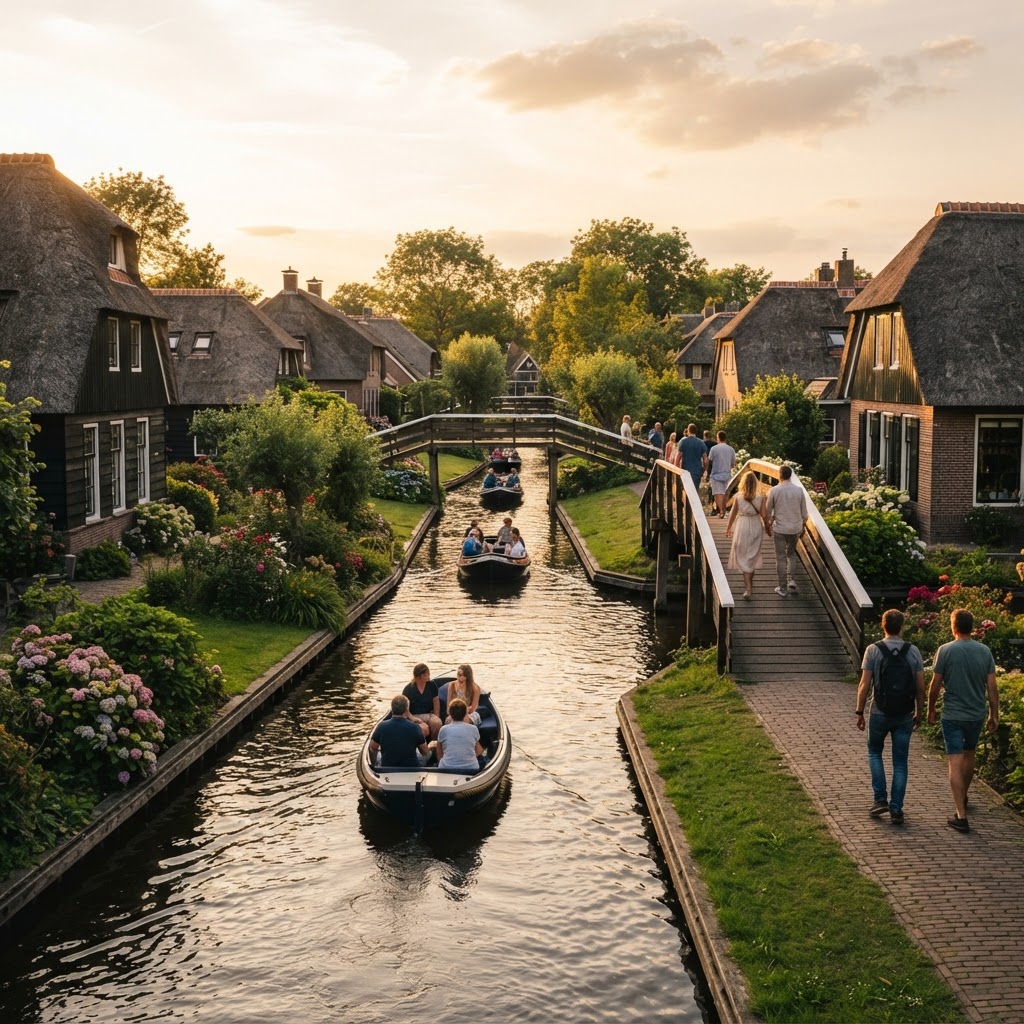
Thatched-roof village life connected strictly by footpaths, wooden arched bridges, and electric whisper boats.
Plan & book
Sort your Giethoorn, Netherlands trip in one place.
We point you to the booking tools we'd actually use — live prices, no markup. Or let us build the day-by-day plan around you first, then book.
Giethoorn is an 800-year-old peat-cutter settlement in the province of Overijssel where roads do not exist in the historic core. Life here moves along a ribbon of shallow waterways crossed by over 170 wooden footbridges and the narrow walking path Binnenpad. While midday day-trippers can turn the village canals into an awkward bumper-boat rally, staying overnight or timing your arrival for the early morning uncovers tranquil, water-lapped Dutch pastoral countryside at its best.
24 hours (1 night)
Best time
May to mid-June or September on Tuesday through Thursday.
Build your own trip with these prebuilt itineraries
Each one is a tested, day-by-day plan for Giethoorn, Netherlands — start here, then make it yours.
3 Days in Giethoorn: Waterways & Weerribben Wetlands in Giethoorn
Active outdoors, cycling, and boating expedition extending beyond the historic village into the wild marshes and reed beds of Weerribben-Wieden National Park
2 Days in Giethoorn: The Romantic Overnight in Giethoorn
Atmospheric overnight retreat focused on golden hour photography, peaceful sunrise waterways, and thatched-cottage village life after tour buses leave
1 Day in Giethoorn: The Essential Day Trip in Giethoorn
Strategic day trip timed to dodge midday bus crowds via early whisper-boat navigation, museum visits, and walking the Binnenpad
Go for the singular experience of navigating a roadless wetland community by piloting an electric whisper boat (fluisterboot) right up to the front lawns of 18th-century thatched farmhouses. Beyond the village spine lies Weerribben-Wieden National Park, Northern Europe's largest continuous fen peat bog, offering miles of reed beds and lakes accessible only by water or bicycle.
Where to stay
Getting there
Getting around
Food & drink
What it costs
Things to do
Book tours & tickets in Giethoorn, NetherlandsSkip it if
Skip Giethoorn if you have less than 72 hours in the Netherlands, as transit takes nearly 4 hours round-trip from Amsterdam. Also skip if you are traveling with travelers who have severe mobility impairments, as the historic core relies heavily on stepped wooden bridges, cobblestones, and stepping into low boats.
When to go
Spring and early autumn provide lush garden blooms and crisp, dry paddling weather while bypassing the heavy tour bus swarms that paralyze village waterways in July and August. Arriving midweek lets you experience quiet canals rather than navigating electric boat traffic jams.
Peak (July to August)
Warm and vibrant, but canals become severely congested between 11:00 AM and 5:00 PM; book rental whisper boats and lodging weeks in advance.
Shoulder (April to June & September to October)
The sweet spot with blossoming gardens or golden reeds, mild weather, and relaxed footpaths once afternoon visitors leave.
Low (November to March)
Eerie, quiet, and cold; many boat rental docks and outdoor terraces close, though frozen winters occasionally turn the canals into outdoor ice rinks.
Neighborhoods
Where you stay shapes the trip. Here's how to think about it.
Giethoorn-Zuid (Binnenpad Core)
Quintessential postcard setting of arched timber bridges, thatched farmhouses, and narrow brick footpaths along the main canal.
Best for:First-timers, architecture buffs, and overnight visitors wanting to walk the village after day-trippers depart
Don't miss:Museum Giethoorn 't Olde Maat Uus, an authentic preserved 19th-century peat farm with costumed interpreters and historic craft displays.
Giethoorn-Noord
A wider, considerably quieter waterway ribbon lined with historic captain houses and expansive reed-thatched properties.
Best for:Couples, photographers wanting uncrowded paths, and paddlers looking to escape boat gridlock
Don't miss:Exploring the northern reaches of the canal where it widens out toward Dwarsgracht away from the tour bus drop-off points.
Dwarsgracht
An uncommercialized satellite hamlet three kilometers west, featuring the identical bridge-and-canal landscape without tour groups.
Best for:Travelers seeking absolute silence, birdwatchers, and self-guided kayakers
Don't miss:Renting a canoe from a local farm launch to paddle into the reed marshes without bumper-to-bumper rental traffic.
Zuideinde
The southern gateway where water meets broader wetlands, home to higher-end waterfront dining and modern marinas.
Best for:Food-focused travelers, boaters renting larger luxury electric sloops, and cyclists
Don't miss:A long lunch or dinner on the waterside terrace at Restaurant De Lindenhof overlooking the surrounding pastures.
Destination intelligence
Updated 9/14/2026The structured record we plan every Giethoorn, Netherlands itinerary from.
Walkability
High in the historic center, though constrained by narrow brick footpaths and stepped wooden footbridges.
Transit quality
Moderate; requires a regional train from Amsterdam to Steenwijk or Zwolle plus connecting local bus line 70.
Car needed
No. Public transit is straightforward, and cars are prohibited inside the historic village core.
Ideal duration
24 hours (1 night)
Minimum useful
4 to 6 hours
Peak season
April through August, marked by blooming spring bulbs, warm weather, and heavy tourist coach crowds midday.
Shoulder season
September to October and late March to early April, offering crisp weather, clear canals, and dramatically fewer tour groups.
Low season
November through February; chilly and misty with many rental operators shuttered, but peaceful and occasionally skateable when canals freeze.
Best for
Common mistakes
- Visiting purely as an Amsterdam day trip between 11:00 AM and 4:00 PM when tour buses clog the single canal artery.
- Hauling full-sized wheeled suitcases over arched, stepped wooden footbridges; pack a light weekend duffel if staying overnight.
- Renting a boat without consulting the official color-coded one-way navigation loop maps, resulting in canal gridlock.
- Expecting bike lanes on every bridge; you must dismount and push bicycles across narrow footbridges on the Binnenpad.
Best nearby
How to plan it
- Reserve your whisper boat for 9:00 AM sharp to enjoy two peaceful hours on the water before tour coaches arrive from Amsterdam.
- Pair Giethoorn with a bike loop through Weerribben-Wieden National Park to trade packed village canals for expansive, open fen landscapes.
- Do not attempt a midday DIY boat rental on summer weekends unless you are comfortable bumping hulls in canal gridlock.
- Stay in Giethoorn-Noord or neighboring Dwarsgracht if you want village tranquility without stepping directly into tourist crowds outside your door.
Questions
More in Netherlands
Readymade itineraries
Start from a tested template — then make it yours.
Ready to book
Lock in your Giethoorn, Netherlands trip
Everything in one place. We may earn a small commission — it never costs you more.
Plan a trip to Giethoorn, Netherlands
Pick a length and we'll build a day-by-day plan around how you travel — neighborhoods clustered, budget-aware, and editable.
Get better at planning trips like this
Occasional notes on planning smarter — no spam, unsubscribe anytime.
Plan a trip to Giethoorn, Netherlands
Turn this guide into a day-by-day plan built around your pace, your group, and your budget.
Build my Giethoorn, Netherlands trip