South Korea
Gangneung, South Korea
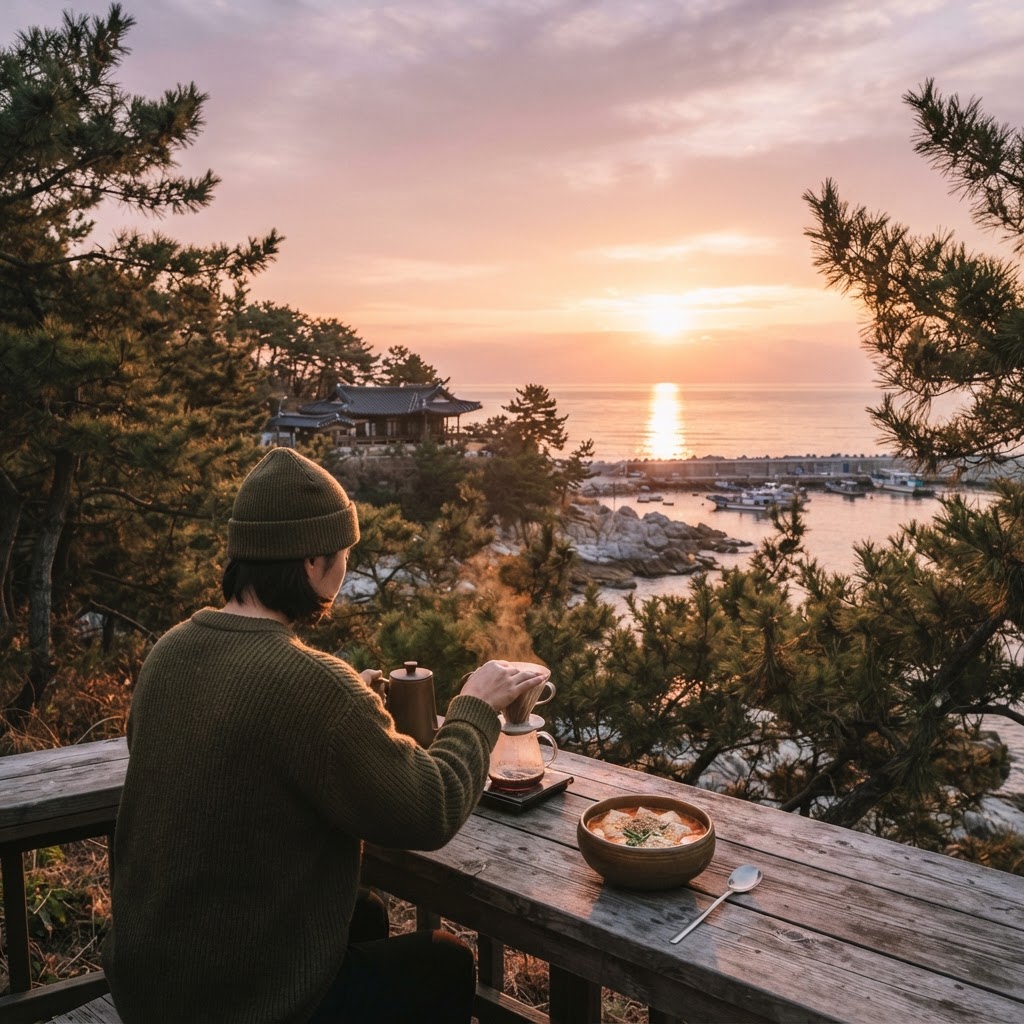
Pine-fringed Pacific sunrises, slow hand-poured roasts, and seawater-curdled tofu.
Plan & book
Sort your Gangneung, South Korea trip in one place.
We point you to the booking tools we'd actually use — live prices, no markup. Or let us build the day-by-day plan around you first, then book.
Perched on South Korea's northeast coast between the Taebaek Mountains and the East Sea, Gangneung operates at a decisively gentler tempo than Seoul or Busan. Connected to the capital in under two hours via the KTX-Eum bullet train, it functions as Korea's premier domestic coastal decompression zone: a city centered around artisanal roasteries along Anmok Beach, heritage pine groves framing Gyeongpo Lake, and Chodang's multi-generational soft tofu houses.
2 nights / 3 days
Best time
Late September through October, when crisp mountain-meets-ocean air delivers cloudless blue skies and minimal humidity.
Build your own trip with these prebuilt itineraries
Each one is a tested, day-by-day plan for Gangneung, South Korea — start here, then make it yours.
4 Days in Gangneung: Slow Coastal & Pine Forest Escape in Gangneung
An unhurried nature and wellness getaway combining seaside boutique stays, serene pine forest trails, Jeongdongjin sunrise views, and coastal art hubs.
3 Days in Gangneung: Coastal Cafes & Heritage Highlights in Gangneung
The classic first-timer retreat balancing Gyeongpo Lake, beach walks, and the Anmok coffee strip via seamless KTX and taxi hops.
2 Days in Gangneung: Culinary & Specialty Coffee Trail in Gangneung
A tightly focused food and cafe immersion centering on early-day Chodang seawater tofu, seafood markets, and independent seaside roasteries.
Gangneung offers the fastest path from high-density Seoul into untamed sea air and pine forests without the logistical friction of renting a car or booking domestic flights. It is Korea's coffee capital, home to a serious specialty brewing culture that began in the 1980s, alongside an exceptional regional food identity centered on Chodang sundubu—tofu set with mineral-rich East Sea water.
Where to stay
Getting there
Getting around
Food & drink
What it costs
Things to do
Book tours & tickets in Gangneung, South KoreaSkip it if
Skip Gangneung if your dream Korean beach vacation requires warm tropical swimming waters and high-octane seaside nightlife; the East Sea remains chilly outside mid-summer and evenings here wind down around 9:00 PM. Also skip if your Korea itinerary is under 7 days total, as Seoul and Gyeongju should take precedence.
When to go
Summer brings punishing humidity, monsoon downpours, and domestic beach crowds that jam coastal roads and drive hotel rates skyward. Late spring offers cherry blossoms around Gyeongpo Lake, but autumn wins on crisp visibility, gentle sea breezes, and low wait times at top-tier roasteries and tofu houses.
Peak (July–August & New Year's)
Sweltering heat, high hotel premiums, and massive crowds packing the sands; December 31 to January 1 sees extreme demand for sunrise pilgrimages.
Shoulder (April–May & September–October)
Clear horizons, vibrant spring blossoms or fall foliage along the Taebaek ridges, and comfortable walking temperatures with modest lines.
Low (Late November–March, excluding Jan 1)
Piercing Siberian coastal winds and biting cold, though the skies stay razor-sharp and roasteries provide unhurried, warm seaside refuges.
Neighborhoods
Where you stay shapes the trip. Here's how to think about it.
Anmok Beach & Coffee Street
A breezy seaside esplanade dominated by multi-story independent roasteries overlooking white sand and crashing surf.
Best for:Coffee purists, sea-view cafe hoppers, and travelers wanting immediate beach access.
Don't miss:Pour-over on the open-air rooftop terrace of Bossa Nova Coffee Roasters facing the East Sea breakwaters.
Chodang Dubu Village
A quiet residential pocket framed by coastal pine groves and defined by morning steam from multi-generational tofu cauldrons.
Best for:Dedicated food lovers, early risers, and travelers seeking rustic culinary tradition away from heavy neon.
Don't miss:The fiery, wok-charred seafood jjamppong sundubu at Dongwha Garden, followed by savory black-sesame soft-tofu gelato down the road.
Gyeongpo Beach & Lake
A dramatic corridor sandwiched between a tranquil fresh-water lagoon and a wide, pine-backed Pacific shoreline.
Best for:Resort stays, scenic sunrise joggers, and visitors looking for upscale oceanfront hotels.
Don't miss:Renting a tandem bicycle to trace the pine paths encircling Gyeongpo Lake before stopping at Gyeongpodae Pavilion.
Gangmun Beach
A compact, photogenic fishing cove with wooden boardwalks, modern aesthetic cafes, and small-boat seafood shacks.
Best for:Couples, casual sunset strollers, and travelers wanting beachside dining without massive crowds.
Don't miss:Walking across the illuminated Sotdae Bridge at dusk after grabbing freshly squeezed cold citrus juice at Gangmont.
Jungang & Wolhwa Street (Downtown)
A gritty, energized market district centered on old railway corridors, smoking griddles, and regional street delicacies.
Best for:Street-food grazers, souvenir hunters, and travelers wanting proximity to Gangneung KTX station.
Don't miss:Freshly fried squid blood sausage (ojingeo sundae) and sweet garlic bread stalls deep inside Gangneung Jungang Market.
Destination intelligence
Updated 9/14/2026The structured record we plan every Gangneung, South Korea itinerary from.
Walkability
Moderate within specific enclaves (Anmok strip, Gyeongpo lake, or Chodang village are very walkable on foot), but the overall city is sprawled and requires short taxi rides or buses between sectors.
Transit quality
High regional connectivity via KTX-Eum from Seoul; dependable local bus lines and extremely affordable, ubiquitous taxis once in the city.
Car needed
No. The combination of high-speed rail from Seoul, cheap local taxis, and foreign tourist taxi programs makes driving unnecessary and often frustrating due to weekend highway traffic.
Ideal duration
2 nights / 3 days
Minimum useful
1 night / 2 days
Peak season
July to August (summer beachgoers) and late December to January 1 (national sunrise pilgrimage rush at Gyeongpo and Jeongdongjin).
Shoulder season
April to May (crisp spring weather and cherry blossoms around Gyeongpo Lake) and September to October (clear blue skies, gentle sea breezes, and autumn foliage).
Low season
Late November through February (barring New Year's), characterized by sharp coastal winter winds and frigid temperatures, though skies remain bright and clear.
Best for
Common mistakes
- Driving from Seoul on a Saturday morning instead of taking the KTX, leading to multi-hour gridlock on the Yeongdong Expressway.
- Attempting to walk between main hubs (e.g., Gangneung Station to Anmok Beach is over 5 kilometers along utility roads; always take a taxi or bus).
- Arriving at Chodang Tofu Village after 7:30 PM, as traditional family-run spots frequently close by 8:00 PM once the day's curd batch sells out.
- Waiting until arrival day to reserve weekend KTX tickets back to Seoul on Sunday evening, which sell out weeks ahead.
Best nearby
See what a trip to South Korea actually costs. Travel Budget Co.
How to plan it
- Base yourself in Gangmun or Gyeongpo if you want waking views of the waves; choose downtown near the station only if your focus is market grazing and early train departures.
- Do not attempt a weekend lunch at Dongwha Garden in Chodang without grabbing a digital queue number via CatchTable or arriving by 10:30 AM, or you will wait two hours.
- Pair Gangneung with a detour north to Jumunjin Port for wild raw-fish stalls and the breakwater, but take a local bus or cab rather than renting a vehicle.
- Avoid leaving your KTX train booking to the station counter; seats on the KTX-Eum between Seoul and Gangneung routinely sell out weeks ahead for weekend schedules.
- Dedicate one dedicated morning to the Terarosa Coffee Factory in Gujeong-myeon—it sits 20 minutes inland by taxi, so combine it with an unhurried brunch rather than squeezing it between beach hops.
Questions
More in South Korea
Yeosu, South Korea
South Korea
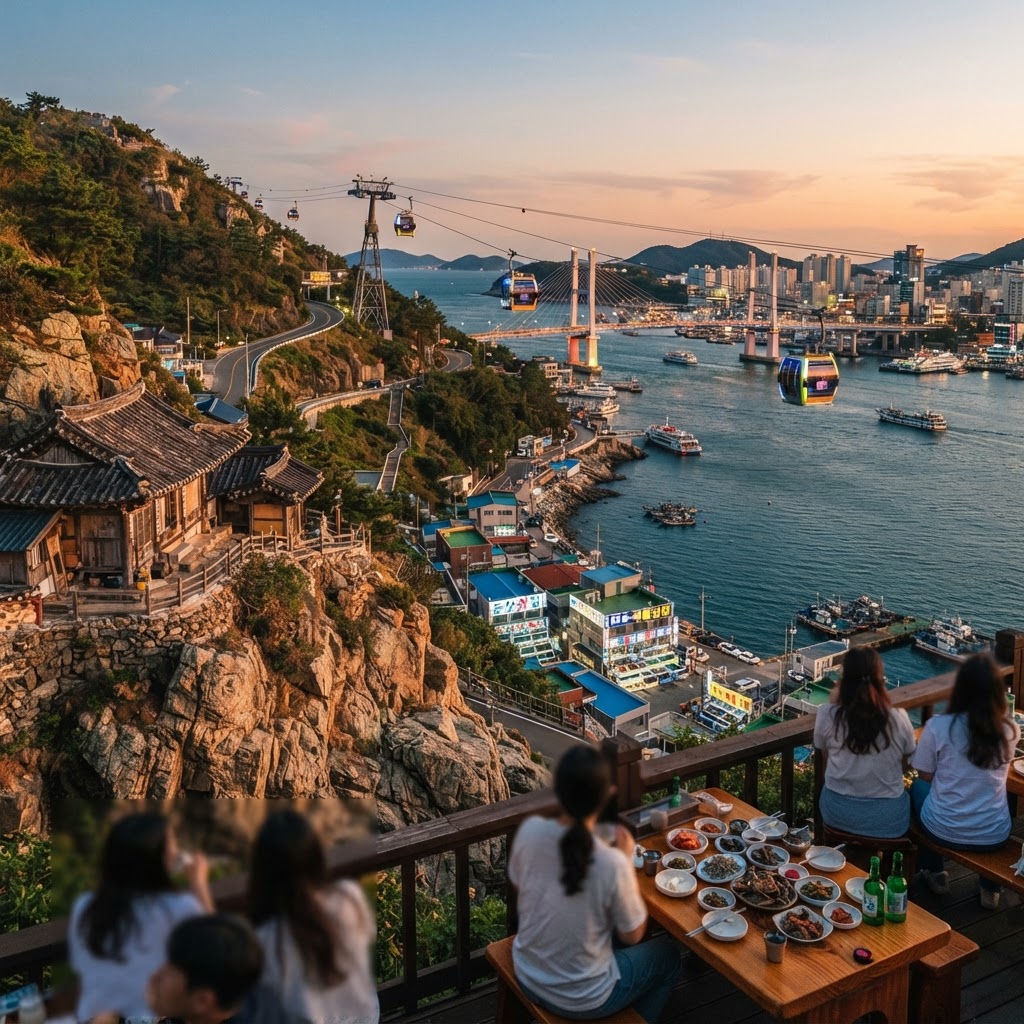
Korea's southern maritime retreat of cliffside hermitages, sea cable cars, and coastal banchan
Suncheon, South Korea
South Korea
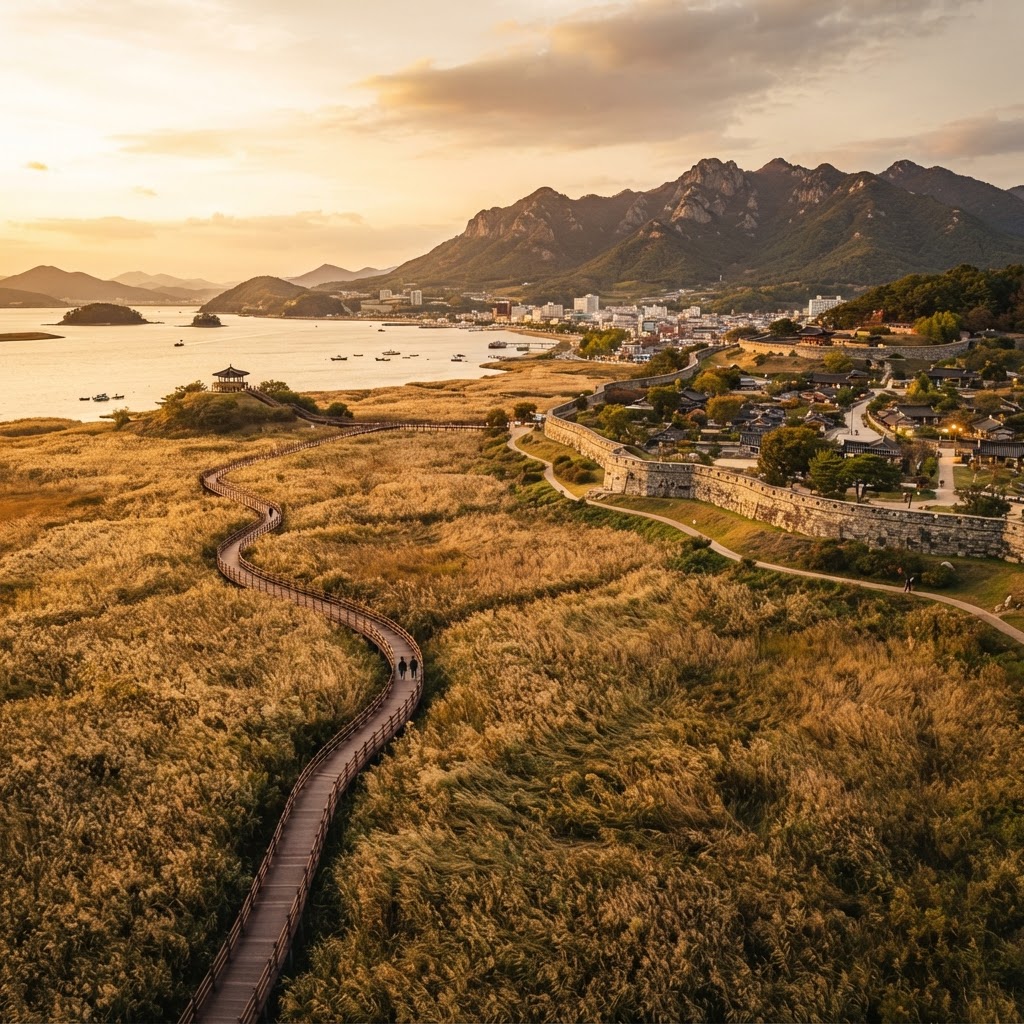
Expansive coastal reed beds, living fortress walls, and quiet southern culinary depth.
Daegu
South Korea
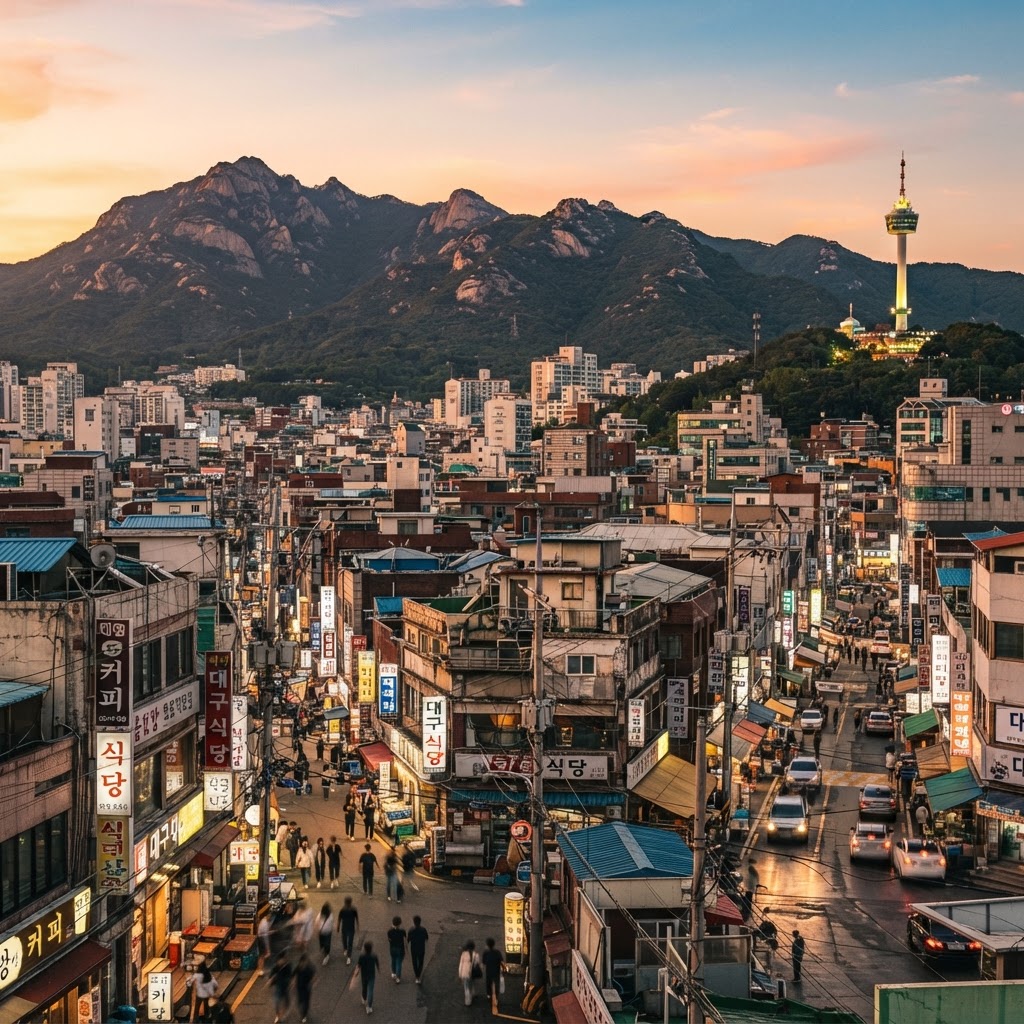
A gritty mountain-ringed textile hub turned coffee capital and culinary heavyweight
Readymade itineraries
Start from a tested template — then make it yours.
Ready to book
Lock in your Gangneung, South Korea trip
Everything in one place. We may earn a small commission — it never costs you more.
Plan a trip to Gangneung, South Korea
Pick a length and we'll build a day-by-day plan around how you travel — neighborhoods clustered, budget-aware, and editable.
Get better at planning trips like this
Occasional notes on planning smarter — no spam, unsubscribe anytime.
Plan a trip to Gangneung, South Korea
Turn this guide into a day-by-day plan built around your pace, your group, and your budget.
Build my Gangneung, South Korea trip