Chile
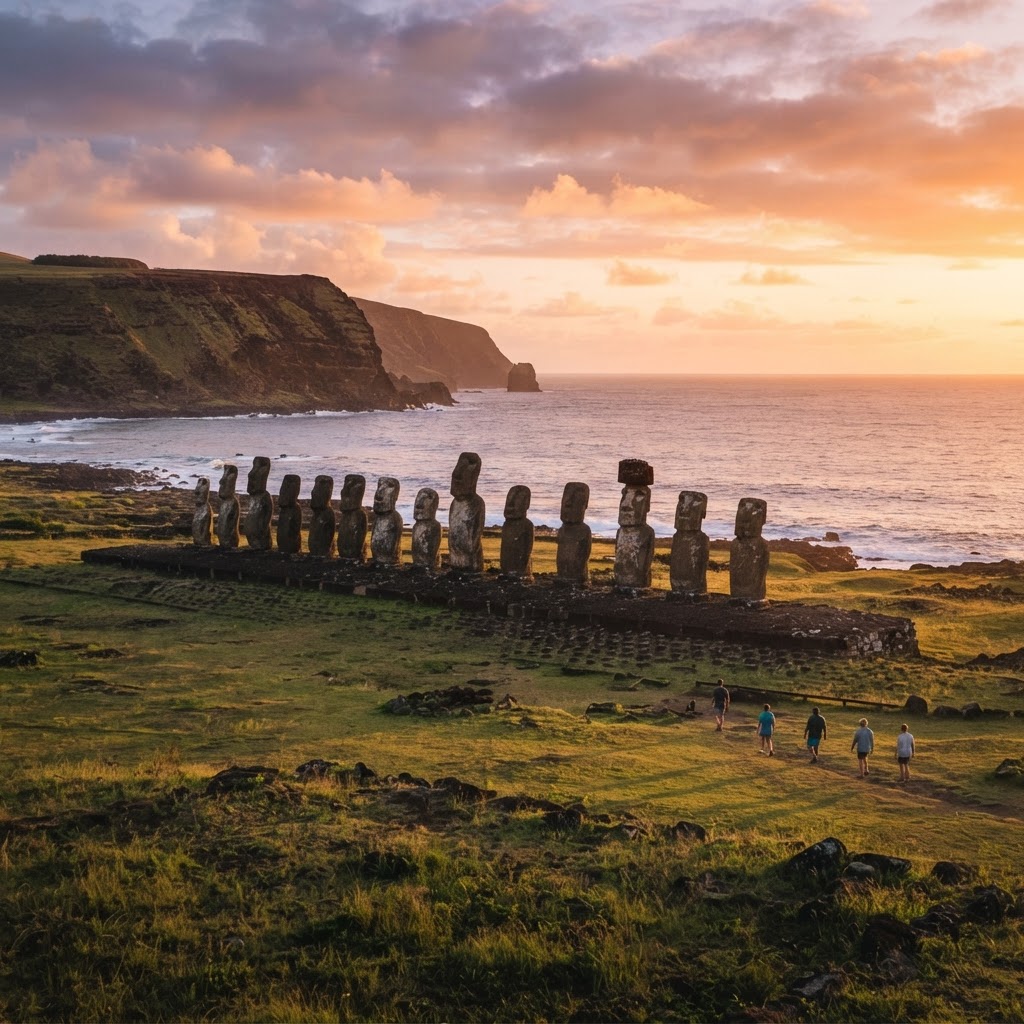
Easter Island (Rapa Nui), Chile
A remote Pacific open-air sanctuary where volcanic megaliths meet living Polynesian culture.
Plan & book
Sort your Easter Island (Rapa Nui), Chile trip in one place.
We point you to the booking tools we'd actually use — live prices, no markup. Or let us build the day-by-day plan around you first, then book.
Lying over 2,300 miles west of continental Chile, Easter Island (Rapa Nui) is one of the most isolated inhabited landmasses on earth. Famed for its monumental moai figures carved from volcanic tuff, the island is fundamentally not an archaeological museum frozen in amber, but the sovereign cultural homeland of the Rapa Nui people. Visiting requires slowing down to island time, hiring mandatory certified local guides for heritage sites, and grappling with an astonishing history of Polynesian navigation, ecological adaptation, and cultural survival.
5 nights
Best time
March to May and October to November for clear skies, mild hiking temperatures, and manageable prices.
Build your own trip with these prebuilt itineraries
Each one is a tested, day-by-day plan for Easter Island (Rapa Nui), Chile — start here, then make it yours.
7 Days: Slow Living, Craters & Coastal Rapa Nui in Easter Island/Rapa Nui
Comprehensive slow-travel itinerary including rugged coastal treks, deep dive into Rapa Nui heritage, and sunset downtime at Anakena.
5 Days: Complete Cultural Immersion & Volcanoes in Easter Island/Rapa Nui
Balanced pace combining guided sacred sites, volcanic crater hikes, and independent 4x4 coastal exploration.
4 Days: Ancient Mysteries & Moai Highlights in Easter Island/Rapa Nui
First-time essential archaeological route hitting Rano Raraku, Ahu Tongariki, and Orongo with licensed local guides.
Go for the sheer wonder of seeing nearly 900 colossal stone statues erected across dramatic volcanic coastlines and craggy crater rims. Unlike crowded mainland ruins, Rapa Nui offers unhurried immersion: watching the dawn ignite the fifteen statues of Ahu Tongariki or standing in the Rano Raraku quarry amidst half-carved giants protruding from the earth is an experience unmatched in global archaeology.
Where to stay
Getting there
Getting around
Food & drink
What it costs
Skip it if
Skip Easter Island if you are on an ultra-strict shoestring backpacker budget, if long 6-hour flights for a single destination strain your travel party, or if you despise guided tours—since mandatory guide policies make entirely independent ruin-rambling impossible.
When to go
Summer brings hot, humid conditions and soaring flight rates driven by the Tapati festival in February. The shoulder months retain warm ocean swimming temperatures and reliable sunshine while avoiding the biting Pacific gales and heavy rainfall of June through August.
Peak (December to February)
Sweltering subtropical heat and peak airfares. February hosts the Tapati Rapa Nui cultural festival, requiring lodging and LATAM flights to be reserved 6 to 9 months in advance.
Shoulder (March to May & October to November)
Comfortable 22–25°C (72–77°F) highs, low humidity, and peaceful archaeological sites. Occasional rain showers in May, but generally optimal for active hiking.
Low (June to August)
Subtropical winter with frequent squalls, strong winds, and cooler evenings (15°C/59°F). Ocean swimming can be brisk, but accommodation rates drop and sights are empty.
Neighborhoods
Where you stay shapes the trip. Here's how to think about it.
Hanga Roa Centro
The dusty, low-slung commercial heartbeat with grocery markets, dive operators, and bakeries along Avenida Atamu Tekena.
Best for:First-timers, travelers without a rental car, and convenience seekers
Don't miss:Stopping at Panadería Hanga Roa early in the morning for hot empanadas before archaeological tours depart.
Caleta Hanga Roa & Playa Pea
A laid-back fishing harbor where sea turtles cruise the shallows and surfers catch reef breaks steps from open-air cevicherías.
Best for:Food lovers, sunset drinks, and travelers who want ocean views within town
Don't miss:Watching green sea turtles from the terrace of Club Sándwich while eating a tuna burger with avocado.
Tahai Coastal Sector
Grassy coastal pasture on the northern edge of town centered around monumental restored ceremonial platforms.
Best for:Photographers, walkers, and travelers seeking quiet evening contemplation
Don't miss:Gathering on the lawn at Ahu Tahai an hour before dusk to watch the sunset silhouette the only moai with intact coral eyes.
Mataveri
A quiet, green southern residential district tucked beneath the cliffs of the Rano Kau volcano and adjacent to the runway.
Best for:Hikers aiming for the Rano Kau caldera and travelers seeking peaceful boutique cabañas
Don't miss:The trail starting near CONAF headquarters that climbs the forested slopes straight to the crater rim of Rano Kau.
Destination intelligence
Updated 9/14/2026The structured record we plan every Easter Island (Rapa Nui), Chile itinerary from.
Walkability
Low overall across the island, but high within the compact footprint of Hanga Roa town.
Transit quality
Very low; there is no formal public transit network, meaning travelers rely on organized tour vans, shared taxis in town, or rental 4x4s.
Car needed
Optional but recommended for flexible travel alongside booking certified guides, especially for visiting Anakena beach outside tour hours.
Ideal duration
5 nights
Minimum useful
3 nights
Peak season
January to February (hot summer months with maximum crowds and the multi-day cultural celebration of Tapati Rapa Nui).
Shoulder season
March to May and October to November (ideal window with mild temperatures, smaller crowds, and better accommodation availability).
Low season
June to August (windiest, wettest, and coolest months of the southern hemisphere winter, though still manageable).
Best for
Common mistakes
- Failing to hire a certified local guide: Post-reopening regulations strictly prohibit solo tourists from entering national park sites without a licensed local guide or authorized host.
- Touching or crossing stone barriers at archaeological platforms: Ahu and moai are deeply sacred ancestral burial grounds; stepping onto platforms carries severe fines and local outrage.
- Booking accommodation not registered with SERNATUR: Airport police in Santiago will deny boarding if your booking cannot be verified on the official registry.
- Packing only beach clothes: The island is windblown and subtropical; sudden squalls and dropping temperatures require sturdy waterproof layers and walking shoes.
- Treating the island as a quick 48-hour layover: Flight schedules and remote distances mean a whirlwind weekend results in exhausting, rushed park inspections rather than genuine cultural appreciation.
Best nearby
How to plan it
- Book your LATAM flights to Mataveri International (IPC) first; schedules are limited to 1-2 flights daily and seats dictate your entire trip calendar.
- Do not visit Rano Raraku and Orongo on day one—save these single-entry ticket sites for when you have your best guide and clearest weather forecast.
- Reserve an oceanfront cabaña in Hanga Roa rather than an all-inclusive resort if you want the flexibility to dine at independent village cevicherías.
- Rent a 4x4 for at least 48 hours midway through the trip to catch dawn at Ahu Tongariki without relying on crowded tour group minibuses.
- Purchase your Rapa Nui National Park ticket online via the official portal before landing to avoid delays at local administrative kiosks.
Questions
More in Chile
Readymade itineraries
Start from a tested template — then make it yours.
Ready to book
Lock in your Easter Island (Rapa Nui), Chile trip
Everything in one place. We may earn a small commission — it never costs you more.
Plan a trip to Easter Island (Rapa Nui), Chile
Pick a length and we'll build a day-by-day plan around how you travel — neighborhoods clustered, budget-aware, and editable.
Get better at planning trips like this
Occasional notes on planning smarter — no spam, unsubscribe anytime.
Plan a trip to Easter Island (Rapa Nui), Chile
Turn this guide into a day-by-day plan built around your pace, your group, and your budget.
Build my Easter Island (Rapa Nui), Chile trip