Morocco
Casablanca, Morocco
A gritty Atlantic metropolis of Mauresque facades, modern commerce, and architectural grandeur.
Plan & book
Sort your Casablanca, Morocco trip in one place.
We point you to the booking tools we'd actually use — live prices, no markup. Or let us build the day-by-day plan around you first, then book.
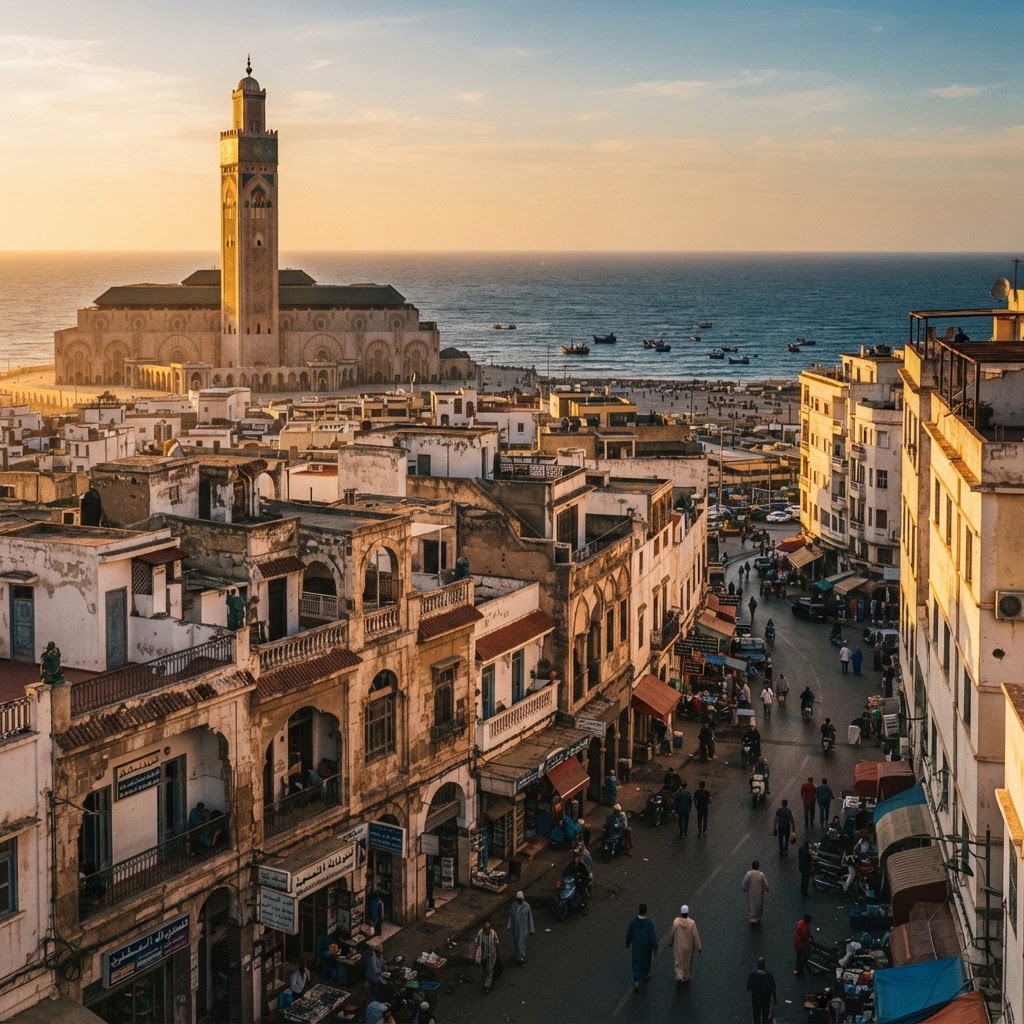
Casablanca is not the Morocco of romanticized desert caravans or labyrinthine imperial medinas. It is the country's economic engine and largest metropolis: a bustling Atlantic port where early 20th-century French colonial planning, Mauresque and Art Deco facades, and raw commercial energy collide. Most international visitors breeze through Mohammed V International Airport en route to Marrakech or Fes, but staying reveals an authentic slice of modern Moroccan life, exceptional Atlantic seafood, and the architectural triumph of the Hassan II Mosque.
2 days
Best time
April to May and September to October for optimal walking temperatures and minimal Atlantic rainfall.
Build your own trip with these prebuilt itineraries
Each one is a tested, day-by-day plan for Casablanca, Morocco — start here, then make it yours.
3 Days in Casablanca: Coastal Food & Market Traditions in Casablanca
Culinary deep dive through central market seafood stalls, Habous pastry institutions, and seaside culinary traditions without tourist kitsch
2 Days in Casablanca: Modern Urban Essentials in Casablanca
First-time overview exploring the Hassan II Mosque interior, Habous quarter, modern tramway corridors, and lively Atlantic corniche
1 Day in Casablanca: Stopover Architecture & Art Deco in Casablanca
Fast-paced architectural focus detailing colonial Mauresque landmarks, Centre-Ville facades, and mid-century modern heritage
Casablanca offers a necessary counterweight to Morocco's heritage circuits. Come to witness the Hassan II Mosque—one of the few operational grand mosques in the nation open to non-Muslim visitors, perched directly over crashing Atlantic waves—and explore streets lined with crumbling 1930s Art Deco and Neo-Moorish architecture that show how modern urban Morocco genuinely lives and works.
Where to stay
Getting there
Getting around
Food & drink
What it costs
Things to do
Book tours & tickets in Casablanca, MoroccoSkip it if
Skip it if you only have a week in Morocco and want the romanticized classic circuit of quiet riads, sprawling souks, and desert dunes—cities like Fes, Chefchaouen, and Marrakech deliver that atmosphere far better.
When to go
Unlike inland Marrakech or Fes, Casablanca's Atlantic marine layer buffers against blistering heat, making summer breezy but crowded with domestic holidaymakers; mid-spring and early autumn deliver clear skies, light crowds, and manageable taxi traffic.
Peak (June to August)
Warm and coastal-tempered (averaging 25–27°C / 77–81°F). The Ain Diab Corniche and beaches fill with domestic vacationers, hotel rates spike along the water, and major cultural festivals take place.
Shoulder (April–May & September–November)
The sweet spot for exploring. Daytime temperatures sit around 18–24°C (64–75°F), making the long architectural walks through Centre-Ville comfortable and train travel uncrowded.
Low (December to February)
Cooler (10–17°C / 50–63°F) with periodic Atlantic rain and grey skies. You will find lower room rates across business hotels and zero tour bus congestion at Hassan II Mosque.
Neighborhoods
Where you stay shapes the trip. Here's how to think about it.
Gauthier
Tree-lined leafy district packed with art galleries, bistros, sidewalk espresso bars, and a relaxed, residential pace.
Best for:independent travelers, food lovers, and quiet evenings
Don't miss:Catching an exhibition or tea in the courtyard at Villa des Arts, an exquisite 1930s Art Deco villa turned cultural center.
Habous Quarter (Nouvelle Medina)
Early 20th-century French-planned medina blending orderly arcades, Mauresque arches, and quiet open-air courtyards.
Best for:cultural immersion, artisan shopping, and architecture buffs
Don't miss:Sampling warm horn-of-the-gazelle pastries straight from the oven at Pâtisserie Bennis Habous on Rue Fkih El Gabbas.
Sidi Belyout & Centre-Ville
The bustling civic core where fading 1930s Art Deco apartment blocks, tram lines, and corporate headquarters intersect.
Best for:first-timers, transit connections, and architectural walking tours
Don't miss:The Mauresque civic monuments around Place Mohammed V, including the grand Wilaya clock tower and modern Grand Théâtre.
Ain Diab (La Corniche)
Atlantic oceanfront strip marked by breezy boardwalk promenades, beachfront beach clubs, and crashing surf.
Best for:luxury stays, sunset coastal walks, and upscale dining
Don't miss:An Atlantic sunset drink or dinner overlooking the rocky coastline at Le Cabestan Ocean View near the El Hank lighthouse.
Maârif
Vibrant, dense commercial district of high-street shopping, casual snack spots, and young local crowds.
Best for:budget travelers and modern local street life
Don't miss:Grabbing fresh Moroccan street food and browsing indie boutiques along Boulevard Al Massira Al Khadra.
Destination intelligence
Updated 9/14/2026The structured record we plan every Casablanca, Morocco itinerary from.
Walkability
Moderate within specific neighborhoods like Gauthier, Habous, or Centre-Ville, but the city as a whole is too spread out to navigate purely on foot.
Transit quality
Good: clean and modern tramway lines connect key districts, backed by frequent airport and regional trains via ONCF.
Car needed
Not recommended: congested urban traffic and aggressive driving make rental cars an active hindrance within city limits.
Ideal duration
2 days
Minimum useful
1 day
Peak season
June through August, when coastal domestic tourism surges and cultural festivals like Jazzablanca take place.
Shoulder season
April to May and September to November, featuring mild coastal weather and fewer crowds across transport links.
Low season
December to February, marked by cooler temperatures, occasional Atlantic rain, and lighter tourist volumes.
Best for
Common mistakes
- Expecting a postcard-perfect medieval walled medina; Casablanca's Old Medina is compact and utilitarian compared to Fes or Marrakech.
- Visiting the Hassan II Mosque outside scheduled non-Muslim guided tour slots, which leaves you only able to see the exterior courtyard.
- Renting a car for inner-city sightseeing instead of using petit taxis and the tramway.
- Spending significant money at Rick's Café under the mistaken belief it is an authentic film location, when the 1942 movie was filmed entirely on a Hollywood soundstage.
Best nearby
See what a trip to Morocco actually costs. Travel Budget Co.
How to plan it
- Stay in Gauthier for tranquil café culture and walkable dining, or choose Sidi Belyout near Casa-Port if you need effortless rail transit.
- Book the morning 09:00 or 10:00 interior tour of Hassan II Mosque to avoid the afternoon tour bus arrivals and midday glare.
- Do not waste your time trying to cross between the Habous Quarter and Ain Diab on foot; hail a metered red Petit Taxi to save your feet.
- Pair Casablanca with Rabat via the 50-minute Al Boraq high-speed train rather than attempting a hurried round-trip by road.
- Head to Marché Central between 12:30 and 14:00 to pick your raw seafood from the fishmongers and have it grilled immediately at adjacent stalls.
Questions
More in North Africa
Readymade itineraries
Start from a tested template — then make it yours.
Ready to book
Lock in your Casablanca, Morocco trip
Everything in one place. We may earn a small commission — it never costs you more.
Plan a trip to Casablanca, Morocco
Pick a length and we'll build a day-by-day plan around how you travel — neighborhoods clustered, budget-aware, and editable.
Get better at planning trips like this
Occasional notes on planning smarter — no spam, unsubscribe anytime.
Plan a trip to Casablanca, Morocco
Turn this guide into a day-by-day plan built around your pace, your group, and your budget.
Build my Casablanca, Morocco trip