
South Korea
Busan Itinerary: How Many Days + Sample Plans
Busan is Korea's beach-and-seafood south — temples by the sea and the country's best fish markets.
Traveler rating
Loved by first-timers.
Plan & book
Sort your Busan trip in one place.
We point you to the booking tools we'd actually use — live prices, no markup. Or let us build the day-by-day plan around you first, then book.
Pick your trip length
How many days do you need in Busan?
Each of these opens a full day-by-day plan you can make your own.
- 2 days — Two days — the essentials, no rushing.
- 3 days — Three days — the icons plus one neighborhood.
- 4 days — Four days — a full city without sprinting.
- 5 days — Five days — room for a day trip.
- 7 days — A week — the city at a human pace.
- With Kids trip — Shorter days, earlier dinners, what to skip.
- For Couples trip — Two-person pacing with evenings built in.
- Solo trip — A plan that works well on your own.
- Food trip — Meals and markets as the anchors.
- Outdoors trip — Nature, walks and open air.
- Culture trip — History, museums and the streets around them.
Busan is Korea's second city, by the sea — beaches, the Jagalchi fish market, and the cliffside Haedong Yonggungsa temple. Take the KTX from Seoul; eat hoe (raw fish) by the harbor.
2–3 days
Best time
Late September to November for crisp coastal air, dry skies, and mild temperatures.
Budget
₩80,000–150,000 per person per day at mid-range.
Build your own trip with these prebuilt itineraries
Each one is a tested, day-by-day plan for Busan — start here, then make it yours.
2 Days in Busan: The Coastal Highlights
First-time visitor focusing on major landmarks like Haeundae Beach, Gamcheon Culture Village, and the coastal temples.
4 Days in Busan: Culinary and Market Deep-Dive
Food-focused itinerary exploring Jagalchi Fish Market, Gukje Market, and hidden local eateries throughout the city.
6 Days in Busan: Coastal Trails and Day Trips
Outdoors and exploration-heavy, featuring Igidae Coastal Walk, Oryukdo Skywalk, and excursions to nearby Gyeongju or Tongdosa Temple.
Busan pairs big-city urban energy with dramatic coastal topography: rugged mountains plunge straight into the sea, framing vast sandy beaches and working container ports. It delivers Korea's freshest seafood culture right at the dock, cliffside temples that catch ocean spray, and colorful hillside refugee settlements that preserved wartime heritage.
Where to stay
Getting there
Getting around
Food & drink
What it costs
Things to do
Book tours & tickets in BusanSkip it if
Skip it if you only have 3-4 total days in South Korea—Seoul warrants that entire window. Also reconsider if you dislike hills, steep stairs, and navigating spread-out regional transit.
When to go
Summer brings oppressive humidity, crowds, and occasional typhoons, while mid-winter coastal winds can feel freezing. Autumn delivers clear visibility over the ocean, comfortable walking conditions, and stable weather.
Peak (July–August)
Sweltering heat, peak ocean swimming, packed Haeundae sands, and inflated resort prices. Expect high humidity and summer downpours.
Shoulder (April–June & September–November)
The best balance of outdoor comfort. Spring features cherry blossoms along Dalmaji Hill, while autumn offers clear blue skies and calm sea breezes.
Low (December–March)
Chilly, sharp sea winds, but sunny and mostly dry. Hotel rates drop significantly, and markets remain fully operational.
Neighborhoods
Where you stay shapes the trip. Here's how to think about it.
Haeundae
Upscale beachfront towers, broad coastal boardwalks, and resort bustle.
Best for:Beach lovers and resort-style relaxation
Don't miss:The retro Haeundae Blueline Park Sky Capsule ride from Mipo to Cheongsapo.
Gwangalli
Laid-back bayfront lined with craft beer pubs, independent cafes, and night skyline views.
Best for:Night views, casual evening dining, and younger travelers
Don't miss:Watching the illuminated Gwangan Bridge from Millak Waterside Park with takeout fried chicken or sashimi.
Nampo-dong
Gritty, energetic historic harbor district full of alley markets, port workers, and street stalls.
Best for:Street food hunters and historic port culture
Don't miss:Browsing the live seafood stalls on the ground floor of Jagalchi Fish Market and eating upstairs.
Seomyeon
High-density transit nexus pulsating with neon, pojangmacha food carts, underground shopping, and late-night bars.
Best for:Efficient transit connections and budget-friendly city nightlife
Don't miss:Grabbing late-night spicy tteokbokki and pajeon at the Seomyeon Pojangmacha street tents behind Lotte Department Store.
Yeongdo
Industrial island turned creative haven featuring renovated shipyards, cliffs, and ocean-facing cafes.
Best for:Cafe lovers, photography enthusiasts, and walkers
Don't miss:Walking the coastal cliff path of Huinnyeoul Culture Village, an old refugee settlement overlooking the South Sea.
Money & essentials
Currency
South Korean won (KRW). Cards common; cash for markets.
Language
Korean. English signage on transit; a translation app helps.
Safety
Exceptionally safe day and night, with virtually zero violent crime and well-monitored public transit.
Budget range
₩80,000–150,000 per person per day at mid-range.
Tipping
Tipping is not customary and generally not accepted in restaurants, bars, or taxis.
See what a trip to South Korea actually costs. Travel Budget Co.
How to plan it
- Stay in Seomyeon if you prioritize transit speed across east and west; base in Haeundae only if waking up directly on the beach matters more than transit efficiency.
- Group your days strictly by geography: do Gamcheon, Jagalchi, and Nampo-dong together, and save Haedong Yonggungsa and Haeundae for another day.
- Book your Haeundae Blueline Park Sky Capsule online 2 weeks in advance to secure sunset departure slots from Mipo to Cheongsapo.
- Take the KTX high-speed train from Seoul Station to Busan Station; it takes just 2 hours and 15 minutes and drops you right into the city core.
Questions
More in South Korea
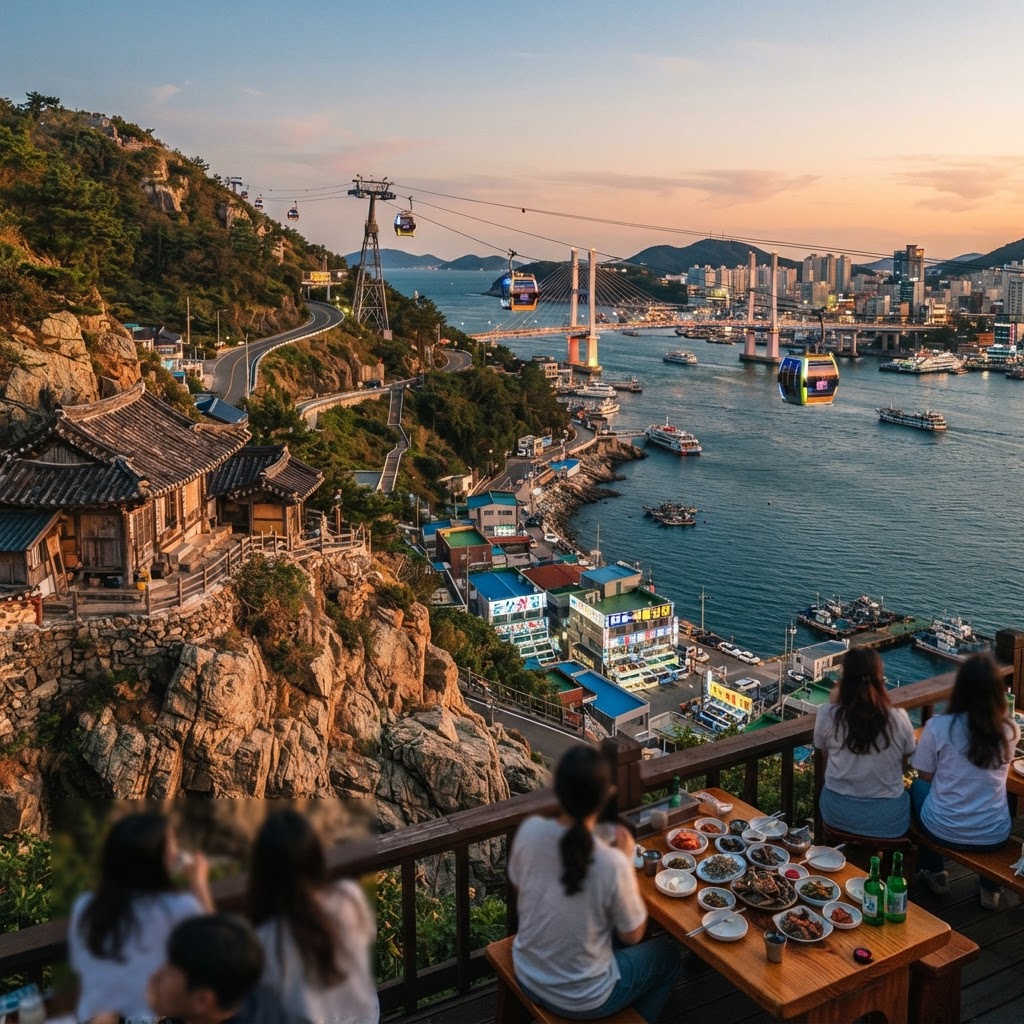
Yeosu, South Korea
South Korea
Korea's southern maritime retreat of cliffside hermitages, sea cable cars, and coastal banchan
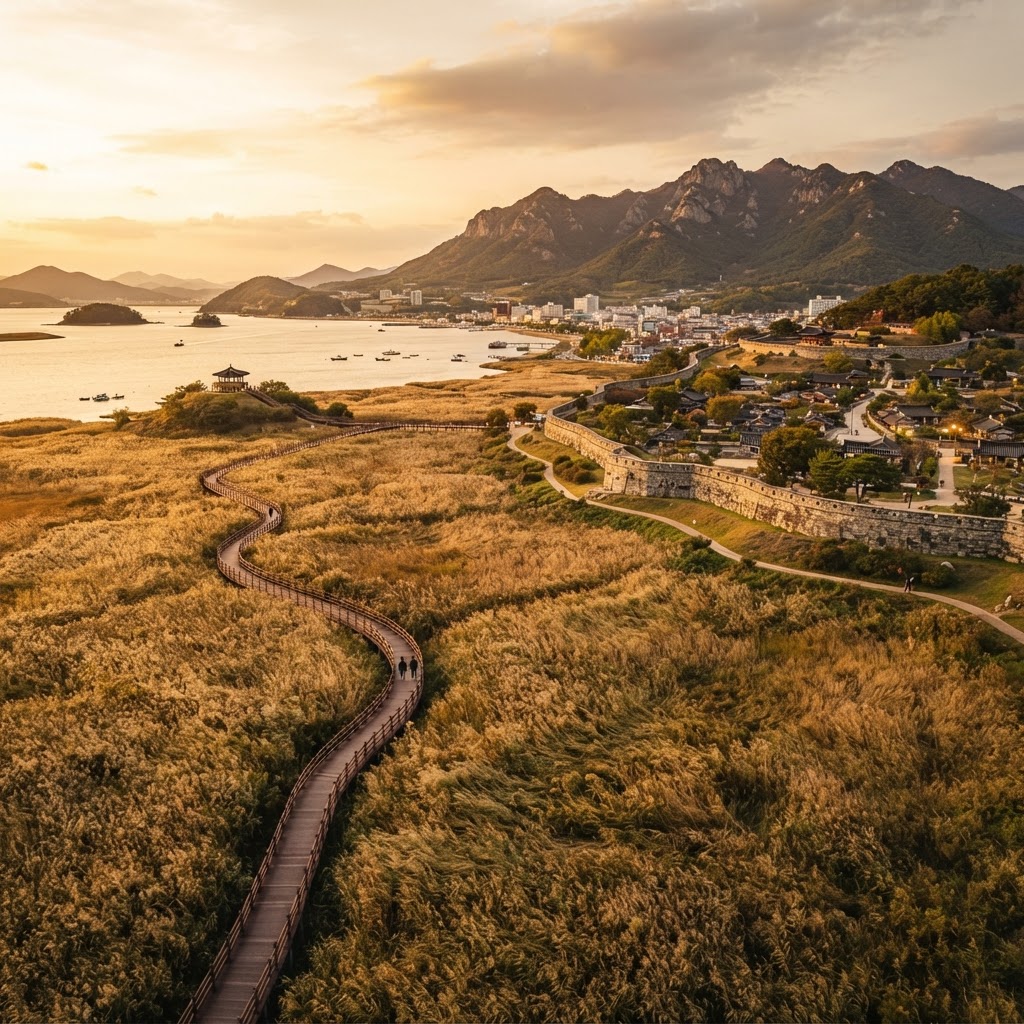
Suncheon, South Korea
South Korea
Expansive coastal reed beds, living fortress walls, and quiet southern culinary depth.
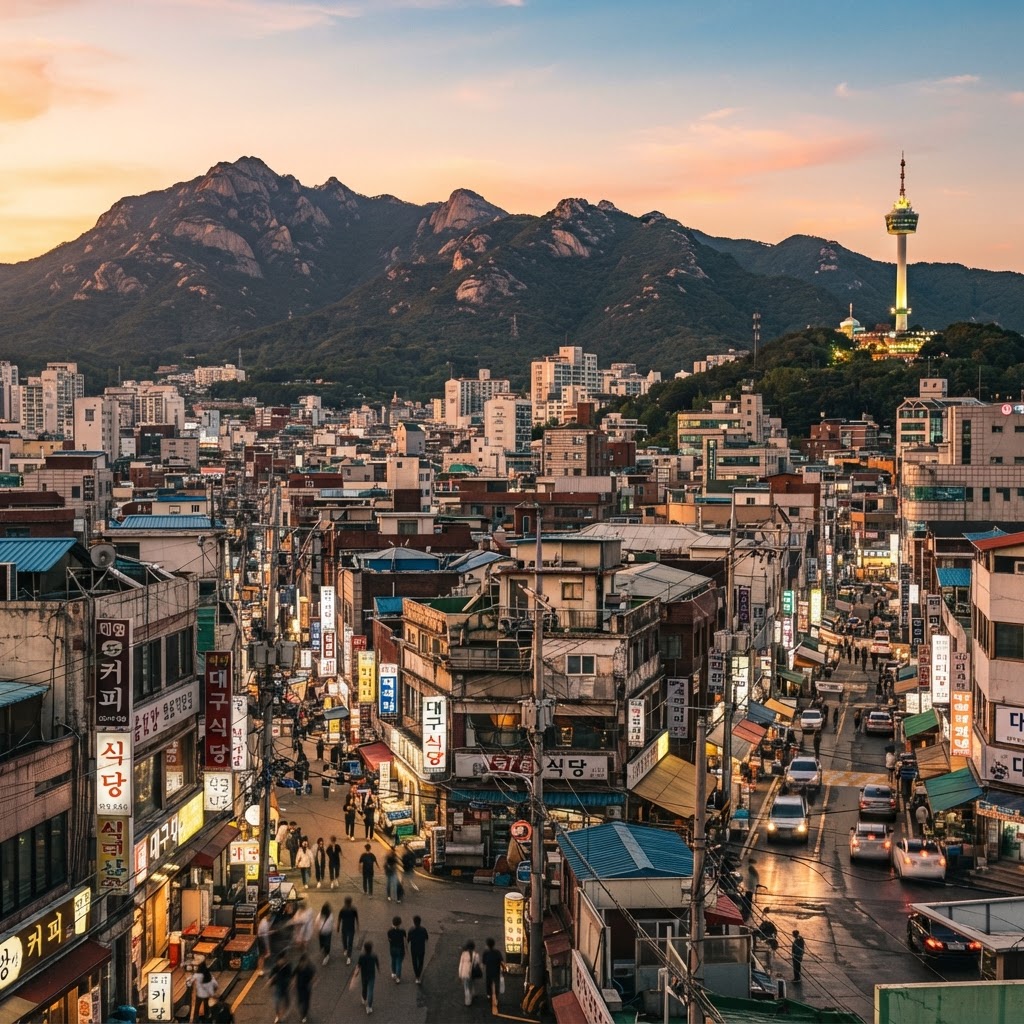
Daegu
South Korea
A gritty mountain-ringed textile hub turned coffee capital and culinary heavyweight
Readymade itineraries
Start from a tested template — then make it yours.
Ready to book
Lock in your Busan trip
Everything in one place. We may earn a small commission — it never costs you more.
Plan a trip to Busan
Pick a length and we'll build a day-by-day plan around how you travel — neighborhoods clustered, budget-aware, and editable.
Get better at planning trips like this
Occasional notes on planning smarter — no spam, unsubscribe anytime.
Plan a trip to Busan
Turn this guide into a day-by-day plan built around your pace, your group, and your budget.
Build my Busan trip