
Uzbekistan
Bukhara
The layered clay heart of the Silk Road
Plan & book
Sort your Bukhara trip in one place.
We point you to the booking tools we'd actually use — live prices, no markup. Or let us build the day-by-day plan around you first, then book.
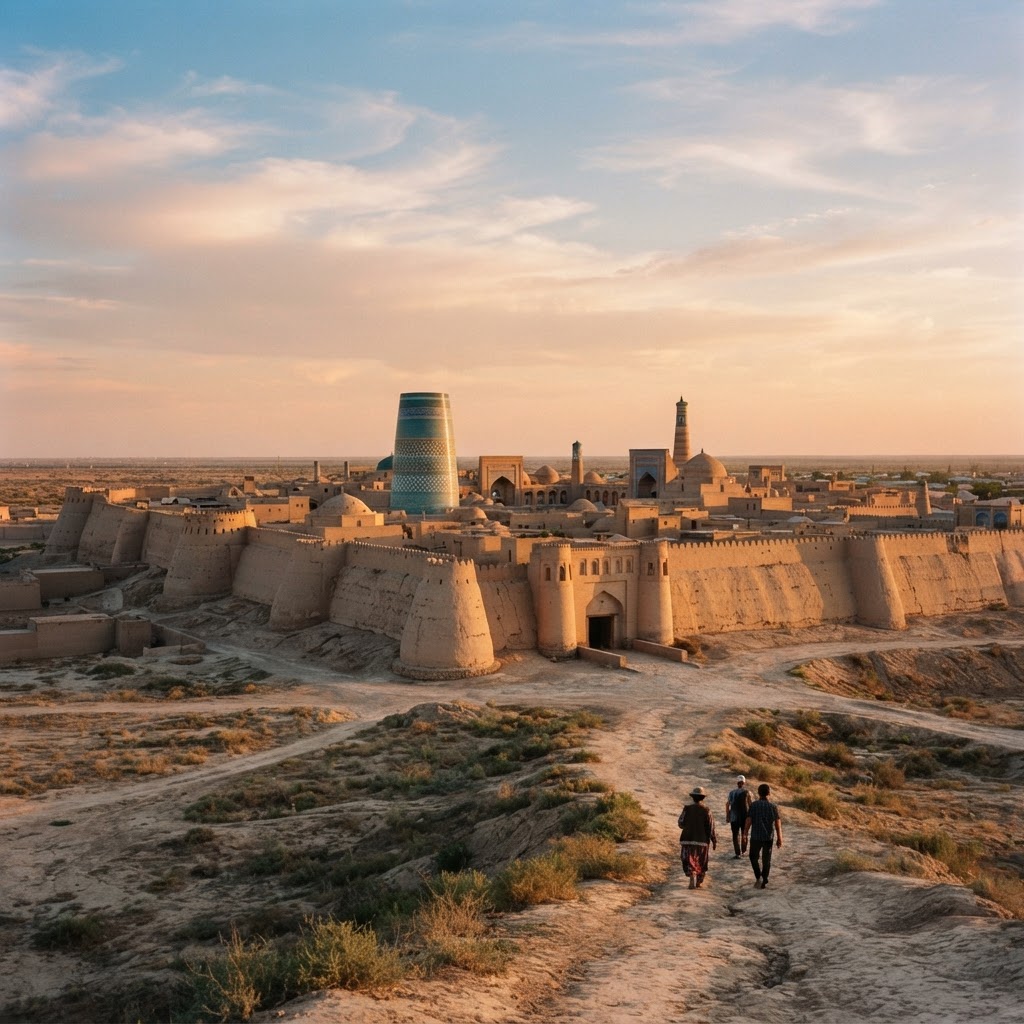
Where Samarkand stuns with colossal standalone monuments, Bukhara works as an unbroken medieval ecosystem. Spared the wide Soviet boulevards that carved up Tashkent, Bukhara's Old Town preserves domed trading bazaars, mud-brick residential alleys, and 1,000-year-old carved brickwork that survived Genghis Khan. It is a slow, textured city best navigated on foot over multiple days.
3 days
Build your own trip with these prebuilt itineraries
Each one is a tested, day-by-day plan for Bukhara — start here, then make it yours.
Bukhara & Kyzylkum Desert Gateways in Bukhara
Combining inner-city medieval monuments with yurt stays at Lake Aydarkul and Gijduvan ceramics
Artisan Craft & Culinary Explorer in Bukhara
Focusing on Bukharian Jewish heritage, carpet weaving, traditional bathhouses, and culinary tours
Silk Road Architecture & Living Heritage in Bukhara
Historic core walking circuits focusing on trading domes, Poi Kalyan, and Chor Minor
Bukhara preserves an intact Silk Road urban fabric that Samarkand simply cannot match. Its trading domes still shelter coppersmiths and carpet weavers, the Kalon Minaret stands exactly where it did in 1127, and the Old Town's shaded courtyards around Lyabi-Hauz allow you to absorb history as a lived environment rather than a checklist of fenced-off monuments.
Where to stay
Getting there
Getting around
Food & drink
What it costs
Things to do
Book tours & tickets in BukharaSkip it if
Skip Bukhara if your travel itinerary is shorter than five days and already prioritizes Tashkent and Samarkand. It is also poorly suited for travelers seeking high-octane nightlife, lush alpine scenery, or sleek contemporary urban culture.
Destination intelligence
Updated 9/13/2026The structured record we plan every Bukhara itinerary from.
Walkability
Excellent inside the Old Town; virtually all historic sites, bazaars, and restaurants are fully pedestrianized.
Transit quality
Limited intra-city public transit, but local ride-hailing via Yandex Go is fast, reliable, and exceptionally cheap.
Car needed
Not required. A car is an active liability in the historic center; trains handle intercity hops and taxis cover outlying palaces.
Ideal duration
3 days
Minimum useful
2 days
Peak season
Spring (April to May) and Autumn (September to October) offering clear skies and mild temperatures between 18°C and 28°C.
Shoulder season
Late March and early November; crisp air and thinner crowds, though nights dip into single digits.
Low season
June to August (scorching desert heat regularly topping 40°C) and December to February (bone-chilling winds and freeze).
Best for
Common mistakes
- Treating Bukhara as a single-day rush between Samarkand and Khiva, which reduces an atmospheric residential town to a sprint across sun-baked stones.
- Booking modern chain hotels in the new city district, forcing unnecessary daily taxi rides into the Old Town.
- Trying to eat plov for dinner; traditional Bukhara plov halls cook by morning and sell out entirely by 1:30 PM.
- Failing to pre-book Afrosiyob high-speed train tickets weeks in advance, resulting in slow overnight sleeper trains or shared taxi slogs.
Best nearby
More in Uzbekistan
Readymade itineraries
Start from a tested template — then make it yours.
Ready to book
Lock in your Bukhara trip
Everything in one place. We may earn a small commission — it never costs you more.
Plan a trip to Bukhara
Pick a length and we'll build a day-by-day plan around how you travel — neighborhoods clustered, budget-aware, and editable.
Get better at planning trips like this
Occasional notes on planning smarter — no spam, unsubscribe anytime.
Plan a trip to Bukhara
Turn this guide into a day-by-day plan built around your pace, your group, and your budget.
Build my Bukhara trip