Romania
Bucharest
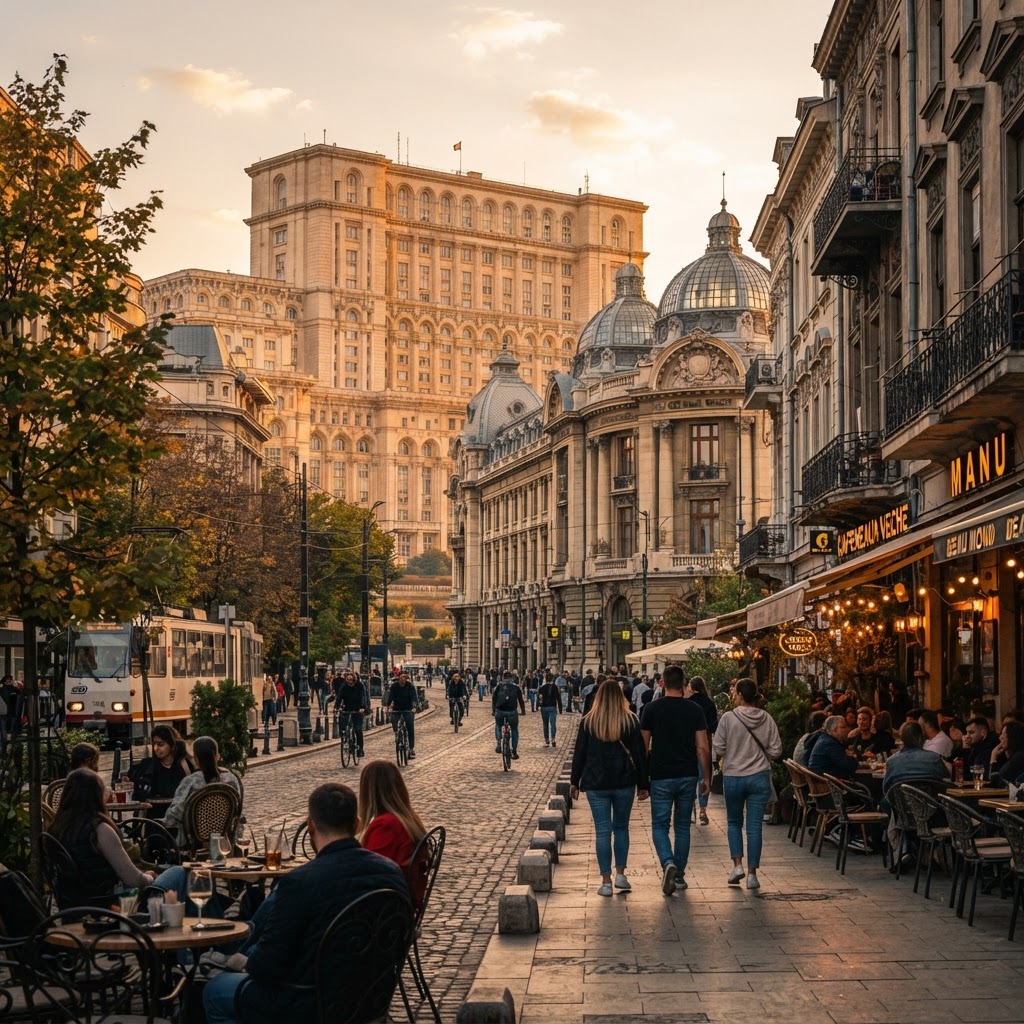
Brutalist scale, Belle Époque remnants, and one of Europe’s sharpest café scenes.
Plan & book
Sort your Bucharest trip in one place.
We point you to the booking tools we'd actually use — live prices, no markup. Or let us build the day-by-day plan around you first, then book.
Bucharest is defined by intense architectural contrasts: Parisian-style boulevards colliding with raw Communist mega-developments. Often treated as a perfunctory transit stop on the way to Transylvania, the city instead rewards travelers interested in complex 20th-century history, specialty coffee culture, and energetic nightlife, all delivered at an exceptional value relative to Western capitals.
3 days
Best time
May to June or September to October for warm walking weather and full terrace life without oppressive summer pavement heat.
Build your own trip with these prebuilt itineraries
Each one is a tested, day-by-day plan for Bucharest — start here, then make it yours.
5 Days in Bucharest: Deep Cut Neighborhoods & Day Escapes in Bucharest
An immersive itinerary exploring gritty residential pockets, quiet villa districts, cultural institutions, and regional thermal baths
3 Days in Bucharest: Architecture, History & Urban Culture in Bucharest
Classic overview highlighting Belle Époque avenues, communist monumentalism, and historic central quarters
2 Days in Bucharest: Craft Beer, Garden Cafés & Nightlife in Bucharest
A high-energy weekend dive into specialty coffee roasters, craft beer bars, and legendary Old Town late-night culture
Go for an unvarnished European capital where historic layers are fully visible. In a single afternoon, you can stroll past crumbling 19th-century French-inspired villas in Cotroceni, face the sheer megalomania of Ceaușescu’s Palace of the Parliament, and relax in third-wave coffee shops and leafy garden terraces.
Where to stay
Getting there
Getting around
Food & drink
What it costs
Things to do
Book tours & tickets in BucharestSkip it if
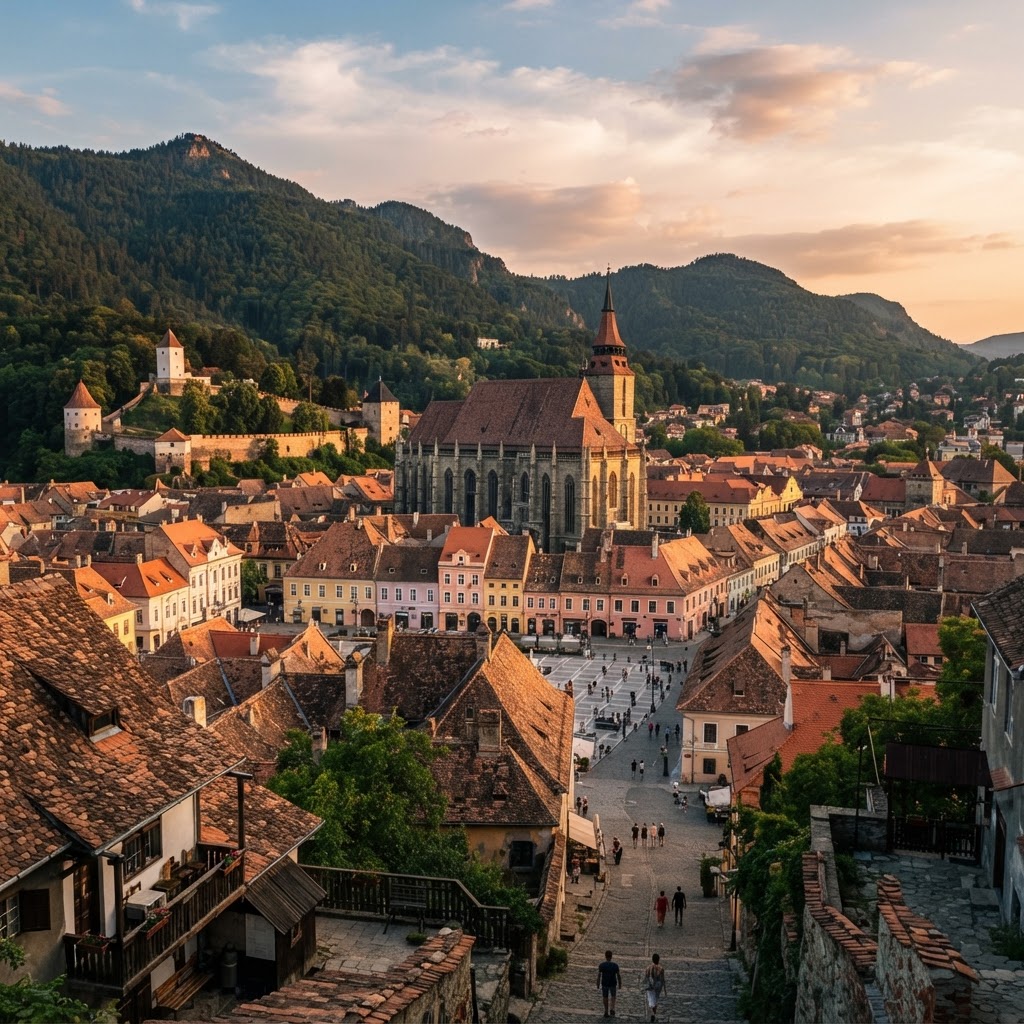
Skip Bucharest if your trip demands pristine fairy-tale cobblestones, impeccably restored medieval squares, or picturesque pastoral tranquility—head straight to Brașov, Sibiu, or Sighișoara instead. It is also not suitable for travelers who get frustrated by gritty urban aesthetics, tangled street cables, and uneven pavements.
When to go
Summer brings temperatures topping 35°C that turn the concrete boulevards sweltering, while winter stays bitterly cold and grey with closed garden venues. Spring and early autumn provide mild 18–24°C days, leafy parks, and open-air sidewalk culture without the peak summer desertion when locals head to the Black Sea.
Peak (May–Jun & Sep–Oct)
Pleasant 18–24°C temperatures, leafy public gardens, bustling open-air bars on Calea Victoriei, and ideal conditions for walking tours.
Shoulder (Apr & Oct–Nov)
Crisp air, variable rain, and thinner crowds; museum lines disappear and hotel rates drop, though evenings require heavy jackets.
Low (Dec–Mar)
Sub-zero snaps, grey skies, and occasional snow; great for budget travelers, uncrowded museums, and day trips to Therme spa, but street terraces remain boarded up.
Neighborhoods
Where you stay shapes the trip. Here's how to think about it.
Calea Victoriei & Amzei
Grand Belle Époque thoroughfare flanked by specialty espresso bars, French-influenced facades, and lively side-street bistros.
Best for:first-timers and architecture buffs
Don't miss:The 18th-century Eastern Orthodox Stavropoleos Monastery courtyard and an espresso stop at Origo or Bob Coffee Lab.
Lipscani (Centrul Vechi / Old Town)
Pedestrianized cobblestone core that shifts abruptly from historic trade lanes by day to loud, unvarnished terrace bars by night.
Best for:nightlife seekers and bar hoppers
Don't miss:Browsing the multi-tiered spiral staircases inside Cărturești Carusel bookshop before evening crowds take over the street.
Cotroceni
Quiet residential enclave of leafy boulevards, Art Deco and Neo-Romanian villas, and unhurried garden tea houses.
Best for:travelers seeking calm and architectural strolling
Don't miss:Tasting loose-leaf blends under the canopy at Ceainăria Infinitea after walking past the Cotroceni Palace perimeter.
Dorobanți & Floreasca
Sleek, upscale districts defined by third-wave brunch spots, polished cocktail bars, and proximity to green parks.
Best for:foodies and contemporary café lovers
Don't miss:The Ceaușescu Mansion (Spring Palace) on Bulevardul Primăverii for an eye-opening view of Communist elite extravagance.
Cișmigiu & Universitate
Academic, slightly bohemian quarter bordered by 19th-century English-style gardens, faded interwar apartments, and indie bookshops.
Best for:solo travelers and culture seekers
Don't miss:A boat rental on Cișmigiu Lake followed by a glass of Romanian Fetească Neagră wine on a terrace along Strada Brezoianu.
Destination intelligence
Updated 9/14/2026The structured record we plan every Bucharest itinerary from.
Walkability
High in central pockets (Old Town, Calea Victoriei, Cișmigiu, Dacia), moderate across broader boulevard districts.
Transit quality
High; inexpensive Metro network supplemented by extensive trams, trolleybuses, and direct airport rail.
Car needed
Not required. Urban traffic is congested and parking is difficult; use public transit and rideshares in the city, renting a car only when departing for rural regions.
Ideal duration
3 days
Minimum useful
2 days
Peak season
May to June and September to October: warm, pleasant temperatures, lively outdoor garden bars, and walkable street life.
Shoulder season
April and October to November: cooler, variable weather with thin tourist crowds and lower hotel rates.
Low season
December to March: cold, grey, and occasionally snowy; pleasant for indoor museums and thermal baths, but outdoor terraces are closed.
Best for
Common mistakes
- Treating the city solely as an airport runway to Transylvania and skipping the capital's distinct culture and culinary scene.
- Hailing rogue street taxis outside train stations or bars instead of booking through official dispatch apps or Bolt/Uber.
- Booking accommodation inside the pedestrian nightlife epicenter of Old Town if you require quiet sleep before 4:00 AM.
- Showing up to the Palace of the Parliament without booking an official guided slot in advance, which requires bringing an original passport for entry.
- Assuming every corner is a manicured tourist set piece; Bucharest is gritty and requires exploring residential and cultural pockets to appreciate.
Best nearby
See what a trip to Romania actually costs. Travel Budget Co.
How to plan it
- Base yourself along Calea Victoriei or Cișmigiu rather than inside the pedestrian Old Town core to get architectural charm without the 3:00 AM bass rumble of late-night bars.
- Book your Palace of the Parliament tour and Ceaușescu Mansion visits at least 48 hours in advance, and carry your physical passport for security entry.
- Pair Bucharest with Brașov or Sibiu by passenger train from Gara de Nord rather than driving through the bottlenecked DN1 highway corridor on a weekend.
- Do not try to combine Bran Castle, Peleș Castle, and a city tour into a single 12-hour excursion; dedicate one focused day to Peleș Castle in Sinaia via a 90-minute CFR train instead.
- Schedule your trip to Therme Bucharest on a weekday morning or early afternoon to avoid extreme weekend queues and family crowds.
Questions
More in Romania
Readymade itineraries
Start from a tested template — then make it yours.
Ready to book
Lock in your Bucharest trip
Everything in one place. We may earn a small commission — it never costs you more.
Plan a trip to Bucharest
Pick a length and we'll build a day-by-day plan around how you travel — neighborhoods clustered, budget-aware, and editable.
Get better at planning trips like this
Occasional notes on planning smarter — no spam, unsubscribe anytime.
Plan a trip to Bucharest
Turn this guide into a day-by-day plan built around your pace, your group, and your budget.
Build my Bucharest trip