Romania
Brașov
Gothic spires, Carpathian forests, and the definitive gateway to Transylvanian history
Plan & book
Sort your Brașov trip in one place.
We point you to the booking tools we'd actually use — live prices, no markup. Or let us build the day-by-day plan around you first, then book.
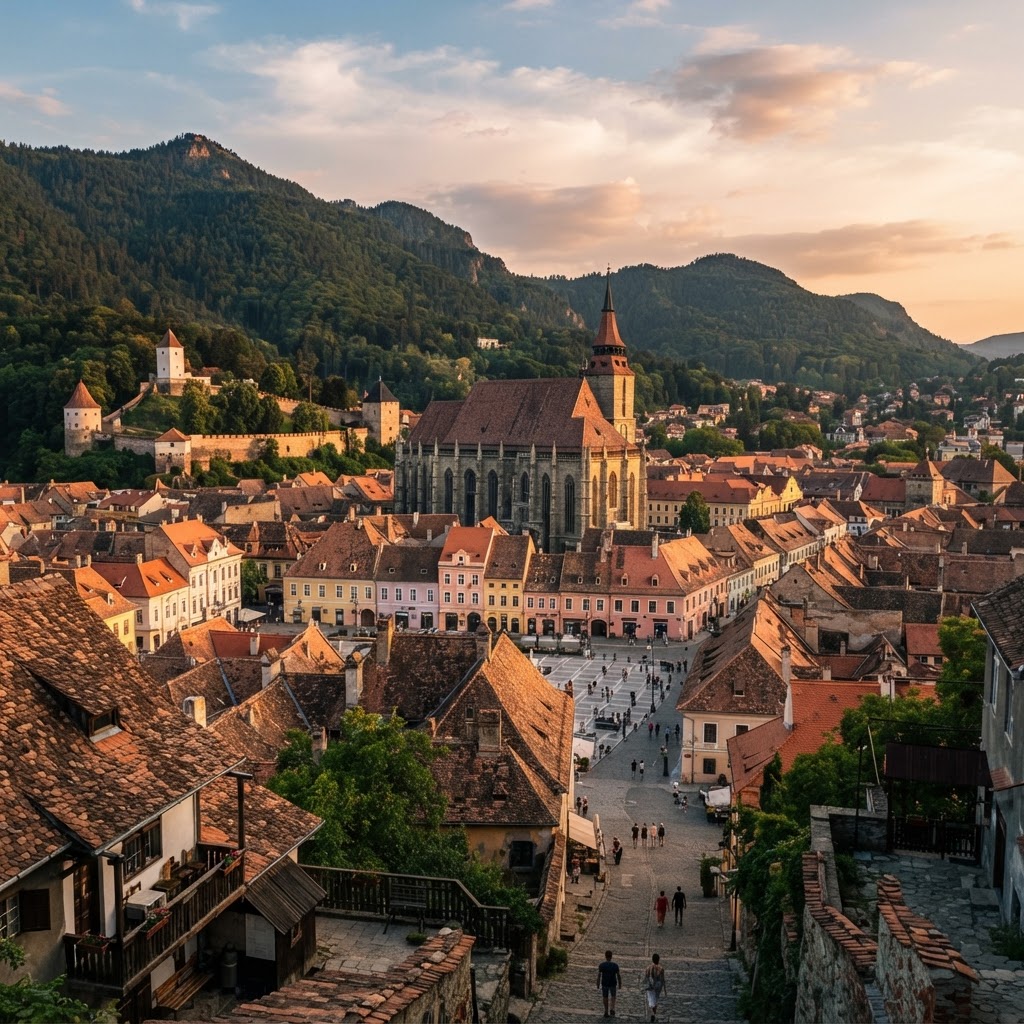
Set against the steep, forested slopes of Mount Tâmpa, Brașov combines Saxon merchant architecture with rugged mountain terrain. It serves as both a pedestrian-friendly base for regional day trips and a self-contained cultural hub known for its fortified towers, cobblestone alleys, and hearty Transylvanian gastronomy.
3 to 4 days
Best time
Mid-September to mid-October delivers crisp hiking weather, peak Carpathian autumn colors, and thinned-out crowds.
Build your own trip with these prebuilt itineraries
Each one is a tested, day-by-day plan for Brașov — start here, then make it yours.
4 Days of Transylvanian Fortresses & Regional Rail in Brașov
Slower-paced cultural exploration using Brașov as a transit hub for Râșnov, Peleș Castle in Sinaia, and Saxon fortified churches
3 Days of Alpine Trails & Carpathian Peaks in Brașov
Active outdoor and mountain adventure covering Mount Tâmpa, Postăvarul ridge treks, and bear-safe hiking routes
2 Days of Medieval Highlights & Castle Lore in Brașov
First-time historical immersion focusing on the walkable Old Town, Black Church, and early morning trip to Bran Castle
Brașov delivers the ideal balance between urban walkability and quick alpine access. Within minutes of stepping out of the bustling Piața Sfatului, you can hike switchbacks up Mount Tâmpa or catch regional trains south to royal residences in Sinaia and Saxon villages across the valley. It avoids the administrative congestion of Bucharest while offering far deeper infrastructure than smaller rural hamlets.
Where to stay
Getting there
Getting around
Food & drink
What it costs
Things to do
Book tours & tickets in BrașovSkip it if
Skip Brașov if your priority is high-energy nightlife, beach leisure, or fast-paced modern megacity culture. Those unwilling to walk cobblestones, climb hills, or navigate slower regional mountain roads will also find it frustrating.
When to go
Summer brings sunny days but packs Piața Sfatului and spikes hotel rates across Transylvania. Early autumn preserves clear mountain visibility and temperate midday hiking air while dropping lodging prices and eliminating queues at regional fortresses.
Peak (July–August & late Dec–February)
Warm, long daylight hours fill outdoor restaurant terraces in summer; winter brings snowseekers heading to Poiana Brașov. Book Old Town accommodations at least 3–4 weeks ahead.
Shoulder (May–June & September–October)
The prime balance of comfortable walking weather, vivid foliage or spring blooms, and manageable regional train travel.
Low (November & March–April)
Cold drizzle, muddy mountain trails, and short daylight hours. Best for quiet museum visits and cheap room rates if outdoor hiking is not your goal.
Neighborhoods
Where you stay shapes the trip. Here's how to think about it.
Centrul Vechi (Old Town)
Saxon burgher townhouses, pedestrian plazas, and gothic spires clustered at the foot of Mount Tâmpa.
Best for:First-timers, architecture buffs, and car-free travelers wanting doorstep walkability.
Don't miss:The vast interior of the 14th-century Black Church (Biserica Neagră) and the cobblestone stretch of Strada Republicii for evening coffee.
Șchei
Historic, winding Romanian hillside suburb of rustic cottages, stone walls, and tranquil village pace.
Best for:Quiet retreats, cultural travelers, and hikers wanting direct access to mountain trailheads.
Don't miss:The 15th-century Saint Nicholas Church and the historic First Romanian School beside Piața Unirii.
Drumul Poienii / Warthe
Serene hillside enclave of modern boutique villas perched along the winding alpine highway.
Best for:Couples, drivers, and travelers seeking panoramic balcony views over the medieval valley.
Don't miss:Watching twilight settle over the Old Town terracotta roofs from the scenic lookout pull-offs along the Poiana road.
Centrul Civic (Civic Center)
Wide post-war boulevards, administrative hubs, modern malls, and fast transit connectivity.
Best for:Budget business stays, extended visits, and travelers prioritizing proximity to supermarkets and modern transit.
Don't miss:Browsing Afi Brașov for regional shopping or catching direct suburban bus routes out to neighboring villages.
Răcădău (Valea Cetății)
Green residential neighborhood nestled in a forested valley under Tâmpa, known for tranquil local daily life.
Best for:Longer stays, families, and hikers wanting immediate forest access away from tourist crowds.
Don't miss:Strolling the quiet walking paths along the base of the mountain where forested slopes directly meet the town edge.
Destination intelligence
Updated 9/14/2026The structured record we plan every Brașov itinerary from.
Walkability
High
Transit quality
Moderate
Car needed
No
Ideal duration
3 to 4 days
Minimum useful
2 days
Peak season
July to August for hiking and outdoor patios; late December to February for skiing in Poiana Brașov
Shoulder season
May to June and September to October (crisp alpine air, vibrant autumn foliage, and manageable crowds)
Low season
November and March to April (mud, chilly rain, and reduced daylight)
Best for
Common mistakes
- Treating Brașov as an exhausting single-day bus tour from Bucharest rather than spending at least two nights locally.
- Renting a car to tour the historic center, where narrow alleys, strict pedestrian boundaries, and limited parking create needless friction.
- Assuming Bran Castle is a sprawling, authentic Dracula lair rather than a compact, often crowded medieval fortress that works best early in the morning.
- Hiking Carpathian trails on Mount Tâmpa or nearby Postăvarul without bear awareness, proper footwear, and daylight planning.
Best nearby
See what a trip to Romania actually costs. Travel Budget Co.
How to plan it
- Base yourself in Centrul Vechi if you rely on walking and rail; choose Șchei if you prefer stone-walled quiet over central restaurant noise.
- Do not try to visit Peleș Castle and Bran Castle in the same afternoon; traffic along the DN1 corridor is notoriously congested, so allocate each castle its own half-day.
- Pair your Brașov stay with an onward train to Sighișoara or Sibiu rather than treating Transylvania as an exhausting out-and-back day trip from Bucharest.
- If taking the Mount Tâmpa cable car, queue early in the morning during peak summer, or bypass the line entirely by hiking the marked Gabony's Steps trail (Treapta lui Gabony).
- Reserve Peleș Castle entry tickets online in advance to bypass the often stagnant morning ticket lines in Sinaia.
Questions
More in Romania
Readymade itineraries
Start from a tested template — then make it yours.
Ready to book
Lock in your Brașov trip
Everything in one place. We may earn a small commission — it never costs you more.
Plan a trip to Brașov
Pick a length and we'll build a day-by-day plan around how you travel — neighborhoods clustered, budget-aware, and editable.
Get better at planning trips like this
Occasional notes on planning smarter — no spam, unsubscribe anytime.
Plan a trip to Brașov
Turn this guide into a day-by-day plan built around your pace, your group, and your budget.
Build my Brașov trip