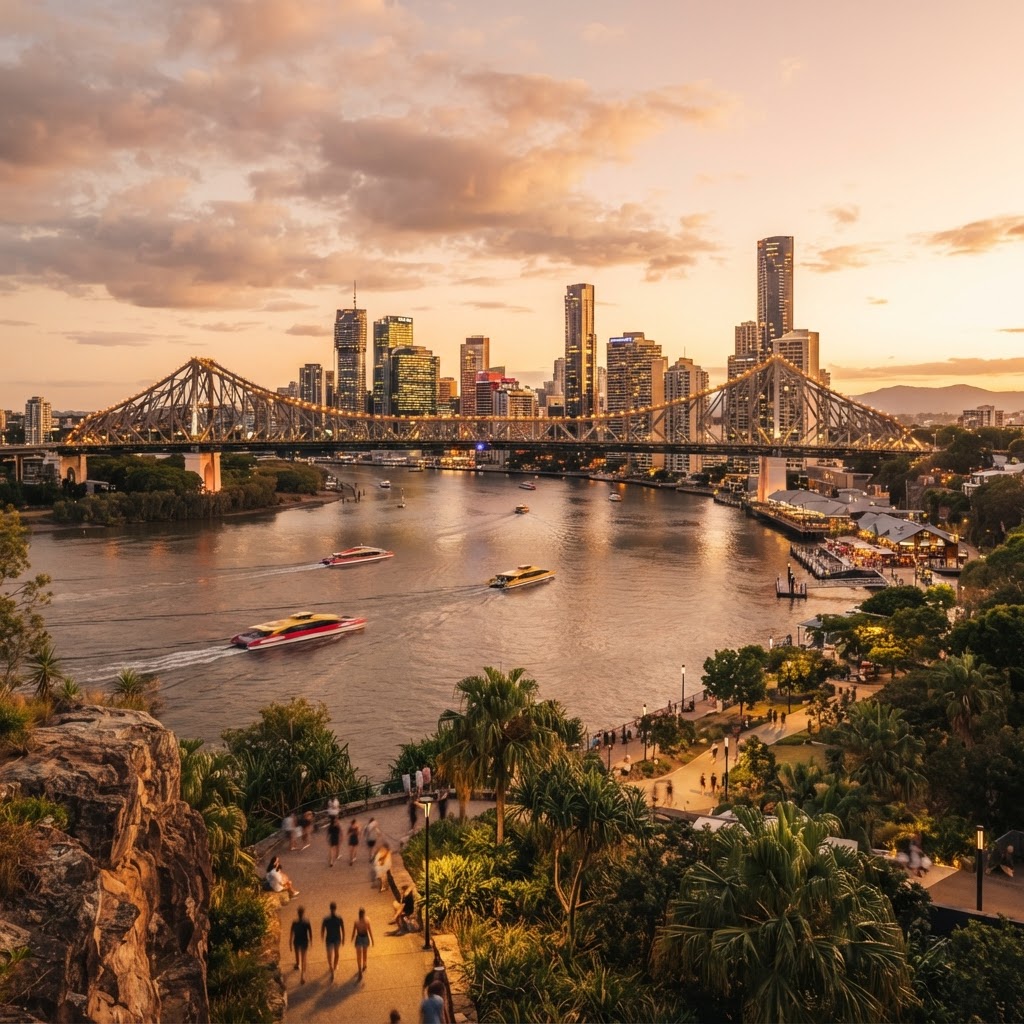
Australia
Brisbane
A sunlit, sub-tropical riverside capital that swapped corporate sleepiness for world-class dining, striking galleries, and urban river life.
Plan & book
Sort your Brisbane trip in one place.
We point you to the booking tools we'd actually use — live prices, no markup. Or let us build the day-by-day plan around you first, then book.
Brisbane has transformed from a sprawling provincial service town into an outdoors-focused urban powerhouse. Centered entirely along the sinuous Brisbane River, the city trades the high-strung pace of Sydney and the moody laneways of Melbourne for lush sub-tropical public spaces, elevated mid-century architecture, and accessible world-class cultural institutions like QAGOMA. It is Queensland's cultural gateway: relaxed, walkable along its river bridges, and filled with micro-precincts catering to excellent dining and outdoor living.
3 days
Best time
June to September (Winter to early Spring)
Build your own trip with these prebuilt itineraries
Each one is a tested, day-by-day plan for Brisbane — start here, then make it yours.
5 Days: Urban Wildlife, Islands & Scenic Hinterland in Brisbane
A slower-paced, family-friendly exploration combining core urban parks and wildlife sanctuaries with day trips out to Moreton Bay and the Scenic Rim hinterland.
3 Days in Brisbane: Art, River Walks & Dining in Brisbane
The definitive classic itinerary covering car-free river strolls, open-air gallery visits, indie bakeries, and subtropical riverside dining at Howard Smith Wharves and New Farm.
2 Days: The Riverside Stopover in Brisbane
A high-energy city break focused on CityCat river ferries, South Bank cultural precincts, and nightlife in Fortitude Valley and West End before heading to the coastal beaches.
Go for one of the most cohesive riverside public realm networks in the southern hemisphere. Between the river ferries, elevated boardwalks, free outdoor cultural programming at QAGOMA and Brisbane Powerhouse, and alfresco precinct hubs like Howard Smith Wharves, Brisbane offers easy, breezy urban living without the relentless friction and sky-high costs of Australia's larger southern capitals.
Where to stay
Getting there
Getting around
Food & drink
What it costs
Things to do
Book tours & tickets in BrisbaneSkip it if
Skip spending more than a night here if your entire Australian dream is based on walking directly from your hotel onto an open-ocean surf beach or viewing iconic heritage architecture. Brisbane is a modern river city; travelers wanting rugged Outback drama or classic beach culture will find those faster elsewhere.
When to go
This window offers cloudless blue skies, zero tropical rainfall, daily highs around 22°C (72°F), and crisp, low-humidity evenings perfect for walking the river bridges. You dodge the oppressive summer heat and heavy thunderstorm season, while domestic winter school crowds remain manageable outside the July break.
Peak (June to October)
Bright, clear days, crisp nights (around 10–13°C), and comfortable walking temperatures. September adds the citywide Brisbane Festival and flowering jacarandas, bringing peak hotel pricing.
Shoulder (April to May & November)
Warm days (25–28°C) with pleasant breezes. Autumn brings calmer waters and settled weather; November sees humidity begin to climb alongside afternoon storm cycles.
Low (December to March)
Intense subtropical heat (exceeding 30°C/86°F), high humidity, and heavy afternoon tropical deluges. Outdoor midday walking becomes draining, though gallery air conditioning and river breezes help.
Neighborhoods
Where you stay shapes the trip. Here's how to think about it.
South Bank & South Brisbane
Sprawling riverside cultural campus packed with galleries, subtropical parklands, and pedestrian boulevards.
Best for:First-timers, museum enthusiasts, and families
Don't miss:The Australian and Indigenous collections at QAGOMA, followed by an evening river walk past the Nepalese Peace Pagoda.
Fortitude Valley & James Street
Boutique leafy retail corridor along James Street shifting into raw, high-decibel live-music venues and late-night nightlife along Brunswick Street.
Best for:Design lovers, shoppers, and late-night revelers
Don't miss:Window shopping and outdoor brunch under the fig trees along James Street, followed by late-night drinks at Savile Row.
New Farm & Newstead
Tree-lined, wealthy residential river pocket defined by heritage Queenslander architecture, sprawling parklands, and riverside craft taprooms.
Best for:Slow travelers, foodies, and outdoor living
Don't miss:The Saturday morning farmers market at the Brisbane Powerhouse, ending with a beer overlooking the water.
West End
Bohemian, community-driven district blending historic Greek delis, craft cocktail dens, indie bookstores, and alternative cafes.
Best for:Casual dining, live indie gigs, and local cafe culture
Don't miss:Boundary Street on a Friday evening for craft beer, Greek street eats, and micro-distillery tasting rooms.
Brisbane CBD & Howard Smith Wharves
Glass corporate skyscrapers giving way to cliff-side riverside dining directly beneath the illuminated cantilever of the Story Bridge.
Best for:Business travelers and short stopovers wanting maximum ferry and pedestrian bridge access
Don't miss:An early evening spritz at Felons Brewing Co at Howard Smith Wharves watching CityCat ferries navigate the river bend.
Destination intelligence
Updated 9/14/2026The structured record we plan every Brisbane itinerary from.
Walkability
High in the inner core. The central city, South Bank, New Farm, and Fortitude Valley are tightly tied together with wide, continuous riverwalks, dedicated bike paths, and car-free footbridges.
Transit quality
High. The city is exceptionally well-served by the CityCat ferry system, a vast dedicated busway network that bypasses highway traffic, and integrated suburban trains.
Car needed
No. A car is an expensive liability in the inner city. Only rent a car on the final day when departing for the Sunshine Coast, Gold Coast hinterland, or Scenic Rim.
Ideal duration
3 days
Minimum useful
2 days
Peak season
Winter through early Spring (June to October). Days are dry, sunny, and warm (21–25°C / 70–77°F) with brisk, clear evenings and low humidity.
Shoulder season
Autumn (April to May) and mid-Spring (November). Comfortable temperatures, warm river breezes, and fewer domestic school holiday crowds.
Low season
Summer (December to February). High sub-tropical heat, oppressive humidity, and regular heavy tropical downpours and thunderstorms.
Best for
Common mistakes
- Renting a rental car to explore the inner city; parking is notoriously expensive and traffic around the CBD and Valley one-way systems is frustrating.
- Visiting in January or February without expecting intense sub-tropical humidity, afternoon storm downpours, and intense midday heat.
- Assuming Brisbane has immediate ocean surf beaches; the city sits on an estuary bay, so ocean surfing requires taking a train or driving an hour south to the Gold Coast or north to the Sunshine Coast.
- Staying strictly inside the business CBD at night, when the livelier restaurant and nightlife crowds migrate to Fortitude Valley, New Farm, and West End.
Best nearby
See what a trip to Australia actually costs. Travel Budget Co.
How to plan it
- Base yourself in South Brisbane or the James Street end of Fortitude Valley; the CBD shuts down early outside corporate hours, while these two neighborhoods remain energetic through dinner.
- Do not book a car for your time inside the city limits—pick up your rental at Brisbane Airport or a downtown depot only on the morning you depart for the Sunshine Coast or Byron Bay.
- Reserve Friday or Saturday dinner along James Street or at Howard Smith Wharves at least 3 to 4 weeks out, as locals treat outdoor weekend dining as a primary pastime.
- Ride the CityCat ferry between North Quay and New Farm at dusk rather than paying for a private river tour; you get the same Story Bridge illumination and skyline view on standard transit fare.
- Pair Brisbane with North Stradbroke Island (Minjerribah) or the Scenic Rim for nature, rather than treating Brisbane as a beach destination—Streets Beach at South Bank is a lagoon pool, not the ocean.
Questions
More in Australia
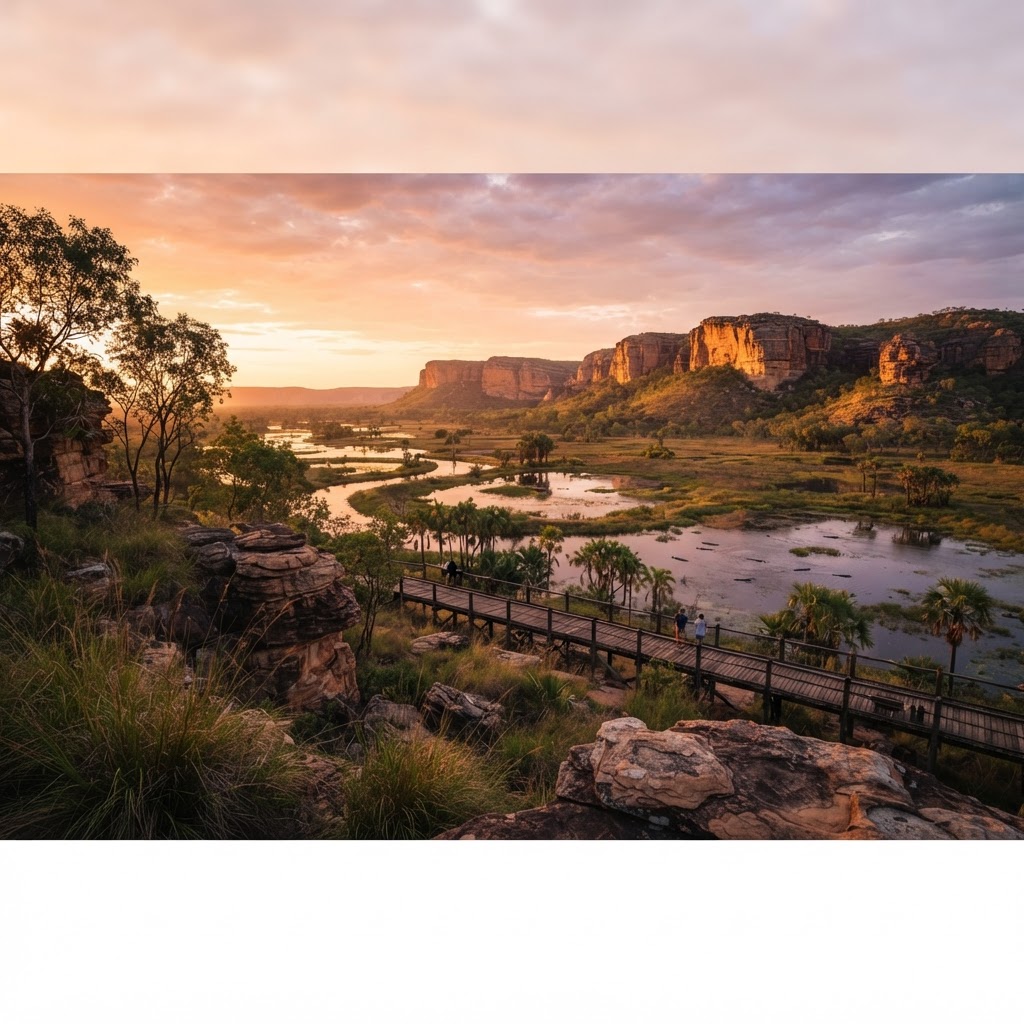
Darwin & Kakadu
Australia
Ancient sandstone floodplains, saltie territory, and balmy tropical open-air nights.
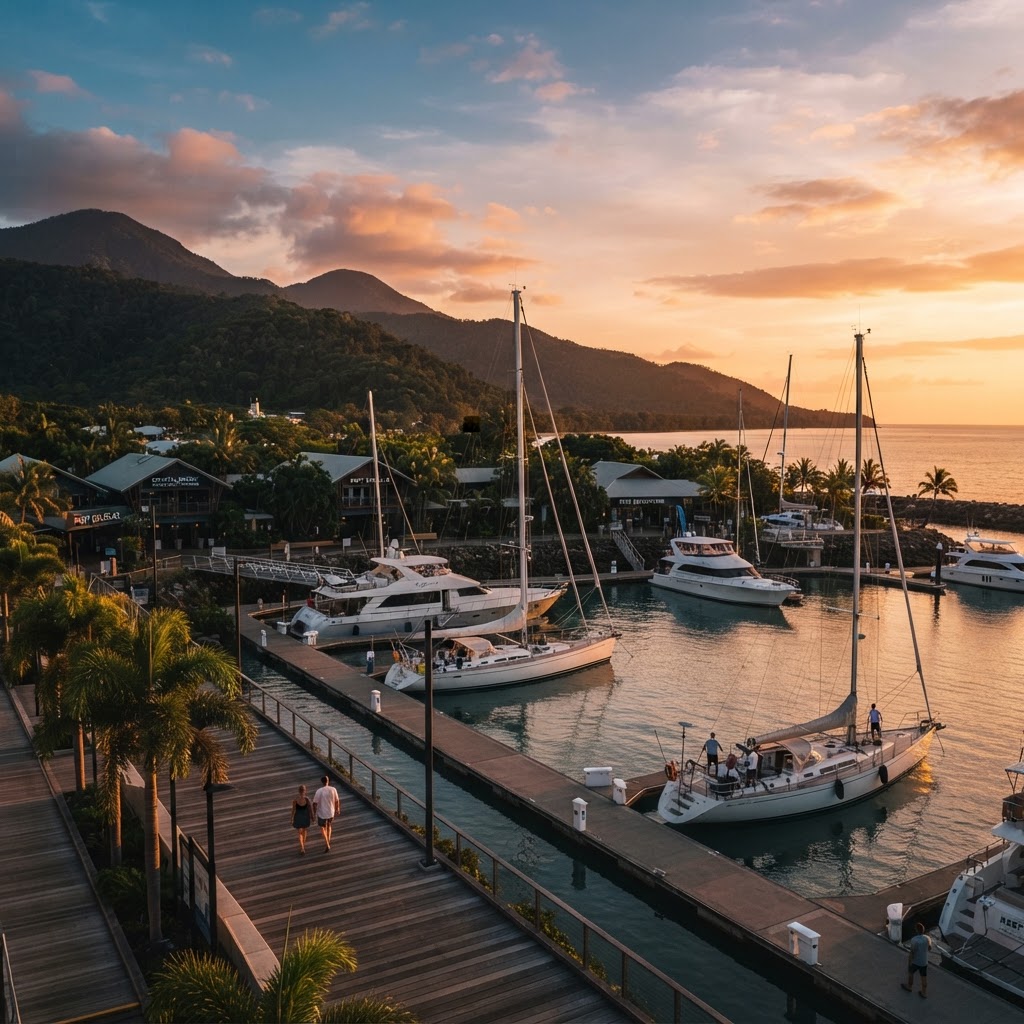
Port Douglas, Queensland
Australia
The sophisticated launchpad where the ancient Daintree meets the outer Great Barrier Reef.
Readymade itineraries
Start from a tested template — then make it yours.
Ready to book
Lock in your Brisbane trip
Everything in one place. We may earn a small commission — it never costs you more.
Plan a trip to Brisbane
Pick a length and we'll build a day-by-day plan around how you travel — neighborhoods clustered, budget-aware, and editable.
Get better at planning trips like this
Occasional notes on planning smarter — no spam, unsubscribe anytime.
Plan a trip to Brisbane
Turn this guide into a day-by-day plan built around your pace, your group, and your budget.
Build my Brisbane trip