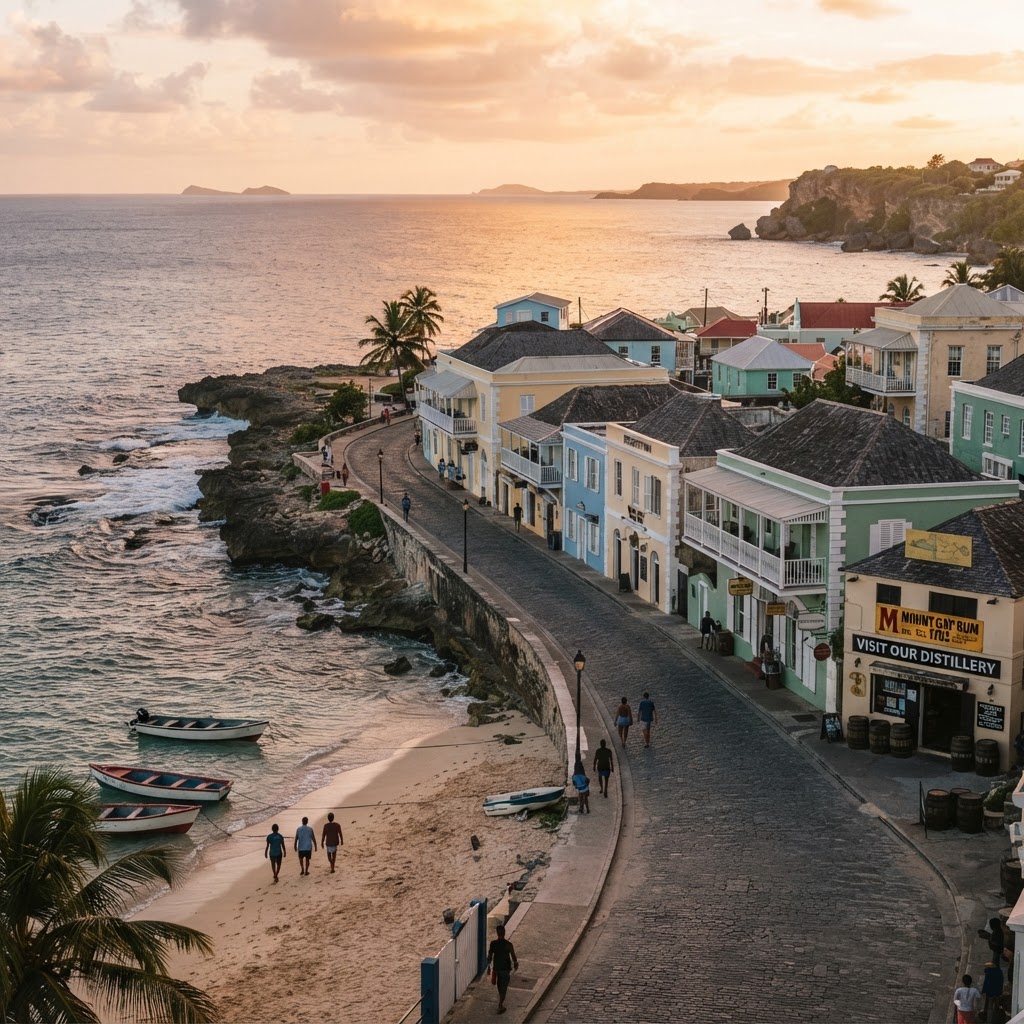
Barbados
Barbados
Two coastlines, rum-making heritage, and coral sand beaches.
Plan & book
Sort your Barbados trip in one place.
We point you to the booking tools we'd actually use — live prices, no markup. Or let us build the day-by-day plan around you first, then book.
Barbados sits solitary on the Atlantic edge of the Lesser Antilles, defined by a distinct dual character. The calm, turquoise waters of its west and south coasts contrast sharply with the pounding Atlantic surf along the rugged east coast in Bathsheba. Beyond the resort strips, it offers UNESCO-listed colonial fortifications, working 17th-century rum distilleries, and roadside fish fries, providing more historical depth and independent exploration than many resort-heavy Caribbean neighbors.
7 to 10 days
Best time
May to June hits the sweet spot: dry enough skies, manageable heat, dropped hotel rates, and empty beaches.
Build your own trip with these prebuilt itineraries
Each one is a tested, day-by-day plan for Barbados — start here, then make it yours.
10 Days Island Explorer & Coastal Wanders in Barbados
In-depth, slow-paced circuit spanning off-grid eastern parishes, northern cliffs, dive spots, and historic plantation trails
7 Days Best of Barbados Road Trip in Barbados
Classic island highlights balancing calm Platinum Coast swimming with rugged Atlantic surf sights and inland caves
5 Days on the South Coast & Local Flavors in Barbados
Car-free coastal escape centered on beach hops, ZR minivans, and authentic rum shops and fish frys
Go for a rare blend of Caribbean reef diving, exceptional independent dining, and distinct regional culture that is accessible outside gated all-inclusive enclaves. You can snorkel over shipwrecks in Carlisle Bay in the morning, drink double-distilled pot-still rum at St. Nicholas Abbey by midday, and eat grilled flying fish on plastic tables at Oistins by dusk without ever feeling confined to a hotel bubble.
Where to stay
Getting there
Getting around
Food & drink
What it costs
Things to do
Book tours & tickets in BarbadosSkip it if
Budget backpackers seeking ultra-cheap five-dollar beach huts should look to mainland Central America or parts of Southeast Asia, as baseline accommodation and imported goods make Barbados expensive. Travelers seeking massive, wild, unpopulated wilderness should also skip, as the island is relatively compact and densely developed.
When to go
Peak season (mid-December through April) brings flawless sunny weather and flat seas, but hotel prices double and top west-coast tables require weeks of advance planning. Shoulder season from May to June preserves excellent sea conditions and manageable rainfall at a much lower cost.
Peak (Mid-December to mid-April)
Clear skies, low humidity, calmest west-coast waters, and full holiday crowds; requires booking hotels and rental cars months ahead.
Shoulder (May to June)
Optimal value window with brief afternoon downpours, lighter crowds, warm sea temperatures, and significantly reduced accommodation rates.
Low (July to November)
Atlantic hurricane season; while Barbados sits south of most major storm paths, expect heavy humidity, passing tropical squalls, and occasional beach swells.
Neighborhoods
Where you stay shapes the trip. Here's how to think about it.
Holetown & St. James
Polished west-coast enclave of upscale beachfront villas, calm Caribbean water, and fine dining.
Best for:luxury travelers and calm-water swimming
Don't miss:Dinner right above the surf at The Lone Star followed by evening drinks along 1st and 2nd Street.
Hastings & Worthing (South Coast)
Walkable, energetic strip centered around the Richard Haynes Boardwalk with easy beach bar hopping.
Best for:first-timers and independent walkers
Don't miss:Early evening walk on the boardwalk followed by cutter sandwiches and Mount Gay rum at a local rum shop.
St. Lawrence Gap
Compact, high-density South Coast strip buzzing with reggae bars, live music, and late-night street food.
Best for:nightlife seekers and solo travelers
Don't miss:Catching live calypso or reggae along the Gap's waterfront watering holes before grabbing late-night doubles.
Oistins
Salt-crusted working fishing town with an authentic culinary heart and relaxed neighborhood feel.
Best for:seafood purists and local culture lovers
Don't miss:Fried flying fish with cou-cou and spicy Bajan pepper sauce at the Friday Night Fish Fry stalls.
Bathsheba & Cattlewash
Raw, wind-battered Atlantic sanctuary surrounded by pounding surf, dramatic boulder rock formations, and dense greenery.
Best for:surfers, landscape photographers, and digital detoxers
Don't miss:Watching elite wave riding at the Soup Bowl followed by a flying fish cutter at a roadside café overlooking the breakers.
Destination intelligence
Updated 9/14/2026The structured record we plan every Barbados itinerary from.
Walkability
Moderate along coastal towns (Hastings, Worthing, central Holetown), but very poor across rural parishes where roads lack sidewalks and streetlights.
Transit quality
High along main coastal arteries via cheap ZR minivans and public buses; low when traveling inland or across the island between coasts.
Car needed
Not needed if staying on the South Coast and sticking to beach life; strongly recommended for 2–3 days if venturing across the rugged east, north, and central interior.
Ideal duration
7 to 10 days
Minimum useful
4 days
Peak season
Mid-December to mid-April: driest weather, clear skies, calmest waters, but hotel rates hit maximum and bookings require months of lead time.
Shoulder season
May to June: lower hotel rates, warm sea temperatures, fewer cruise ship passengers, and generally manageable afternoon showers.
Low season
July to November: hurricane season across the Caribbean (Barbados usually sits south of major paths, but experiences high humidity, frequent rainfall, and higher sea swell).
Best for
Common mistakes
- Staying inside an all-inclusive resort on an island that is exceptionally safe, open, and easy to explore independently.
- Attempting to swim on the Atlantic East Coast beaches around Bathsheba, which feature deadly rip currents and are meant exclusively for experienced surfers and scenic viewing.
- Renting a car for your entire stay when staying along the dense South Coast corridor, where parking is scarce and ZR minibuses run every few minutes.
- Arriving at the Oistins Fish Fry past 8:00 PM on Friday and waiting over 90 minutes in line for food; arrive by 6:00 PM to order easily and secure a seat.
Best nearby
How to plan it
- Base yourself on the South Coast (Hastings or Worthing) if you want walkable restaurants, easy beach access, and cheap public transit without renting a car.
- Rent a car for just 48 to 72 hours in the middle of your trip to loop the wild East Coast (Bathsheba), Animal Flower Cave in the north, and inland rum distilleries, then return it to avoid paying parking or driving stress.
- Do not attempt to cross from the west coast to Bathsheba for a quick afternoon dip; the Atlantic surf is dangerous for casual swimming, and driving narrow inland country roads after sunset is challenging.
- Hit Oistins Fish Fry on Friday for peak party energy and live calypso, or visit on Thursday or Saturday night if you want the exact same freshly grilled mahi-mahi without the massive cruise and tour bus queues.
- Book a morning catamaran snorkeling excursion over Carlisle Bay shipwrecks before 10:00 AM to encounter sea turtles before jet skis and larger tour flotillas arrive.
Questions
Readymade itineraries
Start from a tested template — then make it yours.
Ready to book
Lock in your Barbados trip
Everything in one place. We may earn a small commission — it never costs you more.
Plan a trip to Barbados
Pick a length and we'll build a day-by-day plan around how you travel — neighborhoods clustered, budget-aware, and editable.
Get better at planning trips like this
Occasional notes on planning smarter — no spam, unsubscribe anytime.
Plan a trip to Barbados
Turn this guide into a day-by-day plan built around your pace, your group, and your budget.
Build my Barbados trip