Thailand
Ayutthaya
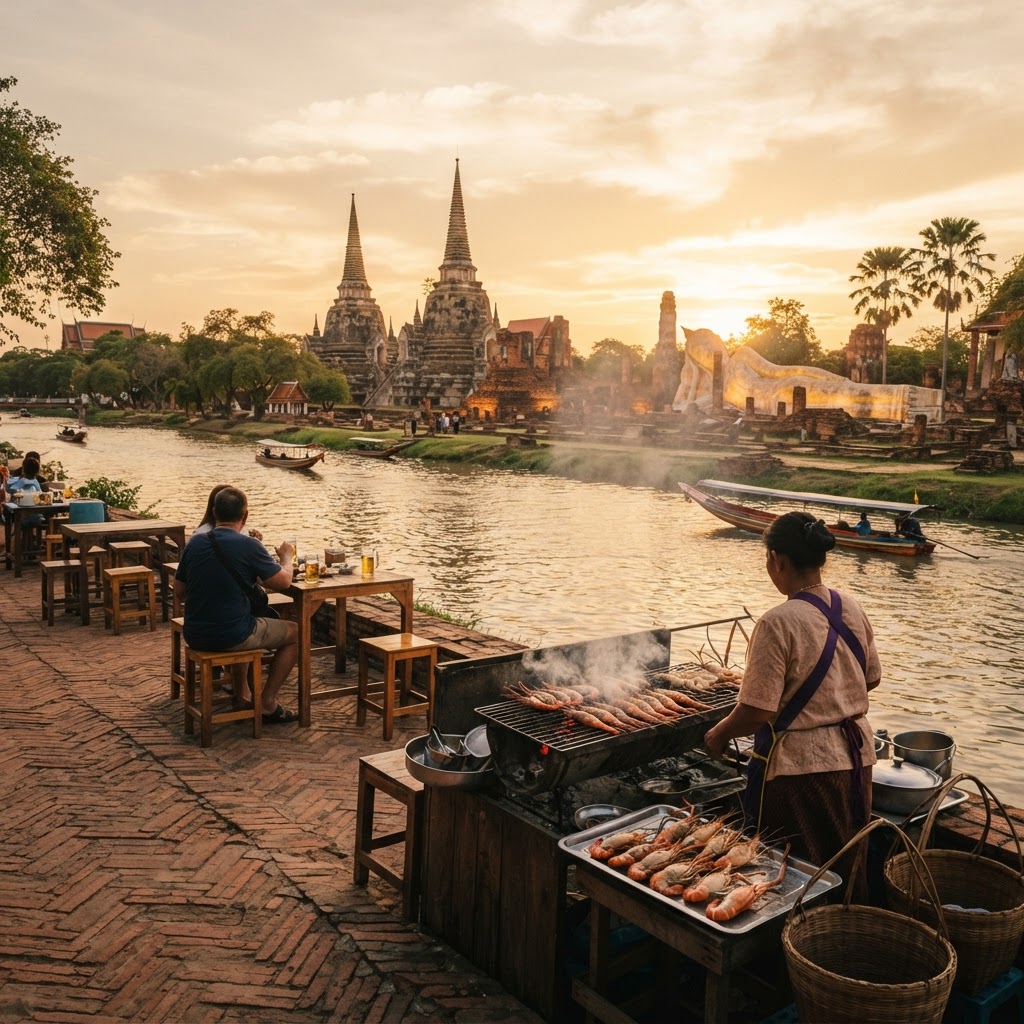
Siam's shattered river capital of brick stupas, colossal reclining Buddhas, and charcoal-grilled giant river prawns.
Plan & book
Sort your Ayutthaya trip in one place.
We point you to the booking tools we'd actually use — live prices, no markup. Or let us build the day-by-day plan around you first, then book.
Surrounded by a protective confluence of three rivers—the Chao Phraya, Pa Sak, and Lopburi—Ayutthaya served as the thriving seat of the Kingdom of Siam for over four centuries before its fall in 1767. Today, this UNESCO World Heritage landscape sits just 80 kilometers north of Bangkok, offering an evocative sprawl of weathered red-brick ruins, bell-shaped chedis, and banyan-wrapped stone carvings. While thousands rush through on rushed mid-day bus tours, the city's true atmospheric appeal belongs to those who wake before the tropical midday heat and linger until sunset, watching illuminated prangs reflect across the riverbanks.
2 days / 1 night
Best time
November to February for dry, manageable cycling conditions and cool evening breezes.
Build your own trip with these prebuilt itineraries
Each one is a tested, day-by-day plan for Ayutthaya — start here, then make it yours.
3 Days in Ayutthaya in Ayutthaya
Deep historical exploration and culinary journey including Chao Phraya river cruising, museums, and night markets
2 Days in Ayutthaya in Ayutthaya
Comprehensive historic immersion pairing island bicycle routes with illuminated twilight ruins and outer-moat temples
1 Day in Ayutthaya in Ayutthaya
Early-morning train day trip covering iconic ruins and a river prawn feast before escaping the midday heat
Ayutthaya presents the architectural zenith of classical Siamese culture without the need to fly to Sukhothai or cross into Cambodia. Its compact island layout lets you seamlessly combine world-class archaeological touring at sites like Wat Mahathat and Wat Chaiwatthanaram with tranquil riverfront dining focused on legendary charcoal-grilled giant freshwater prawns. Staying overnight transforms the experience, allowing you to cycle temple ruins in the cool dawn silence hours before the day-tripper crowds arrive from Bangkok.
Where to stay
Getting there
Getting around
Food & drink
What it costs
Things to do
Book tours & tickets in AyutthayaSkip it if
Travelers indifferent to ancient architecture or ruins who find walking through open-air archaeological parks in high tropical heat tedious, as well as visitors seeking lively nightlife, designer shopping, or seaside relaxation.
When to go
Central Thailand offers essentially three seasons: hot, hotter, and rainy. Between November and early February, daytime temperatures hover around 30°C with lower humidity and near-zero rain, allowing you to walk exposed brick complexes without heat exhaustion. March through May brings crushing 38–40°C heat that turns mid-day sightseeing into an endurance test, while June to October features predictable, brief afternoon deluge showers.
Peak (November–February)
Pleasant mornings and breezy nights; optimal cycling conditions, though riverfront boutique hotels book out weeks ahead and major temples see midday bus crowds.
Shoulder (October & March)
March brings rapidly surging heat; October sees tapering monsoon squalls and lush green temple moats with far smaller crowds.
Low (April–September)
April and May are blisteringly hot; July to September brings frequent downpours and river flooding risks, but hotels discount rates significantly.
Neighborhoods
Where you stay shapes the trip. Here's how to think about it.
Historical Park Core (Within the City Island)
Ancient red-brick ruin vistas surrounded by manicured parkland, quiet paved alleys, and temple boundaries that empty completely after twilight.
Best for:History buffs, photographers, and first-timers wanting to walk or cycle directly to premier ruins.
Don't miss:Watching late afternoon sun wash over the trio of restored bell-shaped stupas at Wat Phra Si Sanphet before the gates close at 18:00.
Chao Phraya South Riverside
Boutique, tranquil riverfront enclave defined by shaded terraces, upscale dining, and direct cross-river panoramas of ancient Khmer-style prangs.
Best for:Couples, luxury travelers, and anyone wanting sunset cocktails with illuminated temple views across the water.
Don't miss:Dinner on the deck overlooking Wat Chaiwatthanaram as darkness falls and floodlights illuminate its carved spires.
Naresuan Road & Soi Farang
Unpretentious, walkable hub of budget guesthouses, bicycle rental shops, laid-back outdoor bars, and chilled Western-Thai cafes.
Best for:Solo travelers, backpackers, and independent explorers seeking easy logistics and evening casual eats.
Don't miss:Renting a sturdy town bike early in the morning from the depot street before heading across the canal to Wat Mahathat.
East Railway Station & Hua Ro Market
Gritty, authentic local Thai market culture along the Pa Sak River, dominated by street food stalls, early-morning commuter energy, and ferry crossings.
Best for:Street-food lovers and budget rail travelers seeking an unvarnished slice of provincial life.
Don't miss:Sampling warm roti sai mai (spun palm-sugar candy wrapped inside fresh pandan crepes) fresh off griddles at Hua Ro Market.
Destination intelligence
Updated 9/14/2026The structured record we plan every Ayutthaya itinerary from.
Walkability
Moderate; the core historical park can be explored on foot, but the overall ruins are scattered over several kilometers, making a bicycle or tuk-tuk necessary.
Transit quality
Basic locally; exceptional direct rail access from Bangkok, supported on the ground by ubiquitous local tuk-tuks, rental bicycles, and ride-hailing apps.
Car needed
Not required; self-driving in Ayutthaya creates unnecessary parking friction, while trains from Bangkok and local tuk-tuks or bicycles provide complete mobility.
Ideal duration
2 days / 1 night
Minimum useful
1 full day (early morning train from Bangkok)
Peak season
November to February; cool, dry weather with daytime temperatures around 30°C and minimal rainfall, coinciding with peak visitor volumes.
Shoulder season
October and March; transitional weather with occasional late monsoon showers or climbing heat, offering quieter temple grounds.
Low season
April to September; characterized by intense pre-monsoon heat (April/May often exceeding 38°C) followed by afternoon monsoon downpours and humid conditions.
Best for
Common mistakes
- Visiting purely as a 4-hour day trip arriving at 11:30 AM, which exposes you to peak humidity, fierce midday sun, and massive bus tour crowds.
- Underestimating heat exhaustion by attempting to cycle continuously between 12:00 PM and 15:30 PM instead of taking an indoor museum or riverside cafe break.
- Wearing clothing that violates temple dress etiquette (shoulders and knees must be covered; carrying a sarong or light linen trousers is mandatory for entering fenced ruins).
- Failing to negotiate and fix a clear hourly rate with tuk-tuk drivers before stepping aboard at the train station.
- Overlooking the temples located outside the moat island, especially Wat Chaiwatthanaram and Wat Yai Chai Mongkhon, which are among the most intact complexes.
Best nearby
See what a trip to Thailand actually costs. Travel Budget Co.
How to plan it
- Split your sightseeing into two blocks: explore between 08:00–11:00 and 16:00–18:30, retreating to an air-conditioned cafe or pool during the brutal midday sun.
- Group your visits geographically: hit inside-the-island ruins (Wat Mahathat, Wat Phra Si Sanphet, Wat Ratchaburana) on one half-day, and outer perimeter temples (Wat Chaiwatthanaram, Wat Yai Chai Mongkhon, Wat Phanan Choeng) on another.
- Do not miss the giant freshwater river prawns; make an early dinner reservation at riverside institutions along the southern bend of the Chao Phraya such as Baan Pomphet or Ruan Thai Gung Pao.
- Hire a motorized longtail river boat from Chanthara Kasem Pier for a 2-hour circuit around the island moat at 16:30 to photograph waterside temples at golden hour.
- If arriving by train from Bangkok, exit the station, walk 50 meters straight down the alley to the river bank, and pay 10 THB for the cross-river ferry rather than paying inflated station tuk-tuk fares.
Questions
More in Thailand
Sukhothai, Thailand
Thailand
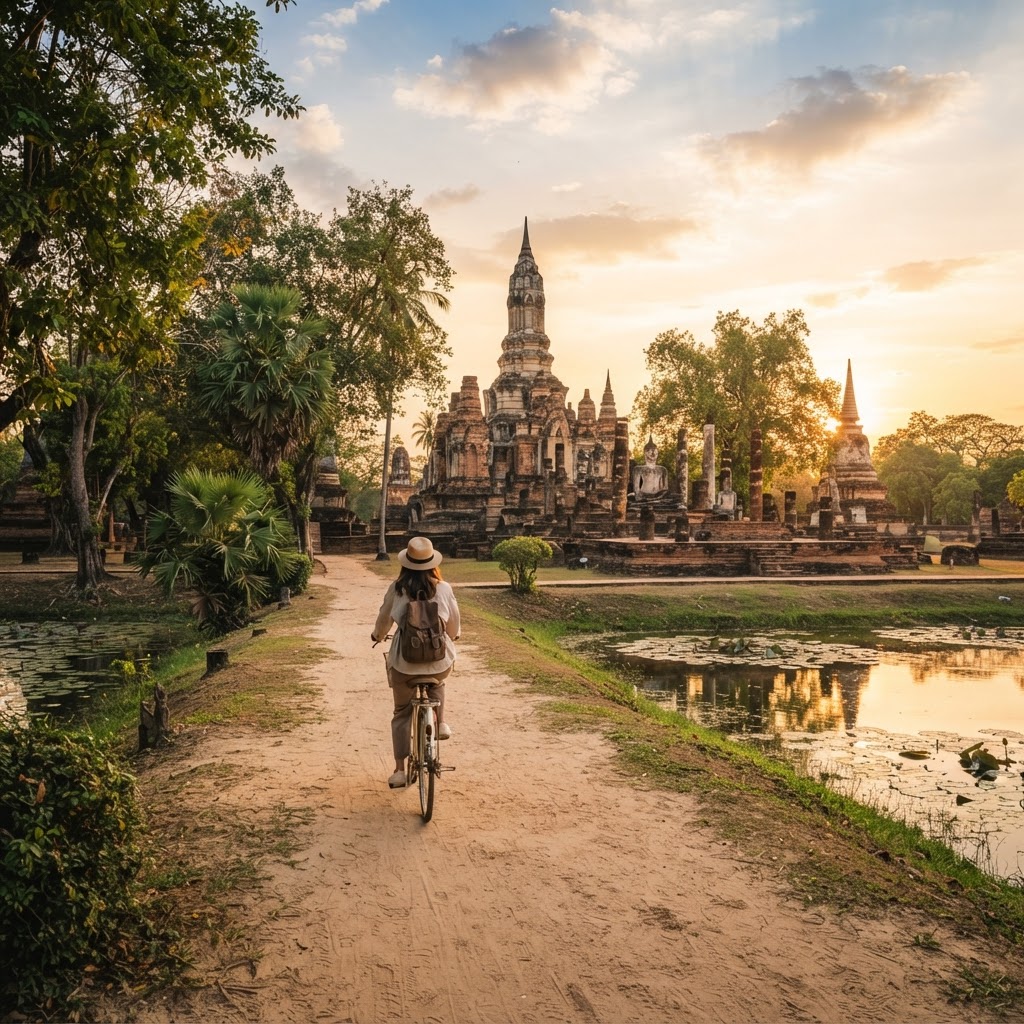
Cycle among the birthplace ruins of Siam, free from highway traffic and mass tour buses.
Hua Hin
Thailand
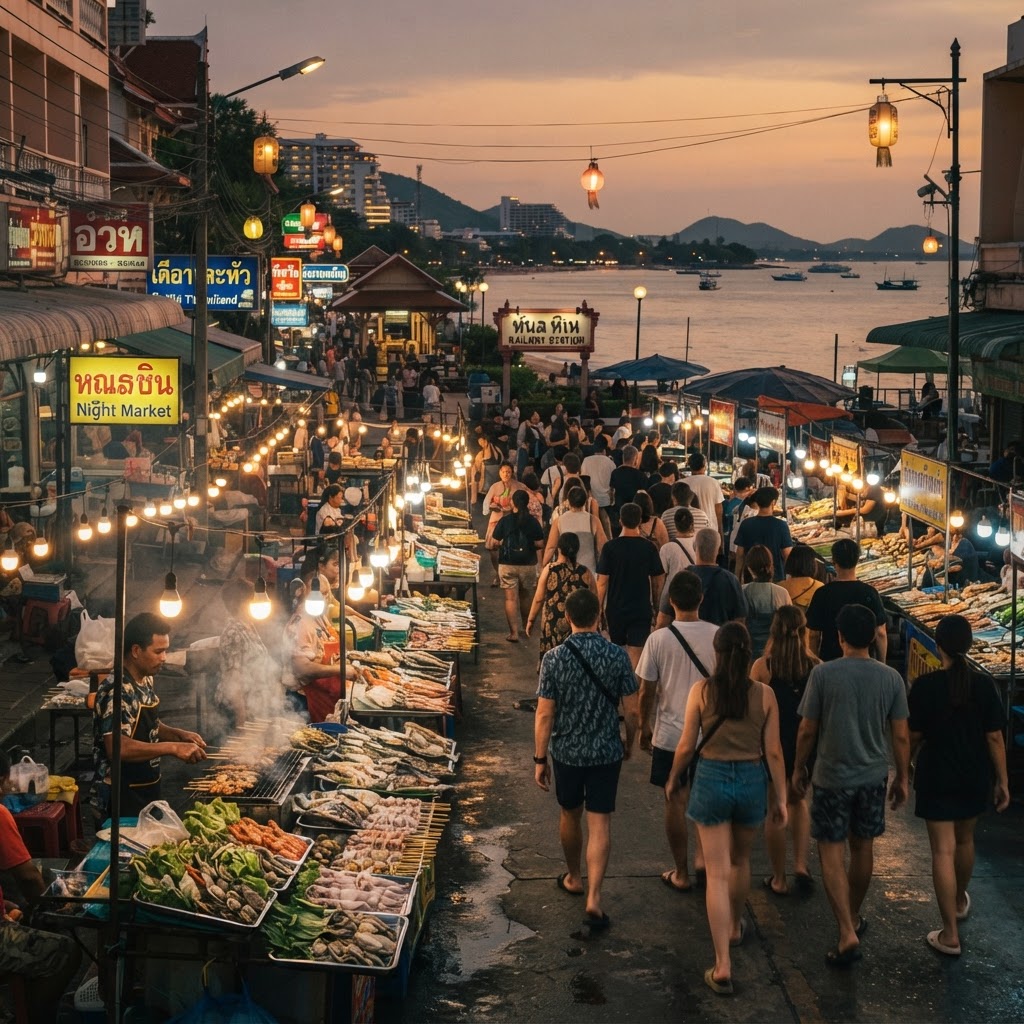
Royal coastal ease, night-market seafood, and low-friction seaside rest without the island transit hassle.
Readymade itineraries
Start from a tested template — then make it yours.
Ready to book
Lock in your Ayutthaya trip
Everything in one place. We may earn a small commission — it never costs you more.
Plan a trip to Ayutthaya
Pick a length and we'll build a day-by-day plan around how you travel — neighborhoods clustered, budget-aware, and editable.
Get better at planning trips like this
Occasional notes on planning smarter — no spam, unsubscribe anytime.
Plan a trip to Ayutthaya
Turn this guide into a day-by-day plan built around your pace, your group, and your budget.
Build my Ayutthaya trip