Netherlands
Amsterdam
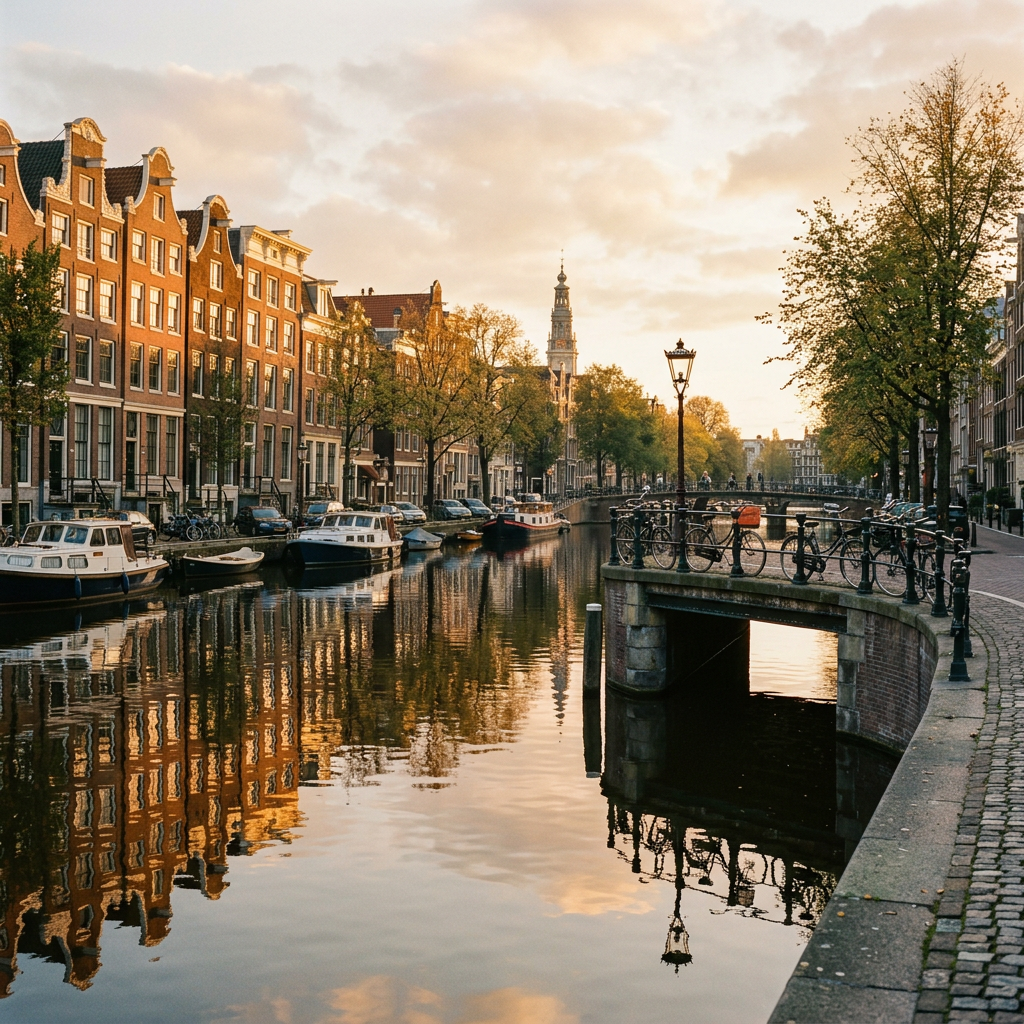
Amsterdam is a canal city built for walking and bikes — stay central, cycle slow, leave time for a museum.
Amsterdam is small, gorgeous, and best experienced at the speed of a bicycle. The canals, the 17th-century houses, and the café culture are all within a compact, walkable core.
The mistake is cramming it like a big city. Amsterdam is a small one — two good museums, a long walk, and a canal-side beer is a full day. Rent a bike but ride it like a local (hand signals, no footpaths), and book the big museums ahead.
It's expensive and crowded in season, but the scale means you see a lot with very little transit.
How long
2–4 days
Best time
April–May and September–October
When to go
Tulips in spring, golden light in fall — both mild and pleasant. Summer is the peak (busy, pricey); winter is cold and dark but charming and quiet.
Spring (Apr–May)
Tulips, mild, long days — the prettiest season.
Early fall (Sep–Oct)
Golden light, fewer crowds than summer.
Summer
Warm and long days, but very busy and expensive.
Winter
Cold, dark early, cheap — canals sometimes freeze for skating.
Neighborhoods
Where you stay shapes the trip. Here's how to think about it.
Canal Ring (Grachtengordel)
First-timers, everyoneThe postcard — concentric canals and 17th-century houses. Stay in or near it.
Don't miss: A canal cruise at dusk when the bridges light up.
Jordaan
Couples, walkersThe most charming neighborhood — narrow streets, hidden courtyards, and cozy brown cafés.
Don't miss: A drink in a bruin café (traditional pub) in the evening.
De Pijp
Food loversThe local, foodie district — the Albert Cuyp market and great casual dining.
Don't miss: A stroopwafel and a herring at Albert Cuyp market.
Oud-West
Budget, familiesResidential and pleasant, near Vondelpark — good value and central.
Don't miss: A picnic in Vondelpark on a sunny afternoon.
Amsterdam Noord
Returning visitors, artsThe edgy, post-industrial north — a free ferry across the IJ, NDSM arts space.
Don't miss: The ferry to Noord and a drink at NDSM by the water.
Practical
Currency
Euro (EUR). Cards everywhere; carry a little cash for markets.
Language
Dutch. English is near-universal and fluent.
Getting around
Walk or bike — the center is small. Trams fill the gaps. Rent a bike but learn the rules (stay in lanes, signal). Avoid cars and taxis; they're slow and pricey.
Safety
Very safe. Watch for pickpockets in the center and at Centraal Station. Cyclists have right of way — look both ways before crossing bike lanes.
Budget range
€80–150 per person per day at mid-range. Amsterdam is expensive; canal-side hotels are the biggest cost.
Tipping
Not expected. Round up or leave 5–10% for good service.
How to plan it
- Book the Rijksmuseum and Anne Frank House weeks ahead — they sell out.
- Rent a bike but ride like a local: stay in lanes, signal, yield to trams.
- Walk the canals at dusk — the city is at its best when the lights come on.
- Book accommodation early; canal-side hotels are scarce and pricey in season.
- Look both ways for bikes before you step into any street — it's the #1 tourist mistake.
Questions
How many days in Amsterdam?
Two to four. Two covers the core; four adds museums, Noord, and a day trip.
Do I need to book museums ahead?
Yes — the Rijksmuseum and Anne Frank House sell out, especially in season. Book weeks ahead.
Are coffee shops legal there?
Cannabis is tolerated in licensed coffee shops for adults. It's not legal elsewhere and not at the airport.
What should I budget per day?
€80–150 at mid-range. Accommodation is the big cost; food and transit are reasonable.
More in Europe

Split
Croatia
Split is a Roman emperor's retirement palace — Diocletian's, still lived in, with the sea on one side and ferries to the islands on the other.

Helsinki
Finland
Helsinki is a Nordic capital by the Baltic — design, saunas, and a sea-archipelago on the doorstep.

Bordeaux
France
Bordeaux is wine country in a city — a UNESCO riverfront of 18th-century stone and the world's wine capital.

Naples
Italy
Naples is Italy raw and real — pizza where it was invented, a castle over the bay, and Pompeii an hour away.

Thessaloniki
Greece
Thessaloniki is Greece's second city — Byzantine churches, a waterfront, and the best food in the country, Athenians say.

Bilbao
Spain
Bilbao is the Basque industrial city reborn by a Guggenheim — old and new in one rebuilt river town.
Readymade itineraries
Start from a tested template — then make it yours.
Where to book
Plan a trip to Amsterdam
Pick a length and we'll build a day-by-day plan around how you travel — neighborhoods clustered, budget-aware, and editable.
Get better at planning trips like this
Occasional notes on planning smarter — no spam, unsubscribe anytime.
Plan a trip to Amsterdam
Turn this guide into a day-by-day plan built around your pace, your group, and your budget.
Build my Amsterdam trip