Albania
Tirana, Albania
Post-communist reinvention meets vibrant café culture and bunker museums
Plan & book
Sort your Tirana, Albania trip in one place.
We point you to the booking tools we'd actually use — live prices, no markup. Or let us build the day-by-day plan around you first, then book.
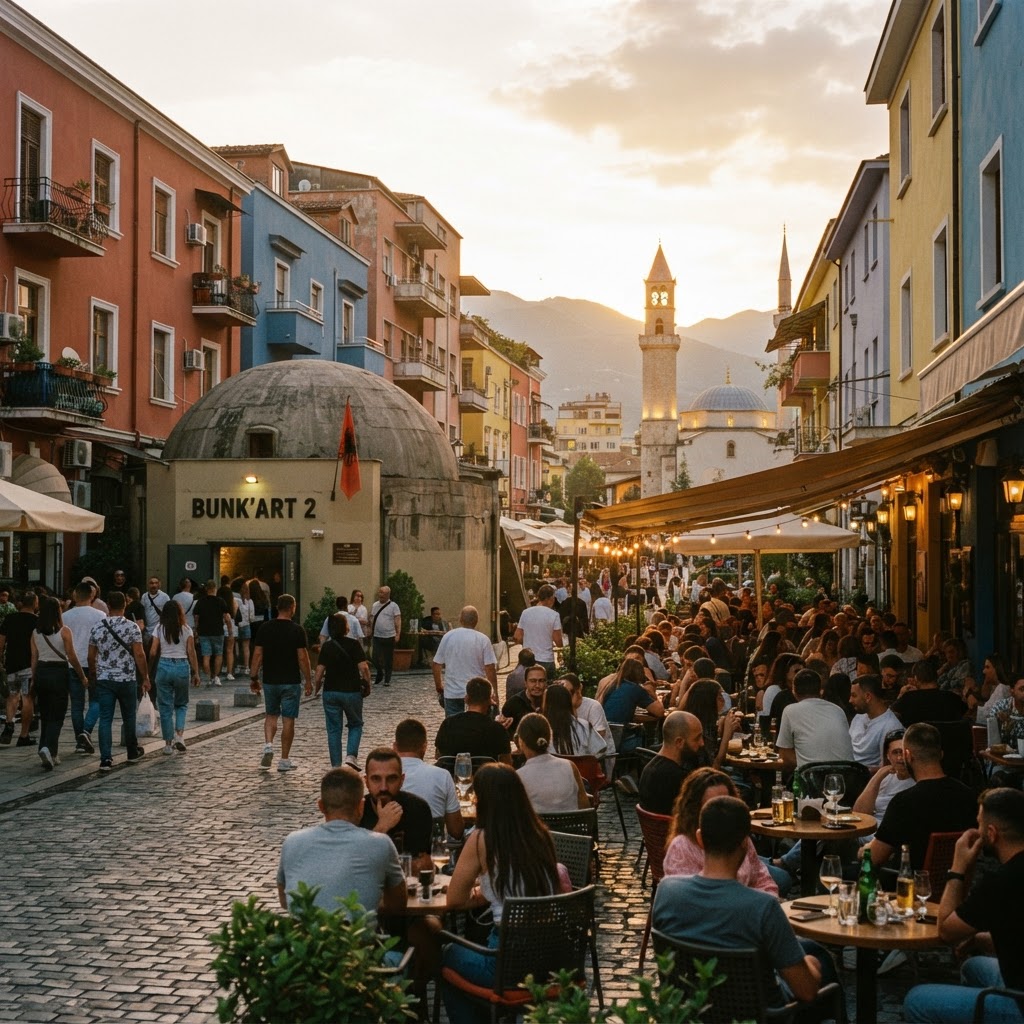
Tirana is one of Europe's most radical urban transformations. Once a grey, isolated capital under Enver Hoxha's totalitarian regime, it has transformed into a color-drenched, animated Mediterranean city where underground bunkers are now premier art institutions and former communist party compounds buzz with espresso bars and cocktail lounges. While it lacks postcard-perfect medieval old towns, Tirana rewards curious travelers with complex history, exceptional dining value, and unmatched Balkan hospitality.
3 days
Best time
April through June, and late September through October
Build your own trip with these prebuilt itineraries
Each one is a tested, day-by-day plan for Tirana, Albania — start here, then make it yours.
5 Days in Tirana: Basecamp for Central Albania in Tirana
A slower-paced deep dive pairing urban Tirana with regional day trips via public transport or organized tours to historic Krujë, Durrës, and Pellumbas Cave.
3 Days in Tirana: Complete City Highlights & Mount Dajti in Tirana
The classic, balanced introduction covering major museums, Skanderbeg Square, scenic cable car ascent to Mount Dajti, and traditional culinary tasting tours.
2 Days in Tirana: Cold War History & Urban Energy in Tirana
First-time city break focusing on pedestrian exploration, communist-era bunkers, vibrant café culture, and the Blloku neighborhood without needing a car.
Go for modern history you can touch, world-class café life, and unmatched European budget value. The underground installations of Bunk'Art 1 and Bunk'Art 2 provide unflinching windows into cold-war paranoia, while neighborhoods like Blloku showcase an energetic, forward-looking youth culture that has turned former political isolation into effortless outdoor living.
Where to stay
Getting there
Getting around
Food & drink
What it costs
Things to do
Book tours & tickets in Tirana, AlbaniaSkip it if
Skip Tirana if your idea of Europe requires manicured, fairy-tale cobblestone streets like Prague or Bruges, or if you only have four days in Albania and want purely sandy beaches on the Riviera.
When to go
Spring and mid-autumn offer clear skies and mild temperatures (18°C–24°C / 65°F–75°F) perfect for walking, avoiding the sweltering July–August heat when city heat traps between concrete and locals escape to the southern coast.
Peak (July–August)
Expect intense daytime heat above 35°C (95°F) and quieter weekdays as residents flee to Riviera beaches, though nightlife in Blloku stays loud and active late into the night.
Shoulder (April–June & September–October)
Optimal urban exploration weather, outdoor cafe terraces bustling at all hours, and prime hiking conditions in nearby Mount Dajti.
Low (November–March)
Cool and prone to prolonged rain spells, but budget accommodation drops to bargain rates and cultural sites like Bunk'Art are completely uncrowded.
Neighborhoods
Where you stay shapes the trip. Here's how to think about it.
Blloku
Former totalitarian elite enclave reinvented as an energetic hub of specialty coffee roasters, neon-lit craft cocktail dens, and design boutiques.
Best for:Nightlife, dining out, and energetic travelers wanting social energy right outside their door
Don't miss:The exterior of Enver Hoxha's preserved communist villa on Rruga Ismail Qemali, juxtaposed against high-end cocktail bars like Radio Bar.
Pazari i Ri (New Bazaar)
A renovated market quarter balancing traditional produce vendors, open-air seafood grills, and quiet residential side streets.
Best for:Foodies, couples, and travelers wanting authentic market culture within a 7-minute walk of the center
Don't miss:Freshly grilled qofte and raki under the geometric glass roof of the central market stalls at dusk.
Skanderbeg Square & Tregu Çam
The monumental administrative and cultural core, lined with travertine communist monoliths, museums, and pedestrian plazas.
Best for:First-time visitors on tight timelines prioritizing walkability to premier museums
Don't miss:The 18th-century frescoes inside Et'hem Bey Mosque, tucked beside the monumental Skanderbeg statue.
Grand Park & Lake District
A tranquil, leafy lakeside retreat popular with runners and families, buffered from urban traffic.
Best for:Families, joggers, and slow travelers seeking a calmer, greener pace
Don't miss:An early evening lakeside promenade (xhiro) with espresso at one of the terrace cafes overlooking the artificial lake.
Destination intelligence
Updated 9/14/2026The structured record we plan every Tirana, Albania itinerary from.
Walkability
High in the core center; Skanderbeg Square down to the Grand Park is completely pedestrian-friendly.
Transit quality
Moderate; extensive and very cheap city bus network, though it lacks rail and requires cash payment.
Car needed
No; a car is an active disadvantage in the city center due to congestion and parking constraints.
Ideal duration
3 days
Minimum useful
2 days
Peak season
July to August (hot, dry, and bustling, though many locals depart for the coast)
Shoulder season
April to June and September to October (optimal weather for walking and day-tripping)
Low season
November to March (cooler, rainy spells, but entirely free of tourist congestion)
Best for
Common mistakes
- Renting a car for your time in Tirana: driving in central traffic is chaotic, parking is scarce, and everything central is walkable
- Relying on credit cards everywhere: smaller bakeries, furgons (minibuses), market stalls, and minor cafes operate strictly in cash (Albanian Lek)
- Expecting organized European-style bus stations: the regional bus terminal (Regional Bus Terminal - North and South) is largely an unpaved open staging yard requiring travelers to read windshield placards or ask drivers directly
- Visiting in July or August without anticipating extreme heat: the inland concrete basin frequently exceeds 38°C (100°F), driving locals out to the coast
Best nearby
How to plan it
- Base yourself in Pazari i Ri for quick walking access to food and museums, or in Blloku if evening cocktail lounges and trendy dining are your priority.
- Pair your trip with an excursion via the Dajti Ekspres cable car up Mount Dajti, but skip it on foggy or overcast days when the valley view is obscured.
- Don't attempt Bunk'Art 1 and Bunk'Art 2 on the same afternoon; their dense, heavy Cold War themes warrant splitting across separate days to prevent museum fatigue.
- If traveling onward to Berat, Gjirokastër, or Sarandë, verify regional bus departures at the South and North Bus Terminal (Terminali i Autobusëve të Veriut dhe Jugut), located 15 minutes by taxi northwest of the city center.
Questions
More in Albania
Readymade itineraries
Start from a tested template — then make it yours.
Ready to book
Lock in your Tirana, Albania trip
Everything in one place. We may earn a small commission — it never costs you more.
Plan a trip to Tirana, Albania
Pick a length and we'll build a day-by-day plan around how you travel — neighborhoods clustered, budget-aware, and editable.
Get better at planning trips like this
Occasional notes on planning smarter — no spam, unsubscribe anytime.
Plan a trip to Tirana, Albania
Turn this guide into a day-by-day plan built around your pace, your group, and your budget.
Build my Tirana, Albania trip