New Zealand
Taupō, New Zealand
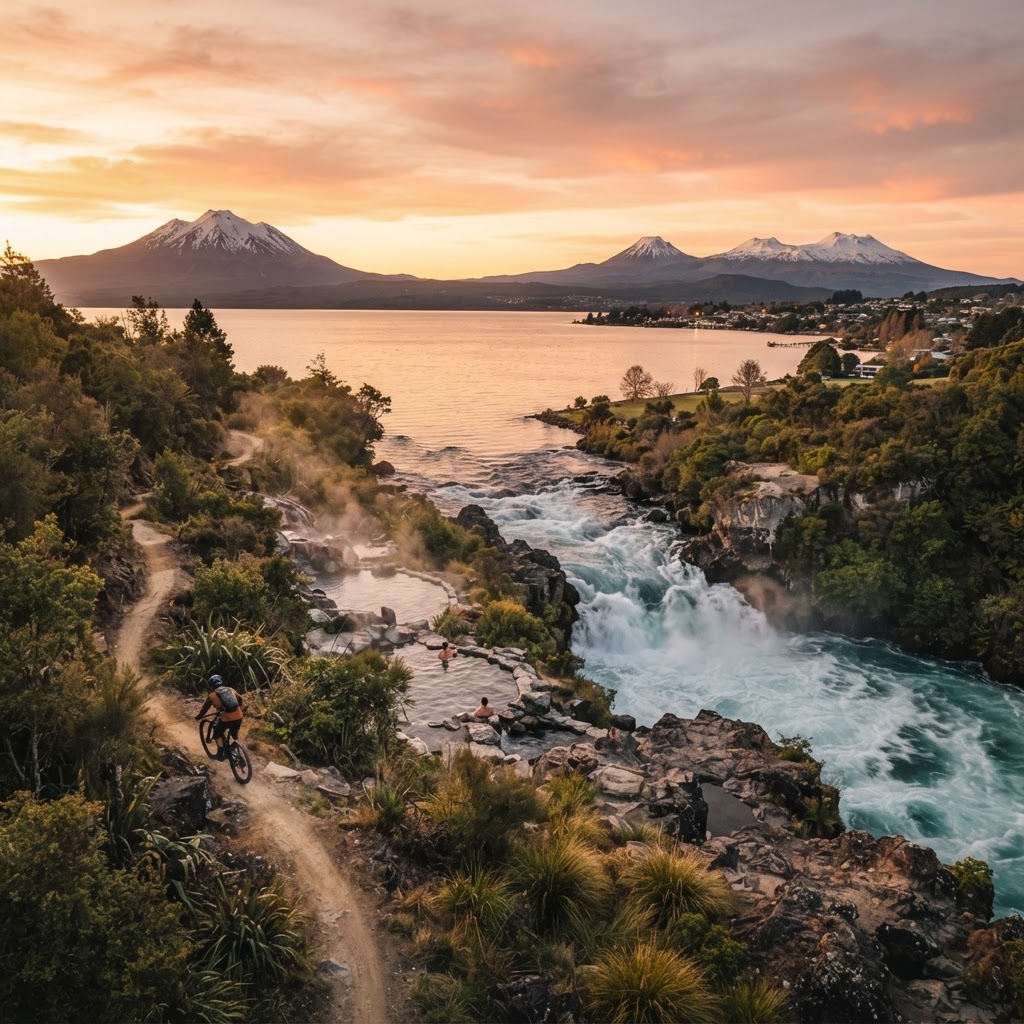
A vast volcanic caldera framed by roaring river rapids, thermal soak spots, and the North Island's best adventure trails.
Plan & book
Sort your Taupō, New Zealand trip in one place.
We point you to the booking tools we'd actually use — live prices, no markup. Or let us build the day-by-day plan around you first, then book.
Set directly on the edge of Australasia's largest freshwater lake—a massive ancient caldera—Taupō serves as the operational basecamp for the Central North Island. Less theatrical and geothermal-heavy than nearby Rotorua, Taupō trades sulphur vents and tour coaches for sparkling alpine water, mountain biking singletrack, natural riverside hot springs, and immediate staging access to the Tongariro Alpine Crossing. It functions both as an outdoor endurance capital and an unhurried lakefront retreat.
3 days
Best time
February to April for warm lake swims, settled high pressure, and reliable trail conditions.
Build your own trip with these prebuilt itineraries
Each one is a tested, day-by-day plan for Taupō, New Zealand — start here, then make it yours.
5 Days in Taupō: Great Lake Trails & Kinloch Road Trip in Taupō
Slow-paced exploration emphasizing mountain biking the Great Lake Trails, hidden bays, geothermal valleys, and lakeside relaxation
2 Days in Taupō: The Active Hiker & Alpine Adventure in Taupō
Action-packed outdoor focus using Taupō as a strategic base for tackling the Tongariro Alpine Crossing and recovery hot springs
3 Days in Taupō: The Essential Highlights & Thermal Waters in Taupō
First-time balanced highlights covering lakeside vistas, Huka Falls, thermal soaks, and the Mine Bay rock carvings
Taupō gives you immediate access to raw hydrological and volcanic power. Within a twenty-minute radius, you can watch 220,000 litres per second crash through the chasm at Huka Falls, paddle a kayak out to the 14-meter-tall Ngātoroirangi Mine Bay Māori Rock Carvings, soak free in natural thermal eddies at Otumuheke Stream, and catch alpine shuttles up into Tongariro National Park without the bus-tour crowds of larger hubs.
Where to stay
Getting there
Getting around
Food & drink
What it costs
Things to do
Book tours & tickets in Taupō, New ZealandSkip it if
Skip Taupō if your itinerary requires dense urban nightlife, extensive pedestrian rail transit, or if you already have Rotorua booked strictly for concentrated commercial Māori cultural performances and boiling mud pools.
When to go
Summer brings 20–25°C water and long daylight hours, but January fills motels and hiking shuttles with domestic holiday traffic. Late summer and early autumn retain warm water temperatures, clear skies, and far lighter trail congestion on the Tongariro Crossing.
Peak (December to February)
Warmest weather and long days for lake boating and skydiving, but holiday crowds peak from Christmas through January; book lodging and alpine shuttles well in advance.
Shoulder (March to May & September to November)
March–April offers crisp mornings, stable alpine weather, and fewer crowds; spring brings snowmelt and variable wind, but lower accommodation rates.
Low (June to August)
Brisk days hovering around 10–13°C with frosty nights; quiet in town, but ideal for thermal mineral soaking and staging ski days on nearby Mount Ruapehu.
Neighborhoods
Where you stay shapes the trip. Here's how to think about it.
Taupō Town Centre
Walkable lakeside hub filled with outdoor-gear outfits, lively cafés, craft brewpubs, and direct water access.
Best for:First-timers, car-free evenings, dining convenience
Don't miss:The pedestrian promenade along Tongariro Street leading into the Great Lake Walkway at sunset.
Two Mile Bay & Four Mile Bay
Laid-back residential lakefront lined with classic Kiwi baches, swimming coves, and watersports drop-ins.
Best for:Families, paddleboarders, relaxed lakeside stays
Don't miss:Wood-fired pizza and lake-view drinks straight off the jetty at Two Mile Bay Sailing Club.
Acacia Bay
Secluded, hilly bush enclave perched on the western arm with elevated caldera panoramas.
Best for:Couples, quiet luxury retreats, kayakers
Don't miss:Launching a sea kayak from Acacia Bay South to paddle under the cliffs to the Mine Bay Māori Rock Carvings.
Wairakei & Huka Falls Precinct
Geothermal woodland corridor defined by thundering river rapids, mountain bike hubs, and steaming mineral pools.
Best for:Thermal bathers, trail runners, active day-trippers
Don't miss:Soaking in the adults-only mineral pools at Wairakei Terraces after viewing the Huka Falls footbridge.
Kinloch
Tranquil sheltered bay settlement 20 minutes west of town, set away from highway noise.
Best for:Mountain bikers, golfers, crowd-avoiders
Don't miss:Riding the scenic W2K section of the Great Lake Trails starting right from Kinloch Marina.
Destination intelligence
Updated 9/14/2026The structured record we plan every Taupō, New Zealand itinerary from.
Walkability
Moderate; the town centre and lakeside walkway are very walkable, but all regional attractions require a car or dedicated tour shuttle.
Transit quality
Low; regional buses run limited timetables, making private vehicles or trail shuttles necessary for most sights.
Car needed
Yes, highly recommended for flexibility across regional sights, lake bays, and hiking access.
Ideal duration
3 days
Minimum useful
2 days
Peak season
December to February (Summer), featuring warm lake days, maximum trail access, and heavy holiday traffic.
Shoulder season
March to May (Autumn) and September to November (Spring), offering crisp hiking weather, vivid foliage, and fewer crowds.
Low season
June to August (Winter), cold and brisk with night frosts, though ideal for soaking in thermal hot springs and skiing on nearby Mount Ruapehu.
Best for
Common mistakes
- Booking Tongariro Crossing shuttles without watching alpine weather forecasts, risking cancellation or dangerous exposed conditions.
- Relying solely on local public transit; a car is vital to visit out-of-town trailheads, Aratiatia Rapids, and Kinloch.
- Assuming lake swimming is uniformly warm; Lake Taupō is fed by snowmelt and mountain rivers, staying bracingly brisk even in midsummer outside geothermal pockets.
Best nearby
See what a trip to New Zealand actually costs. Travel Budget Co.
How to plan it
- Base yourself along Lake Terrace or the Town Centre if you want to walk to dinner and pubs without driving after an active day.
- Book your Tongariro Crossing shuttle 1–2 weeks ahead during peak summer, and keep a flexible buffer day in your itinerary in case alpine high winds cancel departures.
- Combine the Waikato River walk to Huka Falls with a soak at Otumuheke Stream; the walking path directly connects Spa Thermal Park to the falls (about 1.5 to 2 hours one way).
- Do not cram Rotorua and Taupō into the same day—spend your daylight on Taupō's trails or water, stopping at Orakei Korako Geothermal Park on the drive between the two towns instead.
- If paddling to the Mine Bay rock carvings, book a morning kayak tour before the afternoon thermal lake breezes kick up chop.
Questions
Readymade itineraries
Start from a tested template — then make it yours.
Ready to book
Lock in your Taupō, New Zealand trip
Everything in one place. We may earn a small commission — it never costs you more.
Plan a trip to Taupō, New Zealand
Pick a length and we'll build a day-by-day plan around how you travel — neighborhoods clustered, budget-aware, and editable.
Get better at planning trips like this
Occasional notes on planning smarter — no spam, unsubscribe anytime.
Plan a trip to Taupō, New Zealand
Turn this guide into a day-by-day plan built around your pace, your group, and your budget.
Build my Taupō, New Zealand trip