Morocco
Tangier, Morocco
A windswept strait city blending literary bohemian lore with sharp modern coastal vitality.
Plan & book
Sort your Tangier, Morocco trip in one place.
We point you to the booking tools we'd actually use — live prices, no markup. Or let us build the day-by-day plan around you first, then book.
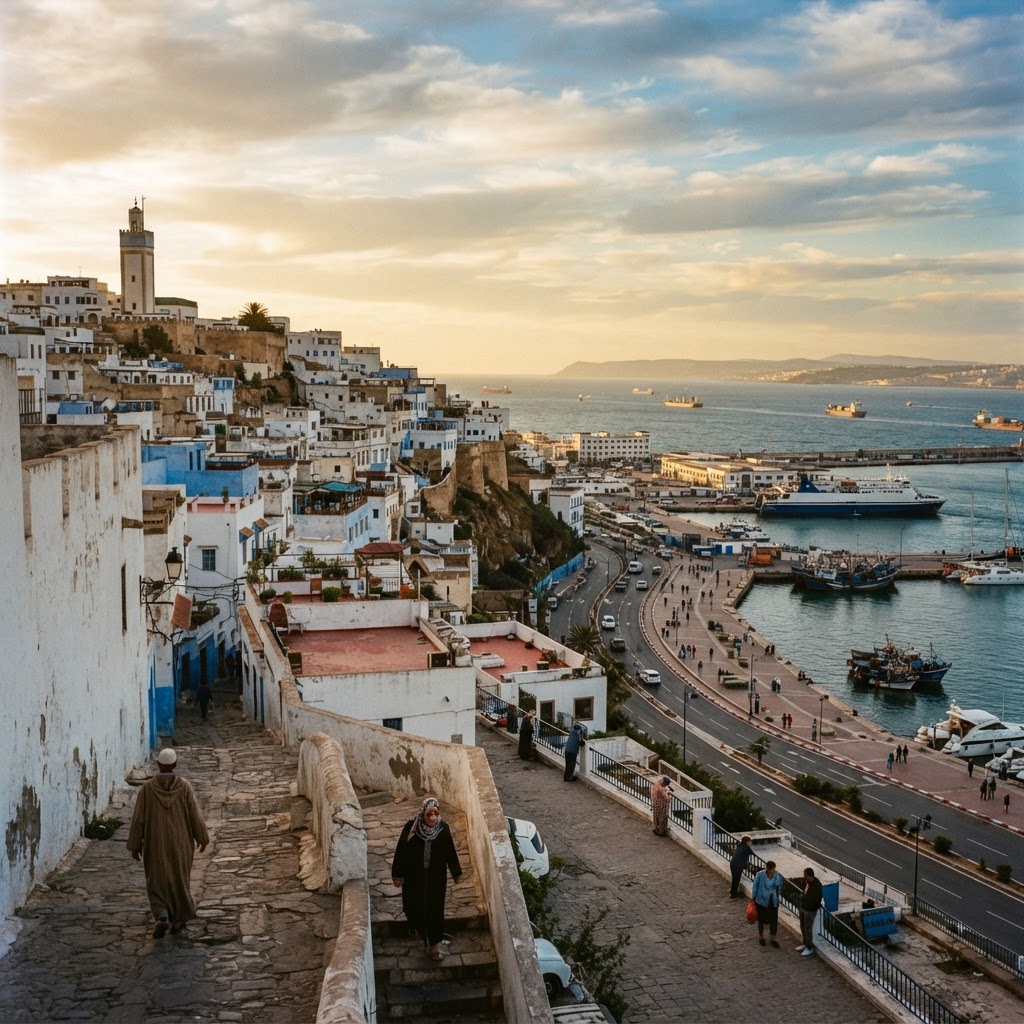
Perched where the Mediterranean meets the Atlantic, Tangier is Morocco's historic gateway to Europe, sitting just 14 kilometers across the Strait of Gibraltar. Long shaped by its mid-century International Zone status and Beat-generation mystique, modern Tangier pairs whitewashed Kasbah alleyways with the Al Boraq high-speed rail line and an expansive seaside corniche.
3 days
Best time
April to May or September to October
Build your own trip with these prebuilt itineraries
Each one is a tested, day-by-day plan for Tangier, Morocco — start here, then make it yours.
5 Days in Tangier: Northern Gateway & Rif Mountain Escapes in Tangier
Extended slow-paced regional base pairing deep urban art exploration with day trips to Asilah and Chefchaouen
3 Days in Tangier: Literary Legacies & Coastlines in Tangier
In-depth classic route exploring the Beat Generation haunts, Cap Spartel, Caves of Hercules, and historic riad living
2 Days in Tangier: Quick Strait Crossing & Medina Highlights in Tangier
Express cultural entry via ferry or Al Boraq focusing on Medina lanes, Kasbah vistas, and legendary café culture
Tangier offers a distinct Moroccan rhythm devoid of the high-pressure salesmanship of Marrakech and Fez. It is defined by historic cafés, salt air, panoramic cliffside views, and a layered bohemian past that rewards travelers who value literary heritage, seafood dinners, and unhurried walking exploration.
Where to stay
Getting there
Getting around
Food & drink
What it costs
Things to do
Book tours & tickets in Tangier, MoroccoSkip it if
Skip if your Morocco trip is under seven days and focused squarely on desert dunes and imperial architecture, or if steep cobblestone alleys and hilly terrain present mobility challenges.
When to go
Spring and early autumn offer mild 20°C to 24°C temperatures and clear strait visibility without the punishing Atlantic winter winds or the dense domestic beach crowds that clog the Corniche in midsummer.
Peak (July to August)
Expect heavy domestic tourist crowds, packed beaches along Malabata, elevated hotel rates, and slow coastal taxi traffic, though evening coastal breezes keep days cooler than interior Morocco.
Shoulder (April to June, September to October)
The prime window: crisp straits air, uncrowded medina passages, perfect walking temperatures, and open hotel availability.
Low (November to March)
Quieter and wallet-friendly, but subject to chilly Atlantic rains and persistent, biting coastal winds, especially in January and March.
Neighborhoods
Where you stay shapes the trip. Here's how to think about it.
The Kasbah
Windswept, quiet hilltop fortification with whitewashed alleys and panoramic vistas of Spain.
Best for:Boutique riad stays, sunset lovers, and travelers who want peace above the medina hustle
Don't miss:Taking in the Strait view from the Bab Al Bahr lookout and sipping spiced mint tea at Café Baba.
The Medina
A maze of sloping stone alleys, bustling souks, and historic international relics.
Best for:First-timers who prioritize walkability, independent exploration, and direct access to street food
Don't miss:The sprawling courtyards and art exhibits inside the Tangier American Legation Museum on Rue d'Amerique.
Ville Nouvelle
Wide, leafy boulevards lined with mid-century French-colonial architecture and lively sidewalk cafés.
Best for:Literary buffs, people-watching, and travelers seeking easier taxi access without steep stair climbs
Don't miss:An espresso outside Grand Café de Paris on Place de France, unchanged since the Beat generation sat there.
The Corniche & Malabata
Modern coastal promenade lined with high-rise hotels, beach clubs, and expansive ocean views.
Best for:Travelers prioritizing contemporary chain hotel amenities, easy parking, and fast train station access
Don't miss:An early evening stroll along the waterfront promenade leading toward the marina as the city lights up.
Marshan
Leafy, dignified residential plateau overlooking the Atlantic, dotted with palaces and cliffside terraces.
Best for:Quiet luxury seekers and travelers escaping dense urban street noise
Don't miss:Terraced outdoor mint tea perched over the water at the historic Café Hafa.
Destination intelligence
Updated 9/14/2026The structured record we plan every Tangier, Morocco itinerary from.
Walkability
High in the historic core, though characterized by steep inclines and stone stairs; taxis are required for cross-city travel.
Transit quality
Good: connected to major cities via the Al Boraq high-speed train; municipal travel relies heavily on plentiful petits taxis.
Car needed
No: personal vehicles are unusable inside the Medina and difficult to park throughout central districts.
Ideal duration
3 days
Minimum useful
2 days
Peak season
July to August (busy domestic coastal season with warm beach crowds)
Shoulder season
April to June and September to October (pleasant temperatures, fewer crowds, and clear strait views)
Low season
November to February (cooler, rainier, and windy along the Atlantic coast)
Best for
Common mistakes
- Treating Tangier merely as a rushed half-day excursion from Spain instead of staying overnight.
- Confusing the commercial ferry port Tanger Med (45 km east) with Tanger Ville Port (adjacent to the old town).
- Renting a car to navigate the dense, narrow pedestrian core of the Kasbah and Medina.
- Expecting the frenzied souk bargaining atmosphere of Fez or Marrakech instead of Tangier's more European café cadence.
Best nearby
See what a trip to Morocco actually costs. Travel Budget Co.
How to plan it
- Stay in the Kasbah or Medina if you want walking access to cafes and history; stay along the Corniche if you have large luggage or rely on elevator-equipped hotels.
- Book your Al Boraq high-speed train tickets to Rabat or Casablanca online at least a week ahead to lock in first-class seats.
- Do not attempt to cram both Chefchaouen and Cape Spartel into a single day trip; Chefchaouen requires at least four hours round-trip in transit through winding mountain roads.
- If taking the ferry from Spain, sail from Tarifa to Tangier Ville to avoid the hour-long transfer from distant Tanger Med.
- Arrive at Saveur de Poisson right when service starts around lunch or dinner to avoid waiting outside for its fixed, multi-course seafood spread.
Questions
Readymade itineraries
Start from a tested template — then make it yours.
Ready to book
Lock in your Tangier, Morocco trip
Everything in one place. We may earn a small commission — it never costs you more.
Plan a trip to Tangier, Morocco
Pick a length and we'll build a day-by-day plan around how you travel — neighborhoods clustered, budget-aware, and editable.
Get better at planning trips like this
Occasional notes on planning smarter — no spam, unsubscribe anytime.
Plan a trip to Tangier, Morocco
Turn this guide into a day-by-day plan built around your pace, your group, and your budget.
Build my Tangier, Morocco trip