South Africa
Stellenbosch, South Africa
Cape Dutch heritage, dramatic peaks, and South Africa's premier wine valley.
Plan & book
Sort your Stellenbosch, South Africa trip in one place.
We point you to the booking tools we'd actually use — live prices, no markup. Or let us build the day-by-day plan around you first, then book.
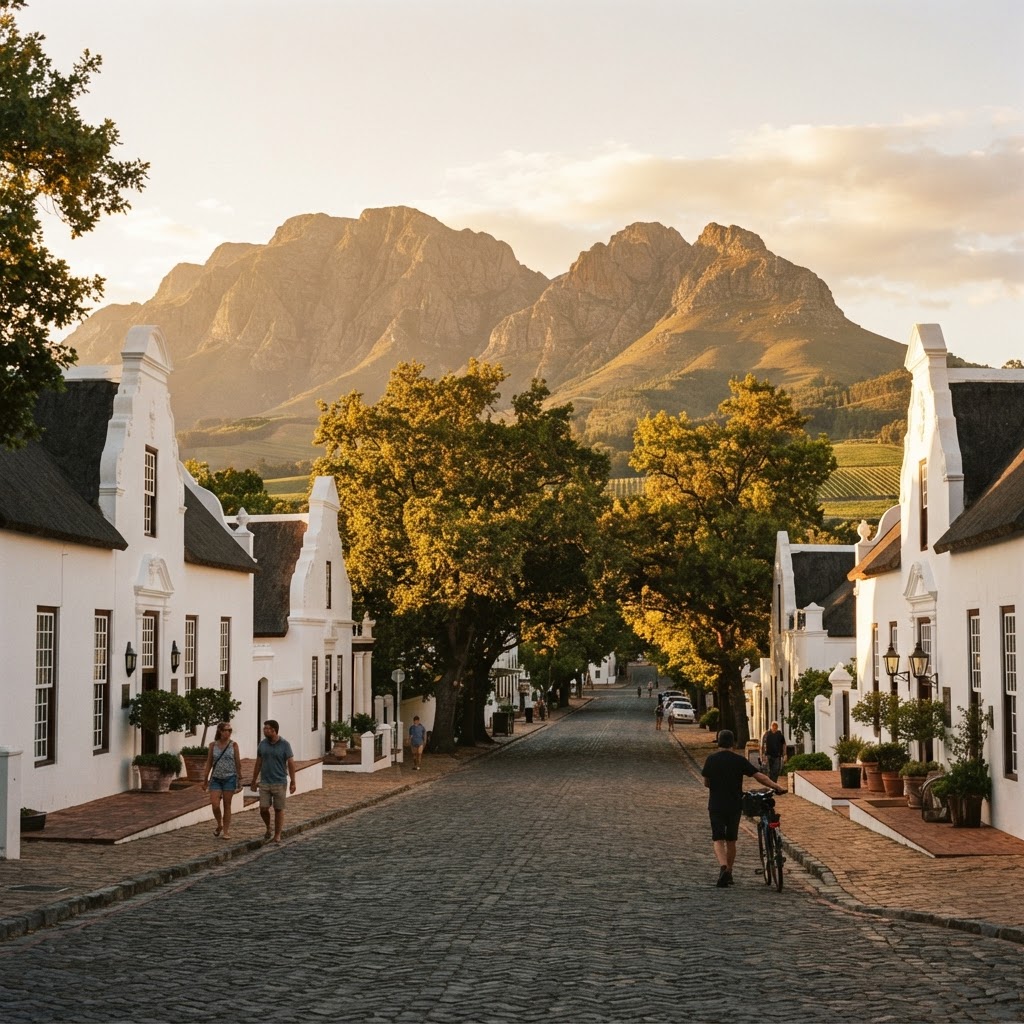
Set against the dramatic backdrop of the Simonsberg and Jonkershoek mountains, Stellenbosch is South Africa's second-oldest European settlement and the intellectual and agricultural epicentre of the Cape Winelands. Far more than a collection of tasting rooms, it is a bustling university city where whitewashed 18th-century Cape Dutch gables border lively oak-shaded cafe terraces. Visitors come for high-caliber Cabernet Sauvignon, heritage Chenin Blanc, and boundary-pushing estate dining, but staying overnight reveals quiet morning streets, serious contemporary African art galleries, and accessible rugged mountain trails right on the edge of town.
3 days
Best time
March to April (early autumn) or October to November (spring).
Build your own trip with these prebuilt itineraries
Each one is a tested, day-by-day plan for Stellenbosch, South Africa — start here, then make it yours.
4-Day Winelands & Mountain Trails Adventure in Stellenbosch
Active outdoors and relaxed romance combining Jonkershoek fynbos hiking with scenic manor retreats
3-Day Food & Wine Connoisseur Journey in Stellenbosch
In-depth culinary and oenophile immersion highlighting farm-to-table dining, cellar tours, and terroir exploration
2 Days in Historic Stellenbosch & Valley Tasting in Stellenbosch
First-time overview blending Cape Dutch heritage walks with leisurely, high-profile estate tastings
Stellenbosch pairs world-class wine production with the architectural richness and street life of a walkable university town. Unlike isolated vineyard regions where dining requires driving long distances along unlit country roads, Stellenbosch lets you explore working 300-year-old estates by day and walk to independent wine bars and bistros by night. Its proximity to Cape Town makes it effortless to integrate, yet its deep agricultural valleys and distinct terroir warrant full immersion rather than a rushed afternoon stop.
Where to stay
Getting there
Getting around
Food & drink
What it costs
Skip it if
Skip staying in Stellenbosch if you do not drink wine, have little interest in agricultural landscapes or culinary dining, and prefer fast-paced urban nightscapes or immediate ocean beach access. Travelers strictly reliant on robust public transit without any desire to take rideshares, hire drivers, or navigate rural lanes will find moving between estates restrictive.
When to go
March and April deliver golden autumn vineyards, active harvest energy without midsummer's scorching 35°C heat, and easier dining reservations. Spring brings mild hiking weather and flowering fynbos, whereas summer brings intense heat and dense tourist crowds.
Peak (December to February)
Hot (often exceeding 32°C), bustling, and packed with domestic and international holidaymakers. Vineyard harvest starts late January; book estate restaurants weeks ahead.
Shoulder (March to May & September to November)
The sweet spot: comfortable daytime temperatures (20°C–25°C), crisp evenings, lower room rates, and vivid colors across both the vineyards and mountain fynbos.
Low (June to August)
Wet, chilly winter months with occasional mountain snow flurries. Many estate fireplaces are lit, but mountain trails get waterlogged and outdoor vineyard dining closes down.
Neighborhoods
Where you stay shapes the trip. Here's how to think about it.
Stellenbosch Central (Historic Town)
A leafy 18th-century grid lined with Cape Dutch facades, student bustle, art shops, and terrace cafes under ancient oaks.
Best for:First-timers, architecture buffs, and car-free evening dining
Don't miss:Strolling Dorp Street and Church Street for gallery hopping followed by lunch at De Vrijmans or dinner at The Fat Butcher.
Jonkershoek Valley
Rugged, tranquil cul-de-sac framed by jagged granite peaks, pine plantations, and natural fynbos reserves.
Best for:Hikers, trail runners, mountain bikers, and travelers seeking mountain solitude
Don't miss:The challenging Panorama Trail inside Jonkershoek Nature Reserve, followed by a crisp glass of Chenin Blanc at Stark-Condé Wines' island pavilion.
Helshoogte Pass & Banhoek
High-altitude vineyard pass linking Stellenbosch to Franschhoek, featuring ultra-luxury estates and dramatic mountain drops.
Best for:Luxury seekers, contemporary art enthusiasts, and epicurean diners
Don't miss:Exploring the world-class sculpture gardens and tasting room at Delaire Graff Estate overlooking the Banhoek Valley.
Blaauwklippen & Upper Helderberg
Sprawling heritage agricultural basin opening south toward False Bay, anchored by old manor houses and family estates.
Best for:Boutique wine collectors, families, and travelers wanting historic farm immersion
Don't miss:Tasting benchmark terroir-driven Pinotage and Syrah at Kleinood, or visiting Waterford Estate for an estate drive and wine-and-chocolate pairing.
Destination intelligence
Updated 9/14/2026The structured record we plan every Stellenbosch, South Africa itinerary from.
Walkability
High within the compact historic town center, where flat oak-canopied streets are easily traversed on foot. Low between regional wine estates, which sit miles apart across rugged mountain passes requiring vehicle transport.
Transit quality
Low. Commuter trains from Cape Town are not recommended for visitors. There is no municipal metro or tram system within the municipality; transport relies on Uber, private chauffeurs, rental cars, and tour operators.
Car needed
Optional if staying downtown and utilizing Uber or private tour drivers for tastings. Highly recommended if you plan an independent road trip linking surrounding valleys like Paarl, Franschhoek, and the Overberg coast.
Ideal duration
3 days
Minimum useful
1 day
Peak season
December through February. Expect dry, hot summer days (28°C–34°C), active vineyard harvests beginning in late January, bustling restaurant terraces, and holiday crowds that require advanced reservations.
Shoulder season
March to May and September to November. Autumn brings cooler temperatures, amber vineyard foliage, and post-harvest cellar activity, while spring brings blooming fynbos, moderate weather, and lighter crowds.
Low season
June through August. The Western Cape's winter is cool and wet with intermittent downpours and mountain snowfalls. While vineyard landscapes turn lush green and cozy cellar fireplaces are lit, outdoor activities are weather-dependent.
Best for
Common mistakes
- Treating Stellenbosch as a rushed day trip from Cape Town and spending prime evening hours sitting in outbound traffic rather than dining in town.
- Drinking and driving between wine estates; South African law enforces a zero-tolerance policy, and rural roads are winding and dark at night.
- Failing to book flagship estate restaurants weeks ahead, especially during summer harvest weekends and local school holidays.
- Over-scheduling estate visits: booking more than three tastings in a single day leads to sensory fatigue and rushed travel times along valley lanes.
- Visiting purely on a Sunday when many independent town boutiques, galleries, and certain historic cellars operate truncated hours or close entirely.
Best nearby
See what a trip to South Africa actually costs. Travel Budget Co.
How to plan it
- Limit yourself to three cellar doors per day; cellar master tastings and multi-course estate lunches run two to three hours and palate fatigue sets in fast.
- Pair a morning hike on Jonkershoek's Panorama Trail with a late lunch and tasting at Stark-Condé or Lanzerac right at the mouth of the valley.
- Do not attempt to tour both Stellenbosch and Franschhoek estates on the same afternoon; the Helshoogte Pass drive requires attention and you will lose half your tasting window in transit.
- Reserve weekday mornings for the town center galleries (Rupert Museum, SMAC Gallery) and historic Dorp Street before foot traffic peaks after midday.
- If traveling during midsummer (December to February), schedule cellar visits for the heat of the afternoon when subterranean barrel rooms offer welcome cool relief.
Questions
Readymade itineraries
Start from a tested template — then make it yours.
Ready to book
Lock in your Stellenbosch, South Africa trip
Everything in one place. We may earn a small commission — it never costs you more.
Plan a trip to Stellenbosch, South Africa
Pick a length and we'll build a day-by-day plan around how you travel — neighborhoods clustered, budget-aware, and editable.
Get better at planning trips like this
Occasional notes on planning smarter — no spam, unsubscribe anytime.
Plan a trip to Stellenbosch, South Africa
Turn this guide into a day-by-day plan built around your pace, your group, and your budget.
Build my Stellenbosch, South Africa trip