Egypt
Sharm El Sheikh, Egypt Itinerary: How Many Days + Sample Plans
World-class Red Sea reef walls, desert escarpments, and self-contained resort life.
Traveler rating
Loved by scuba divers and serious snorkelers.
Plan & book
Sort your Sharm El Sheikh, Egypt trip in one place.
We point you to the booking tools we'd actually use — live prices, no markup. Or let us build the day-by-day plan around you first, then book.
Pick your trip length
How many days do you need in Sharm El Sheikh, Egypt?
Each of these opens a full day-by-day plan you can make your own.
- 2 days — Two days — the essentials, no rushing.
- 3 days — Three days — the icons plus one neighborhood.
- 4 days — Four days — a full city without sprinting.
- 5 days — Five days — room for a day trip.
- 7 days — A week — the city at a human pace.
- With Kids trip — Shorter days, earlier dinners, what to skip.
- For Couples trip — Two-person pacing with evenings built in.
- Solo trip — A plan that works well on your own.
- Food trip — Meals and markets as the anchors.
- Outdoors trip — Nature, walks and open air.
- Culture trip — History, museums and the streets around them.
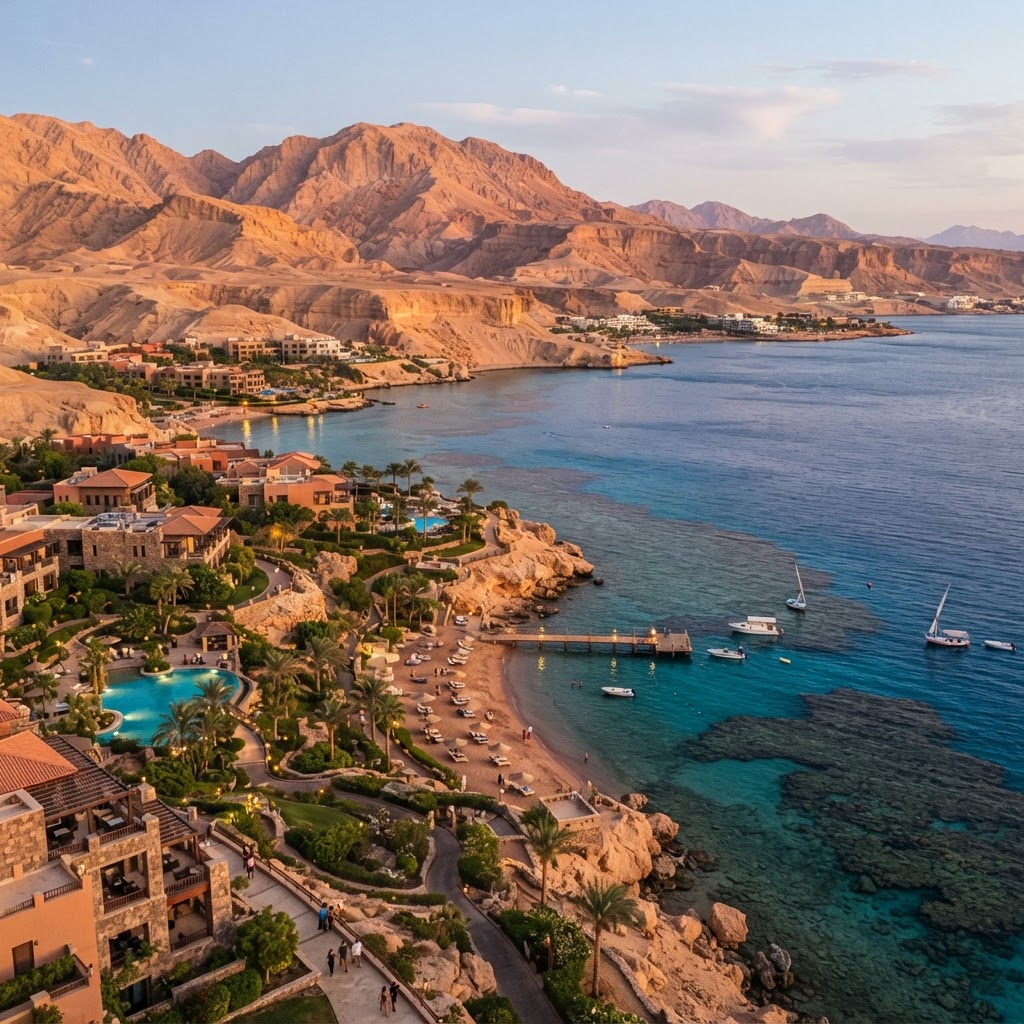
Perched at the southern tip of the Sinai Peninsula, Sharm El Sheikh is a purpose-built marine resort corridor stretching along the Red Sea. Rather than an ancient Egyptian antiquities hub, it is a gateway to globally renowned coral reefs, marine biodiversity, and desert canyons.
5 to 7 days
Best time
October to November and March to April for the perfect balance of calm seas and comfortable land temperatures.
Build your own trip with these prebuilt itineraries
Each one is a tested, day-by-day plan for Sharm El Sheikh, Egypt — start here, then make it yours.
7 Days of Coast & Sinai Wilderness in Sharm El Sheikh
Combining marine sanctuaries with desert quad safaris, Bedouin dinners, and an overland trip to Mount Sinai and Saint Catherine
6 Days of Family Sun & Sea in Sharm El Sheikh
Relaxed all-inclusive resort living with calm house-reef snorkeling, watersports, and Old Market evenings
5 Days of Undersea Adventure & Reefs in Sharm El Sheikh
World-class scuba diving and snorkeling across Ras Mohammed and the Straits of Tiran
Sharm El Sheikh provides direct access to the Ras Mohammed marine park and Straits of Tiran reef walls, featuring dense coral gardens and pelagic life steps from shore or a short boat ride away. It pairs reliable sunshine with high-standard marine infrastructure, dramatic Sinai mountain backdrops, and accessible dive-and-snorkel logistics.
Where to stay
Getting there
Getting around
Food & drink
What it costs
Things to do
Book tours & tickets in Sharm El Sheikh, EgyptSkip it if
Skip Sharm El Sheikh if your goal in Egypt is purely historical antiquities, walkable historic streetscapes, or bohemian, low-key backpacker culture (Dahab is better suited for the latter).
When to go
Summer brings punishing desert temperatures exceeding 40°C, while mid-winter nights can feel brisk with cooler water requiring full wetsuits. The spring and autumn shoulder windows deliver balmy sea conditions alongside warm, breezy air suitable for daytime excursions.
Peak (October to April)
Comfortable daytime highs between 22°C and 28°C draw large European winter-sun crowds. Sea temperatures dip in January and February, so bring a light wetsuit for long snorkels.
Shoulder (May & September)
Warm sea conditions and thin resort crowds, but midday heat reaches the mid-30s°C. Best for focused diving trips rather than desert excursions.
Low (June to August)
Fierce desert heat routinely exceeds 40°C. Snorkeling and diving remain exceptional, but land activities are limited to early mornings or air-conditioned spaces.
Neighborhoods
Where you stay shapes the trip. Here's how to think about it.
Naama Bay
The bustling, pedestrianized commercial center lined with beachside cafes, dive shops, and neon lights.
Best for:Walkability, dining variety, nightlife, and first-time resort visitors who dislike isolation
Don't miss:The seaside pedestrian promenade at dusk for open-air shisha cafes and street performers.
Hadaba & Ras Um Sid
Dramatic coastal cliffs overlooking sheer drop-off reefs, offering iconic sunsets and a relaxed bohemian edge.
Best for:Independent snorkelers, divers wanting cliffside house reefs, and sunset drinks
Don't miss:Farsha Cafe, the multi-tiered cliffside lounge lit by lanterns overlooking Ras Um Sid.
Sharks Bay
Upscale resort cove facing Tiran Island with pristine fringe reefs and family-friendly entertainment enclaves.
Best for:Luxury travelers, serious house-reef snorkeling, and families wanting calm bay swimming
Don't miss:Snorkeling directly off the jetty into the drop-off reef at Sharks Bay Beach.
Old Market (Sharm Al-Maya)
A bustling southern trading and bazaar district anchored by massive Ottoman-inspired architecture and local seafood joints.
Best for:Authentic dining, evening strolls, souvenir bartering, and cultural atmosphere
Don't miss:The illuminated facade of Al Sahaba Mosque, followed by grilled catch at Fares Seafood.
Nabq Bay
A windward northern resort enclave of sprawling modern compounds, kite-surfing bays, and vast tidal flats.
Best for:All-inclusive resort seekers, watersports enthusiasts, and travelers looking for self-contained quiet
Don't miss:Walking out on the long pier over the tidal lagoon to reach the outer reef wall.
Destination intelligence
Updated 10/6/2026The structured record we plan every Sharm El Sheikh, Egypt itinerary from.
Walkability
Low. Individual resort properties and pedestrian centers like Naama Bay promenade or the Old Market are walkable, but getting between neighborhoods requires vehicles.
Transit quality
Basic. There is no metro or municipal rail; transit consists of shared white microbuses along the Peace Road, hotel shuttles, and private taxis.
Car needed
Not recommended. Rental cars are rarely necessary given frequent checkpoints, local driving conditions, and cheap private transfers.
Ideal duration
5 to 7 days
Minimum useful
3 days
Peak season
October to April, when midday temperatures range comfortably between 22°C and 28°C.
Shoulder season
May and September, offering warm sea conditions with tolerable dry heat.
Low season
June through August, when desert heat regularly surges above 40°C.
Best for
Common mistakes
- Booking in Nabq Bay expecting deep swimming off the sand; the water is very shallow at low tide and requires walking out on lengthy jetties.
- Assuming you can explore Pharaonic ruins here; Sharm has no pyramids or ancient tombs—Giza and Luxor require domestic flights.
- Failing to agree on taxi fares before stepping into the vehicle when not using ride-hailing apps.
- Walking on or touching shallow coral flats instead of using floating pontoons and designated reef channels.
Best nearby
See what a trip to Egypt actually costs. Travel Budget Co.
How to plan it
- Stay in Hadaba or Sharks Bay if an accessible drop-off house reef right off the hotel jetty is your top priority.
- Base yourself in Naama Bay if you want to walk out of your hotel directly into restaurants and nightlife without relying on taxis every evening.
- Pair Sharm El Sheikh with a 2-day chillout detour in Dahab (1 hour north by private transfer) for a bohemian, low-key contrast to Sharm's large mega-resorts.
- Book your Ras Mohammed boat trip through a licensed dive center rather than a street kiosk to guarantee marine park environmental permits and smaller group sizes.
- Leave Nabq Bay off your shortlist in mid-winter if you hate wind; its wide tidal flats catch heavy gusts that regularly shut down snorkeling piers.
Questions
Readymade itineraries
Start from a tested template — then make it yours.
Ready to book
Lock in your Sharm El Sheikh, Egypt trip
Everything in one place. We may earn a small commission — it never costs you more.
Plan a trip to Sharm El Sheikh, Egypt
Pick a length and we'll build a day-by-day plan around how you travel — neighborhoods clustered, budget-aware, and editable.
Get better at planning trips like this
Occasional notes on planning smarter — no spam, unsubscribe anytime.
Plan a trip to Sharm El Sheikh, Egypt
Turn this guide into a day-by-day plan built around your pace, your group, and your budget.
Build my Sharm El Sheikh, Egypt trip