Tanzania
Serengeti & Ngorongoro, Tanzania Itinerary: How Many Days + Sample Plans
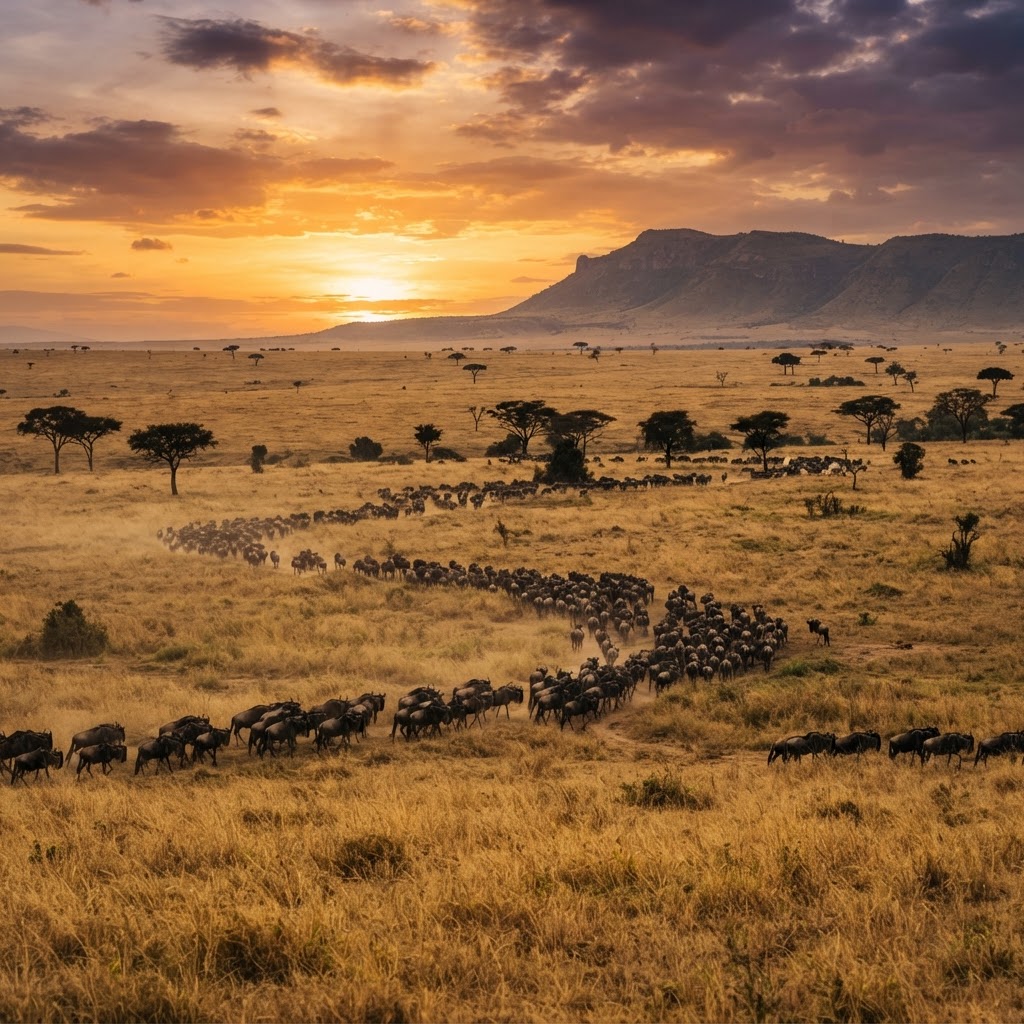
The world's most iconic wildlife theater, defined by scale and seasonal migration.
Traveler rating
Loved by first-time safari travelers.
Plan & book
Sort your Serengeti & Ngorongoro, Tanzania trip in one place.
We point you to the booking tools we'd actually use — live prices, no markup. Or let us build the day-by-day plan around you first, then book.
Pick your trip length
How many days do you need in Serengeti & Ngorongoro, Tanzania?
Each of these opens a full day-by-day plan you can make your own.
- 2 days — Two days — the essentials, no rushing.
- 3 days — Three days — the icons plus one neighborhood.
- 4 days — Four days — a full city without sprinting.
- 5 days — Five days — room for a day trip.
- 7 days — A week — the city at a human pace.
- With Kids trip — Shorter days, earlier dinners, what to skip.
- For Couples trip — Two-person pacing with evenings built in.
- Solo trip — A plan that works well on your own.
- Food trip — Meals and markets as the anchors.
- Outdoors trip — Nature, walks and open air.
- Culture trip — History, museums and the streets around them.
The Northern Safari Circuit is the gold standard for first-time safari travelers, offering unparalleled wildlife density and established logistics. It is a high-stakes, high-reward environment where the quality of your experience is dictated by your choice of camp location and the timing of your visit relative to the Great Migration.
8-10 nights
Best time
July to October for dry-season river crossings, or January to March for calving and predator tracking.
Build your own trip with these prebuilt itineraries
Each one is a tested, day-by-day plan for Serengeti & Ngorongoro, Tanzania — start here, then make it yours.
10 Days
Comprehensive Great Migration Safari & Lake Manyara Expedition
7 Days in Serengeti & Ngorongoro
Classic Wildlife Safari: Tarangire, Ngorongoro & Serengeti Plains
5 Days in Serengeti & Ngorongoro
Essential Northern Circuit: Ngorongoro Crater & Central Serengeti
You go for the sheer scale of the Serengeti ecosystem and the unique geological drama of the Ngorongoro Crater. It is the only place where you can witness the Great Migration's movement across vast plains and descend into a volcanic caldera that acts as a natural, high-density wildlife enclosure.
Where to stay
Getting there
Getting around
Food & drink
What it costs
Skip it if
Travelers who dislike long, bumpy drives or early morning wake-up calls. If you are looking for a low-cost, independent road trip, this region is not for you.
When to go
Dry winter months (July to October) force animals to permanent water sources and thin out tall grass, creating easy sightings at the cost of high vehicle congestion and peak rates. January through March brings lush plains, newborn wildlife, and intense lion and cheetah hunts, but trades off occasional afternoon showers.
Peak (July to October)
Classic dry-season conditions, prime Mara River crossings in Northern Serengeti, highest lodging rates, and dense vehicle clusters at predator sightings.
Shoulder (January to March)
Calving season on the southern Ndutu plains with exceptional predator hunting; green scenery, warm days, and slightly lower camp rates outside prime migration zones.
Low (April to May)
The 'long rains' make unpaved bush roads deeply rutted and muddy, forcing several tented camps to close, but delivers rock-bottom rates and empty game trails.
Neighborhoods
Where you stay shapes the trip. Here's how to think about it.
Central Serengeti (Seronera)
Wildlife-dense plains intersected by river networks, boasting high resident cat numbers alongside heavy vehicle traffic.
Best for:First-time safari travelers and year-round big cat sightings
Don't miss:Early morning drive along the Seronera River valley to track leopards resting in sausage trees before tour convoys arrive.
Northern Serengeti (Kogatende & Lamai)
Remote rolling hills and granite kopjes leading to dramatic, high-stakes river crossings.
Best for:Migration river crossing drama and luxury tented bush stays
Don't miss:Staking out Mara River Crossing Points 4 and 7 between August and October for wildebeest and crocodile interactions.
Southern Serengeti & Ndutu Plains
Expansive acacia woodlands and short-grass plains hosting vast herds and intense predator action.
Best for:Calving season spectacle and off-road tracking with wildlife photographers
Don't miss:Exploring the Ndutu marshes from January to March when thousands of wildebeest drop calves within a synchronized three-week window.
Ngorongoro Crater Rim
Cloud-draped montane forest overlooking a 2,000-foot sheer drop into a volcanic amphitheater.
Best for:Quick early-gate descent access and panoramic rim-side sunsets
Don't miss:The 6:00 AM gate descent via the Senketo ascent/descent road to beat vehicle congestion onto the crater floor.
Karatu Highlands
Lush red-soil farming foothills lined with coffee estates, sitting just outside the conservation area gate.
Best for:Budget-conscious travelers and mid-range safari basecamps
Don't miss:Touring a working coffee farm on the slopes of the Olmoti volcanic foothills before driving into the NCAA gate.
Destination intelligence
Updated 10/6/2026The structured record we plan every Serengeti & Ngorongoro, Tanzania itinerary from.
Walkability
Low
Transit quality
Low
Car needed
Yes
Ideal duration
8-10 nights
Minimum useful
6 nights
Peak season
July to October
Shoulder season
January to March
Low season
April to May
Best for
Common mistakes
- Trying to cover too much ground in too few days
- Prioritizing beach time in Zanzibar over safari days
- Assuming the Great Migration is a single, predictable event
- Booking based on price alone without verifying camp location relative to wildlife movement
Best nearby
How to plan it
- Match your camp location directly to your travel month: stay in Ndutu from January to March, Western Corridor in May and June, and Kogatende from July to October.
- Limit your Ngorongoro Crater floor safari to one single 5- to 6-hour morning window; wildlife density is unmatched, but vehicle congestion and tight permits make a second full day redundant.
- Fly one way and drive the other: fly from Arusha (ARK) to Kogatende or Seronera airstrip, then drive south through Ngorongoro to save 8 hours of teeth-rattling transit.
- Pair your safari with 3 to 4 nights in Zanzibar (ZNZ) or Mafia Island to wash off the volcanic alkaline dust and recover from dawn game-drive wake-up calls.
- Never attempt to drive from Arusha to the northern Serengeti in a single day; split the transit with an overnight stop at Tarangire or the Ngorongoro rim.
Questions
Readymade itineraries
Start from a tested template — then make it yours.
Ready to book
Lock in your Serengeti & Ngorongoro, Tanzania trip
Everything in one place. We may earn a small commission — it never costs you more.
Plan a trip to Serengeti & Ngorongoro, Tanzania
Pick a length and we'll build a day-by-day plan around how you travel — neighborhoods clustered, budget-aware, and editable.
Get better at planning trips like this
Occasional notes on planning smarter — no spam, unsubscribe anytime.
Plan a trip to Serengeti & Ngorongoro, Tanzania
Turn this guide into a day-by-day plan built around your pace, your group, and your budget.
Build my Serengeti & Ngorongoro, Tanzania trip