Vietnam
Sapa, Vietnam
Carved terraces, misty peaks, and deep highland cultural heritage
Plan & book
Sort your Sapa, Vietnam trip in one place.
We point you to the booking tools we'd actually use — live prices, no markup. Or let us build the day-by-day plan around you first, then book.
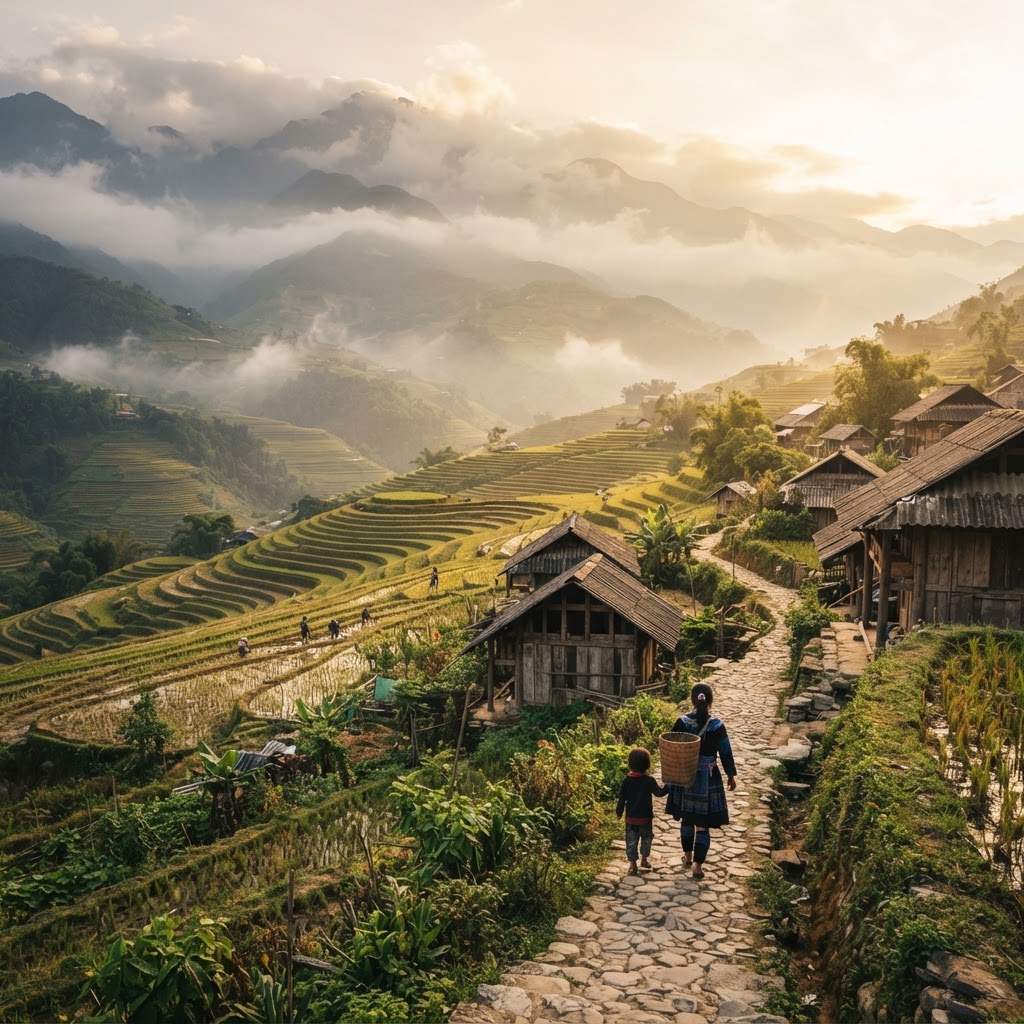
Set high in the Hoang Lien Son range beneath Fansipan peak, Sapa is Vietnam's historic mountain hill station. While rapid urban construction has modernized the central grid, stepping just beyond town reveals the iconic stepped rice terraces of the Muong Hoa Valley and indigenous communities including the Black Hmong and Red Dao.
3 days
Best time
Mid-September to mid-October for golden rice terraces, or April to May for lush planting and clear skies.
Build your own trip with these prebuilt itineraries
Each one is a tested, day-by-day plan for Sapa, Vietnam — start here, then make it yours.
5 Days in Sapa: Deep Trails & Highland Culture in Sapa
Immersive trekking and indigenous textile immersion covering remote Red Dao and Black Hmong hamlets and O Quy Ho Pass.
3 Days in Sapa: The Essential Valleys & Peaks in Sapa
Classic highlights featuring Muong Hoa Valley treks, Fansipan Peak, and traditional craft villages beyond the town center.
2 Days in Sapa: Mountain Escapes & Quiet Homestays in Sapa
Relaxed scenic retreat bypassing crowded tourist hubs to stay directly in quiet rural villages and eco-lodges.
Go for multi-day trekking along the contours of centuries-old rice amphitheaters, ascending Mount Fansipan above the cloud deck, and experiencing indigenous highland traditions in surrounding hamlets rather than staying insulated inside the town center.
Where to stay
Getting there
Getting around
Food & drink
What it costs
Things to do
Book tours & tickets in Sapa, VietnamSkip it if
Skip Sapa if your trip lacks a spare 2–3 days to handle the 5-hour overland transit each way, if you cannot manage steep uneven walks, or if you expect entirely untouched wilderness right outside your hotel room.
When to go
Autumn yields the world-famous yellow terraced fields before the harvest cuts them down, paired with dry trails and lower mountain humidity. Spring brings crisp hiking weather and water-filled mirror terraces, avoiding both the muddy monsoons of July–August and the bone-chilling winter fog of December–February.
Peak (September to November & March to May)
Clear sightlines, comfortable trekking temperatures, and golden harvests in autumn or blooming orchards in spring; book mountain-view lodges and overnight VIP limousine vans 4–6 weeks ahead.
Shoulder (June to August)
Lush emerald terraces and warm highland air, offset by intense monsoon downpours that frequently turn single-track valley trails into slippery mud and trigger landslide warnings.
Low (December to February)
High mountain drizzle, low-hanging mist that can completely blank out valley vistas for days, and barren, fallow fields; pack heavy thermal layers as few rural homestays have central heating.
Neighborhoods
Where you stay shapes the trip. Here's how to think about it.
Sapa Town Center (Around Notre Dame Cathedral)
Bustling, heavily developed mountain commercial hub packed with trekking agencies, bakeries, and neon-lit barbecue stalls.
Best for:First-timers, late arrivals, short 2-day itineraries, and travelers wanting immediate dining options
Don't miss:The quiet stone steps leading behind the 1895 Holy Rosary Church (Notre Dame) up toward Ham Rong Mountain before morning tourist buses gather.
Muong Hoa Valley (Ta Van Village)
Terraced agricultural landscape lined with small streams, wooden rustic lodges, and Black Hmong and Giay family homesteads.
Best for:Hikers, slow travelers, photographers, and anyone who wants to wake up looking directly at rice terraces rather than concrete construction
Don't miss:Crossing the Ta Van wooden suspension bridge in late afternoon as buffalo and farmers walk along the dirt tracks beside the river.
Lao Chai Village
Steep valley walking routes edged by traditional Black Hmong timber homes, indigo dye pots, and continuous terrace views.
Best for:Day trekkers, textile craft enthusiasts, and travelers booking immersive rural guesthouses
Don't miss:Visiting a local home workshop along the lower valley path to see hemp fabric patterned with beeswax and dyed in fermented indigo vats.
Ta Phin Village
A quiet, sprawling agricultural settlement northwest of town home to the Red Dao minority, framed by limestone hills and herbal bath houses.
Best for:Travelers seeking cultural craft traditions and traditional wellness away from the busier Muong Hoa trekking routes
Don't miss:Soaking in a hot wooden barrel bath infused with forest herbs prepared by Red Dao practitioners after a long trail day.
Cat Cat Village
A steep, commercialized showcase village with paved pathways, photo props, and costume rental stalls leading down to a roaring waterfall.
Best for:Casual walkers, short day excursions, and travelers who cannot commit to strenuous hillside trekking
Don't miss:Watching the waterwheels churn alongside the historic French-built hydropower station at the bottom of the gorge.
Destination intelligence
Updated 9/14/2026The structured record we plan every Sapa, Vietnam itinerary from.
Walkability
Moderate within the town center (steep gradients); very low across the rural valleys without guided trekking or private wheels.
Transit quality
Limited (no city metro or reliable public bus network; relies on private car transfers, tour minivans, and local taxis).
Car needed
No car rental needed; hire private cars with drivers or taxis for out-of-town valley trips and passes.
Ideal duration
3 days
Minimum useful
2 days
Peak season
September to November (golden rice harvest window and crisp skies) and March to May (terrace watering season and blooming orchards).
Shoulder season
June to August (lush green landscapes, warmer weather, but frequent heavy mountain rainfall).
Low season
December to February (cold, drizzle, low-hanging mist, and harvested, fallow fields).
Best for
Common mistakes
- Staying exclusively inside Sapa town center and assuming it represents the region's nature, missing the valleys where the scenery actually lives.
- Visiting in winter (December to February) expecting verdant rice terraces, when paddies are barren, brown, and often shrouded in freezing grey fog.
- Underestimating trail mud during the rainy summer months without sturdy, gripped hiking footwear.
- Buying factory-made souvenirs from aggressive street vendors instead of purchasing directly from artisan embroidery cooperatives in rural villages.
Best nearby
See what a trip to Vietnam actually costs. Travel Budget Co.
How to plan it
- Book an overnight limousine van (like EcoSapa) direct from Hanoi instead of the train if you want door-to-door delivery without an extra 45-minute bus connection from Lao Cai Railway Station.
- Split your stay: spend night one in Sapa town if arriving after dark, then shift to a valley lodge in Ta Van or Hau Thao for morning views over the terraces.
- Check the Fansipan summit weather monitors at Sun World Station before buying your cable car ticket; if it is socked in with cloud, reroute your afternoon to O Quy Ho Pass.
- Do not attempt a self-guided cross-country trek from Lao Chai to Giang Ta Chai during rain; terraced mud trails become treacherous slick ramps without local footwear and guidance.
- Carry small Vietnamese Dong notes in cash; rural village craft stalls, herbal bath operators, and roadside fruit vendors do not accept card payments.
Questions
More in Vietnam

Mui Ne
Vietnam
Windswept Sahara-style coastal dunes meet Vietnam's premier kitesurfing swell
Ninh Binh
Vietnam
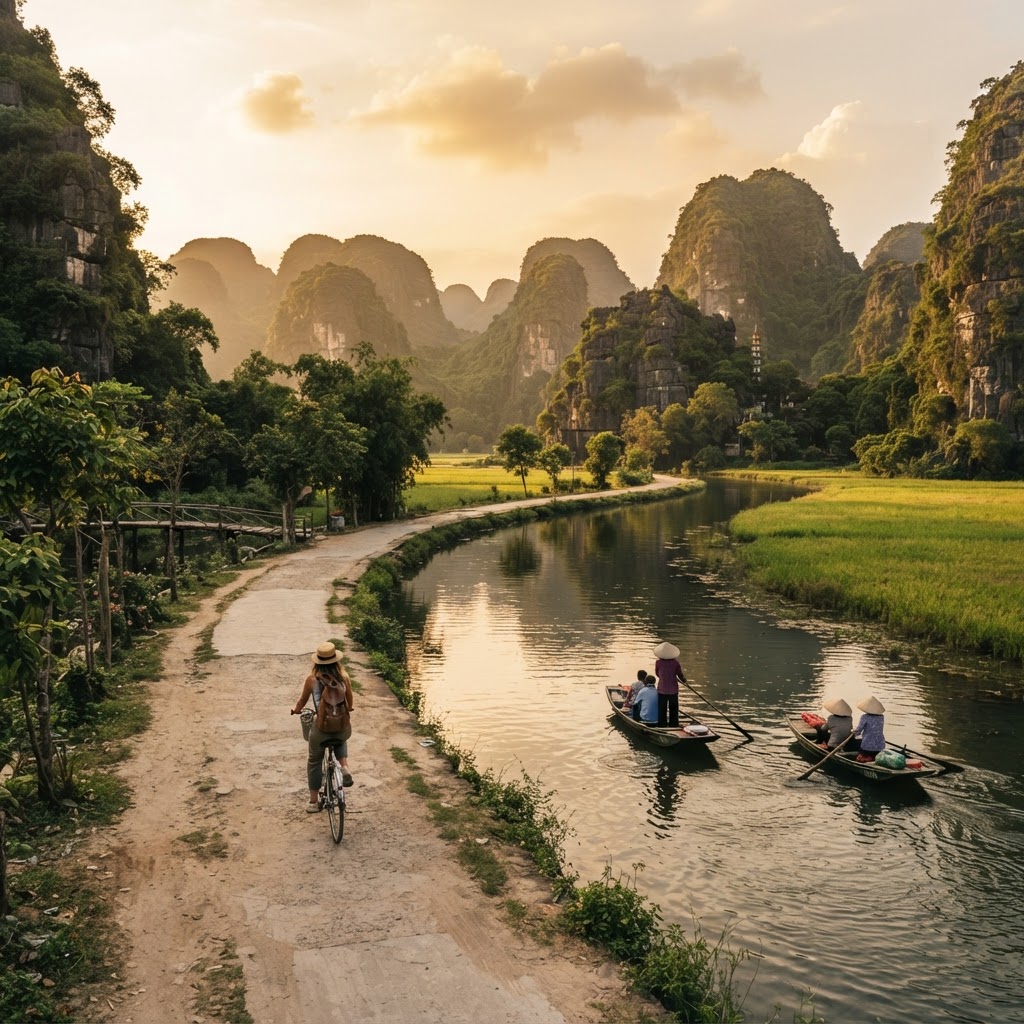
Karst limestone peaks, flat cycling routes, and traditional river sampans two hours south of Hanoi.
Readymade itineraries
Start from a tested template — then make it yours.
Ready to book
Lock in your Sapa, Vietnam trip
Everything in one place. We may earn a small commission — it never costs you more.
Plan a trip to Sapa, Vietnam
Pick a length and we'll build a day-by-day plan around how you travel — neighborhoods clustered, budget-aware, and editable.
Get better at planning trips like this
Occasional notes on planning smarter — no spam, unsubscribe anytime.
Plan a trip to Sapa, Vietnam
Turn this guide into a day-by-day plan built around your pace, your group, and your budget.
Build my Sapa, Vietnam trip