Dominican Republic
Santo Domingo
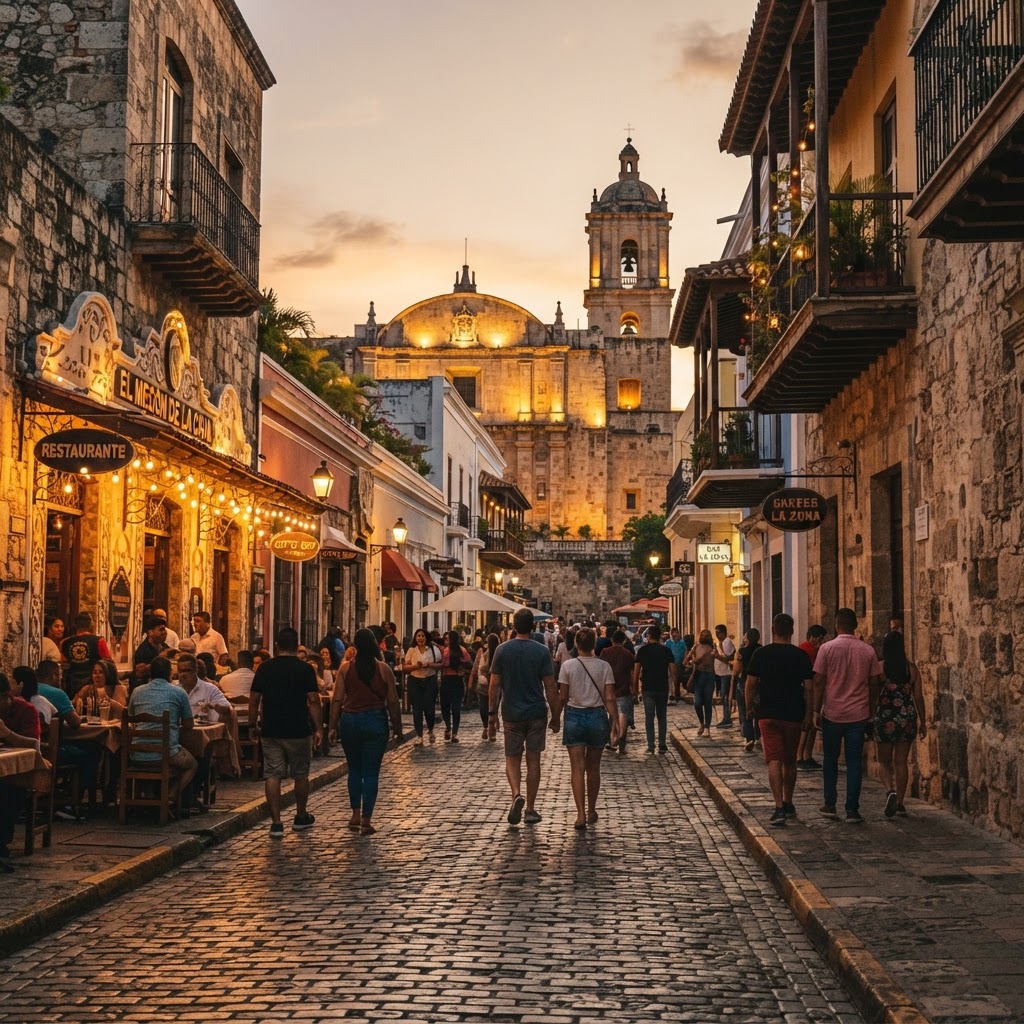
Cobblestone 16th-century history meets high-voltage Caribbean nightlife and culinary reinvention.
Plan & book
Sort your Santo Domingo trip in one place.
We point you to the booking tools we'd actually use — live prices, no markup. Or let us build the day-by-day plan around you first, then book.
As the oldest European settlement in the Americas, Santo Domingo carries profound weight: stone ramparts from the early 1500s stand alongside roaring city traffic, subterranean limestone caves, and a sophisticated contemporary dining scene. While travelers rush to resort strips in Punta Cana, Santo Domingo offers an unapologetically urban look at modern Dominican culture, live son and merengue, and raw colonial architecture.
3 days
Best time
December through March delivers bright blue skies, breezy evenings, and minimal humidity without the hurricane threat.
Build your own trip with these prebuilt itineraries
Each one is a tested, day-by-day plan for Santo Domingo — start here, then make it yours.
4 Days of In-Depth Culture & Coastal Day Trips in Santo Domingo
Immersive urban arts and museums paired with natural limestone caves and nearby coastal escapes
3 Days of Caribbean Gastronomy & Nightlife in Santo Domingo
Elevated modern Dominican dining, live son, and vibrant nightlife across heritage and modern districts
2 Days of Colonial History & Urban Culture in Santo Domingo
First-time architectural highlights and historic streetscapes in the compact Zona Colonial
Santo Domingo is where New World colonial history began, but it remains a lived-in, contemporary Caribbean metropolis. Skip the manufactured isolation of all-inclusive resorts to walk among 500-year-old coral-stone buildings on Calle Las Damas, drink rum under bougainvillea at Parque Colón, and experience a thriving culinary revolution led by innovative Dominican chefs in Piantini.
Where to stay
Getting there
Getting around
Food & drink
What it costs
Things to do
Book tours & tickets in Santo DomingoSkip it if
Skip Santo Domingo if your ideal Dominican Republic trip requires an idyllic white-sand beach right outside your bedroom door; the city’s waterfront along the Malecón is rocky and urban, and the nearest quality swimmable beaches are at least 45 minutes to an hour away.
When to go
Santo Domingo's coastal heat can feel oppressive during the tropical summer months. The winter window trades slightly higher hotel rates for comfortable daytime walking temperatures in the historic core, though early May offers an excellent value compromise if you can handle brief afternoon rain.
Peak (December to April)
Dry, sunny, and reliably in the high 70s to low 80s Fahrenheit; booking hotels 2-3 months out is necessary, especially around the energetic February Carnival parades.
Shoulder (May and November)
Manageable humidity with intermittent afternoon thunderstorms, smaller crowds in the museums, and noticeable room-rate drops.
Low (June to October)
Heavy tropical heat, high humidity, and the core of the Atlantic hurricane season; rates are bottomed out, but midday city walking becomes taxing.
Neighborhoods
Where you stay shapes the trip. Here's how to think about it.
Zona Colonial
Cobblestone lanes, 16th-century coral limestone facades, open plazas, and lively terrace dining.
Best for:First-timers, architecture buffs, and walkability purists
Don't miss:Catching live outdoor son and merengue by Grupo Bonyé beside the ruined stone arches of the Ruinas del Monasterio de San Francisco on a Sunday evening.
Piantini
Polished, cosmopolitan financial quarter packed with sleek high-rises, rooftop lounges, and experimental dining.
Best for:Luxury travelers, modern foodies, and cocktail enthusiasts
Don't miss:Contemporary Caribbean tasting menus paired with local rums along Calle Federico Geraldino.
Gazcue
Tree-lined, residential mid-century district dotted with classic Art Deco villas and quiet avenues.
Best for:Culture seekers wanting an authentic local buffer near the core
Don't miss:The classical neoclassical architecture of the Palacio Nacional and the museums clustered around Plaza de la Cultura.
Bella Vista
Upscale residential neighborhood bordered by grand green space and wide pedestrian boulevards.
Best for:Families, long-term stays, and travelers seeking quiet safety
Don't miss:Morning strolls under the lush tropical canopy of the adjacent Parque Mirador del Sur.
El Malecón (Avenida George Washington)
Breezy Caribbean seaside boulevard vibrating with coastal traffic, casino hotels, and oceanfront bars.
Best for:Sunset strolls, sea views, and late-night oceanfront drinking
Don't miss:Sipping a chilled Presidente beer at an open-air bar as waves break against the coastal sea wall.
Destination intelligence
Updated 9/14/2026The structured record we plan every Santo Domingo itinerary from.
Walkability
High within the compact Zona Colonial; very low across the broader metropolitan area.
Transit quality
Moderate: possesses an efficient two-line metro system used mainly by local commuters, but Uber remains the essential tourist transit option.
Car needed
No. Driving in Santo Domingo is actively discouraged due to erratic traffic and lack of parking.
Ideal duration
3 days
Minimum useful
2 days
Peak season
December to April: dry, sunny, and pleasantly warm with minimal humidity, drawing the largest crowds.
Shoulder season
May and November: manageable humidity, occasional afternoon showers, and lighter crowd levels.
Low season
June to October: hot, humid, and coincides with Atlantic hurricane season, though hotel rates are at their lowest.
Best for
Common mistakes
- Renting a car for city travel: aggressive urban traffic, scarce parking, and confusing one-way streets make driving stressful and counterproductive.
- Treating Santo Domingo merely as an airport transit point: rushing straight to Punta Cana misses the entire cultural backbone of the country.
- Hailing arbitrary street taxis at night instead of using Uber or dispatcher-hailed radio taxis.
- Visiting the Zona Colonial's outdoor sites in the blistering midday sun instead of early morning or late afternoon.
Best nearby
See what a trip to Dominican Republic actually costs. Travel Budget Co.
How to plan it
- Anchor your accommodation in the Zona Colonial if walkability to breakfast, cafes, and historic sites matters more than glossy hotel high-rises.
- Base yourself in Piantini or Bella Vista if you prioritize international luxury hotels, modern cocktail bars, and Michelin-caliber dining over historic architecture.
- Do not attempt to do Parque Nacional Los Tres Ojos and the Faro a Colón in the afternoon heat; head out at 9:00 AM before tour buses arrive and limestone stairs become stifling.
- Schedule your Zona Colonial stay to encompass a Sunday so you can experience the free, weekly Grupo Bonyé open-air salsa and son concerts at the Monasterio de San Francisco ruins.
- Pair a 3-day cultural immersion in Santo Domingo with a 4-day retreat to the beaches of the Samaná Peninsula rather than doing an isolated urban trip.
Questions
Readymade itineraries
Start from a tested template — then make it yours.
Ready to book
Lock in your Santo Domingo trip
Everything in one place. We may earn a small commission — it never costs you more.
Plan a trip to Santo Domingo
Pick a length and we'll build a day-by-day plan around how you travel — neighborhoods clustered, budget-aware, and editable.
Get better at planning trips like this
Occasional notes on planning smarter — no spam, unsubscribe anytime.
Plan a trip to Santo Domingo
Turn this guide into a day-by-day plan built around your pace, your group, and your budget.
Build my Santo Domingo trip