Colombia
Santa Marta, Colombia
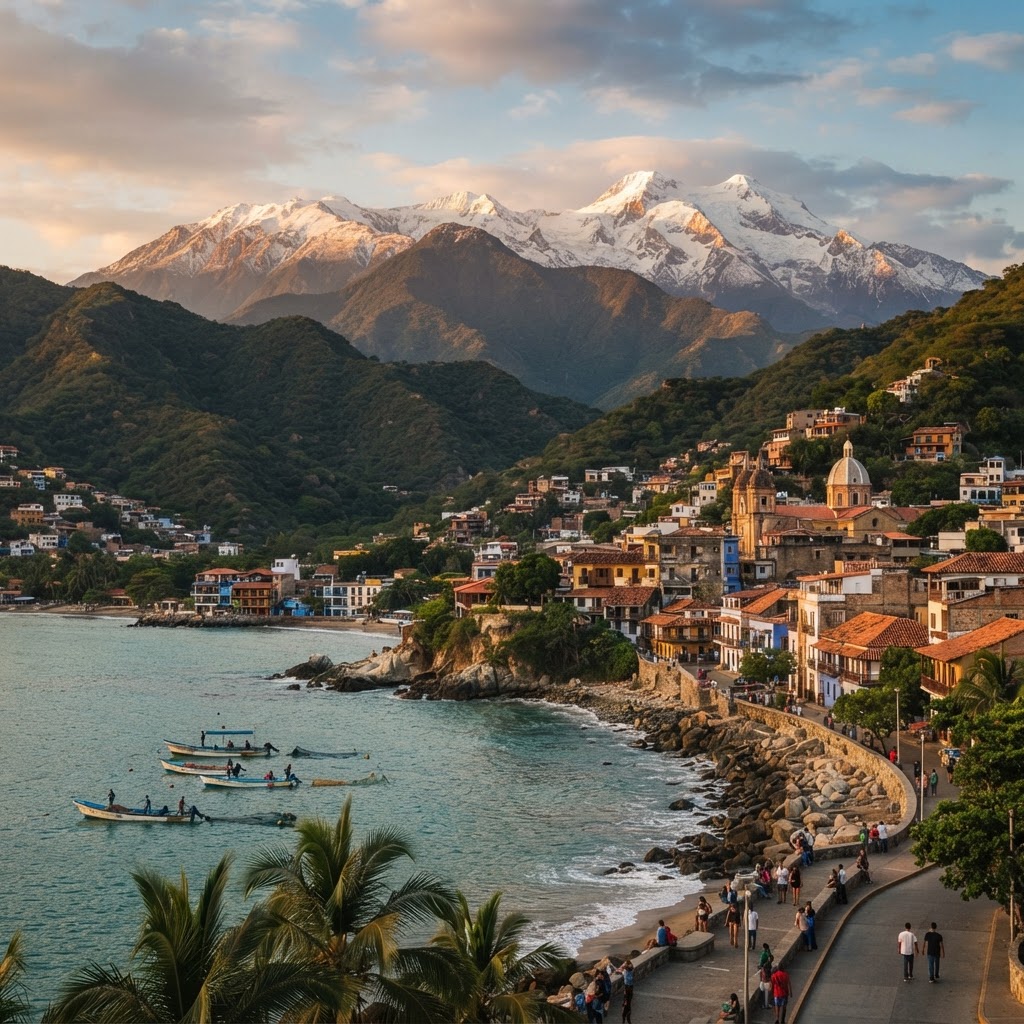
The rugged gateway where the snowcaps of the Sierra Nevada tumble straight into Caribbean tides.
Plan & book
Sort your Santa Marta, Colombia trip in one place.
We point you to the booking tools we'd actually use — live prices, no markup. Or let us build the day-by-day plan around you first, then book.
Founded in 1525, Santa Marta is the oldest surviving Spanish settlement in Colombia, but treating it purely as a standalone city break misses the mark. It is a workhorse launchpad—rawer and less polished than Cartagena—positioned precisely between jungle summits and Caribbean coastline. Travelers use Santa Marta's revitalized colonial center as a basecamp to stage expeditions into Parque Nacional Natural Tayrona, multi-day treks through the Sierra Nevada to Ciudad Perdida, and cool-climate coffee retreats in Minca.
How long
4 to 5 days (allows 1 day to settle and explore the Centro Histórico, 1-2 days inside Tayrona National Park, and a day trip or overnight in Minca)
Best time
December through March for reliably dry, sunny coastal skies and optimal trail conditions.
Build your own trip with these prebuilt itineraries
Each one is a tested, day-by-day plan for Santa Marta, Colombia — start here, then make it yours.
7 Days: Lost City Trek & Caribbean Chill in Santa Marta
High-adventure itinerary pairing the multi-day guided Ciudad Perdida trek with relaxing beach and cultural downtime in the Centro Histórico
5 Days of Coast, Cloud Forest & Wilderness in Santa Marta
In-depth outdoor and nature escape with an overnight stay inside Tayrona, hiking in the Sierra Nevada foothills, and scuba diving from Taganga
3 Days of Coastal & Jungle Highlights in Santa Marta
First-time overview covering the historic colonial core, a day trip to the calm bays of Tayrona National Park, and the cloud forest coffee farms of Minca
Santa Marta gives you access to a collision of ecosystems found nowhere else on earth: tropical Caribbean beaches backdropped immediately by coastal mountain peaks rising over 5,000 meters. Come for the authentic coastal street culture around Parque de los Novios, fresh ceviche at the marina, and straightforward access to Tayrona's granite-boulder coves and the pre-Columbian trails of the Sierra Nevada.
Where to stay
Getting there
Getting around
Food & drink
What it costs
Things to do
Book tours & tickets in Santa Marta, ColombiaSkip it if
Skip Santa Marta if you are searching for a manicured, resort-style holiday with pristine white-sand beaches right outside your luxury hotel room. The city itself is a bustling, gritty working port; travelers wanting pristine cobblestones and polished dining without wilderness day trips should stick to Cartagena.
When to go
This window delivers dry weather for jungle hikes in Tayrona and treks to Ciudad Perdida, though mid-December to mid-January brings peak domestic crowds and elevated lodge rates. February to March strikes the sweet spot with minimal rain and thinning crowds before Holy Week.
Peak (Mid-Dec to Jan, Semana Santa, June to July)
Expect sunny days, intense heat, packed Tayrona beaches, and full lodges; advance bookings for park entrances and Lost City treks are critical.
Shoulder (Feb to May excluding Holy Week, Aug to Sep)
Lower accommodation rates and manageable trail traffic with intermittent showers in late spring; note that Tayrona often observes temporary conservation closures in February.
Low (October to November)
Heaviest rainfall of the year along the Caribbean coast and Sierra Nevada foothills; trails turn deep with mud and rough seas can halt coastal boat transfers.
Neighborhoods
Where you stay shapes the trip. Here's how to think about it.
Centro Histórico
Cobblestone streets, leafy plazas, restored colonial architecture, and lively outdoor dining.
Best for:First-timers, foodies, and culture-focused travelers wanting walkable dining and nightlife
Don't miss:Dining alfresco at Parque de los Novios followed by an evening stroll along the Malecón de Bastidas
Taganga
Gritty, bohemian fishing village wedged in an arid cove, dominated by dive shops and backpacker cafes.
Best for:Budget travelers, scuba divers, and boat departures into Tayrona bays
Don't miss:Catching an early morning dive boat or water taxi to Playa Grande directly from the Taganga beachfront
El Rodadero
High-rise, energetic resort strip packed with domestic holidaymakers, street hawkers, and lively music.
Best for:Families wanting shallow swimming waters and travelers seeking commercial beach amenities
Don't miss:Taking a quick boat ride from the beach dock to the marine exhibits at the Acuario y Museo del Mar
Bello Horizonte & Pozos Colorados
Quiet, upscale beachfront corridor with wide sand stretches and full-service resort hotels.
Best for:Luxury travelers, couples, and sunbathers wanting quiet beaches away from city bustle
Don't miss:A peaceful sunset seafood dinner on the sand without aggressive beach vendor interruptions
Destination intelligence
Updated 9/14/2026The structured record we plan every Santa Marta, Colombia itinerary from.
Walkability
Moderate. The historic colonial core and oceanfront malecón are completely walkable on foot, but reaching nature sites, southern beaches, or foothill trails requires taxis or local bus transit.
Transit quality
Basic to functional. Public transit consists of frequent local microbuses and regional shared colectivos connecting the Mercado Público hub to neighboring towns.
Car needed
No. Navigating Santa Marta and surrounding reserves by rental car creates hassle with poor rural mountain roads, aggressive urban motorcycle traffic, and scarce parking.
Ideal duration
4 to 5 days (allows 1 day to settle and explore the Centro Histórico, 1-2 days inside Tayrona National Park, and a day trip or overnight in Minca)
Minimum useful
2 days (only sufficient as a transit buffer before or after Tayrona / Ciudad Perdida)
Peak season
Mid-December through January, Semana Santa (Easter week), and mid-summer (June-July), characterized by dry sunny skies, elevated accommodation prices, and crowded park trails.
Shoulder season
February through May (excluding Holy Week) and August through September; expect warm weather, fewer crowds along Tayrona's beaches, and lower lodge rates.
Low season
October through November; the heaviest rainfall months in the Caribbean coast and Sierra Nevada, bringing muddy hiking trails and frequent afternoon downpours.
Best for
Common mistakes
- Swimming at Santa Marta's city beaches or dangerous Tayrona beaches: The main city beach along the Malecón sits beside an active commercial port and is not clean, while Tayrona beaches like Playa Brava and Arrecifes have deadly rip currents that drown swimmers every year.
- Renting a rental car: Driving is unnecessary and stressful given erratic traffic, sparse parking, and the fact that trailheads, Tayrona entrances, and Minca mountain roads require either park buses or high-clearance 4x4s.
- Ignoring Tayrona's annual cultural closures: The park periodically closes in February (and sometimes short windows in June and October) at the request of the four indigenous Sierra Nevada groups for environmental and spiritual regeneration.
- Failing to carry enough physical cash: Most mountain outposts in Minca, boat launches from Taganga, and rural entrances to Tayrona do not reliably accept credit cards, and local ATMs frequently run dry.
Best nearby
See what a trip to Colombia actually costs. Travel Budget Co.
How to plan it
- Base yourself in Centro Histórico if you prioritize walkable restaurants and nightlife, but book in Pozos Colorados if you want tranquil, swimmable resort beaches.
- Do not try to combine Minca and Tayrona National Park on the same day; each demands a full day of steep transit and walking.
- If hiking to Ciudad Perdida (Lost City), schedule a rest night in Centro Histórico both before and after the grueling 4-day jungle trek.
- Secure your Tayrona National Park entrance tickets and reserve multi-day Ciudad Perdida slots at least 3 to 4 weeks ahead during December and January peak weeks.
- Pair Santa Marta with Cartagena or Palomino by booking private door-to-door shuttle vans like Marsol instead of navigating the chaotic central bus terminal.
Questions
Readymade itineraries
Start from a tested template — then make it yours.
Ready to book
Lock in your Santa Marta, Colombia trip
Everything in one place. We may earn a small commission — it never costs you more.
Plan a trip to Santa Marta, Colombia
Pick a length and we'll build a day-by-day plan around how you travel — neighborhoods clustered, budget-aware, and editable.
Get better at planning trips like this
Occasional notes on planning smarter — no spam, unsubscribe anytime.
Plan a trip to Santa Marta, Colombia
Turn this guide into a day-by-day plan built around your pace, your group, and your budget.
Build my Santa Marta, Colombia trip