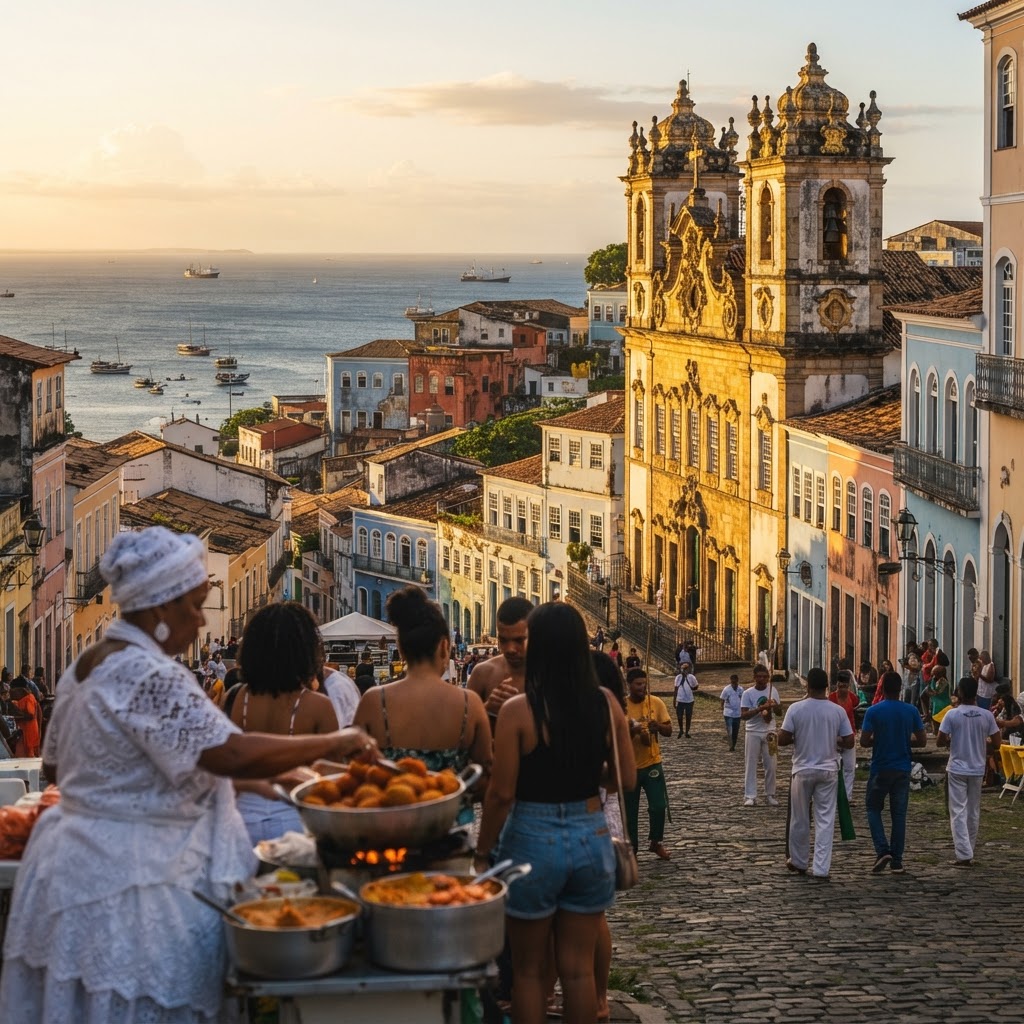
Brazil
Salvador, Brazil
Afro-Brazilian rhythm, gold-drenched baroque stone, and pungent dendê street food on the edge of the Atlantic.
Plan & book
Sort your Salvador, Brazil trip in one place.
We point you to the booking tools we'd actually use — live prices, no markup. Or let us build the day-by-day plan around you first, then book.
Founded in 1549 as Brazil’s inaugural capital, Salvador is the unapologetic heart of Afro-Brazilian culture. Perched on coastal bluffs split into Cidade Alta and Cidade Baixa, it pairs intense colonial architecture with Candomblé spiritual traditions, rolling percussion troupes, and palm-oil scented street cooking. It is electric, raw, and rhythmically unrelenting.
4 to 5 days
Best time
September to November strikes the ideal balance of dry coastal weather, manageable crowds, and reasonable rates.
Build your own trip with these prebuilt itineraries
Each one is a tested, day-by-day plan for Salvador, Brazil — start here, then make it yours.
5 Days in Salvador: Coastal Vibes & Culinary Traditions in Salvador
A relaxed coastal and food-centric exploration balancing moqueca cooking traditions, lively botecos, Barra beaches, and All Saints Bay maritime life
4 Days in Salvador: Music, Rhythms & Black Rome Heritage in Salvador
An immersive music and cultural angle diving deep into Olodum beats, capoeira workshops, Bahian diaspora arts, and historic Cidade Baixa sanctuaries
3 Days in Salvador: Afro-Brazilian Culture & Historic Heart in Salvador
First-time essential highlights focusing on Pelourinho colonial history, candomblé roots, percussion traditions, and iconic coastal sunsets
Salvador offers a cultural intensity unmatched anywhere else in South America. While Rio claims dramatic topography and São Paulo holds financial clout, Salvador preserves the beating pulse of the African diaspora in Brazil. You go to hear the thundering drums of Olodum reverberate off the 17th-century cobblestones of Pelourinho, to taste acarajé fried fresh in smoking dendê oil on seaside squares, and to experience a living matrix of capoeira, Candomblé rites, and street festivity.
Where to stay
Getting there
Getting around
Food & drink
What it costs
Things to do
Book tours & tickets in Salvador, BrazilSkip it if
Skip Salvador if your primary goal is pristine, empty white-sand beaches with crystal-clear resort water; urban beaches like Porto da Barra are packed and lively, meaning tranquil beach seekers are better off heading directly to Boipeba or Morro de São Paulo. It is also not ideal for anxious travelers uncomfortable with persistent street hawkers, urban grit, and strict personal safety vigilance.
When to go
Summer (December to March) brings thrilling street energy and massive cultural festivals like Festa de Iemanjá, but room rates triple and humidity surges. Visiting during the September-to-November shoulder window secures sunny skies and warm waters while avoiding both winter's torrential downpours and Carnaval's overwhelming crowds.
Peak (December to March)
High heat, maximum Afro-Bahian festival energy, and electric street parties leading to Carnaval. Expect sky-high hotel rates, heavy booking competition, and crowded historic streets.
Shoulder (September to November)
Warm, sunny, and significantly less crowded. Perfect walking temperatures for exploring Pelourinho's stone slopes and easier restaurant reservations.
Low (April to July)
The tropical winter rainy season brings frequent, heavy downpours that waterlog streets and disrupt beach days, though indoor museums remain quiet and lodging hits bargain levels.
Neighborhoods
Where you stay shapes the trip. Here's how to think about it.
Barra
Atlantic-facing coastal hub framed by colonial sea forts, calm bay waters, and a bustling sunset boardwalk.
Best for:First-time visitors and beach lovers wanting an easy, safe base
Don't miss:Swimming the sheltered waters at Praia do Porto da Barra and catching the sunset crowd at the 16th-century Farol da Barra.
Pelourinho
Steep, pastel-colored colonial core ringing with heavy Olodum drum rehearsals and gold-leaf baroque churches.
Best for:History buffs and cultural travelers prioritizing immersive sights over peace and quiet
Don't miss:The gold-encrusted interior of Igreja de São Francisco and Tuesday evening percussion gatherings at Praça Terreiro de Jesus.
Rio Vermelho
Bohemian, late-night neighborhood anchored by lively fishing boats, open-air botecos, and street-food stalls.
Best for:Food travelers, nightlife seekers, and live music enthusiasts
Don't miss:Ordering piping hot acarajé drenched in vatapá and caruru from the legendary street vats of Acarajé da Dinha at Largo de Santana.
Santo Antônio Além do Carmo
Gentler, artsy colonial enclave right next to Pelourinho filled with artisan ateliers and tranquil sunset terraces.
Best for:Couples and repeat travelers looking for historic architecture without Pelourinho's street chaos
Don't miss:An afternoon caipirinha on the bay-facing terrace at Bar do Pascoal overlooking the glittering Baía de Todos os Santos.
Vitória / Campo Grande
Leafy, upscale residential corridor lined with century-old mango trees, grand apartments, and cultural museums.
Best for:Travelers who want refined tranquility, upscale pousadas, and quiet safety within short taxi hops to attractions
Don't miss:Browsing the colonial furniture collection and courtyard cafe at Museu de Arte da Bahia (MAB).
Destination intelligence
Updated 9/14/2026The structured record we plan every Salvador, Brazil itinerary from.
Walkability
Low to Moderate. Individual historic clusters like Pelourinho and the Barra waterfront promenade are walkable by day, but steep topography, uneven cobblestones, and urban safety concerns make walking between different neighborhoods inadvisable.
Transit quality
Moderate. The metro system operates well for outer commuter links but misses prime coastal tourism sectors; public buses can be prone to petty theft, leaving rideshares (Uber/99) as the superior choice.
Car needed
No. Driving in Salvador is a liability due to aggressive traffic, confusing one-way grids, scarce parking, and pedestrianized historic cores; rideshares are ubiquitous and cheap.
Ideal duration
4 to 5 days
Minimum useful
3 days
Peak season
December through March. Characterized by blue skies, intense heat, massive summer crowds, cultural festivals like Festa de Iemanjá (Feb 2), and the world-famous street Carnaval.
Shoulder season
September through November. Warm, dry weather with significantly fewer tourists, lower lodging rates, and comfortable conditions for city walking.
Low season
April through July. The tropical rainy season brings frequent torrential downpours and high humidity, though cultural attractions and indoor museums remain open with minimal crowds.
Best for
Common mistakes
- Walking between tourist neighborhoods or along isolated side streets after dusk instead of calling a cheap Uber.
- Flashing expensive jewelry, luxury watches, or walking with phones in hand near heavy traffic lanes where drive-by snatching occurs.
- Attempting to walk the steep downhill routes between Cidade Alta and Cidade Baixa on foot through deserted alleyways rather than taking the Elevador Lacerda.
- Accepting unprompted 'free' Bahia ribbons (fitas do Senhor do Bonfim) tied to your wrist or uninvited body paint in Pelourinho without agreeing on a price first.
- Renting a car for inner-city sightseeing, which creates severe stress due to one-way cobblestone lanes, limited parking, and traffic choke points.
Best nearby
See what a trip to Brazil actually costs. Travel Budget Co.
How to plan it
- Base yourself in Barra if you want calm beach swimming and relaxed evening dining, but switch to a boutique pousada in Santo Antônio Além do Carmo if you want romantic historic architecture outside the tourist fray.
- Plan your Cidade Alta and Pelourinho exploration for a Tuesday to catch the energetic rhythm of the weekly 'Terça da Bênção' evening drum rituals and open-air street performances.
- Take the 1873 Elevador Lacerda between Cidade Alta and Cidade Baixa instead of walking the steep hillside stairs, then cross the plaza straight into Mercado Modelo for artisan crafts.
- Do not attempt to walk from Pelourinho down to Cidade Baixa or over to Rio Vermelho on foot; hop in an Uber to bypass desolate transit zones safely.
- If pairing Salvador with Bahia's natural parks, take the 6-hour executive coach to Lençóis for Chapada Diamantina hiking or the 2-hour maritime cat to Morro de São Paulo.
Questions
Readymade itineraries
Start from a tested template — then make it yours.
Ready to book
Lock in your Salvador, Brazil trip
Everything in one place. We may earn a small commission — it never costs you more.
Plan a trip to Salvador, Brazil
Pick a length and we'll build a day-by-day plan around how you travel — neighborhoods clustered, budget-aware, and editable.
Get better at planning trips like this
Occasional notes on planning smarter — no spam, unsubscribe anytime.
Plan a trip to Salvador, Brazil
Turn this guide into a day-by-day plan built around your pace, your group, and your budget.
Build my Salvador, Brazil trip