Peru
Sacred Valley, Peru
Ditch the rushed day-bus tour: sleep lower, acclimatize better, and absorb living Incan towns along the Urubamba.
Plan & book
Sort your Sacred Valley, Peru trip in one place.
We point you to the booking tools we'd actually use — live prices, no markup. Or let us build the day-by-day plan around you first, then book.
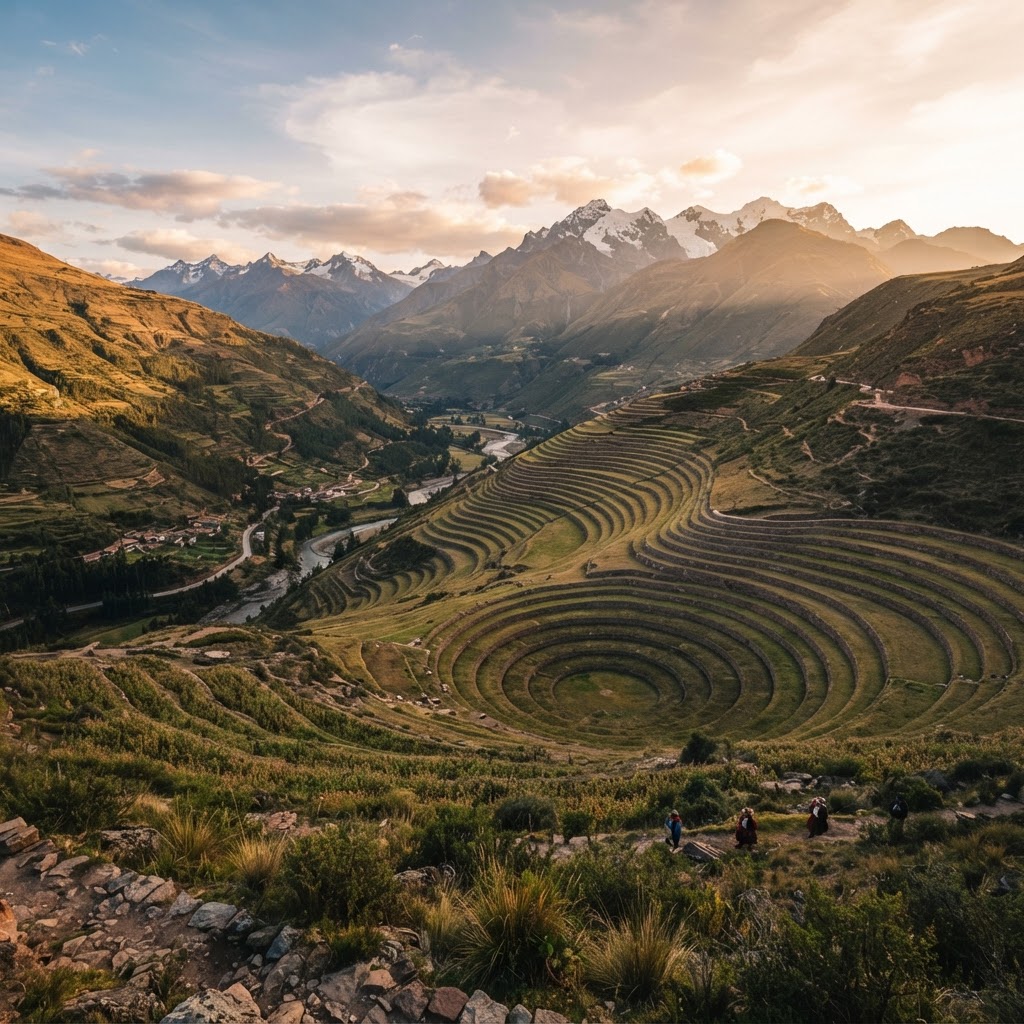
The Sacred Valley of the Incas is routinely relegated to a whirlwind 8-hour bus tour between landing in Cusco and catching the train to Machu Picchu. That is a tactical mistake. Dropping straight into the valley upon landing at Alejandro Velasco Astete Airport places you roughly 2,000 feet lower than Cusco, cutting altitude sickness risk substantially while situating you amid monumental Incan agricultural ruins, living cobblestone villages, and world-class culinary retreats.
3 to 4 days
Build your own trip with these prebuilt itineraries
Each one is a tested, day-by-day plan for Sacred Valley, Peru — start here, then make it yours.
10 Days in Sacred Valley
Complete Cultural Circuit: Cusco, Sacred Valley & Machu Picchu
7 Days in Sacred Valley
Sacred Valley & Inca Trail Gateway Expedition
5 Days in Sacred Valley
Slow Andean Immersion: Pisac, Maras, Moray & Ollantaytambo
Landing in Cusco at 11,152 feet (3,400 meters) frequently knocks travelers flat with soroche (altitude sickness). By contrast, basing yourself immediately in Urubamba (9,420 ft) or Ollantaytambo (9,160 ft) allows your body to adjust gradually while enjoying pastoral mountain views, walking directly into ancient terraced sites like Pisac and Ollantaytambo before the daily bus armadas arrive at 10:30 AM, and catching the direct PeruRail or Inca Rail trains to Aguas Calientes without a 4:00 AM hotel pickup in Cusco.
Where to stay
Getting there
Getting around
Food & drink
What it costs
Things to do
Book tours & tickets in Sacred Valley, PeruSkip it if
Travelers with under 4 days total in the Cusco region who prioritize historic colonial architecture, nightlife, and museum access over mountain landscapes and ancient ruins should base themselves in Cusco city instead. Fast-track travelers catching the early train to Machu Picchu on a strict 48-hour schedule will not have the time buffer required to appreciate valley towns.
Destination intelligence
Updated 9/12/2026The structured record we plan every Sacred Valley, Peru itinerary from.
Walkability
Town centers like Ollantaytambo and Pisac are extremely walkable on foot, though steep and paved with ancient, uneven cobblestones. Valley-wide travel between sites requires transport along the highway.
Transit quality
Good: frequent, cheap local shared colectivos run up and down the main valley floor route, while private drivers are readily available and affordable for higher mountain circuits.
Car needed
No. Private drivers are widely accessible, safe, and inexpensive. Driving a rental car adds needless stress navigating narrow unpaved switchbacks, unmarked speed bumps, and livestock.
Ideal duration
3 to 4 days
Minimum useful
2 days
Peak season
May to September (Andean dry season with crisp, clear, sunny days, freezing nights, and peak visitor volume across all archaeological sites).
Shoulder season
April and October to November (intermittent showers, emerald green mountainsides, and significantly reduced visitor crowds).
Low season
December to March (rainy season; heavy Andean downpours, occasional landslide disruptions along mountain roads and railway tracks, though agricultural fields are lush).
Best for
Common mistakes
- Treating the Sacred Valley as a single-day whistle-stop tour crammed between Cusco and Aguas Calientes.
- Sleeping in Cusco on night one of your trip instead of immediately descending to Urubamba or Ollantaytambo to acclimatize safely.
- Forgetting to purchase the Cusco Tourist Ticket (Boleto Turístico del Cusco) in advance, which is required to enter Pisac, Ollantaytambo, Chinchero, and Moray (the Boleto Turístico does not cover the separate entrance fee at Salineras de Maras).
- Visiting Ollantaytambo or Pisac ruins strictly between 11:00 AM and 2:00 PM, when tour buses disgorge hundreds of day-trippers simultaneously.
Best nearby
See what a trip to Peru actually costs. Travel Budget Co.
Readymade itineraries
Start from a tested template — then make it yours.
Ready to book
Lock in your Sacred Valley, Peru trip
Everything in one place. We may earn a small commission — it never costs you more.
Plan a trip to Sacred Valley, Peru
Pick a length and we'll build a day-by-day plan around how you travel — neighborhoods clustered, budget-aware, and editable.
Get better at planning trips like this
Occasional notes on planning smarter — no spam, unsubscribe anytime.
Plan a trip to Sacred Valley, Peru
Turn this guide into a day-by-day plan built around your pace, your group, and your budget.
Build my Sacred Valley, Peru trip