Morocco
Rabat
Morocco's calm, administrative coastal capital of whitewashed ramparts and quiet souks
Plan & book
Sort your Rabat trip in one place.
We point you to the booking tools we'd actually use — live prices, no markup. Or let us build the day-by-day plan around you first, then book.
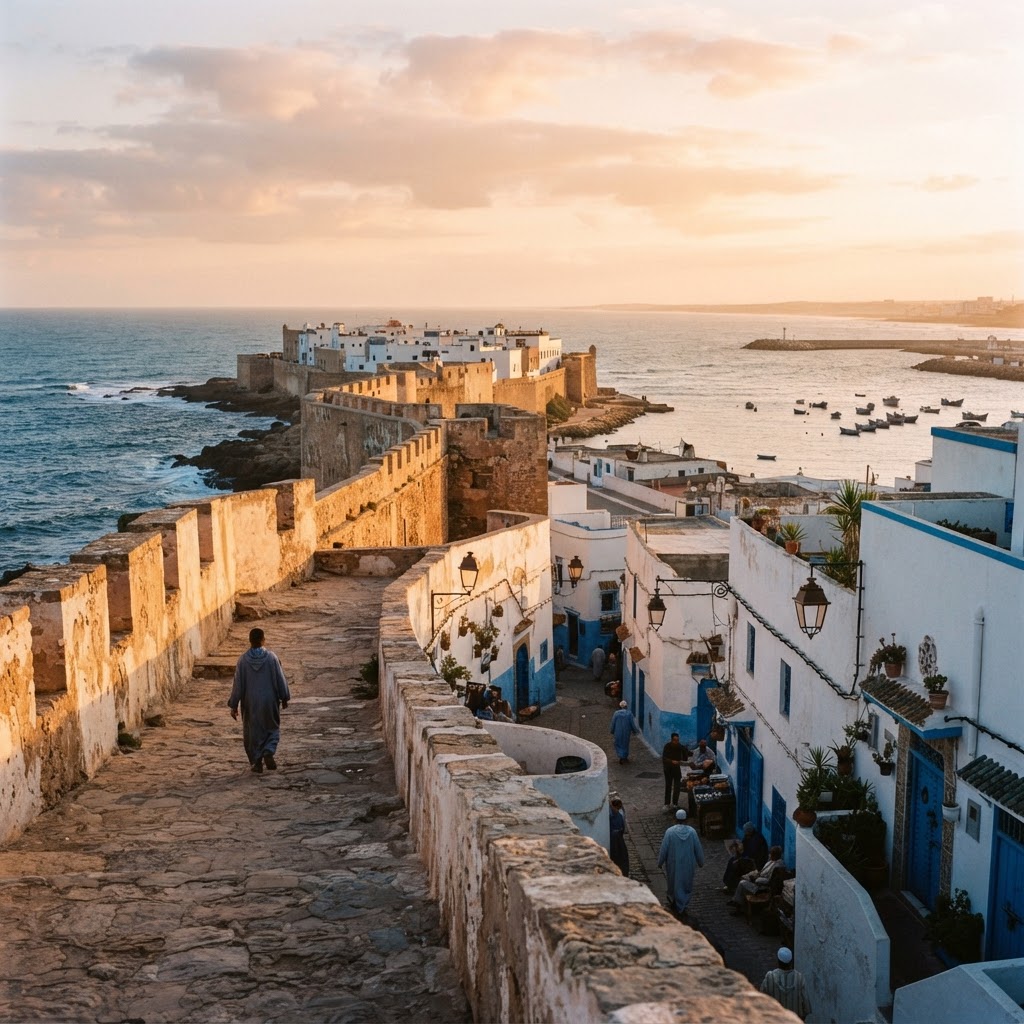
Rabat provides an unhurried, clean, and civilized entry point to Morocco that stands in sharp contrast to the high-friction sensory chaos of Marrakech or Fez. Established on the Atlantic coast along the mouth of the Bou Regreg river, the capital pairs well-preserved 12th-century Almohad monuments and blue-and-white clifftop fortresses with modern French colonial boulevards, a sleek tram network, and an approachable historic core.
2 days
Best time
April to May and September to October for optimal walking temperatures and minimal Atlantic rainfall.
Build your own trip with these prebuilt itineraries
Each one is a tested, day-by-day plan for Rabat — start here, then make it yours.
3 Days in Rabat: Architecture, Art & Atlantic Coast in Rabat
Deep dive into imperial monuments, modern Moroccan art museums, contemporary architecture, and relaxed coastal boulevards
2 Days in Rabat: The Low-Stress Cultural Introduction in Rabat
First-timer introduction pairing tranquil medina wandering and Andalusian gardens with Almohad monuments and cross-river Salé
1 Day in Rabat: Capital Highlights in Rabat
Express heritage crawl hitting the Kasbah of the Udayas, Hassan Tower, and Chellah via the modern tramway
Go for an authentic, low-pressure urban Morocco where shopkeepers do not aggressively hustle, the Atlantic breeze cuts the heat, and major monuments like the Kasbah of the Udayas and Hassan Tower can be explored without wrestling tour bus crowds. It is the best place in the country to find architectural gravity, contemporary art, and peaceful medina wandering within a single, highly walkable day.
Where to stay
Getting there
Getting around
Food & drink
What it costs
Things to do
Book tours & tickets in RabatSkip it if
Skip Rabat if your Morocco itinerary is short (under 7 days) and you are chasing the high-octane spectacle of Marrakech, dramatic High Atlas trekking, or deep Sahara sand dunes. It is an orderly administrative city, not a high-drama travel postcard.
When to go
Spring and autumn strike the perfect compromise: temperatures hover between 20°C and 25°C, avoiding both winter ocean squalls and the thick coastal humidity of midsummer. Crowds are never an issue in Rabat, so timing revolves entirely around weather comfort.
Peak (April to May & September to November)
Clear blue skies and comfortable sea breezes make this ideal for exploring ramparts and open-air ruins on foot.
Shoulder (June to August)
Noticeably cooler than inland Marrakech or Fez thanks to Atlantic breezes, but coastal humidity peaks and midday sun requires pacing.
Low (December to February)
Chilly, damp ocean winds and intermittent rains make beach walks brisk, though sights are delightfully empty and hotel rates drop.
Neighborhoods
Where you stay shapes the trip. Here's how to think about it.
Kasbah of the Udayas
Cobblestone alleys, whitewashed facades with royal blue trim, and clifftop Atlantic panoramas.
Best for:Romantics, photographers, and quiet evening wanderers
Don't miss:Catching sunset mint tea and almond pastries at the open-air Café Maure overlooking the Bou Regreg estuary.
Rabat Medina
A rectilinear, unhurried walled quarter focused on local commerce rather than high-pressure sales.
Best for:Low-stress souk shopping and traditional riad stays
Don't miss:Rue des Consuls for handwoven carpets, leather goods, and cedar crafts without aggressive touts.
Quartier Hassan
Stately diplomatic core characterized by wide colonial boulevards, Almohad landmarks, and sleek tram stops.
Best for:First-timers, architecture buffs, and train travelers
Don't miss:Walking the column-filled esplanade between the 12th-century Hassan Tower and the intricately carved Mausoleum of Mohammed V.
Agdal
Modern, affluent commercial district packed with contemporary bistros, leafy residential blocks, and students.
Best for:Longer stays, cafe hoppers, and business travelers
Don't miss:Browsing contemporary Moroccan galleries and patisseries along Avenue Fal Ould Oumeir.
Salé Medina & Marina (Across the River)
Raw, deeply traditional walled city paired with a polished modern yacht marina along the rivermouth.
Best for:Culture seekers looking for untouched historic character
Don't miss:Crossing the Bou Regreg by wooden rowboat ferry to inspect the delicate carved cedar woodwork at the 14th-century Medersa of Salé.
Destination intelligence
Updated 9/14/2026The structured record we plan every Rabat itinerary from.
Walkability
High in central areas like the Medina, Kasbah of the Udayas, and Hassan district, with wide pavements and pedestrianized streets.
Transit quality
High; the modern Rabat-Salé tramway connects major rail stations, historic sights, and cross-river Salé cleanly and reliably.
Car needed
No; driving and parking are unnecessary hassles. High-speed rail connects from other cities, and trams or metered taxis handle all inner-city transit.
Ideal duration
2 days
Minimum useful
1 day
Peak season
Spring (April to May) and Autumn (September to November), offering mild, sunny temperatures ideal for walking monuments and gardens.
Shoulder season
Summer (June to August), which remains cooler than inland Moroccan cities due to Atlantic sea breezes, though coastal humidity rises.
Low season
Winter (December to February), marked by frequent rain, ocean winds, and chilly evenings, though tourist sights remain completely uncrowded.
Best for
Common mistakes
- Booking a beach resort outside the core expecting a swimming vacation—Rabat's urban beaches are rocky, windswept, and impractical compared to southern beach hubs like Taghazout or Essaouira.
- Renting a car for the city stay; central parking is frustrating and traffic congestion makes the modern tramway and petit taxis vastly superior.
- Skipping the Chellah necropolis to spend extra hours in the medina shops, which are far smaller than those in Fez.
Best nearby
See what a trip to Morocco actually costs. Travel Budget Co.
How to plan it
- Base yourself in Quartier Hassan if you value direct tram access and calm modern hotels, or the Medina for atmospheric riad courtyards.
- Pair Rabat as a tranquil 48-hour buffer between intense, high-sensory stays in Casablanca, Fez, or Marrakech.
- Skip renting a car until you are leaving Rabat toward the Rif Mountains or southern desert routes; train lines between Tangier, Rabat, and Casablanca render driving obsolete.
- Take the 2-dirham wooden rowboat ferry across the Bou Regreg river to Salé instead of hailing a road taxi across the bridge for a scenic water-level approach.
Questions
Readymade itineraries
Start from a tested template — then make it yours.
Ready to book
Lock in your Rabat trip
Everything in one place. We may earn a small commission — it never costs you more.
Plan a trip to Rabat
Pick a length and we'll build a day-by-day plan around how you travel — neighborhoods clustered, budget-aware, and editable.
Get better at planning trips like this
Occasional notes on planning smarter — no spam, unsubscribe anytime.
Plan a trip to Rabat
Turn this guide into a day-by-day plan built around your pace, your group, and your budget.
Build my Rabat trip