Costa Rica
Puerto Viejo de Talamanca, Costa Rica
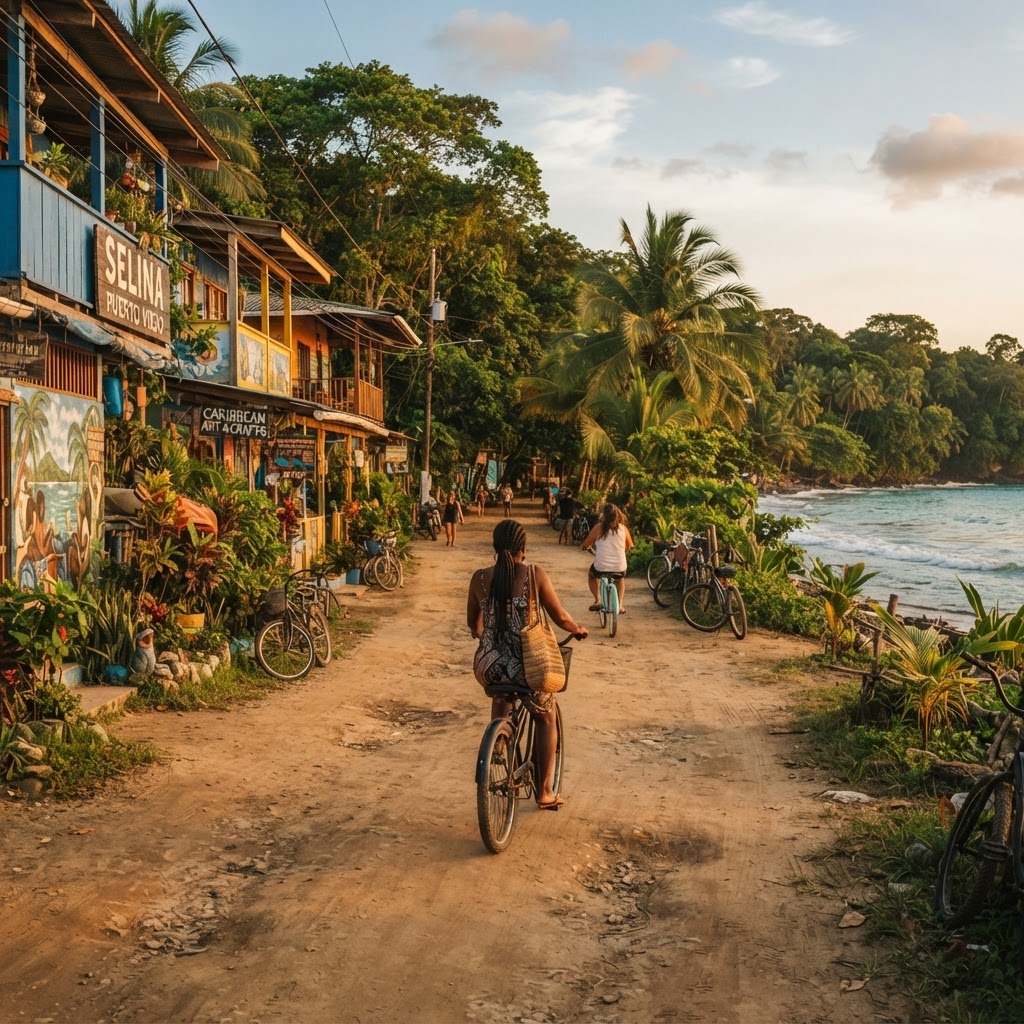
Afro-Caribbean cadence, unmanicured coastal rainforest, and unhurried bicycle life.
Plan & book
Sort your Puerto Viejo de Talamanca, Costa Rica trip in one place.
We point you to the booking tools we'd actually use — live prices, no markup. Or let us build the day-by-day plan around you first, then book.
Puerto Viejo de Talamanca sits in Costa Rica's far southeastern corner, where the asphalt ends and the rainforest drops straight into the turquoise Caribbean. Culturally distinct from the Pacific slope, this corridor is defined by deep Afro-Caribbean roots, indigenous Bribri heritage, coconut rice, reggae rhythms, and dirt tracks navigated on single-speed cruiser bikes. It trades manicured resort amenities and tour buses for wild, palm-backed beaches, legendary surf, and sloths lounging above open-air cafes.
4 to 5 days
Best time
September to October for peak sunshine and glassy seas, or February to April for dry weather and consistent surf.
Build your own trip with these prebuilt itineraries
Each one is a tested, day-by-day plan for Puerto Viejo de Talamanca, Costa Rica — start here, then make it yours.
5 Days: Slow Caribbean Nature & Indigenous Immersion in Puerto Viejo
Deep dive into rainforest preserves, Bribri indigenous chocolate traditions, Cahuita reefs, and secluded southern beaches
4 Days: Coastal Jungle & Wildlife Explorer in Puerto Viejo
First-time balance of national parks, beach cruiser trails, animal sanctuaries, and Afro-Caribbean food
3 Days: Surf Breaks & Pura Vida Chill in Puerto Viejo
Surf-focused escape targeting Salsa Brava and Cocles beach breaks, seaside reggae shacks, and vibrant town culture
Go for a rare convergence of authentic Afro-Caribbean culture, thriving biodiversity, and laid-back beach living that has avoided institutional mega-resorts. In Puerto Viejo, your daily commute is a shaded 20-minute bicycle pedal through canopy-covered roads linking reef breaks, calm snorkeling bays, and wildlife rehabilitation centers. It is one of the few places in Central America where you can eat jerk chicken or rondon soup, hike pristine coastal rainforest trails in morning solitude, and catch world-class surf by sunset.
Where to stay
Getting there
Getting around
Food & drink
What it costs
Skip it if
Skip Puerto Viejo if your ideal Costa Rica vacation requires five-star resort chains, air-conditioned infinity pools, smooth highways, or seamless tour-bus logistics. Travelers with mobility limitations will struggle with unpaved jungle side roads, elevated wooden cabinas, and cycling infrastructure. Also reconsider if you are locked into traveling during May, June, or November and cannot tolerate substantial tropical rain.
When to go
The Caribbean coast breaks Costa Rica's standard climate pattern: when the Pacific coast drowns in September and October rains, Puerto Viejo enjoys its driest, sunniest days with ultra-calm waters for snorkeling. Early spring brings festive energy and prime surf breaks, but costs peak alongside international dry season crowds.
Peak (September–October & December–April)
Early autumn offers the clearest water and lowest rainfall. Christmas through April brings vibrant party life, perfect surf swells, and high lodge rates requiring months-ahead booking.
Shoulder (May & August)
A comfortable sweet spot of warm intervals, lower accommodation rates, and manageable afternoon downpours that rarely ruin an entire day.
Low (June–July & November–December)
Atlantic weather systems drive heavy, unpredictable downpours, muddy trails, and rough ocean chop, though nature reserves are intensely green and tourist foot traffic is minimal.
Neighborhoods
Where you stay shapes the trip. Here's how to think about it.
Puerto Viejo Town Center
Rambling, energetic hub of beach cruiser traffic, reggae beach bars, tour operators, and open-air cafes.
Best for:First-timers, solo travelers, and nightlife seekers who want everything walkable without needing a bike after dark.
Don't miss:Watching advanced surfers tackle the infamous Salsa Brava reef break right off the beach from the tables at Stanford's.
Playa Cocles
Youthful, surf-centric beach strip backed by dense jungle, boutique eco-lodges, and artisan bakeries.
Best for:Active travelers, intermediate surfers, and beachgoers who want casual cafe culture within a 15-minute pedal of town.
Don't miss:Taking a morning surf lesson on Cocles Beach before grabbing iced coffee and fresh sourdough at Caribeans Chocolate.
Playa Chiquita
Tucked-away, residential pocket where private jungle paths lead down to secluded tide pools and quiet coves.
Best for:Couples, light sleepers, and travelers prioritizing wildlife watching and boutique dining over nightlife.
Don't miss:The guided educational tour at the nearby Jaguar Rescue Center to see recovering sloths, anteaters, and wildcats.
Punta Uva
Calm, postcard-perfect crescent bay with turquoise water, arching coconut palms, and gentle swimming conditions.
Best for:Families, sea kayakers, and calm-water swimmers frustrated by the heavier Atlantic surf elsewhere.
Don't miss:Renting a kayak to paddle up the freshwater river estuary behind the point while spotting river turtles and kingfishers.
Manzanillo
Unhurried, traditional Afro-Caribbean fishing village at the dead-end of Route 256 where the coastal road terminates.
Best for:Hikers, snorkelers, and anyone seeking pure local immersion away from international boutique trends.
Don't miss:Hiking the coastal jungle trail inside the Gandoca-Manzanillo National Wildlife Refuge to reach the dramatic viewpoint at Punta Mona.
Destination intelligence
Updated 9/14/2026The structured record we plan every Puerto Viejo de Talamanca, Costa Rica itinerary from.
Walkability
Moderate within town and local beach hubs; high overall along the coastal strip if paired with a beach cruiser bicycle.
Transit quality
Fair; reliable local hourly buses connect Puerto Viejo north to Cahuita and south to Manzanillo, supplemented by affordable tuk-tuks and taxis.
Car needed
Not required; a car is often a hindrance in town and on beach trails where bicycles and local shuttles work better.
Ideal duration
4 to 5 days
Minimum useful
3 days
Peak season
September to October (unique Caribbean dry microclimate) alongside Christmas to April.
Shoulder season
May and August; intermittent afternoon rain interspersed with strong sunny intervals and lighter crowds.
Low season
June, July, November, and December, when Atlantic fronts bring heavy tropical rainfall and rough surf conditions.
Best for
Common mistakes
- Assuming Pacific weather patterns apply; visiting in July or November expecting dry conditions while missing the September–October Caribbean sunshine window
- Renting a large SUV to commute between beaches when flat-tire-prone traffic and narrow shoulders make a simple beach cruiser bike vastly superior
- Walking unlit roads or desolate stretches of beach alone after dark, which remains the primary scenario for local petty crime and bag snatches
- Rushing through on a 1- or 2-night stopover; the 5-to-6-hour drive each way from San José demands at least 3 to 4 full nights to justify the transit time
Best nearby
See what a trip to Costa Rica actually costs. Travel Budget Co.
How to plan it
- Base yourself in Playa Cocles or Playa Chiquita if you want jungle tranquility and boutique dining, but pick the Town Center if you hate riding bikes after dark or want nightlife within stumbling distance.
- Pair your Puerto Viejo visit with a night near Arenal Volcano or a Pacuare River whitewater trip to efficiently break up the long cross-country transit from San José.
- Do not try to combine Cahuita National Park and the Gandoca-Manzanillo Refuge into a single day; allocate a dedicated morning to Cahuita (30 minutes north) and another to the southern beaches.
- Book your guided morning slot at the Jaguar Rescue Center online in advance to guarantee entry before morning tour slots hit their visitor cap.
- If you want Caribbean calm, ditch the standard Pacific vacation schedule and target September or October when the rest of Costa Rica is soaking in rain.
Questions
Readymade itineraries
Start from a tested template — then make it yours.
Ready to book
Lock in your Puerto Viejo de Talamanca, Costa Rica trip
Everything in one place. We may earn a small commission — it never costs you more.
Plan a trip to Puerto Viejo de Talamanca, Costa Rica
Pick a length and we'll build a day-by-day plan around how you travel — neighborhoods clustered, budget-aware, and editable.
Get better at planning trips like this
Occasional notes on planning smarter — no spam, unsubscribe anytime.
Plan a trip to Puerto Viejo de Talamanca, Costa Rica
Turn this guide into a day-by-day plan built around your pace, your group, and your budget.
Build my Puerto Viejo de Talamanca, Costa Rica trip