Brazil
Paraty, Brazil
Car-free colonial lanes, emerald jungle fiords, and craft cachaça along the Costa Verde.
Plan & book
Sort your Paraty, Brazil trip in one place.
We point you to the booking tools we'd actually use — live prices, no markup. Or let us build the day-by-day plan around you first, then book.
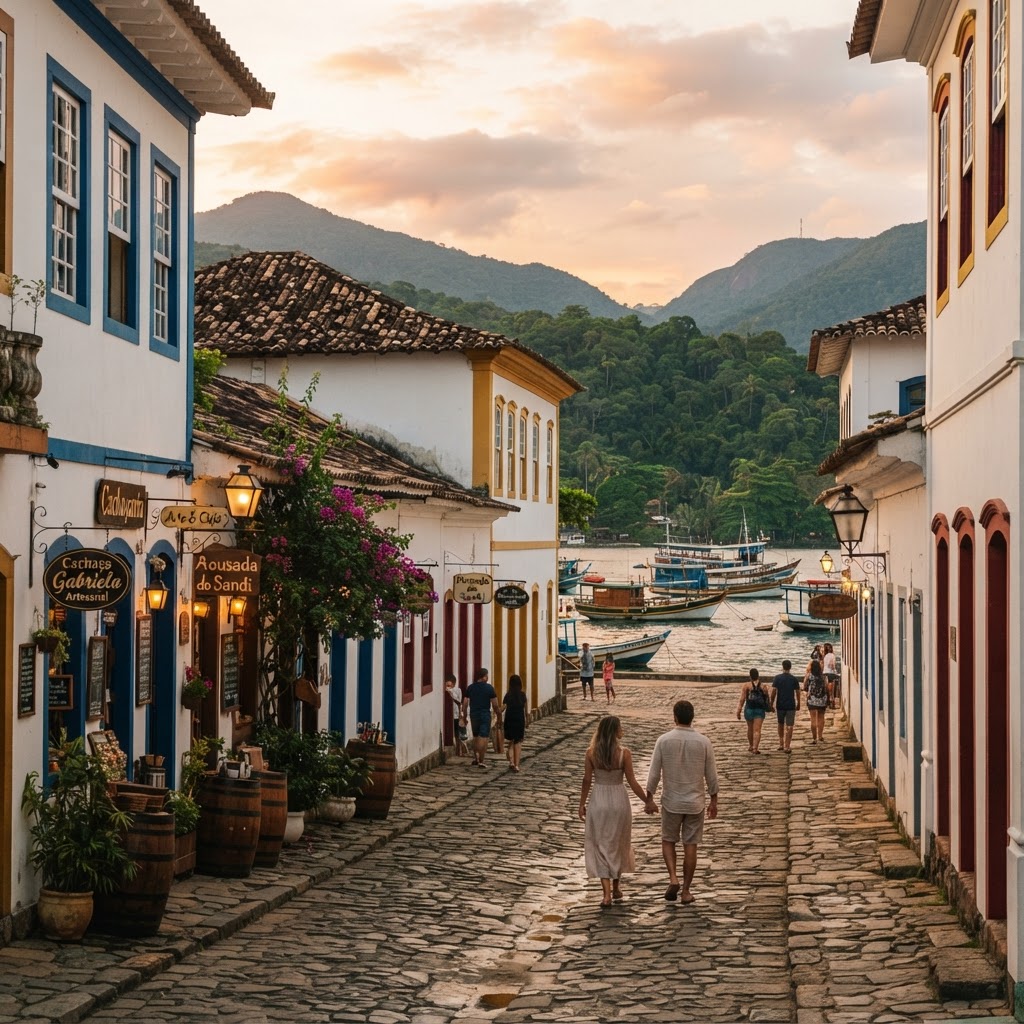
Set along the Costa Verde where the Atlantic Forest drops directly into quiet emerald bays, Paraty is a rare dual UNESCO World Heritage site celebrated for both its intact 18th-century Portuguese colonial core and its surrounding biodiversity. Motorized vehicles are barred from the historic center, leaving irregular cobblestone streets lined with whitewashed merchant facades, artisan boutiques, and candlelit seafood taverns. It serves as both a cultural haven and an aquatic gateway to sheltered fjords like Saco de Mamanguá, cascading Serra da Bocaina waterfalls, and centuries-old artisanal cachaça stills.
3 to 4 days
Build your own trip with these prebuilt itineraries
Each one is a tested, day-by-day plan for Paraty, Brazil — start here, then make it yours.
4 Days in Paraty: Coastal Adventure & Rainforest Treks in Paraty
Active exploration focusing on Atlantic Forest waterfalls, sea kayaking secluded coves, and the surf-swept beaches of Trindade
3 Days in Paraty: Colonial Charm & Bay Escapes in Paraty
First-timer highlights balancing cobblestone history, local cachaça, and a schooner cruise around the island-dotted bay
2 Days in Paraty: Romantic Boutique Retreat in Paraty
A relaxed, leisurely weekend centered on candlelit gastronomy, boutique pousadas, and quiet architectural wandering
Paraty breaks the breakneck pace of southeastern Brazil. Situated roughly halfway between Rio de Janeiro and São Paulo, it pairs walkable 18th-century architecture with exceptional coastal nature. Instead of crowded urban shores, days here are spent chartering traditional wooden escunas or private speedboats to secluded island coves, kayaking through coastal mangrove networks, and sliding down slick granite riverbeds like Cachoeira do Tobogã, before returning to a quiet, lamplit historic core for fresh seafood and sugarcane spirit tastings.
Where to stay
Getting there
Getting around
Food & drink
What it costs
Things to do
Book tours & tickets in Paraty, BrazilSkip it if
Skip Paraty if you have mobility challenges, rely on wheelchairs, or push heavy strollers, as the rough, car-free colonial cobblestones are genuinely difficult to navigate. Also pass if your ideal vacation requires high-rise beachfront resort pampering directly outside your hotel room, or if you cannot spare more than 48 hours away from Rio de Janeiro.
Destination intelligence
Updated 9/13/2026The structured record we plan every Paraty, Brazil itinerary from.
Walkability
High within the compact historic center, provided you wear sensible shoes. The irregular cobblestone paving makes wheels and formal footwear impractical.
Transit quality
Moderate. Regional bus connections to Rio, São Paulo, and Trindade are dependable, while water taxis and boat charters handle bay transport.
Car needed
Not required. Cars are prohibited inside the historic core; regional buses, transfers, and boat taxis cover primary routes.
Ideal duration
3 to 4 days
Minimum useful
2 days
Peak season
December to February (Carnival and Brazilian summer holidays) and July (during the FLIP international literary festival). Expect crowded alleys, elevated rates, and higher summer rainfall.
Shoulder season
April to May and September to November. Pleasant temperatures, significantly lower rainfall, manageable crowds, and clear bay waters.
Low season
June to August (Southern Hemisphere winter). Cooler evenings (around 15°C/60°F) and brisk water, but offers the year's sunniest, driest weather.
Best for
Common mistakes
- Treating Paraty as an ambitious day trip from Rio de Janeiro or São Paulo; one-way transit takes 4 to 6 hours, requiring at least a two-night stay.
- Packing wheeled rolling luggage or wearing high heels/flimsy flip-flops inside the historic center, where irregular stones twist ankles and ruin wheels.
- Expecting the town's urban beaches (Praia do Pontal or Jabaquara) to be paradise; the best swimming waters require taking a boat into the bay or a bus to Trindade.
- Visiting in peak summer (January-February) without checking rain forecasts, when relentless tropical downpours can wash out dirt hiking trails and muddy the coastal water.
Best nearby
See what a trip to Brazil actually costs. Travel Budget Co.
Readymade itineraries
Start from a tested template — then make it yours.
Ready to book
Lock in your Paraty, Brazil trip
Everything in one place. We may earn a small commission — it never costs you more.
Plan a trip to Paraty, Brazil
Pick a length and we'll build a day-by-day plan around how you travel — neighborhoods clustered, budget-aware, and editable.
Get better at planning trips like this
Occasional notes on planning smarter — no spam, unsubscribe anytime.
Plan a trip to Paraty, Brazil
Turn this guide into a day-by-day plan built around your pace, your group, and your budget.
Build my Paraty, Brazil trip