Cyprus
Paphos, Cyprus
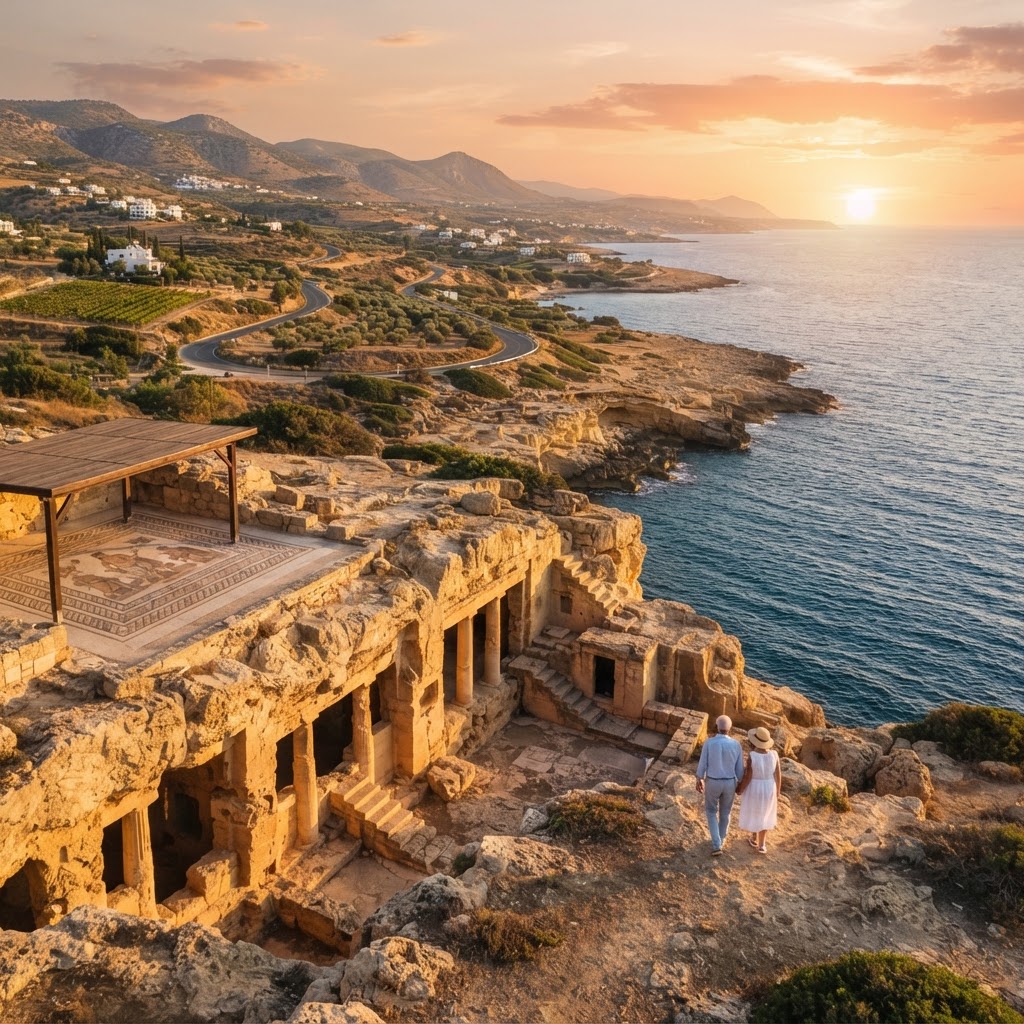
Sun-drenched Roman floor mosaics, subterranean sea-cliff tombs, and mountain wine roads.
Plan & book
Sort your Paphos, Cyprus trip in one place.
We point you to the booking tools we'd actually use — live prices, no markup. Or let us build the day-by-day plan around you first, then book.
Paphos sits on the southwest coast of Cyprus, functioning as both an open-air archaeological reserve and an easygoing Mediterranean harbor hub. Divided between the seaside promenade of Kato Paphos and the hillside Old Town (Ktima), the city offers world-class Greco-Roman mosaics and rock-cut necropolises alongside clear waters and village tavernas.
4 days
Best time
Late April through May or late September through October provide the sweet spot of comfortable warmth and easy sightseeing.
Build your own trip with these prebuilt itineraries
Each one is a tested, day-by-day plan for Paphos, Cyprus — start here, then make it yours.
7 Days in Paphos: The Complete Western Cyprus Road Trip in Paphos
Comprehensive regional loop balancing coastal ruins, Troodos foothills wine villages, and secluded coves
5 Days in Paphos: Wild Coasts & Akamas Adventure in Paphos
Outdoor exploration, gorge hiking, and remote beaches with a rental vehicle
3 Days in Paphos: UNESCO Antiquities & Old Town in Paphos
Historic highlights and meze culture without needing a rental car
Go for one of the densest collections of Hellenistic and Roman antiquities in the Mediterranean, located right along the waterline rather than locked behind museum ropes. The 3rd-century BC Tombs of the Kings carved straight into coastal sandstone and the vivid 2nd-century mosaics at Nea Paphos rival anything in Italy or mainland Greece, but with far smaller crowds outside midsummer.
Where to stay
Getting there
Getting around
Food & drink
What it costs
Things to do
Book tours & tickets in Paphos, CyprusSkip it if
Skip Paphos if you are seeking a car-free urban metropolis, high-density designer shopping, or pristine white-sand beaches right outside your city hotel door. Travelers chasing thumping all-night mega-club party strips will find Ayia Napa on the island's eastern end a better fit.
When to go
Summer brings relentless Mediterranean heat exceeding 32°C (90°F) that makes unshaded archaeological ruins punishing to explore, whereas shoulder months pair 24°C–28°C weather and swimmable seas with significantly lower crowd density and better hotel rates.
Peak (July to August)
Scorching daytime temperatures above 32°C, packed beaches, high hotel rates, and crowded harbor promenades. If visiting now, schedule open-air ruin visits for 8:00 AM.
Shoulder (April to June & September to November)
The prime window. May offers blooming wildflowers and mild walking weather; October pairs crisp air with summer-warmed water ideal for swimming.
Low (December to March)
Cool, quiet, and mild (daytime highs around 16°C–18°C) with occasional rain. Some seasonal tourist outfits close, but ruins remain open without queues and lodging prices drop steeply.
Neighborhoods
Where you stay shapes the trip. Here's how to think about it.
Kato Paphos
Harborfront tourist hub centered on ancient ruins, seaside promenades, and casual coastal dining.
Best for:First-timers, car-free travelers, history enthusiasts wanting doorstop site access
Don't miss:The sprawling Roman floor mosaics inside the Villa of Dionysos at Kato Paphos Archaeological Park.
Ktima (Old Town)
Elevated, authentic hillside core of neoclassical civic buildings, market alleyways, and quiet sunset bars.
Best for:Independent travelers, food lovers seeking local meze away from resort strips, culture buffs
Don't miss:Panoramic evening drinks looking down over the Mediterranean coastline from the clifftop near Kennedy Square.
Tombs of the Kings Road
A bustling coastal transit artery blending suburban conveniences, mid-range hotels, and dramatic sea-facing cliff tombs.
Best for:Budget-conscious travelers, long-stay visitors, travelers prioritizing direct bus access to Coral Bay
Don't miss:Underground rock-cut burial chambers carved with Doric columns at the actual Tombs of the Kings site.
Coral Bay & Peyia
A classic crescent-beach resort shelf that transitions into a terraced traditional hillside village.
Best for:Beach lovers, families with small children, travelers seeking villa rentals close to Akamas trails
Don't miss:The sea caves and the stranded EDRO III shipwreck just past the bay around sunset.
Destination intelligence
Updated 9/14/2026The structured record we plan every Paphos, Cyprus itinerary from.
Walkability
Moderate. Kato Paphos waterfront is easily walkable on foot, but reaching Old Town Ktima requires an uphill climb or bus, and regional highlights demand transit or a vehicle.
Transit quality
Moderate. OSYPA buses cover key tourist corridors (Harbour to Tombs of the Kings, Coral Bay, and Airport) cleanly and affordably, though rural routes are infrequent.
Car needed
Optional for the town center, recommended for exploring nature reserves, coastal gorges, and Troodos mountain wineries.
Ideal duration
4 days
Minimum useful
2 days
Peak season
July to August (Intense heat above 32°C/90°F, high resort occupancy, warm sea temperatures, crowded harbor promenade).
Shoulder season
April to June and September to November (Ideal 22°C–28°C weather, pleasant sea swimming in autumn, wildflowers in spring, manageable crowds).
Low season
December to March (Mild Mediterranean winter with daytime highs around 16°C–18°C, quiet sites, cheap accommodation, though some coastal resorts close).
Best for
Common mistakes
- Visiting the archaeological parks during midday in July or August when direct sun and heat reflect off the stones with little shade; go right at 08:30 opening instead.
- Staying entirely inside an all-inclusive hotel along the coast and missing the restored streetscapes, wine bars, and authentic meze houses in Ktima Old Town.
- Assuming Paphos town beaches are wide and sandy; the central waterfront is mostly rocky platforms and breakwaters, requiring a bus or drive to Coral Bay or Lara Beach for true sand.
- Forgetting that driving is on the left side of the road in Cyprus, a legacy of British administration.
Best nearby
How to plan it
- Stay in Kato Paphos if you want to step directly onto the coastal walkway and walk into ruins without dealing with parking.
- Base yourself in Ktima (Old Town) if you prefer authentic evening tavernas, neoclassical squares, and a local town atmosphere over resort strips.
- Do not attempt to tackle Kato Paphos Archaeological Park and the Tombs of the Kings on the same afternoon during summer—both are vast and virtually shade-free.
- Pair a morning visit to Aphrodite's Rock (Petra tou Romiou) with an inland drive up the E601 into the Commandaria wine villages to maximize your rental car day.
- Reserve an off-road buggy or dedicated 4x4 tour in advance if venturing deep into the Akamas Peninsula, as regular rental sedans are forbidden on the rough dirt tracks past Agios Georgios.
Questions
More in Cyprus
Larnaca, Cyprus
Cyprus
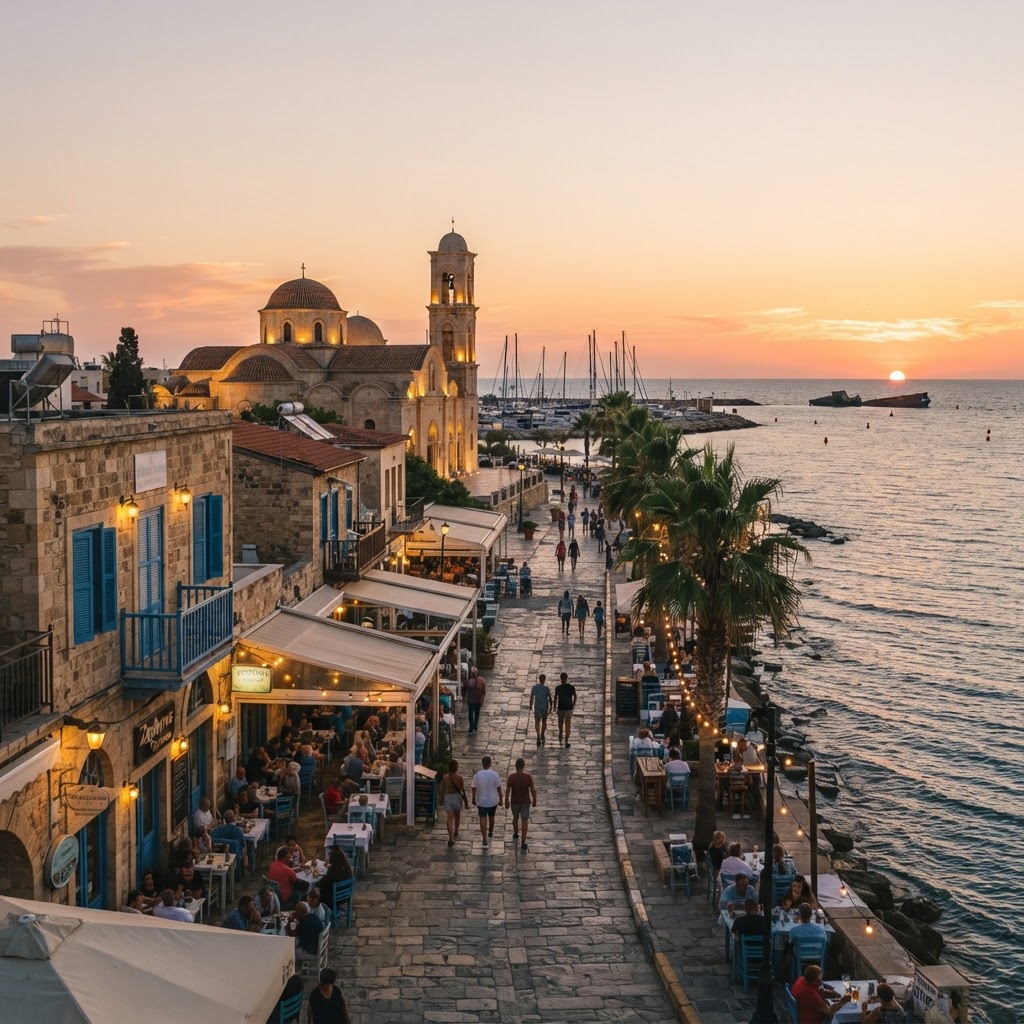
A relaxed coastal gateway trading mass-resort chaos for Byzantine relics, dive wrecks, and coastal tavernas.
Limassol, Cyprus
Cyprus
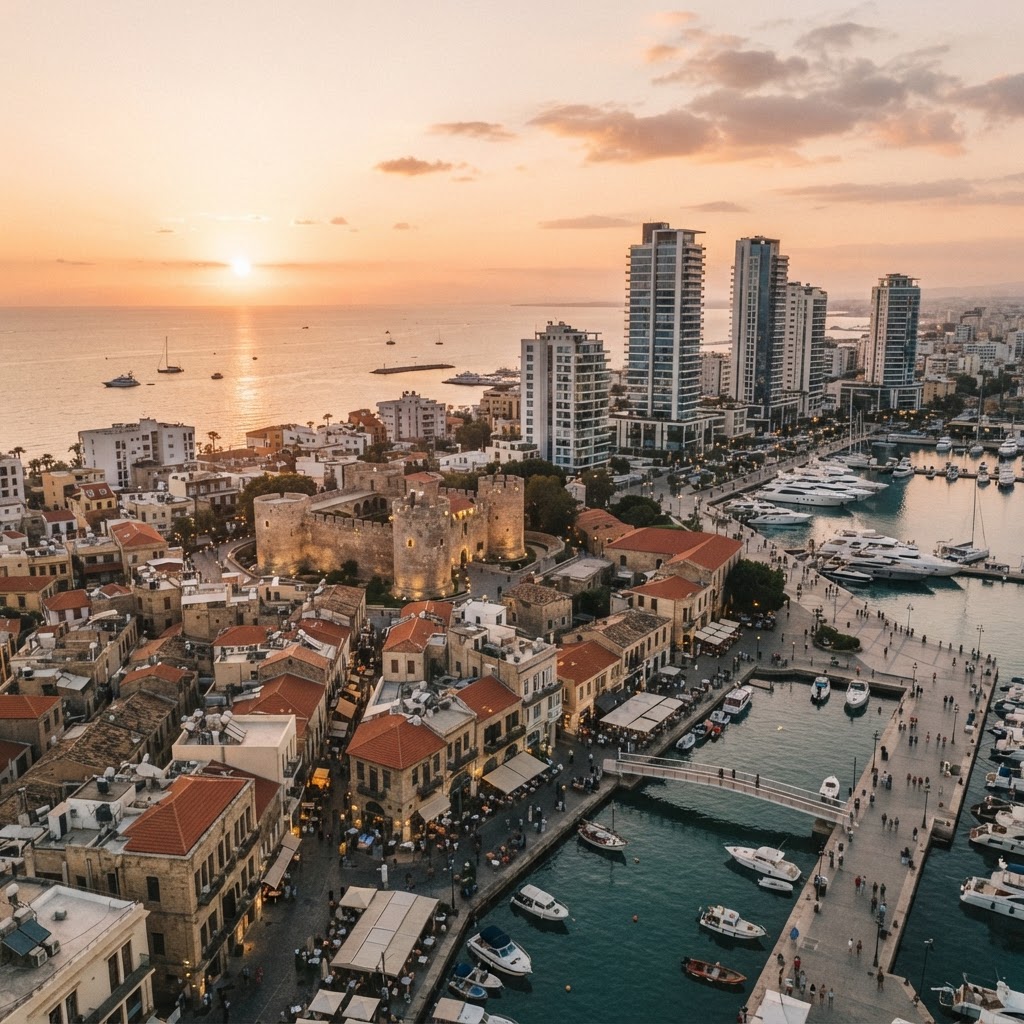
Cyprus’s energetic coastal hub where medieval lanes meet high-rise glamour and commandaria wine.
Readymade itineraries
Start from a tested template — then make it yours.
Ready to book
Lock in your Paphos, Cyprus trip
Everything in one place. We may earn a small commission — it never costs you more.
Plan a trip to Paphos, Cyprus
Pick a length and we'll build a day-by-day plan around how you travel — neighborhoods clustered, budget-aware, and editable.
Get better at planning trips like this
Occasional notes on planning smarter — no spam, unsubscribe anytime.
Plan a trip to Paphos, Cyprus
Turn this guide into a day-by-day plan built around your pace, your group, and your budget.
Build my Paphos, Cyprus trip