Turkey
Pamukkale & Hierapolis, Turkey
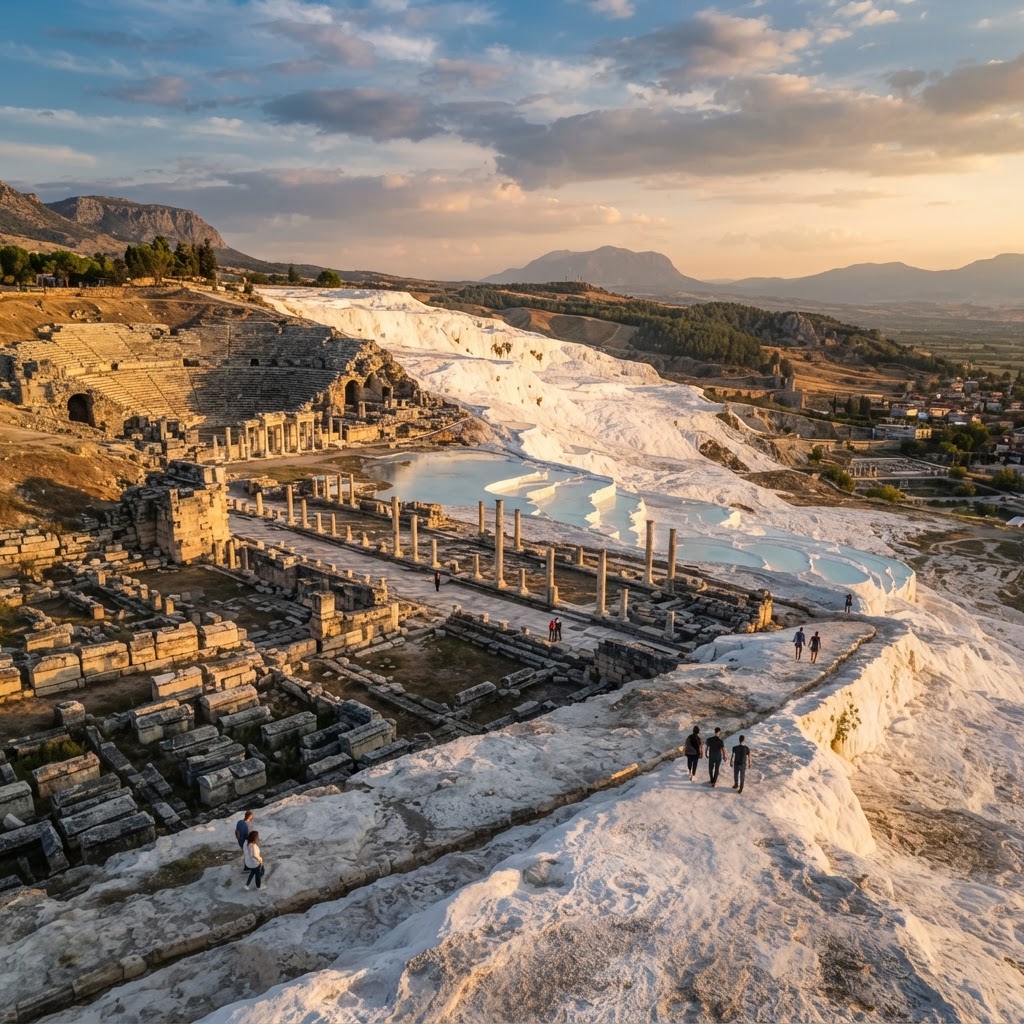
A blinding calcite hillside crowning the thermal ruins of ancient Hierapolis.
Plan & book
Sort your Pamukkale & Hierapolis, Turkey trip in one place.
We point you to the booking tools we'd actually use — live prices, no markup. Or let us build the day-by-day plan around you first, then book.
Pamukkale is defined by glowing white travertine terraces cascading down a hillside overlooking the Buyuk Menderes valley, paired directly with the sprawling Greco-Roman ruins of Hierapolis above. While mass tour buses descend daily on rigid afternoon schedules, the site rewards independent travelers who stay overnight, entering at the morning bell or late afternoon to experience the Roman theater, the ancient necropolis, and the mineral-rich waters free from tour-group congestion.
How long
1 night / 2 half-days (arrive in the afternoon for golden hour, visit Hierapolis early next morning, depart midday)
Build your own trip with these prebuilt itineraries
Each one is a tested, day-by-day plan for Pamukkale & Hierapolis, Turkey — start here, then make it yours.
3 Days Pamukkale, Aphrodisias & Salda Road Trip in Pamukkale
A regional explorer base utilizing a rental car to pair the white travertines with the marble ruins of Aphrodisias and the turquoise shores of Lake Salda
2 Days Ancient Spa & Thermal Springs in Pamukkale
A relaxed wellness and archaeological focus combining Cleopatra's Antique Pool, Karahayıt red thermal mud baths, and the sprawling Northern Necropolis
1 Day Classic Sunset to Sunrise in Pamukkale
The quintessential overnight stay designed to beat the tour bus crowds with golden hour terraces and an early morning Hierapolis tour
The rare geological wonder of petrified thermal terraces physically connected to a massive ancient spa city. Walking barefoot across natural travertine shelves filled with warm mineral water and swimming among sunken Roman fluted columns in the Cleopatra Antique Pool provide an archaeological experience unmatched anywhere else in the Mediterranean basin.
Where to stay
Getting there
Getting around
Food & drink
What it costs
Skip it if
Skip if your itinerary is already rushed and you expect a pristine, empty natural spa resort: modern water diversion means many terraces are dry or artificial, and entering the travertine slope requires balancing barefoot on slippery, corrugated stone surfaces that can be painful for those with tender feet or joint problems.
Destination intelligence
Updated 9/13/2026The structured record we plan every Pamukkale & Hierapolis, Turkey itinerary from.
Walkability
High within the village and archaeological zone, though the ruins and terraces demand sturdy endurance and walking barefoot on rough limestone.
Transit quality
Good: frequent dolmus minibuses link Pamukkale, Karahayit, and Denizli railway/bus hubs every 15-20 minutes.
Car needed
Not required. Regional buses and trains efficiently access Denizli, and local minibuses cover the village; a rental car is only useful if extending trips to remote Aphrodisias or Lake Salda.
Ideal duration
1 night / 2 half-days (arrive in the afternoon for golden hour, visit Hierapolis early next morning, depart midday)
Minimum useful
4 to 5 hours (a tightly paced half-day en route between Izmir/Selçuk and Antalya)
Peak season
June through August: Scorching heat (often exceeding 38°C/100°F) and dense midday tour-bus throngs from Mediterranean resorts.
Shoulder season
April to May and September to October: Mild weather, crisp skies, and optimal conditions for walking the ruins and wading the terraces.
Low season
November to March: Cold, occasionally snowy conditions; significantly reduced crowds, but walking barefoot on icy limestone terraces can be uncomfortable.
Best for
Common mistakes
- Arriving on a day tour between 11:00 AM and 3:00 PM alongside dozens of coastal tour buses when crowds peak and sun glare off the white stone is blinding.
- Failing to bring a drawstring backpack or tote for footwear; shoes are strictly prohibited on the travertines to protect the soft calcite, meaning you must carry your footwear barefoot for over a kilometer.
- Neglecting the sprawling ruins of Hierapolis and the Necropolis, mistakenly treating the destination as merely a 30-minute photo stop at the water terraces.
- Expecting all travertine terraces to be filled with deep water simultaneously; water flow is strictly regulated by conservation authorities on rotating schedules to prevent algae growth and terrace erosion.
- Eating expensive, low-quality buffet food at the immediate park cafeterias instead of packing water and a picnic lunch or dining in the village below.
Best nearby
See what a trip to Turkey actually costs. Travel Budget Co.
Readymade itineraries
Start from a tested template — then make it yours.
Ready to book
Lock in your Pamukkale & Hierapolis, Turkey trip
Everything in one place. We may earn a small commission — it never costs you more.
Plan a trip to Pamukkale & Hierapolis, Turkey
Pick a length and we'll build a day-by-day plan around how you travel — neighborhoods clustered, budget-aware, and editable.
Get better at planning trips like this
Occasional notes on planning smarter — no spam, unsubscribe anytime.
Plan a trip to Pamukkale & Hierapolis, Turkey
Turn this guide into a day-by-day plan built around your pace, your group, and your budget.
Build my Pamukkale & Hierapolis, Turkey trip