Brazil
Olinda, Brazil
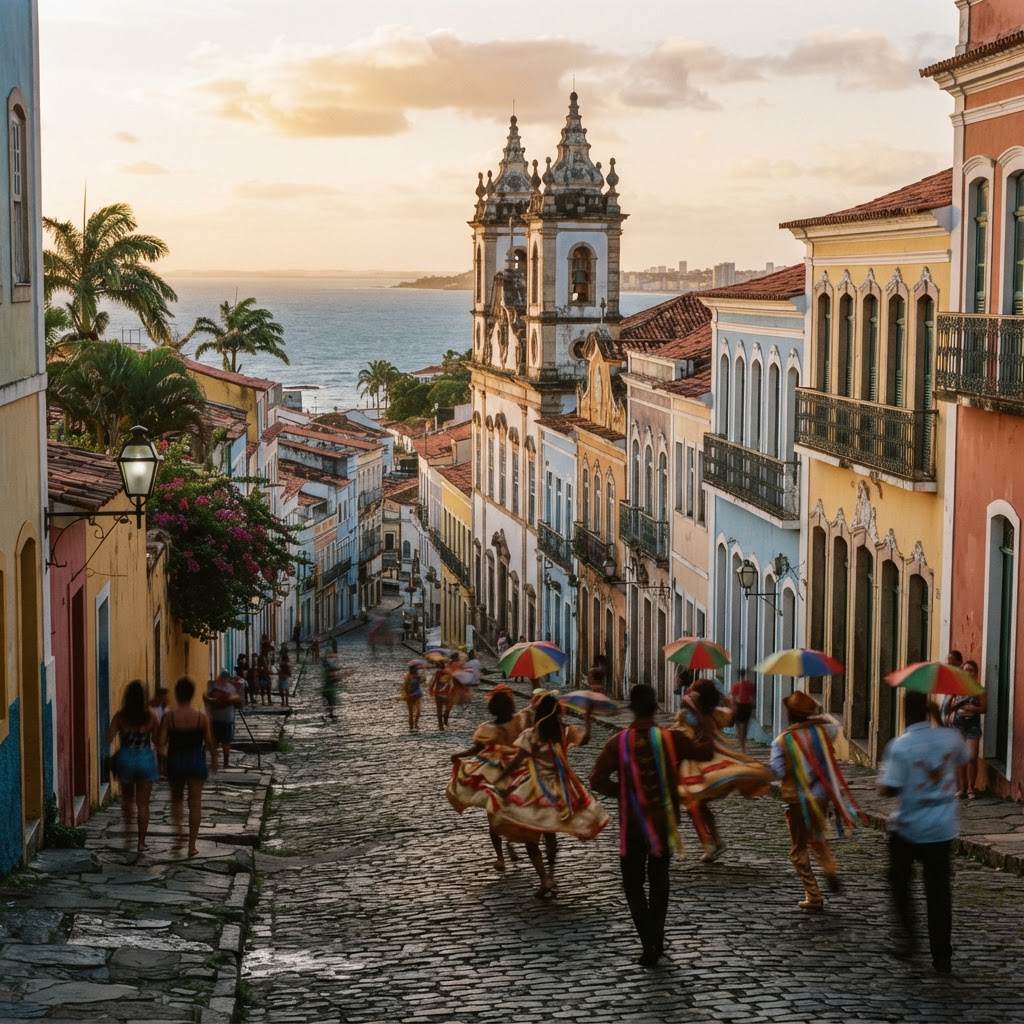
Baroque church spires, steep coastal cobblestones, and the rhythmic heartbeat of frevo
Plan & book
Sort your Olinda, Brazil trip in one place.
We point you to the booking tools we'd actually use — live prices, no markup. Or let us build the day-by-day plan around you first, then book.
Perched on lush hills directly overlooking the Atlantic and the modern skyline of Recife, Olinda is a preserved UNESCO World Heritage enclave of Portuguese colonial architecture, vivid artisan ateliers, and vibrant Afro-Brazilian street music. While thousands treat it merely as a hurried afternoon day trip, its true magic reveals itself early in the morning and at dusk when day-trippers disperse, leaving behind cooling sea breezes, echoing brass horns, and quiet terrace caipirinhas.
2 days
Best time
September through November for prime dry weather, warm trade winds, and relaxed sight-lines without the crush of holiday rates.
Build your own trip with these prebuilt itineraries
Each one is a tested, day-by-day plan for Olinda, Brazil — start here, then make it yours.
2 Days in Historic Olinda in Olinda
First-time colonial highlights, panoramic church views, and atmospheric evening street culture
3 Days of Culture, Music & Afro-Brazilian Roots in Olinda
Immersive cultural deep-dive exploring Maracatu rhythms, local ateliers, and evening music circles
1 Day Architecture & Heritage Walk in Olinda
Intensive walking tour focusing on baroque churches, sacred art, and colonial cobblestone streets
Olinda provides one of South America's most intact 16th-century colonial streetscapes without feeling like an inert museum. Its cultural heritage is lived on the streets through participatory frevo dances, maracatu drum circles, master puppetry workshops, and sunset gatherings over tapioca flatbreads at Alto da Sé.
Where to stay
Getting there
Getting around
Food & drink
What it costs
Things to do
Book tours & tickets in Olinda, BrazilSkip it if
Travelers with significant mobility challenges who cannot manage steep, uneven cobblestones, or resort seekers wanting direct luxury beachfront access with swimmable waters right outside their hotel room.
When to go
Peak season (December through Carnaval in February) delivers unmatched street-revelry energy but demands quadruple lodging rates and packed cobblestones. Low season (May through August) brings heavy, sudden coastal squalls that make steep stone slopes dangerously slick. The spring shoulder offers crisp blue skies, open restaurant tables, and easy exploring.
Peak (Dec–Feb & Jul)
Massive crowds, electric energy, open-air rehearsal blocos leading into Carnaval, and premium lodging rates; book 4 to 6 months ahead.
Shoulder (Sep–Nov & Mar–Apr)
The sweet spot of dry tropical days, moderate pousada pricing, and unhurried access to church interiors and artist studios.
Low (May–Aug)
Pernambuco's rainy season delivers torrential downpours that drench the hillsides, though temperatures stay warm and pousadas drop rates by 40%.
Neighborhoods
Where you stay shapes the trip. Here's how to think about it.
Alto da Sé
Hilltop epicenter of panoramic coastal vistas, open-air tapioca stands, and church bells.
Best for:Sunset watchers, photography enthusiasts, and first-time orientation
Don't miss:Catching the Atlantic ocean breeze at the terrace behind Catedral da Sé while sampling freshly made sweet coconut tapioca from the evening carts.
Carmo
Lower historic gateway anchored by expansive plazas, leafy parks, and easy rideshare pickup spots.
Best for:Basecamp convenience, flatter walking, and quick links to Recife
Don't miss:The austere facade of Igreja de Nossa Senhora do Carmo and its surrounding plaza, where impromptu batucada drumming rehearsals gather.
Amparo & Rua do Amparo
Artisanal, bohemian artery lined with atelier doorways, low-lit cachaçarias, and courtyard dining.
Best for:Evening dining, couples, art collectors, and live acoustic music
Don't miss:Browsing woodcut prints (xilogravuras) in local workshop-galleries before pulling up a wooden sidewalk chair at Oficina do Sabor.
Bonsucesso & Quatro Cantos
Rhythmic heart of street-level frevo culture, narrow cobbled intersections, and local bar corners.
Best for:Carnaval devotees, street culture buffs, and evening caipirinhas
Don't miss:Sipping local infused cachaça (pau do índio) at the iconic intersection of Quatro Cantos where costumed blocos collide during festivities.
Destination intelligence
Updated 9/14/2026The structured record we plan every Olinda, Brazil itinerary from.
Walkability
High within Cidade Alta, provided you are prepared for steep hills and slick colonial cobbles; outside the historic core, walking is impractical.
Transit quality
Limited within the old town; public buses are crowded and slow, making rideshare (Uber/99) the preferred choice for cross-city travel.
Car needed
No. A car is an active disadvantage in the narrow, winding colonial alleys with negligible parking.
Ideal duration
2 days
Minimum useful
1 full day (overnight recommended)
Peak season
December through February (summer holidays and Carnaval) and July (domestic winter school holidays). Expect steep lodging prices and thick crowds.
Shoulder season
September through November and March through April. Offers dry, sunny days, reasonable pousada rates, and relaxed sightseeing.
Low season
May through August. Marks the tropical rainy season with periodic downpours, though temperatures remain warm year-round.
Best for
Common mistakes
- Treating Olinda merely as a three-hour daytime stop from Recife and missing the vibrant evening street life and cool breezes.
- Wearing slick-soled shoes or high heels on the town's polished, notoriously steep cobblestone streets.
- Wandering along poorly lit, deserted alleys outside the main historic arteries late at night with expensive camera equipment exposed.
- Renting a car, which proves to be an active liability due to nonexistent parking, steep grades, and narrow one-way passages.
Best nearby
See what a trip to Brazil actually costs. Travel Budget Co.
How to plan it
- Stay overnight inside Cidade Alta rather than day-tripping from Recife to experience the historic quarter in the quiet morning hours before tour buses arrive.
- Tackle uphill treks like Ladeira da Misericórdia before 10:00 AM; Pernambuco's equatorial midday sun reflecting off white stucco makes midday climbing exhausting.
- Pair your Olinda stay with a 20-minute rideshare into Recife Antigo on a Sunday afternoon, when the old port pedestrianizes its streets around Praça do Marco Zero.
- Book boutique pousadas along Rua do Amparo or Rua do Sol 4 to 6 months in advance if your dates touch January or the frevo madness of Carnaval.
Questions
Readymade itineraries
Start from a tested template — then make it yours.
Ready to book
Lock in your Olinda, Brazil trip
Everything in one place. We may earn a small commission — it never costs you more.
Plan a trip to Olinda, Brazil
Pick a length and we'll build a day-by-day plan around how you travel — neighborhoods clustered, budget-aware, and editable.
Get better at planning trips like this
Occasional notes on planning smarter — no spam, unsubscribe anytime.
Plan a trip to Olinda, Brazil
Turn this guide into a day-by-day plan built around your pace, your group, and your budget.
Build my Olinda, Brazil trip