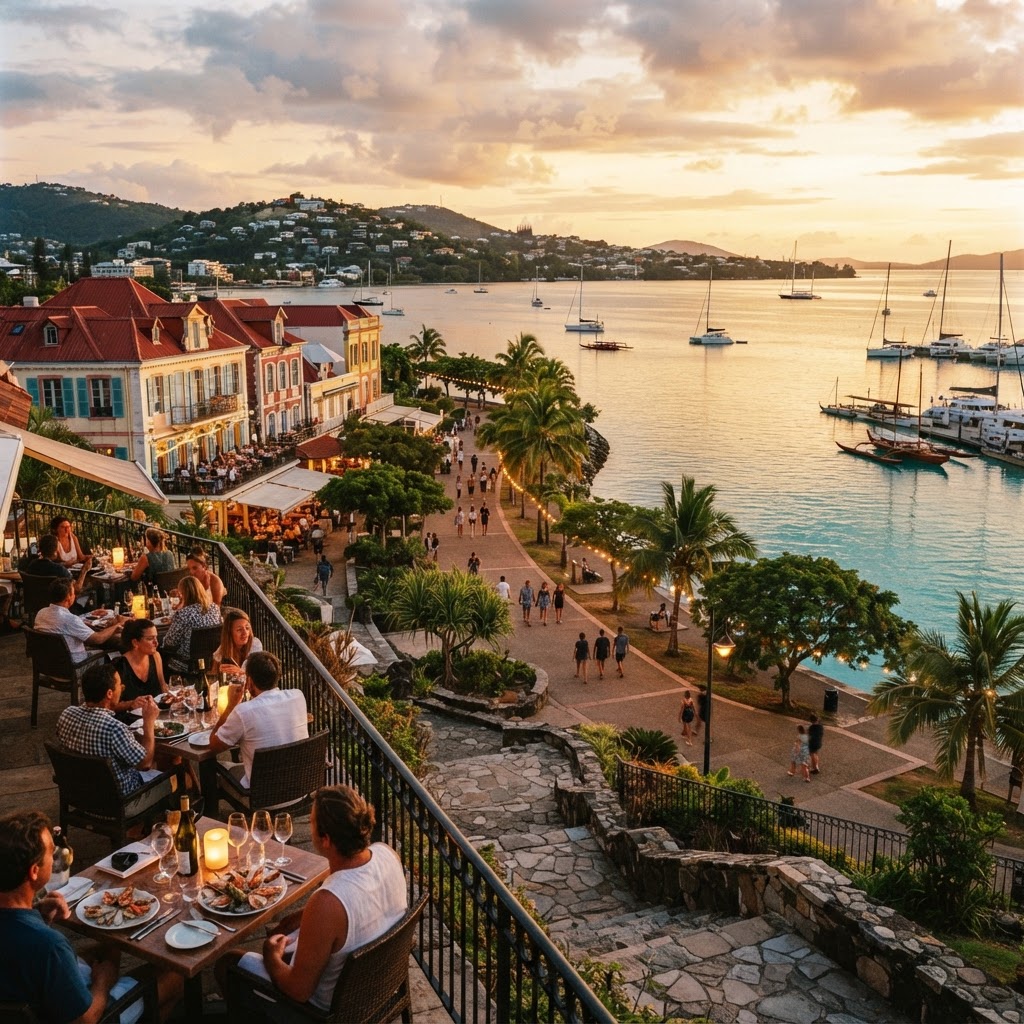
New Caledonia
Nouméa, New Caledonia
French epicurean life framed by the world's largest enclosed lagoon.
Plan & book
Sort your Nouméa, New Caledonia trip in one place.
We point you to the booking tools we'd actually use — live prices, no markup. Or let us build the day-by-day plan around you first, then book.
Nouméa is a distinct Pacific anomaly: an overseas French territory where Parisian bakery standards, bistros, and wine merchants sit directly on coral bays. Sprawling across a hilly peninsula on Grande Terre, it serves as the political, culinary, and logistical gatekeeper to New Caledonia's UNESCO-listed lagoon. Travelers often treat it merely as a transit hub, but those who linger find exceptional Kanak cultural architecture, windsurfing bays, and boat taxis to uninhabited coral islets just ten minutes offshore.
How long
4 to 5 days (or 2 to 3 days if pairing with the Isle of Pines or Lifou)
Best time
September to November for crisp skies, dry trails, moderate warmth, and optimal underwater visibility.
Build your own trip with these prebuilt itineraries
Each one is a tested, day-by-day plan for Nouméa, New Caledonia — start here, then make it yours.
5 Days in Nouméa: French-Pacific Highlights in Nouméa
The quintessential comprehensive experience featuring culinary French delights, vibrant morning markets, marine reserves around Îlot Canard, and scenic day outings across Grande Terre.
4 Days in Nouméa: Watersports & Lagoon Adventure in Nouméa
An active, wind-and-water focused route designed for paddleboarders, kitesurfers, and marine lovers exploring coastal bays, offshore islets, and coral reef ecosystems.
3 Days in Nouméa: Island Hopper Stopover in Nouméa
A high-impact transit stopover combining iconic lagoon snorkeling at Îlot Maître, Kanak heritage at Tjibaou, and sunset dining in Anse Vata before flying out to the outer islands.
Go for the singular collision of authentic Kanak culture and French provincial living on the edge of marine wilderness. In a single morning, you can browse fresh passionfruit and coral fish at the Port Moselle morning market, visit Renzo Piano's architectural masterpiece at the Tjibaou Cultural Centre, and take a 10-minute water taxi to Ilot Canard for drift-snorkeling over staghorn coral before sitting down to duck confit and Bordeaux at Baie des Citrons.
Where to stay
Getting there
Getting around
Food & drink
What it costs
Things to do
Book tours & tickets in Nouméa, New CaledoniaSkip it if
Skip Nouméa if you are seeking a cheap South Pacific backpacker trail or thatched-roof beach huts straight out of Fiji or Samoa. If you cannot tolerate high restaurant bills, dislike French-language immersion, or expect an energetic 24/7 late-night party strip, Nouméa will disappoint.
When to go
This sweet spot sits squarely between the blustery, cooler winter months and the stifling summer cyclone season. You get calm, crystal-clear lagoon conditions for reef excursions with minimal rain, dodging both the December holiday flight surcharges and peak tropical humidity.
Peak (September to December)
Warm, sunny, and dry with top-tier lagoon visibility. November and December book out months ahead with travelers from Australia, New Zealand, and mainland France; secure accommodations and rental cars early.
Shoulder (April to August)
Southern hemisphere winter brings daytime highs around 22–26°C and gustier trade winds. Water temperatures drop to 21–23°C (bring a 2–3mm wetsuit top for snorkeling), but hiking in southern Grand Terre is at its most comfortable.
Low (January to March)
High heat, heavy tropical humidity, and active cyclone season. Downpours can churn up lagoon clarity and disrupt outer-reef boat departures, but hotel rates drop and crowds thin.
Neighborhoods
Where you stay shapes the trip. Here's how to think about it.
Anse Vata
The breezy, nautical hub where windsurfers prep on the sand, resort balconies face coral islets, and water-taxi operators dock along Promenade Roger Laroque.
Best for:Water sports enthusiasts, resort seekers, and first-time visitors wanting direct lagoon access.
Don't miss:Catching a 10-minute taxi-boat from the beach out to Îlot Canard (Duck Island) for coral garden snorkeling before the afternoon southeasterly trades pick up.
Baie des Citrons (Lemon Bay)
A sheltered, swimmable cove with calm water, shaded lawn strips, and a dense waterfront parade of French bistros, brasseries, and late-afternoon terrace bars.
Best for:Families with small children, casual swimmers, and anyone who wants dinners and evening drinks entirely on foot.
Don't miss:An early-evening glass of wine and charcuterie board across from the beach while watching local open-water swimmers finish their laps in the protected bay.
Downtown / Port Moselle
The civic and maritime core, marked by government offices, the busy ferry terminals, colonial administrative buildings, and morning market commerce.
Best for:Market shoppers, transit-focused travelers connecting to outer islands, and maritime history buffs.
Don't miss:Browsing Marché de Port Moselle before 9:00 AM for fresh blue lagoon prawns, tropical fruits, and French pastries under the blue-roofed octagonal halls.
Faubourg Blanchot & Vallée des Colons
Historic residential quarters filled with 19th-century colonial timber cottages (maisons coloniales), lush tropical foliage, quiet side streets, and authentic local eateries.
Best for:Architectural walkers, photographers, and diners seeking classic local bistros away from hotel rows.
Don't miss:A walking route through Rue du Port Despointes to photograph preserved colonial verandahs, followed by traditional French dining at Le Relais de la Vallée.
Tina Peninsula
A quiet, green headland north of the city center defined by mangrove forests, walking paths, and dramatic modern indigenous architecture.
Best for:Architecture enthusiasts, cultural travelers, and photographers.
Don't miss:The Renzo Piano-designed Jean-Marie Tjibaou Cultural Centre, wandering the outdoor Kanak cultural path and touring the soaring iroko-wood pavillions.
Destination intelligence
Updated 9/14/2026The structured record we plan every Nouméa, New Caledonia itinerary from.
Walkability
Moderate within individual beachfront strips like Baie des Citrons and Anse Vata, but low across the wider city due to distance and steep topography.
Transit quality
Moderate. The Tanéo bus system is clean and reliably serves the trunk route between the beaches and downtown, but schedules thin out significantly on weekends and evenings.
Car needed
Optional if staying exclusively in Anse Vata and doing water excursions; strongly recommended if exploring the Tjibaou Centre, northern lookouts, or day trips into southern Grande Terre.
Ideal duration
4 to 5 days (or 2 to 3 days if pairing with the Isle of Pines or Lifou)
Minimum useful
2 days
Peak season
September to December (warm, dry, minimal rainfall, and ideal lagoon visibility before summer cyclone season).
Shoulder season
April to August (cooler southern winter, breezy conditions favored by windsurfers, lower humidity, minimal storm risk).
Low season
January to March (hot, humid, and subject to tropical low-pressure systems and potential cyclones).
Best for
Common mistakes
- Staying in Centre-Ville (downtown), which shuts down after business hours and lacks beach access.
- Failing to pre-book La Tontouta airport transfers; standard taxis from the curb are rare and extremely costly without prior booking.
- Forgetting that most shops, markets, and casual restaurants close strictly on Sunday afternoons and Mondays.
- Confusing international airport La Tontouta (NOU, 45 mins north) with domestic airport Magenta (GEA, right inside the city).
- Skipping the Tjibaou Cultural Centre under the false assumption that Nouméa is only about beaches.
Best nearby
How to plan it
- Base yourself in Anse Vata if your priority is easy boat-taxi departures to coral islets and windsurfing; choose Baie des Citrons if you prefer calm swimming without wind and dining steps from your door.
- Do not try to combine the Tjibaou Cultural Centre and a day trip to Parc Provincial de la Rivière Bleue on the same day—Rivière Bleue demands a full day and an early 7:00 AM departure to beat afternoon heat on the red dirt trails.
- Book domestic flights with Air Calédonie to the Isle of Pines or Lifou at least 6 to 8 weeks in advance, as aircraft seats fill rapidly on weekend routes.
- Reserve your rental car strictly for the days you leave the southern bays; paying daily parking fees while you are taking day boats to offshore islets wastes money and logistics.
- Visit Marché de Port Moselle on a Saturday or Sunday morning between 7:00 AM and 9:00 AM for the widest array of produce, freshly baked viennoiseries, and Kanak snacks, as vendors pack down by noon.
Questions
Readymade itineraries
Start from a tested template — then make it yours.
Ready to book
Lock in your Nouméa, New Caledonia trip
Everything in one place. We may earn a small commission — it never costs you more.
Plan a trip to Nouméa, New Caledonia
Pick a length and we'll build a day-by-day plan around how you travel — neighborhoods clustered, budget-aware, and editable.
Get better at planning trips like this
Occasional notes on planning smarter — no spam, unsubscribe anytime.
Plan a trip to Nouméa, New Caledonia
Turn this guide into a day-by-day plan built around your pace, your group, and your budget.
Build my Nouméa, New Caledonia trip