Madagascar
Nosy Be, Madagascar
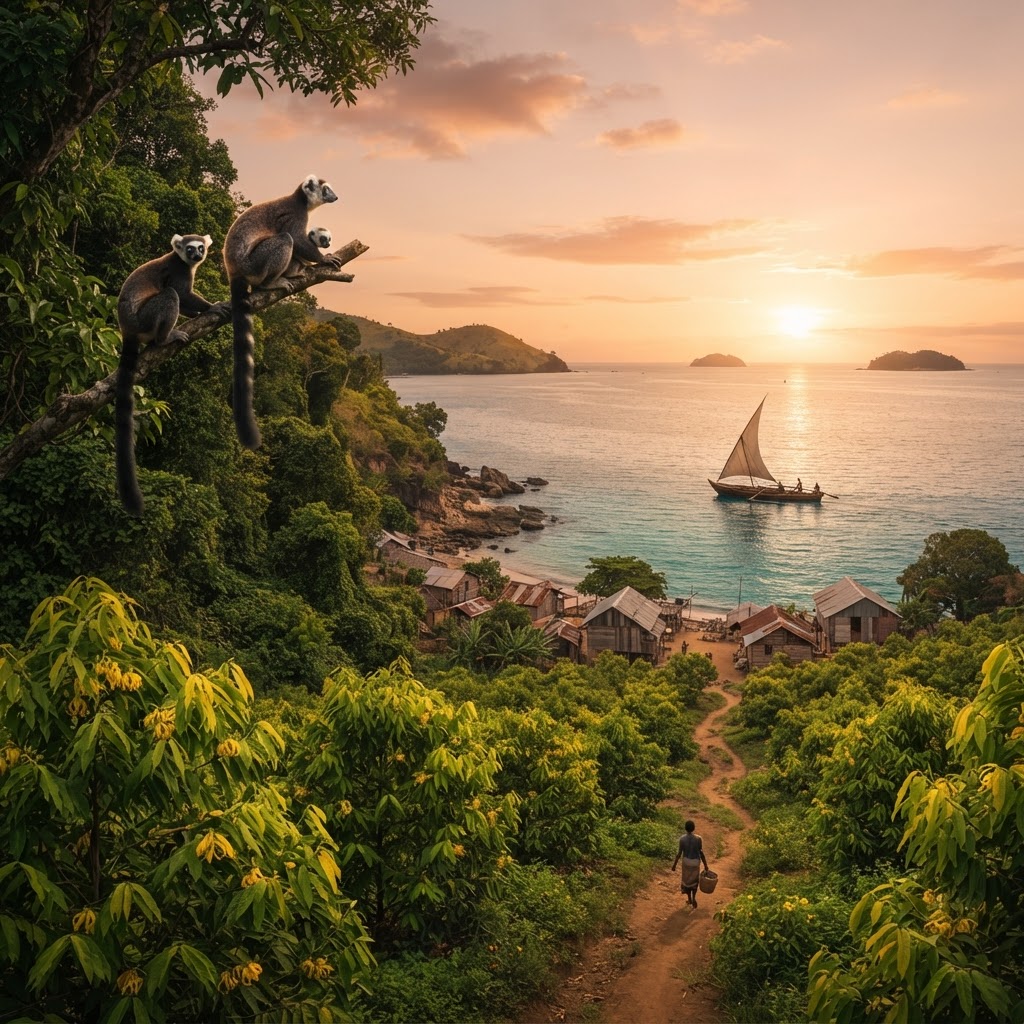
Ylang-ylang plantations, primary rainforest lemurs, and pelagic boat crossings off northern Madagascar.
Plan & book
Sort your Nosy Be, Madagascar trip in one place.
We point you to the booking tools we'd actually use — live prices, no markup. Or let us build the day-by-day plan around you first, then book.
Nosy Be is Madagascar's most accessible marine gateway, anchored off the northwest coast in the Mozambique Channel. Known historically for ylang-ylang distillation and sugarcane fields, the volcanic island pairs protected primary rainforest at Lokobe with offshore sandbanks and marine sanctuaries teeming with green turtles and seasonal megafauna.
5 to 6 days
Best time
August to late October for peak marine megafauna, dry trails, and calm channel crossings.
Build your own trip with these prebuilt itineraries
Each one is a tested, day-by-day plan for Nosy Be, Madagascar — start here, then make it yours.
8 Days in Nosy Be: Island Hopping & Coastal Nature in Nosy Be
Slow-paced exploration, multi-day outer archipelago boat charters, and immersive coastal wildlife retreats
6 Days in Nosy Be: Complete Island Highlights in Nosy Be
Classic balance of pristine outer islets, Lokobe rainforest lemurs, and cultural village day trips with a private driver
4 Days in Nosy Be: Reefs & Marine Giants in Nosy Be
Offshore marine wildlife, reef snorkeling around marine reserves, and seasonal whale shark encounters
Unlike mainland Madagascar, which demands grueling overland driving on notoriously rough roads, Nosy Be provides direct international flight access straight to wildlife and reef ecosystems. It offers a base for snorkeling with whale sharks, seeing wild black lemurs in Lokobe National Park, and taking day boats out to pristine satellite atolls without logistically grueling transit days.
Where to stay
Getting there
Getting around
Food & drink
What it costs
Things to do
Book tours & tickets in Nosy Be, MadagascarSkip it if
Skip Nosy Be if your Madagascar goal is seeing high-elevation spiny forests, iconic Avenue of the Baobabs landscapes, or dramatic Tsingy stone pinnacles, which require expeditions deep into the mainland interior. It should also be skipped by travelers looking for manicured resort walks or seamless public transit infrastructure.
When to go
This window bridges humpback whale sightings and the arrival of juvenile whale sharks while dodging the high humidity and heavy cyclonic downpours of the southern summer. Lodges charge peak rates and boat charters book up, but trail access and water visibility are unmatched.
Peak (July–October)
Crisp 25°C temperatures, dry hiking tracks in Lokobe, excellent offshore visibility, and prime humpback whale plus early whale shark encounters. Book lodges and private boat skippers 3 to 5 months out.
Shoulder (April–June & November)
November offers peak whale shark aggregations around Nosy Sakatia alongside occasional humid afternoon thundershowers. May and June offer lush greenery and low crowds, though offshore winds can chop outer-islet crossings.
Low (January–March)
Monsoon rainfall, sweltering humidity, and seasonal cyclone risk down the Mozambique Channel. Many remote eco-lodges shutter, dirt access roads wash out, and boat crossings are regularly grounded.
Neighborhoods
Where you stay shapes the trip. Here's how to think about it.
Ambatoloaka
Buzzing coastal strip crammed with dive shops, beach shacks, and active evening bars along a crescent bay.
Best for:divers and solo travelers wanting evening dining and nightlife steps from the water
Don't miss:Fresh grilled calamari and THB beers directly on the sand after chartering a morning dive at Manta Point.
Hell-Ville (Andoany)
Working colonial harbor hub defined by crumbling French facades, packed zebu butcher stalls, and tuk-tuk exhaust.
Best for:market day trips, culture enthusiasts, and provisioning for catamaran expeditions
Don't miss:The bustling Bazar Be market on Rue Georges V to buy fresh pink peppercorns and cured vanilla beans straight from Diana Region producers.
Andilana
Secluded northern enclave home to wide, calm turquoise coves and upscale boutique retreats far from street noise.
Best for:swimmers, honeymooners, and families wanting safe, low-tide swimming water
Don't miss:Plage d'Andilana during late afternoon for calm shore swimming followed by whole baked capiton fish at beachside open-air tables.
Djamandjary
Working coastal community rooted in historic sugarcane and ylang-ylang cultivation, flanked by laid-back west-coast lodges.
Best for:travelers seeking local pace and easy access to Mont Passot's crater trails
Don't miss:Touring local artisanal ylang-ylang copper still distillation workshops to see the raw flower extraction process.
Ambatozavavy
Sleepy, traditional fishing village tucked between tidal mangroves and the edge of Lokobe's rainforest.
Best for:wildlife-first explorers and ecotourists avoiding beach resort crowds
Don't miss:Boarding a carved wooden pirogue at sunrise from the muddy shore to reach the remote hiking base of Lokobe Strict Reserve.
Destination intelligence
Updated 9/14/2026The structured record we plan every Nosy Be, Madagascar itinerary from.
Walkability
Low. The island covers over 300 square kilometers with limited sidewalks, steep topography, and spread-out fishing villages connected by single-lane roads.
Transit quality
Basic. There is no formal scheduled public transit; transit consists of shared taxi-brousse vans, local tuk-tuks, and chartered water taxis.
Car needed
Not recommended to self-drive. Renting a 4x4 with an experienced local driver is safer and far more practical than navigating unpaved interior roads independently.
Ideal duration
5 to 6 days
Minimum useful
3 days
Peak season
July to October brings dry skies, cooler breezes around 25°C, humpback whale migrations, and prime whale shark aggregations in clear coastal waters.
Shoulder season
April to June and November offer thinner crowds, lower lodging rates, and calmer winds, though November brings brief tropical downpours.
Low season
January to March brings the monsoon season with heavy rainfall, tropical storms, high humidity, and suspended boat crossings.
Best for
Common mistakes
- Expecting pristine coral reefs right on the main island's hotel beaches; nearshore Nosy Be reefs are heavily degraded, requiring boat transfers to Nosy Tanikely or Nosy Sakatia for clean diving and snorkeling.
- Renting a standard two-wheel-drive car or scooter without anticipating sudden road ruts, poorly lit night corridors, and wandering zebu cattle.
- Confining your entire stay to Ambatoloaka's main beach strip, which gets noisy and congested with overt sex tourism and rowdy bars after dark.
- Failing to carry local currency (Malagasy Ariary) in small denominations, as village boatmen, market traders, and tuk-tuk operators rarely accept credit cards or make change for large euro notes.
Best nearby
See what a trip to Madagascar actually costs. Travel Budget Co.
How to plan it
- Stay in Andilana if your priority is quiet ocean swimming, but base yourself near Ambatoloaka or Madirokely if you plan to launch boat excursions every morning.
- Do not try to combine Lokobe National Park and the Nosy Iranja sandbar into a single day; both require dedicated boat transits and full half-day commitments.
- Reserve your peak-season marine safari boat (July–October) at least 3 weeks ahead to secure operators adhering to ethical wildlife-distance protocols.
- Pair Nosy Be with mainland Diego Suarez (Antsiranana) or the Amber Mountain rainforest via the Ankify passenger ferry rather than treating it as an isolated beach vacation.
- Keep at least 200,000 to 400,000 Malagasy Ariary in crisp cash; ATMs in Hell-Ville and Ambatoloaka run out of currency regularly on weekends.
Questions
Readymade itineraries
Start from a tested template — then make it yours.
Ready to book
Lock in your Nosy Be, Madagascar trip
Everything in one place. We may earn a small commission — it never costs you more.
Plan a trip to Nosy Be, Madagascar
Pick a length and we'll build a day-by-day plan around how you travel — neighborhoods clustered, budget-aware, and editable.
Get better at planning trips like this
Occasional notes on planning smarter — no spam, unsubscribe anytime.
Plan a trip to Nosy Be, Madagascar
Turn this guide into a day-by-day plan built around your pace, your group, and your budget.
Build my Nosy Be, Madagascar trip