Oman
Nizwa, Oman
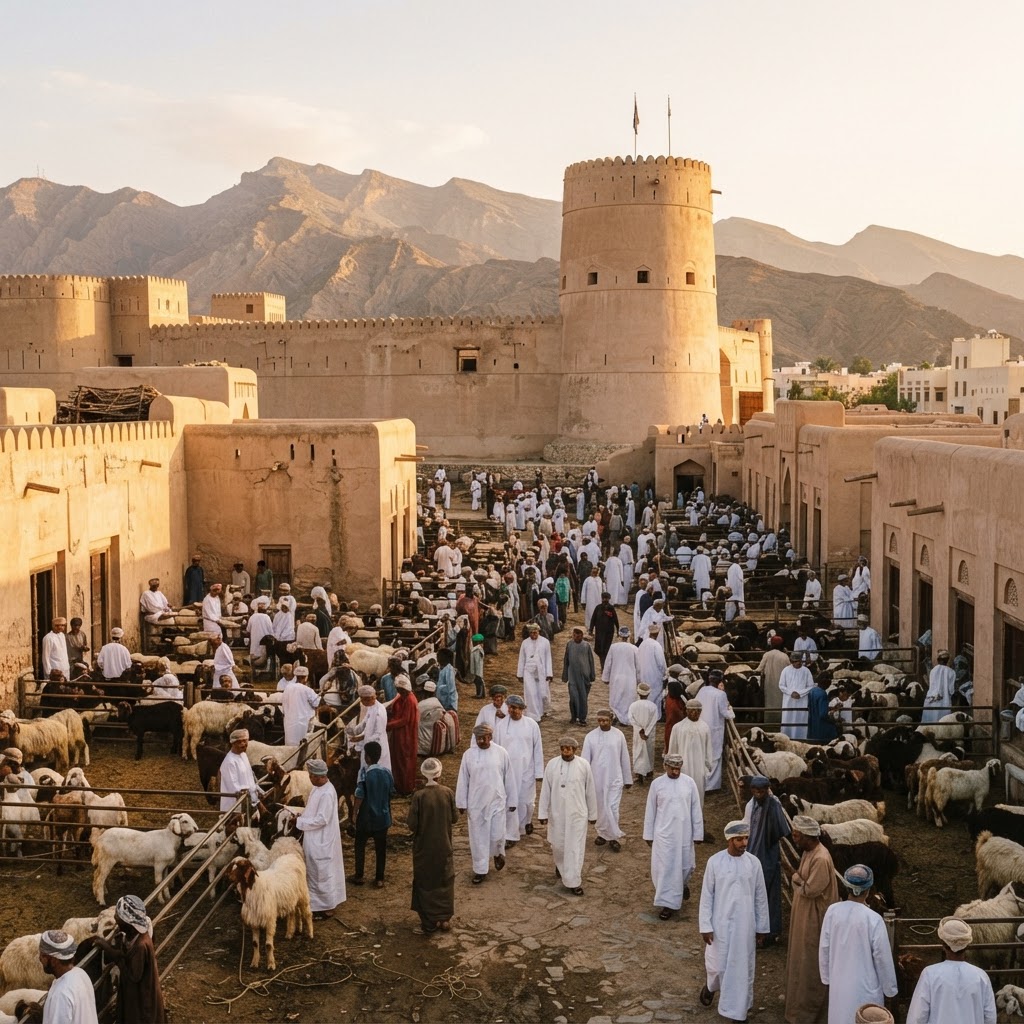
The historic heart of Oman, where ancient mud-brick bastions meet lively mountain livestock trading
Plan & book
Sort your Nizwa, Oman trip in one place.
We point you to the booking tools we'd actually use — live prices, no markup. Or let us build the day-by-day plan around you first, then book.
Perched at the base of the dramatic Al Hajar Mountains, Nizwa is the historic cultural capital of Oman. Once the power center of the Ibadi imams, the oasis city has traded defensive insularity for open-door mountain hospitality. Nizwa rewards travelers who time their arrival specifically around the Friday livestock market, using the city as an atmospheric basecamp for exploring towering clay fortresses, terraced mud-brick oasis villages, and deep canyon wadis.
2 to 3 days
Best time
November to February for mild mountain hiking weather and buzzing Friday markets without oppressive inland desert heat.
Build your own trip with these prebuilt itineraries
Each one is a tested, day-by-day plan for Nizwa, Oman — start here, then make it yours.
1 Day: Classic Oasis Express in Nizwa
Fast-paced immersion capturing early morning souq traditions, Nizwa Fort, and neighboring mudbrick ruins
3 Days: 4WD Mountain & Canyon Trekking in Nizwa
Outdoor adventure using Nizwa as an overland base to tackle Jebel Akhdar and Jebel Shams Balcony Walk
2 Days: Forts, Souqs & Heritage in Nizwa
Historic highlights focused on ancient architecture, Old Town falaj systems, and Friday livestock market culture
Nizwa offers the most concentrated taste of heritage Oman without the modern sprawl of Muscat or the coastal resorts of Salalah. The 17th-century cylindrical fort tower, authentic date souq, UNESCO falaj irrigation channels, and historic mountain passes make it essential for understanding how human civilization survived and thrived inside the arid interior for centuries.
Where to stay
Getting there
Getting around
Food & drink
What it costs
Things to do
Book tours & tickets in Nizwa, OmanSkip it if
Skip Nizwa if your definition of an Arabian vacation relies on beachfront cocktail lounges, active late-night clubbing, or mega-resort entertainment. Nizwa shuts down early, maintains deeply conservative social norms, and focuses on living traditional culture and mountain geography.
When to go
Nizwa sits away from coastal breezes, making seasonal timing critical: winter highs hover around 25°C with cool canyon evenings, whereas summer pushes past 42°C and completely halts midday exploration.
Peak (October to March)
Crisp desert nights and warm sunny days perfect for exploring clay forts and climbing the Hajar peaks; book Old Town guesthouses 4-8 weeks early for Thursday night stays.
Shoulder (April and September)
Daytime temperatures climb into the mid-30s°C; mountain elevations remain pleasant while low-lying wadis and fort courtyards get uncomfortably hot by midday.
Low (May to August)
Extreme desert heat regularly exceeds 40°C; the livestock market runs shortened hours at dawn and outdoor sightseeing is essentially restricted to sunrise.
Neighborhoods
Where you stay shapes the trip. Here's how to think about it.
Al Aqr (Historic Walled Quarter)
Narrow mud-brick alleyways, restored heritage guesthouses, and immediate foot access to the defensive battlements.
Best for:independent culture travelers and photography buffs wanting total walkability to heritage sites
Don't miss:Climbing the restored corner watchtowers and sitting on an open roof terrace over the date palms as the call to prayer sounds at dusk.
Souq Perimeter & Fort Plaza
Bustling daytime commercial energy centered around vaulted market halls, antique daggers, and lively early-morning bargaining.
Best for:first-timers and short-stay visitors who want the fort and livestock trading right outside their door
Don't miss:The spice and halwa stalls in the covered market early Friday morning before tour coaches roll in from Muscat.
Birkat Al Mouz
Terraced banana and date plantations framed by crumbling mud-brick ruins at the foot of Jebel Akhdar, 20 minutes east.
Best for:road-trippers and hikers seeking pastoral mountain tranquility over urban souq buzz
Don't miss:Walking along the stone channels of the UNESCO-inscribed Falaj Al Khatmain irrigation system winding through the active palm groves.
Al Madina (Modern Commercial Corridor)
Wide, sun-bleached asphalt avenues lined with modern business hotels, auto workshops, and casual shawarma joints.
Best for:budget travelers and families needing easy highway parking and predictable modern hotel layouts
Don't miss:Grabbing quick Omani bread, grilled chicken, and karak tea from the strip of local cafeterias along Route 21.
Destination intelligence
Updated 9/14/2026The structured record we plan every Nizwa, Oman itinerary from.
Walkability
High within the Old Town (Al Aqr and Souq area); completely car-dependent for regional day trips and mountain access.
Transit quality
Poor. While long-distance Mwasalat buses connect Muscat to Nizwa's outer road, local public transit and ride-hailing are virtually non-existent.
Car needed
Yes. A rental vehicle (preferably 4WD for the surrounding mountain ranges) is essential for efficient travel beyond the central souq perimeter.
Ideal duration
2 to 3 days
Minimum useful
1 full day (preferably spanning Thursday night to Friday morning)
Peak season
October to March. Clear, sunny days with daytime temperatures between 22°C and 30°C and cool desert nights make mountain and desert explorations comfortable.
Shoulder season
April and September. Warmer daytime temperatures (33°C to 38°C) with thinner tourist crowds and lower hotel rates.
Low season
May to August. Extreme desert heat frequently exceeding 42°C, limiting outdoor activities exclusively to early dawn hours.
Best for
Common mistakes
- Arriving on Friday after 08:30 AM: the livestock market wraps up rapidly by 09:00 AM, and traffic gridlocks the entire access perimeter
- Visiting purely as a day trip from Muscat, which robs you of early-morning market access and forces midday exploration in high heat
- Renting a compact 2WD sedan when planning to ascend nearby Jebel Akhdar, which strictly requires a 4WD checkpoint clearance by Royal Oman Police
- Wearing beachwear or revealing clothing: Nizwa is culturally conservative; shoulders and knees must be covered in markets, villages, and forts
Best nearby
How to plan it
- Lock in your Thursday night accommodation in Al Aqr or near the Souq weeks in advance so you can stroll into the Friday livestock market at dawn without parking stress.
- Group your architectural visits into a single circuit: pair Nizwa Fort with the uncrowded painted ceilings of Jabreen Castle and the mud walls of Bahla Fort, just 30 minutes west.
- Do not attempt both Jebel Shams and Jebel Akhdar in the same afternoon; each mountain requires a steep, deliberate ascent on winding switchbacks and deserves dedicated half-day commitments.
- Stop at the ancient oasis of Birkat Al Mouz on your drive into or out of town to walk the Falaj water canals beneath the ruined mud-brick quarters.
- Leave Nizwa by 08:00 if heading out to hike the Jebel Shams Balcony Walk, ensuring you finish the exposed rim trek before the midday sun peaks.
Questions
Readymade itineraries
Start from a tested template — then make it yours.
Ready to book
Lock in your Nizwa, Oman trip
Everything in one place. We may earn a small commission — it never costs you more.
Plan a trip to Nizwa, Oman
Pick a length and we'll build a day-by-day plan around how you travel — neighborhoods clustered, budget-aware, and editable.
Get better at planning trips like this
Occasional notes on planning smarter — no spam, unsubscribe anytime.
Plan a trip to Nizwa, Oman
Turn this guide into a day-by-day plan built around your pace, your group, and your budget.
Build my Nizwa, Oman trip