Egypt
Nile Cruise (Luxor to Aswan), Egypt
A slow-water passage through 4,000 years of riverside antiquity.
Plan & book
Sort your Nile Cruise (Luxor to Aswan), Egypt trip in one place.
We point you to the booking tools we'd actually use — live prices, no markup. Or let us build the day-by-day plan around you first, then book.
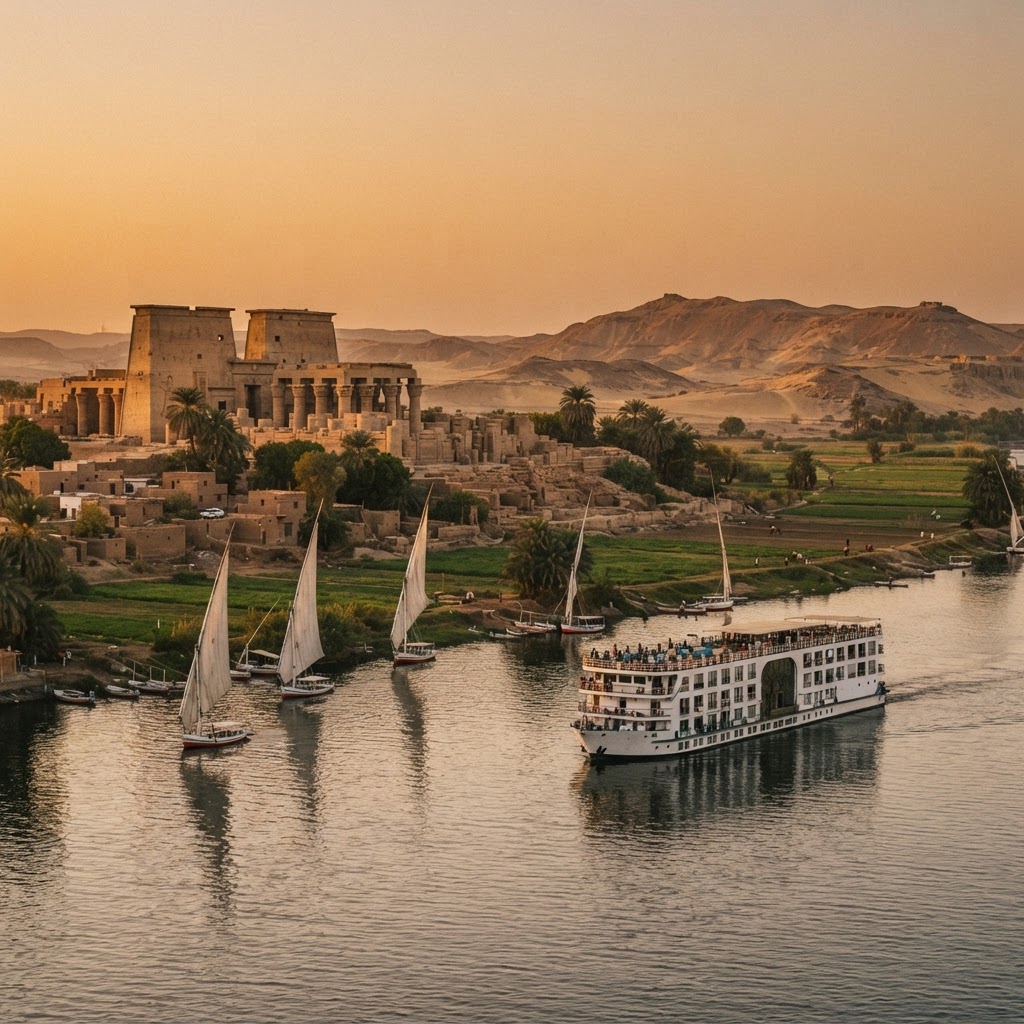
Plying the 135-mile stretch between Luxor and Aswan, a Nile cruise transforms travel logistics into an immersive, slow-moving front-row seat to the ancient world. Rather than enduring congested desert highways or fragmented domestic train schedules, travelers glide past date-palm banks and rural feluccas, unpacking once while waking up at the docksteps of colossal Ptolemaic temples and pharaonic tombs.
How long
4 to 5 nights (either 4 nights heading south upstream from Luxor to Aswan, or 3-4 nights heading north downstream from Aswan to Luxor)
Best time
November to February for mild sightseeing weather, with November offering the premier balance of comfortable midday sun and manageable crowds.
Build your own trip with these prebuilt itineraries
Each one is a tested, day-by-day plan for Nile Cruise (Luxor to Aswan), Egypt — start here, then make it yours.
7 Nights: Slow Luxury Roundtrip Luxor to Luxor in Nile Cruise
In-depth historical immersion and relaxed deck cruising avoiding midday crowds
4 Nights: Classic Upstream Luxor to Aswan in Nile Cruise
First-timer highlights sailing south from Karnak to Philae with seamless shore logistics
3 Nights: Downstream Highlights Aswan to Luxor in Nile Cruise
Fast-paced iconic temple dash sailing north downstream with Abu Simbel connection
The Upper Nile river corridor between Luxor and Aswan concentrates the world's most staggering cluster of ancient architecture right along the riverbanks. Cruising solves the hardest friction points of Upper Egypt travel: exhausting road transfers, aggressive street touts at train hubs, and fragmented hotel stays. It allows you to watch daily agricultural life unfold along the reeds between dawn temple visits and mid-afternoon pool deck transit through the Esna lock.
Where to stay
Getting there
Getting around
Food & drink
What it costs
Skip it if
Skip the cruise if you demand total schedule autonomy or despise organized group flow. Cruising requires adhering to fixed docking times, designated meal windows, and communal shore walks. Fast-paced independent travelers who prefer lingering in dusty tombs for six hours or dining in local alleys each evening will find cruise life stifling and should book land hotels in Luxor and Aswan instead.
When to go
Upper Egypt's hyper-arid climate turns limestone temple complexes into thermal ovens. Cooler winter months allow comfortable exploration of enclosed subterranean tombs without extreme exhaustion, though peak holiday weeks bring bottlenecks at locks and temples.
Peak (December to February)
Daytime highs hover around 70–75°F (21–24°C), but nights turn chilly on deck; expect crowded gangways, long waits at the Esna Lock, and peak cabin rates.
Shoulder (October–November & March–April)
Highs between 80–90°F (27–32°C). November offers crisp light and fewer river flies, while March brings blooming riverbanks tempered by occasional Khamaseen sand winds.
Low (May to September)
Extreme heat routinely exceeding 105°F (40°C) confines excursions to 5:30 AM starts; mid-day sun deck lounging is brutal, but cruise fares drop dramatically and tomb interiors sit empty.
Neighborhoods
Where you stay shapes the trip. Here's how to think about it.
Luxor East Bank
Bustling provincial riverfront flanked by colossal illuminated columns and carriage traffic.
Best for:First-timers, temple enthusiasts, walkable dining before embarkation
Don't miss:Walking through the soaring open-air Hypostyle Hall at Karnak at 6:00 AM before cruise tour buses arrive.
Luxor West Bank
Rural, sun-baked desert bluffs dotted with alabaster workshops, date groves, and ancient necropolises.
Best for:History buffs, quiet boutique hotel stays, active archaeology explorers
Don't miss:The intensely vibrant wall murals inside the tomb of Seti I in the Valley of the Kings.
Kom Ombo & Edfu Riverfronts
Chaotic, working agricultural ports where vendors pitch galabeyas directly to ship balconies from rowboats.
Best for:Riverside temple hop, cultural trade spectacle, mid-cruise excursions
Don't miss:Watching the evening floodlights illuminate the dual sanctuary of Sobek and Haroeris at Kom Ombo directly from your vessel's gangway.
Elephantine Island & West Aswan
Slow, car-free Nubian river oasis defined by vibrant mud-brick hamlets, palm canopies, and granite boulders.
Best for:Scenic downtime, walkers, culturally immersive afternoons away from tour groups
Don't miss:Taking a small wooden motor launch around the Nile's First Cataract into the Nubian village of Gharb Soheil at dusk.
Aswan Corniche & Downtown
Relaxed African river gateway lined with cruise berths, fragrant spice stalls, and low-slung colonial terraces.
Best for:Shopping, independent café-hopping, basecamp for Abu Simbel trips
Don't miss:Sunset drinks looking over the felucca-studded Nile from the terrace of the historic Old Cataract Hotel.
Destination intelligence
Updated 9/14/2026The structured record we plan every Nile Cruise (Luxor to Aswan), Egypt itinerary from.
Walkability
Low off the ship. While Kom Ombo temple sits directly beside the gangway, most sites (Valley of the Kings, Edfu, Philae) require coordinated coaches, tuk-tuks, or water taxis over rough, unpaved surfaces.
Transit quality
High onboard efficiency. The river vessel functions as your hotel, dining room, and primary long-distance transit. Local public transport along the rural banks is impractical for foreign tourists.
Car needed
Not required or recommended. Independent car rentals in Upper Egypt face frequent military checkpoints and erratic road traffic; the cruise company handles all coordinated transfers and shore transport.
Ideal duration
4 to 5 nights (either 4 nights heading south upstream from Luxor to Aswan, or 3-4 nights heading north downstream from Aswan to Luxor)
Minimum useful
3 nights (fast downstream route Aswan to Luxor, which compresses temple stops and leaves zero downtime)
Peak season
December to February. Daytime temperatures hover in the low-to-mid 70s°F (22°C), providing ideal sightseeing weather. Ships book up months in advance and major temples are heavily congested.
Shoulder season
October to November and March to April. Crisp mornings and comfortably warm days with noticeably smaller crowds around the gangways and tombs.
Low season
May to September. Upper Egypt temperatures routinely exceed 105°F (40°C), turning tomb visits into saunas. Cabin prices drop by half, but mid-day sun deck relaxation is impossible.
Best for
Common mistakes
- Booking the cheapest budget boat online: Low-tier ships suffer from heavy diesel exhaust fumes in lower-deck cabins, mediocre buffet food, and rigid schedules that arrive at temples during peak noon heat alongside dozens of tour buses.
- Underestimating the grueling early-morning alarm calls: Due to desert midday heat and cruise docking slots, morning tours frequently depart ship gangways between 5:30 AM and 6:30 AM.
- Drinking tap water or eating raw unpeeled produce: Even on luxury ships, stick strictly to sealed bottled water for drinking and brushing teeth to avoid disruption from stomach bugs.
- Over-tipping or under-tipping haphazardly: Ship crews operate on a communal pooled tip box distributed at checkout (typically $15–$25 per guest per day), while your private Egyptologist guide should be tipped separately.
Best nearby
See what a trip to Egypt actually costs. Travel Budget Co.
How to plan it
- Book a 4-night upstream route (Luxor to Aswan) rather than a condensed 3-night downstream sprint to prevent severe temple fatigue.
- Stay an extra night in Luxor before embarkation at an East Bank hotel to explore Karnak Temple at sunrise before the fleet of tour buses pulls in.
- Add one night post-cruise at Aswan (ideally on Elephantine Island or the Old Cataract) to sail a traditional wooden felucca at sunset without looking at your watch.
- Reserve premium tomb tickets (such as Seti I in the Valley of the Kings or Nefertari in the Valley of the Queens) well in advance, as cruise Egyptologists rarely include these high-tariff entries in basic packages.
- Opt for a cabin on the upper deck away from the lower aft engine bay to minimize diesel fumes and nighttime motor vibration while underway.
Questions
Readymade itineraries
Start from a tested template — then make it yours.
Ready to book
Lock in your Nile Cruise (Luxor to Aswan), Egypt trip
Everything in one place. We may earn a small commission — it never costs you more.
Plan a trip to Nile Cruise (Luxor to Aswan), Egypt
Pick a length and we'll build a day-by-day plan around how you travel — neighborhoods clustered, budget-aware, and editable.
Get better at planning trips like this
Occasional notes on planning smarter — no spam, unsubscribe anytime.
Plan a trip to Nile Cruise (Luxor to Aswan), Egypt
Turn this guide into a day-by-day plan built around your pace, your group, and your budget.
Build my Nile Cruise (Luxor to Aswan), Egypt trip