Peru
Nazca, Peru
A windswept desert hub built around pre-Columbian engineering and iconic aerial geoglyphs
Plan & book
Sort your Nazca, Peru trip in one place.
We point you to the booking tools we'd actually use — live prices, no markup. Or let us build the day-by-day plan around you first, then book.
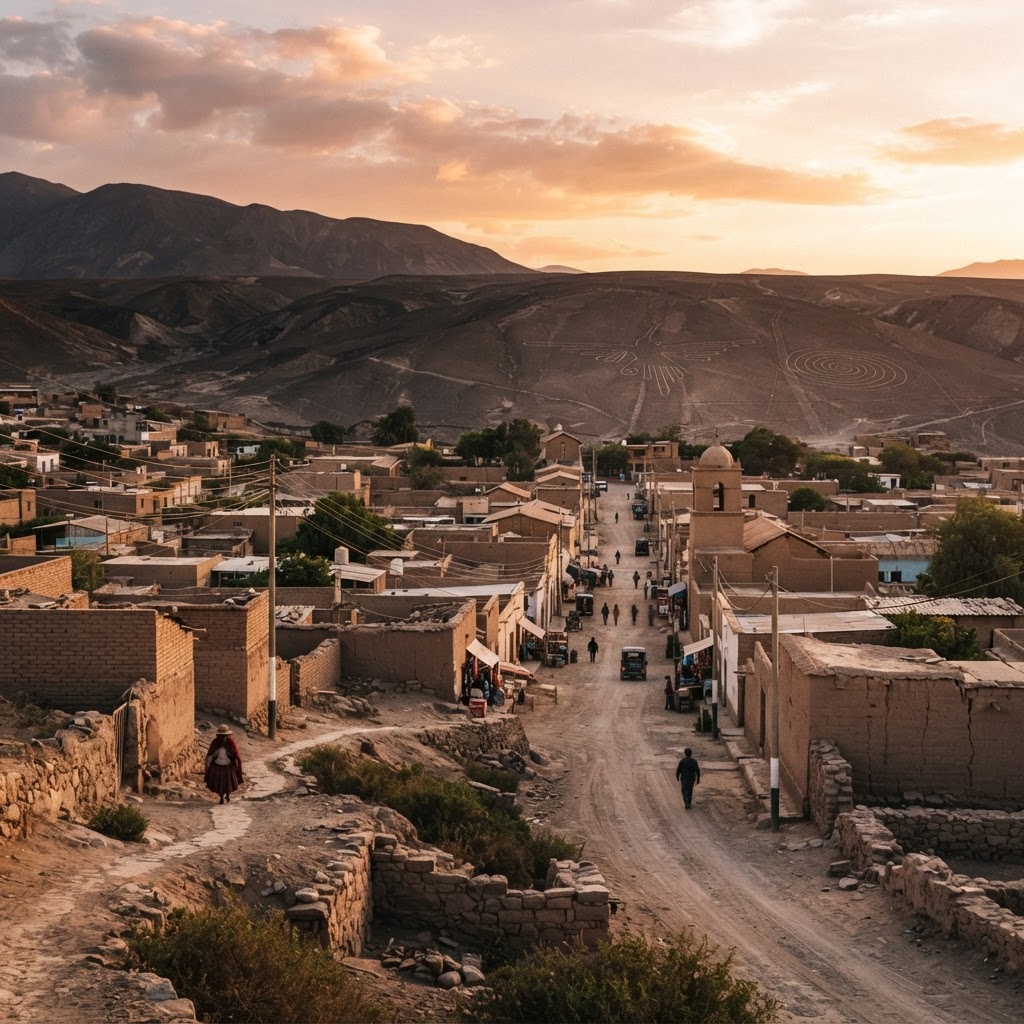
Set in one of the most hyper-arid desert basins on earth, Nazca exists in the travel imagination almost entirely from 2,500 feet above ground. Etched into the iron-oxide plateau between 500 BCE and 500 CE, the Nazca Lines remain an astonishing feat of ancient geometry, depicting hummingbirds, monkeys, spiders, and vast geometric lines that defy ground-level perspective. Below the flight path, however, the modern town is a dusty, functional oasis with a distinct desert pace. Beyond the iconic Cessna flights, Nazca offers profound archaeological depth—from the functioning subterranean spirals of the Cantalloc Aqueducts to the hair-and-bone desert necropolis at Chauchilla. It serves as an essential overland pause linking Lima, Paracas, and the high Andes of Arequipa.
How long
1 to 2 days (enough for an early morning flight, a half-day archaeological tour to Cantalloc and Chauchilla, and an overnight stay before moving south)
Best time
May through September for calmest morning skies, sharpest shadow contrast over the geoglyphs, and manageable daytime warmth.
Build your own trip with these prebuilt itineraries
Each one is a tested, day-by-day plan for Nazca, Peru — start here, then make it yours.
3 Days Desert Expeditions & Coastal Route in Nazca
Extended desert and cultural circuit taking in the Palpa petroglyphs, Maria Reiche history, and deep-desert ruins
2 Days Beyond the Lines & Ancient Civilizations in Nazca
Comprehensive archaeological deep dive exploring the Cantalloc aqueducts, Chauchilla mummies, and Cahuachi
1 Day Flight & Essential Lines in Nazca
Overland stopover featuring the classic morning scenic flight and roadside viewing towers
Nazca delivers an encounter with ancient landscape architecture that cannot be duplicated anywhere else on earth. The aerial perspective reveals geoglyphs scraped into desert patina that have survived millennia purely because of hyper-arid microclimates without rain or wind erosion. Beyond the 35-minute flight, you can descend into spiral stone puquios (aqueducts) that still channel Andes snowmelt to irrigate modern crops, touch Inca administrative ruins at Los Paredones, and stand inches away from thousand-year-old mummies preserved naturally in open desert air at Chauchilla.
Where to stay
Getting there
Getting around
Food & drink
What it costs
Things to do
Book tours & tickets in Nazca, PeruSkip it if
Skip Nazca if you suffer from severe, untreatable motion sickness or claustrophobia in tiny 4- to 12-seater aircraft, as the flight requires steep 45-degree banked turns to let passengers on both sides see each figure. Also skip if your itinerary is under 8 total days in Peru—the 7-hour overland bus journey each way eats an immense amount of time that is better reserved for Cusco, the Sacred Valley, or Arequipa.
When to go
Winter brings cooler desert temperatures and stable morning air currents, which minimize flight cancellations and motion sickness. Summer heats the desert floor rapidly, generating midday dust winds that ground small aircraft and push ground temperatures above 32°C (90°F).
Peak (June–August)
Crisp morning air around 18–24°C (64–75°F) with optimal visibility over the lines; coincides with the high season for Andean tourism, making pre-booked flight slots essential.
Shoulder (April–May & September–November)
Comfortable weather, lower hotel rates, and shorter runway queues at the aerodrome; flight slots are flexible and afternoon ruins are uncrowded.
Low (December–March)
Intense midday heat exceeding 32°C (90°F) and seasonal afternoon winds (paracas) that frequently postpone late flights; plan exclusively for 7:00 AM to 9:00 AM departures.
Neighborhoods
Where you stay shapes the trip. Here's how to think about it.
Plaza de Armas & Centro
Low-rise civic grid filled with tour operator storefronts, casual chifas, and breezy shaded benches.
Best for:First-timers, transit-focused travelers, and solo explorers
Don't miss:The Antonini Didactic Museum (Museo Didáctico Antonini) six blocks east of the plaza on Avenida de la Cultura, showcasing textiles and trophy heads recovered from Cahuachi.
Aeropuerto María Reiche Outskirts
Wide-open tarmac fringe along the Pan-American Highway framed by sunbaked desert hills and light aviation hangars.
Best for:Travelers prioritizing early-morning flight logistics over central town nightlife
Don't miss:Watching early-morning Cessna departures while having coffee before the mid-morning desert thermals create turbulence.
Cantalloc Rural Valley
Agricultural desert oasis dotted with traditional hacienda-style lodges, date palms, and olive groves.
Best for:Couples, photographers, and travelers seeking quiet stargazing away from highway rumble
Don't miss:Walking among the subterranean spiral stonework of the Cantalloc Aqueducts (puquios) in the soft late-afternoon light.
San Carlos & Southern Residential Edge
Quiet working residential district lined with small local bodegas and family-run guesthouses.
Best for:Budget travelers looking for calm nights within a 10-minute walk of long-distance bus terminals
Don't miss:A quick mototaxi ride out toward the Inca administrative ruins of Los Paredones on the road toward Puquio.
Destination intelligence
Updated 9/14/2026The structured record we plan every Nazca, Peru itinerary from.
Walkability
Moderate inside the small central grid around Plaza de Armas; zero outside town where sights are scattered across the desert pampa.
Transit quality
Limited within town (mototaxis and standard taxis dominate); exceptional for intercity overland connections via long-distance cruiser buses along the Pan-American Highway.
Car needed
Not recommended. Highways are dominated by heavy trucking, desert trails risk vehicle stranding, and local taxis and guided tours are inexpensive and logistically seamless.
Ideal duration
1 to 2 days (enough for an early morning flight, a half-day archaeological tour to Cantalloc and Chauchilla, and an overnight stay before moving south)
Minimum useful
6 to 8 hours (arriving on an early morning bus or shuttle from Huacachina, completing the flight and the roadside viewing tower, and continuing on an evening coach to Arequipa)
Peak season
June through August (cleanest morning desert skies, coolest ambient temperatures around 20-25°C / 68-77°F, coinciding with peak Andean dry-season travel).
Shoulder season
April to May and September to November (mild heat, lighter tourist queues at María Reiche Airport, reliable morning flight windows).
Low season
December through March (extreme desert heat climbing well over 32°C / 90°F, midday dust winds that occasionally delay flight schedules, though mornings generally stay flyable).
Best for
Common mistakes
- Eating a large, greasy breakfast immediately before flying—desert thermal turbulence and aggressive banked turns by pilots will induce intense motion sickness; take medication 45 minutes prior and keep food light.
- Booking cheap, unregistered charter flights from aggressive hawkers outside bus stalls rather than established, DGAC-licensed operators with strict weight and maintenance controls.
- Treating Nazca purely as a sprint touchdown for the flight and skipping Cantalloc and Chauchilla, which explain the human civilization behind the lines.
- Underestimating midday desert heat—temperatures from December through March routinely exceed 32°C (90°F) under brutal sun with zero shade.
- Assuming you can self-drive a standard rental car across the desert to Cahuachi; loose sands will strand unguided 2WD vehicles immediately.
Best nearby
See what a trip to Peru actually costs. Travel Budget Co.
How to plan it
- Book your Cessna flight for the earliest available morning slot (between 7:00 AM and 9:00 AM) to beat both thermal air turbulence and afternoon wind delays.
- Pair Nazca with Huacachina and Paracas as an overland sequence from Lima rather than treating it as a long out-and-back day trip.
- Do not book a bus out of Nazca before 3:00 PM if your flight is scheduled that morning; desert weather delays can push 8:00 AM departures into early afternoon.
- Visit Cantalloc Aqueducts and the Chauchilla Cemetery on a single half-day hired car tour in the afternoon following your morning flight.
- Take the Cruz del Sur or Movil Bus overnight sleeper directly south toward Arequipa to save a night of accommodation and maximize daylight exploration.
Questions
Readymade itineraries
Start from a tested template — then make it yours.
Ready to book
Lock in your Nazca, Peru trip
Everything in one place. We may earn a small commission — it never costs you more.
Plan a trip to Nazca, Peru
Pick a length and we'll build a day-by-day plan around how you travel — neighborhoods clustered, budget-aware, and editable.
Get better at planning trips like this
Occasional notes on planning smarter — no spam, unsubscribe anytime.
Plan a trip to Nazca, Peru
Turn this guide into a day-by-day plan built around your pace, your group, and your budget.
Build my Nazca, Peru trip