New Zealand
Napier, New Zealand
A sunny coastal Art Deco enclave paired with New Zealand’s premier red wine country
Plan & book
Sort your Napier, New Zealand trip in one place.
We point you to the booking tools we'd actually use — live prices, no markup. Or let us build the day-by-day plan around you first, then book.
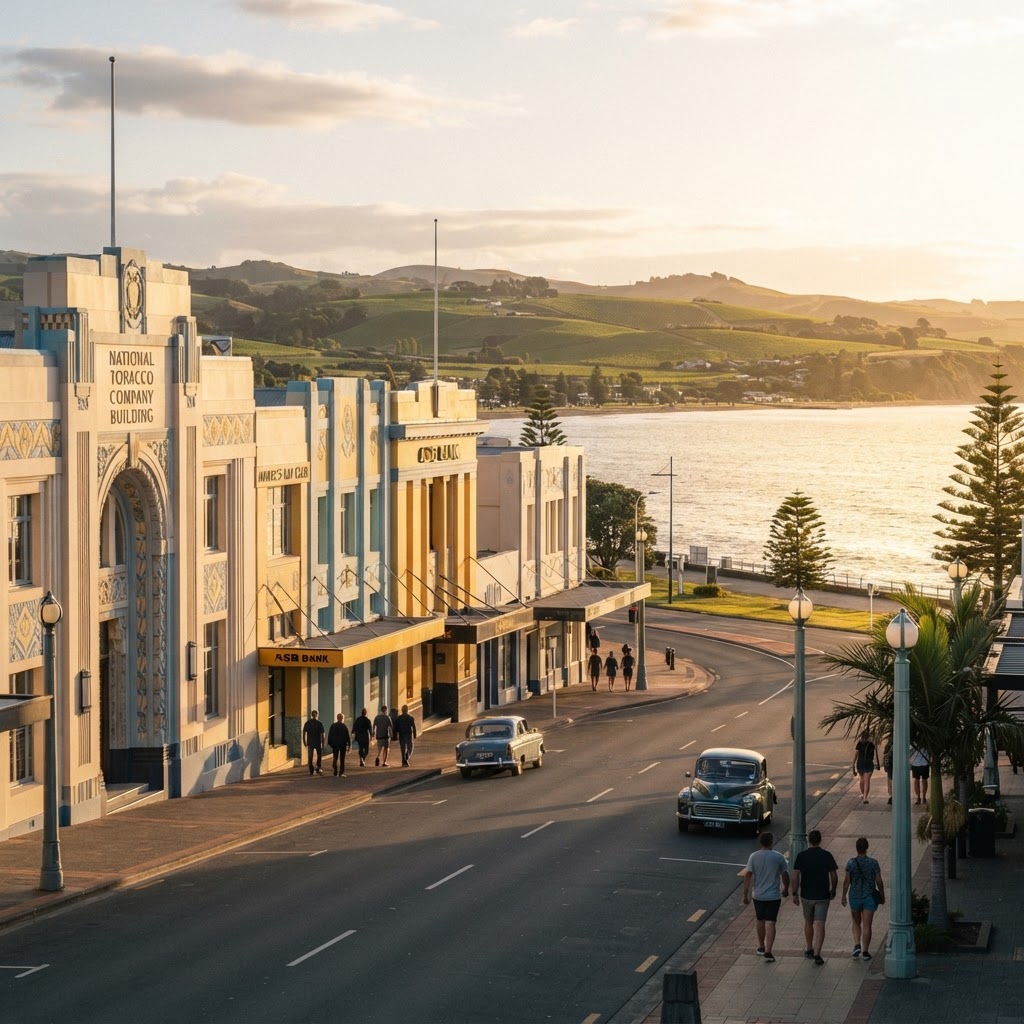
Risen from the ruins of a devastating 1931 earthquake, Napier was swiftly rebuilt in the reigning styles of the era: Art Deco, Spanish Mission, and Stripped Classical. Today, this Hawke’s Bay seaside hub serves as an open-air architectural museum flanked by coastal trails, world-class Syrah and Chardonnay vineyards, and an easygoing maritime pace.
3 days
Best time
March to May is the decisive sweet spot.
Build your own trip with these prebuilt itineraries
Each one is a tested, day-by-day plan for Napier, New Zealand — start here, then make it yours.
3 Days in Napier & Hawke's Bay Wine Country in Napier
Classic balance of city heritage, world-class Gimblett Gravels cellar doors, and Te Mata Peak
4 Days of Coastal Cycling & Regional Trails in Napier
Active exploration connecting winery trails by bike, Cape Kidnappers gannet colony, and safe coastal swimming
2 Days of Art Deco & Coastal Sights in Napier
Walkable city highlights, 1930s architecture heritage, and Marine Parade coastal culture
Napier delivers a concentrated architectural streetscape found virtually nowhere else on earth, set against one of New Zealand’s sunniest and most prolific wine regions. Travelers can spend the morning deciphering zigzag motifs and Maori Art Deco carvings downtown, lunch among the vines at historic estates like Mission Estate and Church Road, and wrap up with panoramic sunsets from Te Mata Peak or Bluff Hill.
Where to stay
Getting there
Getting around
Food & drink
What it costs
Things to do
Book tours & tickets in Napier, New ZealandSkip it if
Skip Napier if your New Zealand priorities are high-intensity alpine hiking, glacial fjords, or adrenaline sports, which are far better served in Rotorua, Tongariro, or the South Island.
When to go
Autumn brings harvest season energy, golden vineyard canopy colors, and warm, stable sunny days with significantly fewer domestic crowds than midsummer. You bypass peak holiday rates while avoiding winter vineyard closures.
Peak (Dec–Feb)
Sunniest and warmest beach weather, but town books solid months out for the mid-February Art Deco Festival and prices surge.
Shoulder (Mar–May & Oct–Nov)
March through May brings ideal harvest conditions, foliage, and quiet cellar doors; spring offers blossom but occasional coastal rain.
Low (Jun–Aug)
Crisp sunny winter days with cool coastal winds; many regional cellar doors run on reduced winter operating days (closed Mon–Tue).
Neighborhoods
Where you stay shapes the trip. Here's how to think about it.
Napier CBD
Walkable open-air 1930s architectural grid lined with cafes, deco facades, and Marine Parade views.
Best for:first-timers and architectural walkers
Don't miss:The guided walk departing from the Art Deco Trust on Herschell Street.
Ahuriri
Industrial-maritime waterfront filled with converted woolstores, craft beer bars, and sheltered estuary waters.
Best for:food-focused couples and evening diners
Don't miss:The dramatic floral entrance of the National Tobacco Company Building on Bridge Street.
Bluff Hill
Steep residential haven of lush historic villas overlooking the port and the sweeping Hawke Bay coastline.
Best for:quiet stays and view seekers
Don't miss:The scenic panorama over the bustling commercial port at Bluff Hill Domain Lookout.
Taradale
Inland semi-suburban fringe resting against rolling vineyard-covered foothills.
Best for:wine-focused travelers wanting immediate winery access
Don't miss:A long terrace lunch at Mission Estate Winery, New Zealand's oldest operational vineyard.
Havelock North & Te Awanga
Upscale satellite village and coastal fringe anchoring the wider Hawke's Bay cellar door trail.
Best for:serious culinary tourists and cycling wine groups
Don't miss:An early evening glass of Syrah overlooking the craggy hillsides at Craggy Range Winery.
Destination intelligence
Updated 9/14/2026The structured record we plan every Napier, New Zealand itinerary from.
Walkability
High in downtown Napier and along the Marine Parade promenade; very low for reaching the wider Hawke's Bay wine region.
Transit quality
Limited. Regional goBay buses operate basic local routes, but they do not conveniently serve the vineyard clusters or top nature sights.
Car needed
Recommended. While Napier CBD is walkable, a rental car is required to explore Hawke’s Bay wineries, Cape Kidnappers, and Te Mata Peak.
Ideal duration
3 days
Minimum useful
1 day
Peak season
December to February (warm summer weather, coastal crowds, and the annual Art Deco Festival in February).
Shoulder season
March to May (grape harvest season with golden foliage, crisp clear days, and fewer crowds) and October to November (spring blossom).
Low season
June to August (cool winter coastal breezes, shorter days, and quieter cellar doors).
Best for
Common mistakes
- Assuming Napier Beach on Marine Parade is safe for swimming—the steep pebble drop-off and strong undertow make it dangerous; head to Pandora Pond or Waimarama instead.
- Skipping a rental car and relying solely on public buses to reach Hawke's Bay wineries, which are spread out across Hastings and the Gimblett Gravels.
- Visiting in mid-February without booking accommodations months in advance during the massive annual Art Deco Festival.
Best nearby
See what a trip to New Zealand actually costs. Travel Budget Co.
How to plan it
- Base yourself in Napier CBD if you want dinner and drinks on foot, but stay in Havelock North if your trip revolves primarily around wine estate lunches.
- Pair Napier with a North Island road trip connecting Rotorua (2.5 hours northwest) or Wellington (4 hours south) along State Highway 2 and 5.
- Do not try to wing winery lunches on weekends; popular cellar door dining rooms like Craggy Range, Church Road, and Mission Estate require reservations weeks in advance.
- Check cellar door opening calendars carefully if visiting between May and October, as many smaller wineries shut down on Mondays and Tuesdays.
Questions
Readymade itineraries
Start from a tested template — then make it yours.
Ready to book
Lock in your Napier, New Zealand trip
Everything in one place. We may earn a small commission — it never costs you more.
Plan a trip to Napier, New Zealand
Pick a length and we'll build a day-by-day plan around how you travel — neighborhoods clustered, budget-aware, and editable.
Get better at planning trips like this
Occasional notes on planning smarter — no spam, unsubscribe anytime.
Plan a trip to Napier, New Zealand
Turn this guide into a day-by-day plan built around your pace, your group, and your budget.
Build my Napier, New Zealand trip