New Zealand
Marlborough, New Zealand
World-class Sauvignon Blanc, sunken sea valleys, and unhurried South Island pace
Plan & book
Sort your Marlborough, New Zealand trip in one place.
We point you to the booking tools we'd actually use — live prices, no markup. Or let us build the day-by-day plan around you first, then book.
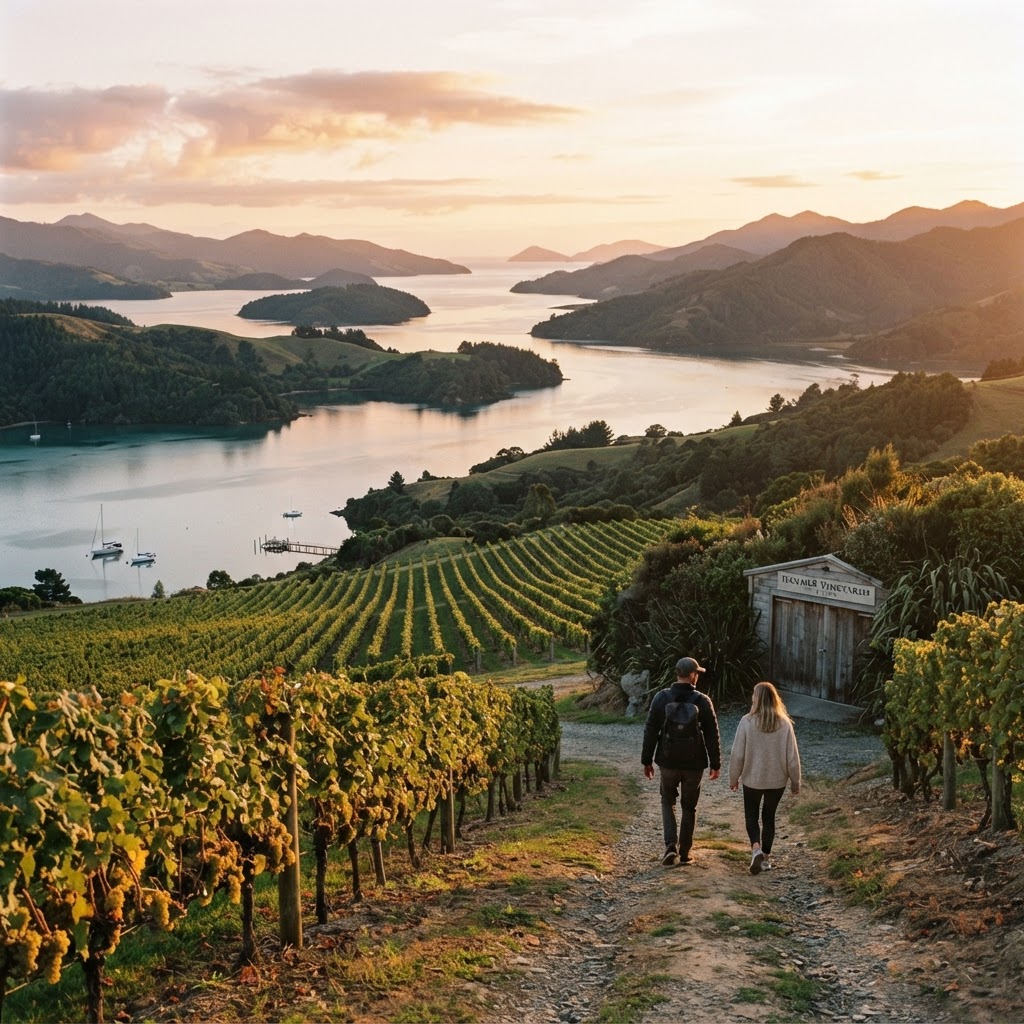
Marlborough anchors the northern tip of New Zealand's South Island, defined by two distinct landscapes: the sun-drenched alluvial plains of the Wairau Valley—home to over 140 wineries producing crisp Sauvignon Blanc and nuanced Pinot Noir—and the intricate sea-drowned valleys of the Marlborough Sounds. While many travelers treat it simply as a ferry arrival point at Picton, staying several days unlocks a tranquil, indulgent rhythm centered around estate cellar doors, world-class seafood, and scenic maritime hiking.
3 to 4 days
Best time
March to late April for harvest energy and optimal weather, or January to February for warm water and long vineyard days.
Build your own trip with these prebuilt itineraries
Each one is a tested, day-by-day plan for Marlborough, New Zealand — start here, then make it yours.
5 Days in Marlborough: Coastal Trails & Remote Lodges in Marlborough
Active hiking along the Queen Charlotte Track combined with water taxis and secluded Sounds seafood retreats
4 Days in Marlborough: The Classic Sound & Sip in Marlborough
A balanced exploration pairing Queen Charlotte Sound marine excursions with premier wine country
3 Days in Marlborough: Vines & Valleys in Marlborough
Cellar door tastings, estate lunches, and cycling the Wairau Valley beyond Sauvignon Blanc
Marlborough produces three-quarters of New Zealand's wine export, but visiting is far from an industrial operation. Cellar doors here range from architectural showstoppers like Cloudy Bay to small-batch bio-dynamic estates like Hans Herzog. Beyond the vine rows, the Queen Charlotte Sound offers pristine coastal waters ideal for sea kayaking, boat-access-only lodges, and fresh Greenshell mussels harvested directly from the bay.
Where to stay
Getting there
Getting around
Food & drink
What it costs
Things to do
Book tours & tickets in Marlborough, New ZealandSkip it if
Skip Marlborough if your New Zealand priorities are strictly high-adrenaline alpine sports, dramatic mountain peaks, and fast-paced nightlife—Central Otago or Queenstown deliver that profile far better.
When to go
Summer brings hot, dry weather and swimming conditions in the Sounds, but accommodation in Picton and vineyard restaurants book out weeks ahead. Autumn (March to May) balances warm daytime temperatures with golden autumn foliage and working harvest activity at the wineries, without midsummer crowds.
Peak (December to February)
Dry, sunny, and very busy due to domestic holidays; water taxis and premier cellar door lunches require reservations weeks early.
Shoulder (March to May & October to November)
March–May is ideal for vintage harvest colors and calm days; spring brings fresh green growth but occasional brisk coastal winds.
Low (June to August)
Crisp sunny days with chilly nights; cellar doors operate on restricted winter hours and some Sounds water taxis reduce schedules.
Neighborhoods
Where you stay shapes the trip. Here's how to think about it.
Renwick & The Wairau Plains
Flat country roads lined with endless vines, cycling cellar-to-cellar, and sunlit garden lunches.
Best for:Wine enthusiasts, self-guided cyclists, and couples wanting vineyard tranquility
Don't miss:Renting an e-bike to taste through Jackson Road and stopping for an outdoor flight at Cloudy Bay.
Picton
A working maritime harbor town serving as the gateway to the Queen Charlotte Sound, with a walkable seafront strip.
Best for:Hikers, ferry arrivals, boat tour departures, and travelers without a vehicle
Don't miss:Boarding a morning water taxi out to the Queen Charlotte Track from London Quay.
Blenheim Central
The commercial hub of the region, featuring flat grid streets, civic parks, and reliable dining.
Best for:Practical bases, travelers wanting evening restaurants on foot, and business travelers
Don't miss:Dinner at an artisan bistro in town after cellar doors shut at 4:30 PM.
Havelock
A salty, low-key fishing township functioning as the gateway to the remote Pelorus Sound.
Best for:Seafood purists, kayakers, and travelers heading off the beaten track
Don't miss:A steaming pot of steamed green-lipped mussels at the marina waterfront.
The Sounds Inlets (Kenepuru & Queen Charlotte)
Boat-access coves, forested mountain ridges plunging into calm sea valleys, and utter disconnection.
Best for:Off-grid luxury, multi-day track walkers, and water lovers seeking sanctuary
Don't miss:Staying at a remote boat-in lodge in Endeavour Inlet with zero road noise.
Destination intelligence
Updated 9/14/2026The structured record we plan every Marlborough, New Zealand itinerary from.
Walkability
Low overall. While central Blenheim and downtown Picton are walkable, reaching vineyards and Sounds trailheads requires a bicycle, car, or water taxi.
Transit quality
Limited. Public bus networks are minimal between rural towns; regional travel depends on private shuttles, rental vehicles, and water ferries.
Car needed
Yes, unless you book guided group excursions or confine your stay exclusively to a boat-access Sounds resort.
Ideal duration
3 to 4 days
Minimum useful
2 days
Peak season
December to February: hot, dry summer days, lively cellar door gardens, and peak outdoor boating activity.
Shoulder season
March to May (vintage/harvest season with golden vines and mild days) and October to November (spring blossom and fewer crowds).
Low season
June to August: cooler winter days, quieter tasting rooms, and reduced ferry and water taxi schedules.
Best for
Common mistakes
- Rushing through Picton immediately after disembarking the ferry without dedicating time to the Sounds
- Failing to reserve cellar door estate lunches in advance during the peak summer and harvest periods
- Drinking and driving between rural cellar doors instead of using organized tours, designated drivers, or e-bikes
- Assuming Marlborough only makes Sauvignon Blanc, thereby missing out on brilliant local Chardonnay, Riesling, and Pinot Noir
Best nearby
See what a trip to New Zealand actually costs. Travel Budget Co.
How to plan it
- Stay in Renwick if you want to step directly onto vineyard cycle trails; base in Picton if maritime hiking and water taxis are your daily focus.
- Cellar doors close early (usually between 4:00 PM and 5:00 PM), so front-load tastings before 3:00 PM and plan dinner in town.
- Don't try to hike a section of the Queen Charlotte Track and do a full wine tour on the same day; transit between the wharf and the vines eats up too much time.
- Book vineyard lunches (like Wairau River or Saint Clair) before you finalize your day's route, as these anchor your tasting geography.
- Pair Marlborough with Kaikōura (2 hours south) for marine wildlife or Nelson/Abel Tasman (1.5 to 2 hours west) to round out a northern South Island circuit.
Questions
Readymade itineraries
Start from a tested template — then make it yours.
Ready to book
Lock in your Marlborough, New Zealand trip
Everything in one place. We may earn a small commission — it never costs you more.
Plan a trip to Marlborough, New Zealand
Pick a length and we'll build a day-by-day plan around how you travel — neighborhoods clustered, budget-aware, and editable.
Get better at planning trips like this
Occasional notes on planning smarter — no spam, unsubscribe anytime.
Plan a trip to Marlborough, New Zealand
Turn this guide into a day-by-day plan built around your pace, your group, and your budget.
Build my Marlborough, New Zealand trip