Costa Rica
Manuel Antonio
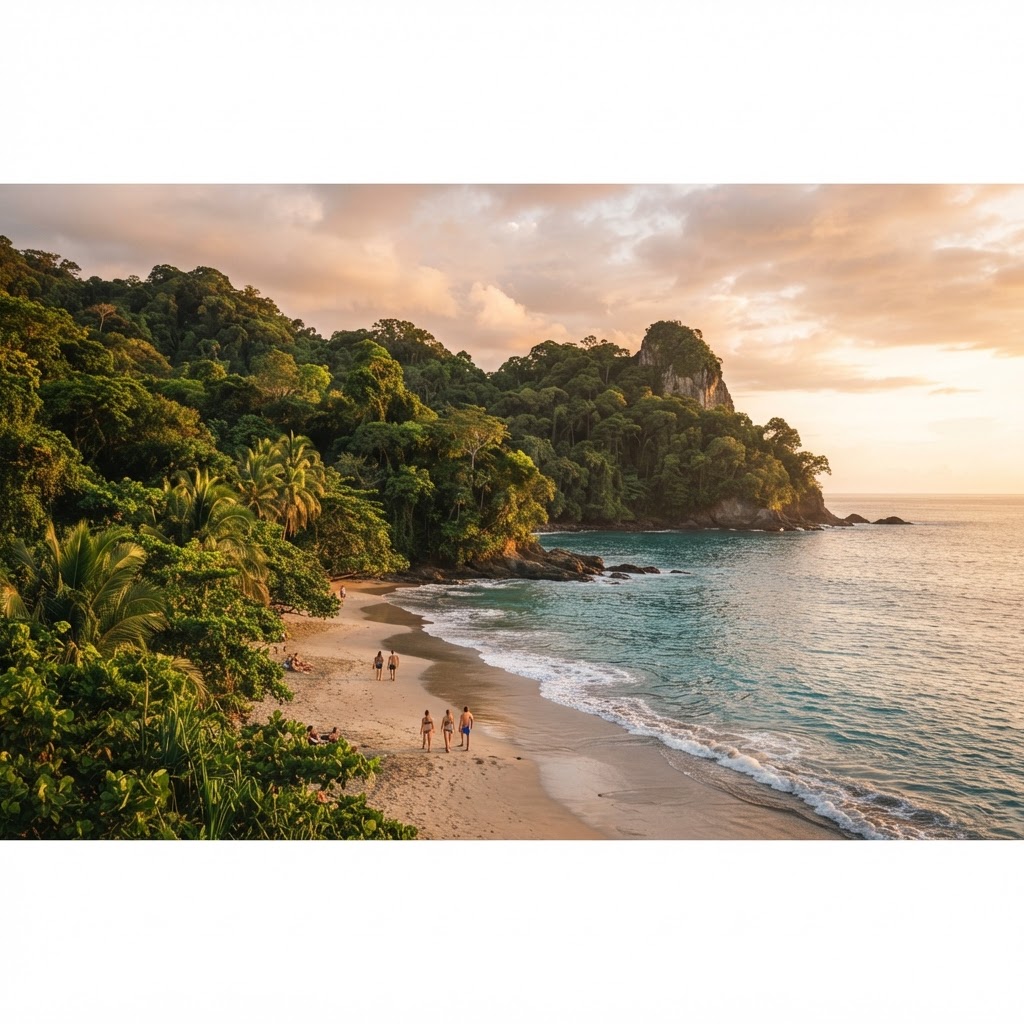
Where emerald jungle crashes directly into calm Pacific sand
Plan & book
Sort your Manuel Antonio trip in one place.
We point you to the booking tools we'd actually use — live prices, no markup. Or let us build the day-by-day plan around you first, then book.
Manuel Antonio is Costa Rica's iconic wildlife-meets-ocean collision: an 8-kilometer coastal ridge road connecting the port town of Quepos to a compact national park where two-toed sloths, capuchin monkeys, and coatis roam straight onto white-sand coves. It is undeniably popular and heavily touristed, yet no other place in Central America makes raw biodiversity this accessible with such effortless infrastructure.
3 to 4 days
Best time
Mid-December through April offers reliable blue skies and dry Pacific waters at the cost of steep rates and crowded trails.
Build your own trip with these prebuilt itineraries
Each one is a tested, day-by-day plan for Manuel Antonio — start here, then make it yours.
5 Days in Manuel Antonio: Jungle Canopy & Waterfalls in Manuel Antonio
Active rainforest and regional exploration combining the national park with inland waterfalls, coastal kayaking, and canopy zip-lines
4 Days in Manuel Antonio: Relaxed Family & Beach Pace in Manuel Antonio
Family-friendly itinerary with calm swimming waters, stress-free bus transit, wildlife boat tours, and downtime avoiding midday heat
3 Days in Manuel Antonio: Wildlife & Classic Coast in Manuel Antonio
First-timer highlights focusing on guided park wildlife spotting, protected beach coves, and Pacific sunset dining along the ridgeline
If your ideal trip balances rainforest hiking with immediate, calm ocean swimming, Manuel Antonio delivers like nowhere else. The national park's protected headland blocks heavy Pacific swell, creating calm, crystalline waters fringed by primary forest. You can watch white-faced capuchins swing through the canopy while floating in bath-warm water, then retreat up the ridgeline for ocean-view dining. It compresses the classic Costa Rican experience into an efficient, manageable footprint.
Where to stay
Getting there
Getting around
Food & drink
What it costs
Things to do
Book tours & tickets in Manuel AntonioSkip it if
Skip Manuel Antonio if you despise tourist crowds, tour buses, and vendor-lined beach access paths. Serious adventure purists seeking raw, off-the-grid jungle should head south to the Osa Peninsula (Corcovado), while dedicated surfers will find far better, more consistent breaks in Santa Teresa, Pavones, or Playa Hermosa.
When to go
Dry season guarantees calm swimming conditions and clear mornings for wildlife viewing, but hotel rates spike and park slots vanish weeks in advance. Visiting in late April or May delivers lush emerald foliage and halved lodging rates, requiring only an afternoon raincoat to manage the trade-off.
Peak (Mid-December to April)
Brilliant sunshine and tranquil ocean surf; book hotels and national park entry passes months in advance to avoid being turned away.
Shoulder (May to August)
Bright, sunny mornings followed by predictable late-afternoon thundershowers; prime time for lush rainforest greenery and relaxed crowds.
Low (September to November)
Heavy tropical deluges and rough trails, with October bringing trail washouts; best skipped unless operating on an extreme budget.
Neighborhoods
Where you stay shapes the trip. Here's how to think about it.
The Ridgeline (Route 618)
Chic, elevated coastal canopy perched high above the Pacific with epic sunset views and fine dining.
Best for:couples, view-seekers, boutique hotel lovers
Don't miss:Dinner or sunset cocktails overlooking the coast near El Avión and Café Milagro.
Playa Espadilla Norte
Bustling, sun-drenched beach town strip right where the sand meets the national park entrance.
Best for:families, beachgoers who hate walking uphill, surfers
Don't miss:Fresh coconut water from beach kiosks before wading in the gentler north cove waters at low tide.
Punta Quepos / Playa Biesanz
Secluded, lush coastal enclave tucked down steep jungle trails into calm turquoise coves.
Best for:kayakers, snorkelers, travelers seeking a quieter coastal escape
Don't miss:Renting a kayak at Playa Biesanz to paddle around the sheltered inlet away from ridge crowds.
Downtown Quepos & Marina Pez Vela
Working-class Costa Rican harbor town transitioning into a polished international yacht marina.
Best for:budget travelers, charter anglers, authentic dining
Don't miss:Grabbing fresh ceviche and local gallo pinto at the Quepos Central Market, or an evening stroll along the marina boardwalk.
Destination intelligence
Updated 9/14/2026The structured record we plan every Manuel Antonio itinerary from.
Walkability
Poor to Moderate. Playa Espadilla base is flat and walkable, but the main ridgeline road is steep, winding, and lacking sidewalks in many sections.
Transit quality
Good. Reliable, inexpensive public buses run up and down the hill between Quepos and the beach every 20-30 minutes all day.
Car needed
Optional. Useful for regional waterfalls and coastal day trips, but parking near the park entrance is cramped and predatory; public transit and taxis suffice locally.
Ideal duration
3 to 4 days
Minimum useful
2 days
Peak season
Mid-December to April (dry season with sunshine, calm waters, and peak holiday crowds)
Shoulder season
May to August (morning sunshine with regular late-afternoon downpours; lush greenery and fewer crowds)
Low season
September to November (heaviest rainfall months; discounted hotels, empty beaches, but frequent trail washouts)
Best for
Common mistakes
- Attempting to enter Manuel Antonio National Park on Tuesdays, when the park is closed for conservation and trail maintenance
- Failing to pre-purchase official park entry tickets online in advance via the SINAC portal, as gate ticket sales do not exist
- Visiting the park without a certified guide; sloths and leaf-mimic tree frogs sit 60 feet up in dense foliage and are almost invisible to the untrained naked eye
- Leaving food unattended on Playa Manuel Antonio, where clever raccoons and monkeys readily unzip daypacks
- Trying to walk the winding, sidewalk-free Route 618 hill on foot in high midday heat rather than paying 75 cents for the bus
Best nearby
See what a trip to Costa Rica actually costs. Travel Budget Co.
How to plan it
- Stay in Playa Espadilla Norte if you want to walk directly out to the sand without taking buses, or along Route 618 if you prioritize canopy ocean views.
- Pair Manuel Antonio with Monteverde Cloud Forest or Arenal Volcano to balance humid Pacific coastline with cool mountain ecosystems.
- Do not try to visit the national park on a Tuesday; the park is closed every Tuesday for environmental resting.
- Book your national park entry timeslot for 7:00 AM or 8:00 AM to see the wildlife before the midday equatorial heat drives them deeper into the forest.
- Combine your visit with an afternoon drive south along Route 34 to the dramatic Nauyaca Waterfalls or the sea caves of Playa Ventanas.
Questions
Readymade itineraries
Start from a tested template — then make it yours.
Ready to book
Lock in your Manuel Antonio trip
Everything in one place. We may earn a small commission — it never costs you more.
Plan a trip to Manuel Antonio
Pick a length and we'll build a day-by-day plan around how you travel — neighborhoods clustered, budget-aware, and editable.
Get better at planning trips like this
Occasional notes on planning smarter — no spam, unsubscribe anytime.
Plan a trip to Manuel Antonio
Turn this guide into a day-by-day plan built around your pace, your group, and your budget.
Build my Manuel Antonio trip