Fiji
Mamanuca Islands
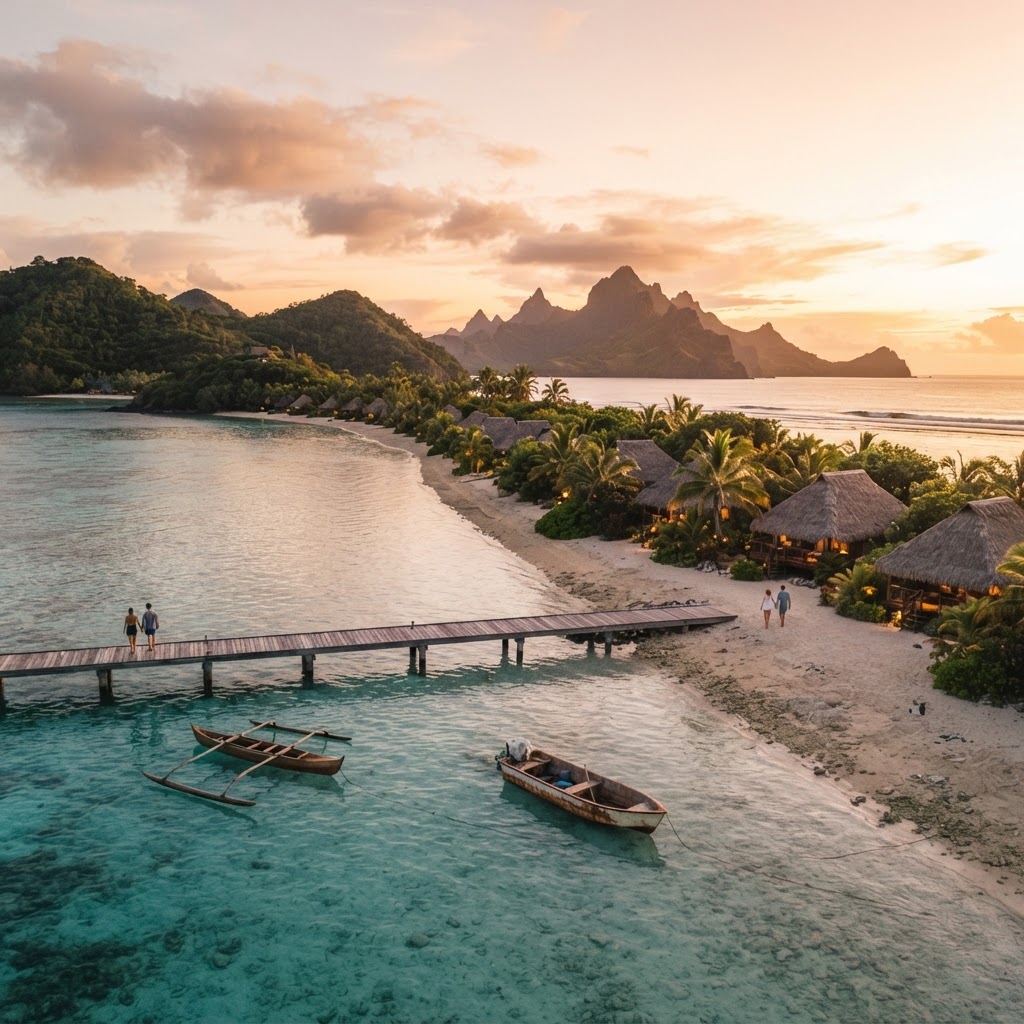
Reef-fringed volcanic outposts with world-class surf, calm lagoons, and short transfers from Nadi.
Plan & book
Sort your Mamanuca Islands trip in one place.
We point you to the booking tools we'd actually use — live prices, no markup. Or let us build the day-by-day plan around you first, then book.
Floating just off the western coast of Viti Levu, the Mamanuca archipelago delivers quintessential South Pacific scenery without demanding painful transfer days. About 20 volcanic and coral islands make up the group, offering everything from championship reef breaks like Cloudbreak to sheltered, shallow lagoons ideal for snorkeling straight from the sand. Because access requires just a 45-to-90-minute high-speed catamaran or boat run from Port Denarau, the islands serve as the premier maritime base for travelers who want immaculate coral reefs and ocean-facing bures without sacrificing half a vacation day to regional air logistics.
5 to 6 days
Best time
May to October delivers the dry season's calmest seas, clearest underwater visibility, and minimal rainfall.
Build your own trip with these prebuilt itineraries
Each one is a tested, day-by-day plan for Mamanuca Islands — start here, then make it yours.
6 Days of Family Lagoon Fun in Mamanuca Islands
Family-friendly multi-generational stay centered on calm lagoon waters, cultural village trips, and stress-free resort living
4 Days of Waves & Ocean Adventure in Mamanuca Islands
High-octane marine trip focusing on world-class outer reef breaks like Cloudbreak, deep scuba walls, and sandbar excursions
5 Days of Island Romance & Reef Seclusion in Mamanuca Islands
Couples-focused relaxation in adults-only bures, sunset sails, and pristine house-reef snorkeling straight off the beach
The primary reason to choose the Mamanuca Islands over Fiji's more remote archipelagos is immediate access to world-tier marine recreation. You can land at Nadi International Airport in the morning and be snorkeling on a healthy barrier reef or paddling toward a sandbar before mid-afternoon. Furthermore, for ocean sports enthusiasts, this group anchors Fiji's premier wave breaks—including Cloudbreak, Restaurants, and Wilkes Passage—while offering calmer inner reef lagoons for families and casual divers.
Where to stay
Getting there
Getting around
Food & drink
What it costs
Things to do
Book tours & tickets in Mamanuca IslandsSkip it if
Skip the Mamanucas if you demand budget street food, lively independent nightlife, cultural urban centers, or the ability to wander outside a resort gate into local town life. Travelers seeking raw, road-tripping adventure or deep jungle hiking are better served on Viti Levu's Suncoast or the garden island of Taveuni.
When to go
The dry winter window eliminates tropical humidity and heavy rain, ensuring optimal conditions for reef diving and boat transit, though lodging rates and school-holiday bookings peak from July through August. The summer wet months bring lower rates but also steep humidity, afternoon thunderstorms, and cyclone vulnerability.
Peak (July–August & mid-December–mid-January)
Crisp sunny days and calm water, but resort bures command top rates and require booking 6 to 9 months in advance.
Shoulder (May–June & September–October)
The sweet spot: excellent reef visibility, moderate trade winds, comfortable temperatures, and thinner crowds.
Low (November–April)
Tropical cyclone season brings high heat, oppressive humidity, and regular downpours; discounts abound, but weather delays on catamarans are common.
Neighborhoods
Where you stay shapes the trip. Here's how to think about it.
Malolo Island & Malolo Lailai
The bustling epicentre of the chain, balancing high-end eco-luxury, yachting hubs, and traditional villages.
Best for:First-timers, families, and couples wanting resort variety without extreme isolation
Don't miss:Wood-fired pizza and cold local beers at Musket Cove Yacht Club's sandbar Island Bar, reached via a short timber jetty.
Tokoriki Island
Secluded, adult-oriented northern sanctuary framed by dramatic volcanic ridges and wide sandbars.
Best for:Honeymooners, wellness retreats, and upscale couples wanting silence over activities
Don't miss:Diving the edge of the Tokoriki passage reef wall during calm morning slack tides.
Mana Island
Action-forward, lagoon-centered mid-sized hub with dual-facing beaches and vibrant fringing reefs.
Best for:Active families, open-water swimmers, and snorkelers wanting immediate house-reef access
Don't miss:Snorkeling directly offshore at Sunset Beach around the coral bommies teeming with clownfish and blue sea stars.
Tavarua & Namotu
Dedicated ocean-sports and surf enclaves revolving entirely around swell directions, tide charts, and boat charters.
Best for:Advanced surfers, foilers, and serious watermen and waterwomen
Don't miss:Catching an early-morning boat run out to watch expert surfers drop into the barrels at Cloudbreak.
Qalito Island (Castaway Island)
Classic, barefoot thatched-roof bure outpost wrapped in 170 acres of native rainforest and pristine reef.
Best for:Multi-generational families wanting calm waters, exceptional kids' programs, and total digital detox
Don't miss:The freshly caught walu prepared in banana leaves during the weekly beachside lovo feast.
Destination intelligence
Updated 9/14/2026The structured record we plan every Mamanuca Islands itinerary from.
Walkability
Island-dependent; compact enough to walk anywhere on your specific resort footprint, but zero inter-island foot connections.
Transit quality
High-frequency water catamarans and water taxis out of Port Denarau, but limited inter-island casual transit.
Car needed
No (vehicles do not exist on the resort islands; transit is strictly water- and foot-based).
Ideal duration
5 to 6 days
Minimum useful
3 days
Peak season
July to August and mid-December to mid-January (dry winter weather, school holidays, calm seas, and premium lodging rates).
Shoulder season
May to June and September to October (superb clear water, moderate humidity, fewer crowds, and steady trade winds).
Low season
November through April (the tropical wet/cyclone season, featuring high humidity, heavy afternoon rainstorms, and reduced resort rates).
Best for
Common mistakes
- Booking afternoon flights landing past 3:30 PM in Nadi, which forces an accidental overnight stay on the mainland because scheduled resort ferry catamarans finish afternoon runs before dusk.
- Assuming you can hop easily between arbitrary resort islands for dinner; boat transfers are weather-dependent, expensive to charter privately after dark, and largely unscheduled at night.
- Failing to budget for mandatory resort meal plans or imported food surcharges, which can double the base room cost at check-out.
Best nearby
See what a trip to Fiji actually costs. Travel Budget Co.
How to plan it
- Lock in your specific island based on your group dynamic: book Likuliku or Tokoriki for kid-free romantic seclusion, Castaway or Mana for family water-sports infrastructure, or Namotu/Tavarua specifically for surf access.
- Do not book an international departure flight out of Nadi earlier than 2:00 PM if relying on the morning ferry from the islands, as rough morning seas can delay transfers to Port Denarau.
- If your international flight arrives in Nadi after 3:30 PM, you will miss the final scheduled catamaran out of Port Denarau; either book an overnight at Denarau or secure an expensive private water taxi transfer in advance.
- Book your day charter to Monuriki Island (where the movie 'Cast Away' was filmed) on your second morning before the tradewinds pick up sea chop in the afternoon.
- Pre-book dive packages and surf boat charters 2 to 4 weeks ahead during the July–August peak season, as onboard spots are limited by marine park regulations.
Questions
Readymade itineraries
Start from a tested template — then make it yours.
Ready to book
Lock in your Mamanuca Islands trip
Everything in one place. We may earn a small commission — it never costs you more.
Plan a trip to Mamanuca Islands
Pick a length and we'll build a day-by-day plan around how you travel — neighborhoods clustered, budget-aware, and editable.
Get better at planning trips like this
Occasional notes on planning smarter — no spam, unsubscribe anytime.
Plan a trip to Mamanuca Islands
Turn this guide into a day-by-day plan built around your pace, your group, and your budget.
Build my Mamanuca Islands trip